
Kanheri Buddhist Caves: India’s Ancient Treasure of Education, Art, and Religion
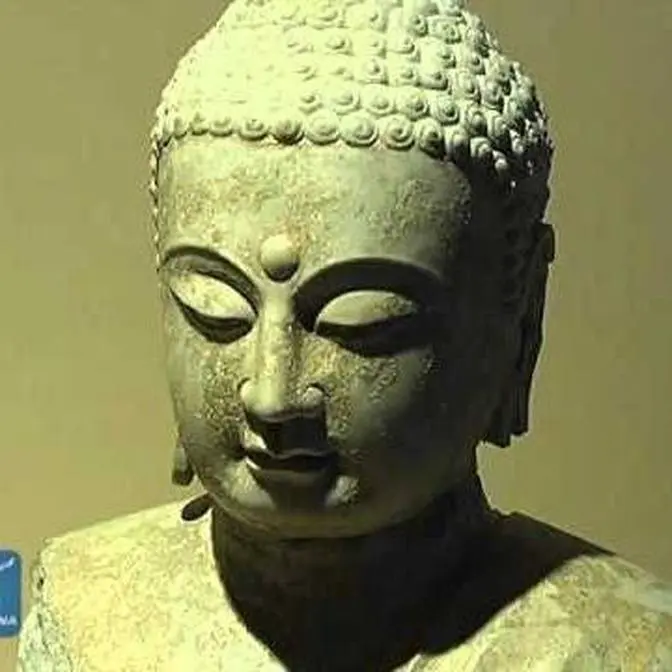
Look at this peaceful statue of Lord Buddha.
Can you imagine?
This place used to be once a prosperous school.
As beggars from all over the world come here,
they study the teachings of Lord Buddha,
and spread the knowledge.
For more than two thousand years,
in this historical place,
the remains of India's prosperous Buddhist year
and the vision of the ancient trade route are preserved.
It is said that great scholars like Buddha Gosha
used to live here,
who studied the Tripitaka and spread it.
This is not just the center of knowledge,
but it is also the center of place, trade, culture, and spirituality.
Today, we are standing in Kanere lane,
which is connected to an ancient trade route.
It was the capital of the seventh kingdom of the Paitan.
This route was going to connect Sri Lanka, South East Asia, and other countries.
Do you know?
For the construction of these lanes,
women have contributed a lot.
Think about it.
The discussion of these great scholars
must have taken the peace of mind of the beggars
and the society of businessmen into account.
In these lanes,
the knowledge of ancient India,
Kanere lane is located
45 km from Mumbai
in the quiet surroundings of Boruli.
Kaneri is derived from the Sanskrit word
Krishnagiri,
which means Black Mountain.
The other name of Kanere was popular,
that is Andhen,
which means Black Mountain.
The way to the lanes
goes through the mountains of Sanjay Gandhi National Museum.
The zigzag-shaped curves
make you feel the magic of nature at every moment.
The atmosphere and natural beauty
are so mesmerizing
that you feel like spending a lot of time on these six lanes.
So, to know the history of this ancient road
and to discover its mystery,
we have to stay with us in this journey.
There are more than 120 caves in the Kanere lanes,
which are a combination of meditation caves,
Vihar caves and Bhavya Chaitra caves.
Laney Kramangam is such an extraordinary Chaitra cave.
The map on its Bhavya Khamba
is a statue of the middle-class
and the statue of Vishal Buddha.
You will be tired of looking at it.
But the question is,
what is so important about this place?
What is so special about these lanes?
Because of this,
they still feel like a part of history.
And how did this place come to be
Let's find out.
The history of the Kanere lanes
is almost 2,000 years old.
There are more than 109 lanes in this place,
which were dug from the 1st century BC
to the 10th century BC.
These lanes are not just a decoration of buildings and sculptures,
but also show the progress of Buddhism in ancient India
and the lifestyle of that time.
These lanes were not only religious,
but also for businessmen, kings,
and ordinary people.
They were also used to store water
and were used as a place of study.
The Buddhist monks in Kanere were well-equipped.
These lanes were connected to famous business centers
such as Sopara, Kalyan, Nashik, Paitan, and Ujjain.
These large numbers were clearly visible from the cave,
where the monks were educated and meditated.
Looking at the most important part of Kanere,
there are three caves in the Kramangam.
The Sapadshashratha is an excellent example,
whose structure is closely related to the Karela.
The cave, which is 25 meters long, 15 meters wide,
and 10 meters high, is a great example.
Here is the famous Kangan,
on which there is a wall decorated with a rail pattern.
A beautiful view of the hunter is made on the lower part of the wall.
The main area of the cave is made like an elephant's back.
The Bhavya Kham in the lanes is a perfect example of it.
The Bhavya statue of Buddha is carved on the Khamba.
On some Khambas, Yaksha is held in the hands of Vati.
To protect the religion,
it seems that four broken lions are protecting this object.
There are 10 shrines in this lane.
In one of the shrines of Japa,
it is mentioned that the seventh king Yajneshri Satkarni
built this cave with his work.
This shrine is an important center of Bhadrayani Buddhism.
On this lane, two businessmen,
Gajasena and Gajvira, had donated.
On the upper part of the main cave,
Buddha and Maitreya Buddha statues are carved.
From these inscriptions,
it seems that Kaneri was a big center of education.
Here, Bhikshun contributed significantly to the study of Tripitaka.
Kaneri was situated on Paitan,
which was considered the capital of the seventh kingdom at that time.
Paitan is an important symbol in the inscriptions.
Paitan was connected to Sri Lanka,
South East Asia and other parts through trade routes.
As a result, Kaneri became a business,
religious and cultural center.
Lane 4 is an important lane in Kaneri Lane.
After climbing a few steps,
you will see a pillar.
The statue of Lord Buddha carved on the pillar
is characterized by these inscriptions.
On the upper part of the pillar,
that is, on the upper layer,
there is an inscription of a woman named Shivpalitanika.
She was a goldsmith's wife.
The donation she made for this pillar
reflects the importance of women in the society at that time.
In this lane,
various statues of Lord Buddha are carved on the wall behind the pillar,
which reflect the various aspects of their teachings.
The Kauri Upam in these lanes
gives us a glimpse of the wonderful art of the Kauri Upam of that time.
Out of the two lanes,
which are a collection of many lanes,
three are designed as Chettikruhar and Vihar.
There are two pillars in this lane.
On the back side of the pillar,
there is a Baudha Litany, i.e. a prayer.
In this prayer,
Lord Buddha has shown him praying for human suffering and liberation from suffering.
On the front side of this lane,
a long garden has been carved to sit spread out and prostrated.
In the 6th and 7th centuries of the 8th century,
Buddha statues of meditation, meditation and religious transformation
have been carved on the walls of the lanes.
When the steps of the lanes go up,
the Mokle Ayatakaar group
constructs a garden carved in the wall to sit in it.
Water tanks have been dug in the outer part.
On top of that,
the names of Poonvasu and Swami Datta,
have been carved.
In the Vihar in the lane,
in the abbey carved on the throne,
it is noted that Nasik's Nakanak, i.e. Annachatra, donated.
From this, it can be seen that
not only religious,
but also from a business and social point of view,
the lanes of the abbey are important.
At the base of the throne,
the 7th and 8th statues of Buddha and his friends have been carved.
On this statue,
the unparalleled art of carving with their crown
The Kanere lanes are a combination of history, art and spirituality.
The heritage carved in these lanes
gives us a glimpse of the knowledge,
reverence and cultural heritage of ancient India.
The lanes are a combination of history, art and spirituality.
Lehni Kramang kheg is a vihar.
In the Kanere lane community,
this lane is an incomplete consciousness,
and is a reference to the process of finding lanes from the structure of the lanes.
There are two ditches in this lane, whose structure is similar to that of Elephanta Lane.
On these ditches, Fuchal Capitals, i.e. the map of Ushi's size, has been done.
The main plan was to make this cave two-storied,
but due to the fault in the cliff, it was left halfway.
Still, this lane is an excellent example of contemporary architectural science.
So friends, in the next part, we will learn more about the cave.
Why is it so important in Buddhism?
You will definitely like this comparison.
How did you like this video?
Do let us know in the comment box.
Share this video with as many people as possible.
And don't forget to subscribe to our channel.
See you in the next part.