
How to get a Clear Sound on the Flute | Eliminate the Air in Your Sound
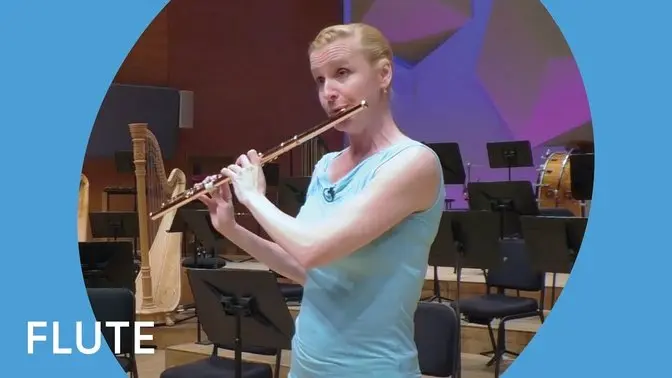
#Education #music # instruments # Flute # Orchestra # instrument demonstration
Comments are disabled for this video.
Does your playing sound like this?
And do you want it to sound like this?
Hi my name is Devin. Today I'll be talking about air and flute playing and how to eliminate the
sound or at least get rid of that fluff that we hear on top of the sound that we're creating.
Now I want to put a disclaimer here. Air is not actually a bad thing in flute playing
and it's air that creates the sound. It's not our lips. It's not anything else except for the air
is directly creating the sound that we want. So a lot of people will think to eliminate the air we
want to just stop blowing so much air. But if that happens you'll start to sound like this.
You'll get less sound but you won't get less air. The sound will just dissipate
but your air will still be there. So blowing less air is not going to help you. What will help you
is pointing your air in the right direction. Now this could mean a lot of different things.
Sometimes people are a little too rolled out. Listen to what happens when I roll in.
The sound automatically clears up. It also gets more in tune. Sometimes if you're a little too
sharp you might be a little too rolled out or if you're a little too loud you also might be
a little too rolled out. Conversely sometimes people play too rolled in. That won't create
an air sound but it will create a dull kind of tight kind of annoying sound that is not really
pleasant. It'll also make you quieter and flatter. Neither of which we want in flute playing.
Sometimes people's lips aren't as engaged as they should be. They'll let their lips just flop around
like this. If you try too hard to not have an embouchure this might be you. We need to acknowledge
in flute playing that we all have an embouchure. We all have to form our lips in some way or another
to create a sound and whether that sound is pleasant or is really airy that is up to how you
form your lips. Your lips are simply a tool to point the air in the right direction and if your
are just willy-nilly sort of floating around they're not going to point the air in the right
direction. Conversely you don't want to have such a tight embouchure. Sometimes people are going for
the edgiest sound the punchiest sound and really trying to eliminate that air actually gets them
to sound too tight. Now you recognize that this sound also has air but it's kind of a different
type of air. Think about the air that when we're not making an embouchure we're putting into the
we have a sound but there's just so much air on top of it. Now think about the air that we're
creating when we're too tight. This is air telling us that our lips are too close together and all of
this air is trying to come out. We're building all this pressure that doesn't need to be there.
Instead you want your lips to be at a normal aperture which is the size of the opening of
your lips. We want that to be a normal shape and oftentimes it's important to think of your
aperture hole as long like this instead of flat like this. Having a longer aperture means that we
are going to target your air to hit right in the center of your riser and this is what we want.
This is what creates a good sound. If you're having a lot of fluff that could be because
the air is actually hitting the sides of your riser. So it's really all about experimentation.
You should fiddle around, move your flute back and forth this way, move your head even and try to do
things with your body. Maybe you're not supporting enough from your abdomen. You should try to squeeze
and push that air out instead of just letting it hang and just your throat is doing all the work.
That's not what we want. That'll create sort of a hollow sound. So thinking about the direction of
your airstream is also really important. Using your lips as a tool to point the air right in the
middle of this riser. Split. You can feel it with your finger. Touch the end of the riser. This is
called the sharp edge and how we create the sound on the flute is this air gets split. Some of it
goes up and some of it goes down into the flute. When we make it go into the flute more, meaning we
direct the air more down, it will sound flatter but we're going to get more resonance. We're going
to get a louder and more rich dark sound whereas if we point the air too much out of the flute
it's going to sound a little too fluffy. Think about directing the air up and down and this is
what it will sound like. You can hear the difference in the sound and there's many different degrees of
air in the sound. It could be so many different things so you really have to experiment on your
own. Even sometimes look in front of a mirror and see what you're doing exactly with your lips.
Blowing less air is definitely not going to help you. If anything you should try to blow more air
but it's about blowing the air in the right direction. Some exercises to use when doing this
are just long tones. You don't want to do anything that's too stressful on your fingers
so just think about playing notes descending chromatically. The Moyse de la Sonorte exercises
are very important in our development of tone and you can just use the first exercise of descending
chromatic notes to help you with this. This is what that would sound like and you can hear how
I'm tapering off the notes without letting the air get involved and this is really really difficult
to do and it's going to take a lot of practice but having a good sound is so important in flute
playing. After all it doesn't matter how good your technique is if your sound isn't very good people
aren't going to want to listen to you play. So achieving the best sound you can I think is really
important and remember that your sound is your personal choice. You don't want to be too swayed
by one person or another person on how they play. You want to do what works for you so don't get
so stuck up on sounding like this person when you really should just be sounding like yourself.
I hope this video helped and if you have any further questions please leave them in the
comments below. I would love to hear from you and if you're interested in watching any other flute
content please be sure to subscribe so you don't miss out on anything else I post. Thank you so
much for watching. Bye!