
The Lost Kingdoms of Ancient Europe | Uncovering Forgotten Civilizations
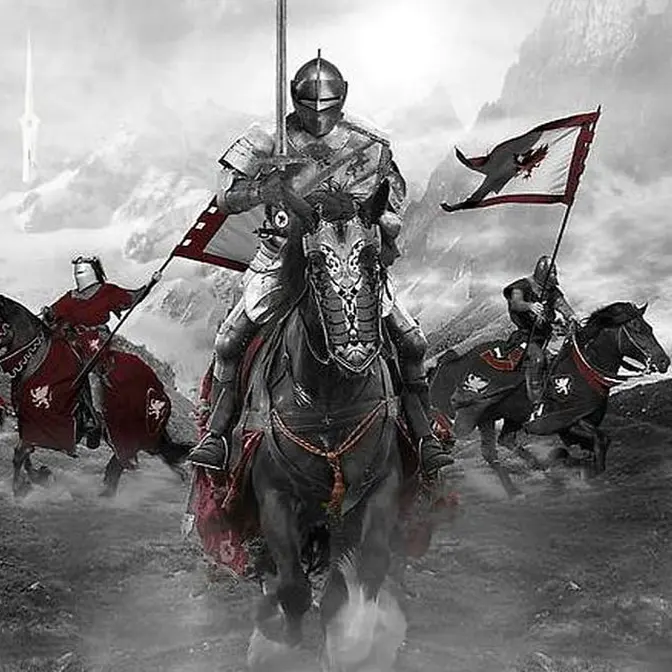
Explore the hidden history of the lost kingdoms of ancient Europe in this gripping history documentary. We uncover five forgotten civilizations—Tartessos, the Etruscans, Dacia, the Picts, and the Vandals—revealing their secrets and legacies. From Tartessos’ golden treasures and possible Atlantis connection to the Etruscans’ impact on Rome, Dacia’s resistance, the Picts’ enigmatic symbols, and the Vandals’ bold conquests, this video is a must-watch for history buffs! Subscribe for more ancient history content, like the video, and tell us: Which lost kingdom intrigues you most?
#LostKingdoms #AncientEurope #ForgottenCivilizations #HistoryDocumentary #AncientHistory #EuropeanHistory #HistoryMystery #ViralHistory #Archaeology #HistoryLovers
Europe's history is a tapestry of empires. Rome, Greece, the Celts. But what about the kingdoms
that came before? Today, we're uncovering five lost kingdoms of ancient Europe. Civilizations
so mysterious, so remarkable, that their stories deserve to be told. Stick around,
because you won't believe what we've dug up. Picture Europe thousands of years ago.
No Roman legions. No grand cathedrals. Just a wild, untamed land ruled by kingdoms you've
probably never heard of. These weren't just villages or tribes. They were powerful
civilizations with wealth, culture, and secrets that still baffle historians today.
In this video, we're diving into five of them. Tartessos, the Etruscans, Dacia, the Picts,
and the Vandals. Each one has a tale of glory and collapse that'll make you rethink
everything you know about ancient Europe. Ready? Let's go back in time. Did you know
one of the richest kingdoms in ancient Europe might have inspired the legend of Atlantis?
Meet Tartessos, a civilization that thrived in what's now southwestern Spain around 3,000 years
ago. This wasn't just some backwater settlement. Tartessos was swimming in gold, silver, and
copper, making it a jackpot for trade. They struck deals with the Phoenicians, swapping metals for
exotic goods from the Mediterranean. But here's the kicker. Some scholars think Tartessos could
be the real Atlantis. Both were wealthy, advanced, and gone without a trace. The Greek philosopher
Plato described a lost paradise that sounds eerily similar. Coincidence? You decide. Around the 6th
century BCE, Tartessos vanished. Was it a dried-up river cutting off trade? An invasion? We're still
guessing. What's left is a mystery wrapped in gold and a story that keeps us wondering.
Before Rome ruled the world, another civilization taught them how to build it.
Welcome to the Etruscans, who dominated central Italy from 900 to 300 BCE.
These weren't just Rome's neighbors. They were their mentors. The Etruscans were engineering
wizards. They drained swamps, built roads, and crafted arches that Rome later made famous.
Even Roman gods like Jupiter owe a nod to Etruscan religion. Think of them as the unsung
architects of an empire. But as Rome grew, the Etruscans faded. By the 3rd century BCE,
their cities were swallowed up. Their culture blended into Rome's.
Still, every Roman temple or aqueduct carries a whisper of Etruscan genius.
Imagine a kingdom so fierce it took Rome two wars to bring it down.
That's Dacia, a powerhouse in what's now Romania. Thriving around the 1st century BCE,
led by the legendary king, the Dacians weren't just fighters. They were loaded with gold.
That gold funded epic battles against Rome. But in 106 CE, Emperor Trajan said enough
and conquered Dacia after a brutal campaign. The Romans hauled off so much treasure it
funded their empire for years. Dacia was absorbed into Rome, but its spirit lived on.
Today, Romanians point to Dacia as the root of their identity,
a lost kingdom that refused to go quietly.
In the misty hills of Scotland, a people painted symbols that still stump us today.
Say hello to the Picts, who ruled from the 3rd to the 9th century CE. These weren't just random
tribes. They were a kingdom that laughed in the face of Roman conquest. Those symbols?
No one's cracked their code. Were they a language? A story? A warning?
The Picts kept their secrets close, even as they fought off Roman legions trying to push north.
By the 9th century, they merged with the Scots, forming the kingdom of Alba. The Picts disappeared
as a name, but their stones and their mysteries still stand tall in Scotland. They were called
barbarians, but they built a kingdom that humbled Rome. The Vandals started in Eastern Europe,
then trekked across the continent, landing in North Africa by the 5th century CE. And in 455 CE,
they pulled off the heist of the century. They sacked Rome, carting off gold, silver,
and even the empress's treasures. Then they set up shop in Carthage, ruling a kingdom that rivaled
the empires they'd toppled. But in 534 CE, the Byzantines crushed them, and the Vandals faded away.
Their name stuck around, though. Vandalism comes from them, even if their stories weigh more epic
than mindless destruction. Five kingdoms, five stories of rise and ruin. Tartessos and its golden
riddle, the Etruscans shaping Rome, Dacia defying an empire, the Picts guarding their secrets,
and the Vandals rewriting the rules. These lost kingdoms prove that history isn't just about the
winners, it's about the forgotten, too. Their legacy still echoes through Europe, waiting for
us to uncover it. So, which of these lost worlds grabbed you the most? Tartessos, Atlantis vibes?
The Picts, silent stones? Drop your thoughts in the comments, and tell us what other ancient
kingdoms we should uncover next. If you loved this trip through time, hit that like button,
share it with a history buff, and subscribe for more. The past is calling, let's keep answering.