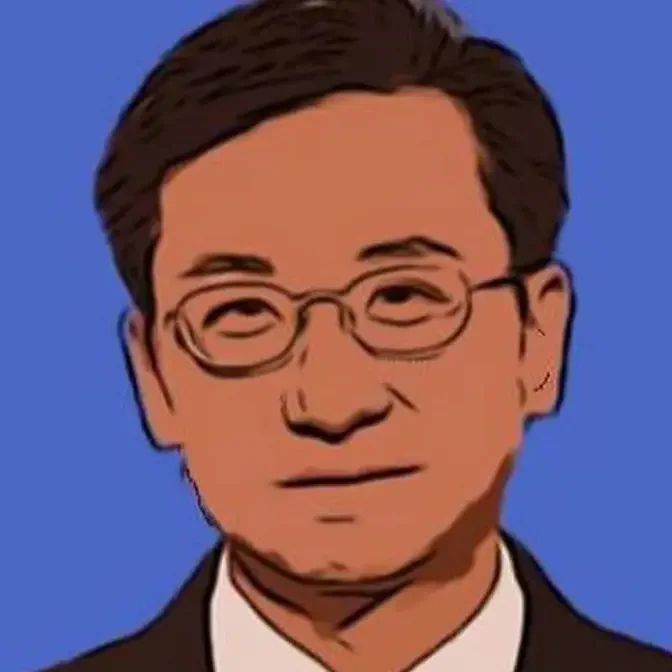
A major rectification campaign spanning five months has been launched to enforce party loyalty, spotlighted by a 14-episode CCTV series, Lectures on Xi Jinping’s Economic Thought, exploring innovative economic frameworks and new productive forces. Xi’s prolific book publications, potentially earning him billions, underscore his ideological push, yet The Economist reveals an ironic twist: his anti-American rhetoric has fueled U.S. hawks, drawing from over 130 volumes to critique China. This shift, from pro-China “panda huggers” to hardliners, reflects Xi’s vision of global dominance over co-leadership, risking the liberal order. His words, possibly bluster for domestic control, are taken seriously abroad, amplifying misjudgments. Nationalism and a radicalized party are his tools, unmoderated internally despite diplomatic restraint. Xi accepts the West’s opposition as a byproduct of his autocratic grip, prioritizing power over national interest, unmoved by critiques of his bombast.
Help me grow the channel by donating any amount through the link below—your support makes a difference! https://paypal.me/DonXiang
Hi, I'm Dong Xiong. Welcome to Digging into China, where we explore China in depth to
reveal unique perspectives. Allow me to share with you a piece of significant
and rather intriguing news, one that merits our thoughtful consideration.
No sooner had the Chinese Communist Party concluded its two sessions than Xi Jinping
unveiled a bold and consequential initiative, a rectification campaign within the Party's
This endeavor, set to span five rigorous months, will require every member to prove their mettle.
Its purpose is unambiguous, to cement unwavering loyalty to Xi Jinping across the entire Party,
encapsulated in phrases like two upholds and two safeguards.
The news I bring you today is intimately tied to this very campaign.
Let us turn our attention to a noteworthy broadcast from China's state media, CCTV.
On March 23, in partnership with the National Development and Reform Commission,
they launched an ambitious 14-episode series titled Lectures on Xi Jinping's Economic Thoughts.
This production stands as a cornerstone of the rectification campaign's educational efforts.
CCTV describes it as a pivotal program, crafted to deepen the study and application of Xi Jinping's
economic philosophy. It delves into his pronouncements on embracing innovative
development principles, forging new economic frameworks, advancing high-quality growth,
and cultivating what he terms new productive forces.
Xi Jinping spares no effort in distilling and extolling his theoretical contributions.
His most prolific and effective endeavor appears to be the ceaseless publication of
books—works that, once released, become mandatory study for the Party faithful.
By a rudimentary estimate of his manuscript earnings, one might reasonably conclude
that Chairman Xi has accrued a personal fortune reaching into the billions of dollars.
On this political development, I wish to draw your attention to a perceptive analysis from
The Economist, which probes Xi Jinping's fervor for promoting his ideas and writings.
He seems to relish the role of a sage, guiding not just his people but humanity itself—a
mantle he wears with evident delight. Yet, The Economist discerns an unintended
consequence of this zeal—one both surprising and worthy of reflection.
The article, titled, Helping America's Hawks Get Inside the Head of Xi Jinping,
China's leader is a risk-taker. How far will he go in confronting America?
It posits a compelling thesis. For over three decades, America's political
establishment across both parties embraced a vision of China's peaceful ascent,
a stance epitomized by the so-called panda huggers. One could scarcely survey past leaders,
Republican or Democrat, without encountering a chorus of pro-China voices.
Yet, almost imperceptibly, a cage of anti-China hawks has surged forth in Congress.
Whence did they arise? Historical currents offer some explanation, but The Economist highlights
a striking phenomenon—Xi Jinping himself has been their unwitting midwife.
These American hawks, resolute in their stance against China, derive their insights,
their rationale, and their ammunition from Xi's own prolific output—more than 130 volumes of
his writings. The very critiques they level at China are mined from the expansive corpus of
his works. In essence, Americans awoke to Xi's pronounced anti-American bent and his methodical
articulation of an adversary strategy. This revolution stoked their earth. Politicians
once amenable to China's rise began to discern. Within Xi's growing library and unsettling
narrative, America casts its unwitting farmer in the fable of the snake. Thus, Xi's relentless
anti-American rhetoric has, paradoxically, nurtured the very hawks who now oppose him.
The piece opens with an observation, and I will cite it directly.
Now that Donald Trump has formed his foreign policy team following his inauguration,
many of his cabinet members share a notable trait—they are outspoken China hawks. These
advocates for a hotline stance against America's rival include Mike Watts, Trump's national
security advisor, and Marco Rubio, his secretary of state. Their roles now involve understanding
how US-China relations have evolved since Trump's first term ended four years ago,
a period marked by a faltering Chinese economy, heightened tensions over Taiwan and the South
China Sea, and a deepening divide among the world's major powers due to the ongoing war
in Ukraine. As they assess the risks Xi Jinping might take in his rivalry with the United States,
fresh calculations are essential. Developing these strategies requires a deep dive into what
drives China's leader. A valuable tool is the vast body of literature purporting to have been
written by Mr. Xi. The number of volumes bearing his name explaining his views on China's main
concerns at home and abroad far exceeds that of books by Mr. Trump or Mr. Putin, or, indeed,
previous Chinese leaders. According to an estimate by the China Media Project,
he published 120 volumes in the first decade of his rule. Last year, at least 9 have been
added to the pile. These books are tedious, but they are also important. They reflect the ideology
that guides the party and show how Mr. Xi is trying to reshape it to justify his distinctive
approach to ruling the country and projecting Chinese power. In 2017, during Mr. Trump's first
term, Inside the Mind of Xi Jinping by Francois Bogan, a French journalist became the first
critical book-length study of what is commonly known as Xi Jinping Thought. Mr. Bogan argued
that Xi maneuvers, tinkers, and seeks his balance between conflicting ideological forces in China.
There is no indication that he is the author of a coherent doctrine of his own.
Analysts now have much more of Xi's thoughts to sift through. Among global statesmen, Kevin Rudd
is rare in having undertaken this task. Mr. Rudd was Australia's prime minister between 2007 and
2010, when Xi was China's heir apparent, and again in 2013, after Xi became leader. In a recent book
on Xi Jinping, how Xi's Marxist nationalism is shaping China and the world, Mr. Rudd, who is now
his country's ambassador to America, says, the outline of Xi's brave new world is now hiding
in plain sight for us all. His biography lists well over 50 of Xi's books, more than a quarter
were published after Mr. Trump left the White House. In Mr. Rudd's telling, ideology is the
impulse behind Xi's actions. China's leader sees powerful historical forces leading to the decline
of the West and the ineluctable rise of the East. The process can be hastened by a disciplined
communist party that understands the dialectical process. In his pursuit of the great rejuvenation
of the Chinese nation by 2049, when the party marks the centenary of its rule, a defining
objective is reunification with Taiwan. Like his predecessors, Xi does not rule out the use
of force. Two strands of Xi's thinking are far less in doubt to those who have studied him.
One is his Leninism, meaning his emphasis on the party as an instrument of control.
He blames the Soviet collapse on ideological laxity. He wants his officials to parrot well-worn
doctrine lines rather than debate them. The other strand is Xi's chest-thumping
nationalism. The message conveyed by his works contrasts with that of Deng Xiaoping,
who said China should hide its capabilities and abide its time. Xi said China must move to the
center of the global stage. Some of Mr. Trump's picks for senior jobs believe this means more
than a mere desire for great power status. They are seeking to supplant us, and they are seeking
to replace democracy and capitalism with their one-party form of rule, techno-state,
said Mr. Waltz last year. Trump's inner circle grasps two axioms central to Xi's worldview.
These hawks are not mere ideologues gripped by fervor. Their posture rests on a sophisticated
comprehension of Xi Jinping. And who furnished them with this understanding? Xi himself.
The irony is profound. Xi employs a nationalism to beguile the Chinese populace and a populism
to mold their minds with his rhetoric. Yet in so doing, he has roused China's foes. He has
precipitated an overnight proliferation of anti-China hawks in America. Xi aspires to
global leadership, yet his book is true of any notion of co-stewardship with the United States.
He seeks, instead, to displace it as the world's preeminent power, a vision that at its core
entails dismantling the liberal international order to erect one consonant with Xi Jinping's
thoughts. To democracies, this prospect is nothing short of chilling. Yet there exists a possibility
that Xi's words are misconstrued. Much of what he declares to the party's inner center may be
bluster, designed to sway the faithful or placate the masses. Should the West take such pronouncements
at face value, misinterpretation could ensue. Within the CCP's structure, Xi occupies a dual role,
both sovereign and punitive. He governs the nation while shaping its ideological soul.
Thus, certain of his writings serve not to illuminate or resolve China's challenges,
but to burnish his dominion. The West, however, often interprets these as
earnest state policy, inviting potential misjudgments. Understanding Chairman Xi's
persists in his literary output, commissioning television specials and refining his ideological
edifice. The repercussions for the West and its grasp of the CCP yield a situation both paradoxical
and a draw. Permit me to offer two observations. First, in our era of boundless information,
China can no longer sustain the old dichotomy of domestic versus foreign messaging. The eastward
paradigm of strict at home, lenient abroad has crumbled. Xi's clandestine party address now
ripples across the globe in real time. Yet within the ossified framework of the CCP and in Xi's own
mind, the illusion of such a divide persists. Considering November 2023, when Xi at the
APEC summit in San Francisco assured President Biden that China harbors no ambition to challenge
America or upend global order. Yet upon returning home, he extorted the party to claim its voice,
to assert the bearing of a great power, to steer the world's course. Which utterance rings true?
Perhaps neither. But American leaders fixated on the threats, and over 90% of those emerged
from Xi's domestic rhetoric, directed at the party and the populace. Thus, Xi's internal
pronouncements and publications can no longer be sequestered from global scrutiny. Western
observers and statesmen now perceive the CCP's ardent anti-American, anti-Western canon laid
bare in Xi's writing. To assert that he has fostered a legion of anti-China hawks is no
overstatement. It signals the obsolescence of the CCP's traditional inside-outside divide.
Second, could Xi moderate his tone before the party or the Chinese public,
refraining from such strident anti-Americanism or provocation of the West? He cannot. The
restraint he exhibits abroad eludes him at home. Why? Because nationalism is the bedrock
of his autocracy. He must inflame antipathy toward America, conjuring a formidable external
foe to unite the populace, only through fear and uncertainty will they clamor for a strongman's
guidance. Subtly, as wielded in diplomatic arena, is anathema to him domestically. He must incite,
must stoke anti-American and anti-Western fervor. Xi wields another instrument, a Leninist party
apparatus. Radicalized under his command, he bends the CCP into a vessel for his extreme ideology,
subjugating it to his will. Thus, this, too, demands a vehement anti-American, anti-Western
posture, an external adversary to galvanize the party's purpose. From this twin perspective,
Xi cannot present a singular visage. He dons one mask abroad, another within. Rationality deserts
him domestically. Extremism is his currency to govern the party and lord over 1.4 billion souls.
We may thus infer a conclusion. Xi harbors no remorse that his radical rhetoric has illuminated
the CCP's anti-American intent for America's political class. This is no regretful oversight.
It is a by-product of his autocratic rule, a tolerable cost in his calculus. The West's
opposition to the CCP pales beside the gratification it derives from dominating China.
National interest to Xi is subordinate. His paramount concern is ruling China, fortifying
his dictatorship. Even as economists skewers him with wry humor, suggesting his domestic
bombast inadvertently stokes Trump's administration with hawks, will Xi take heed and desist from
actions that harm China's ending? He will not. With his consummate mastery of power,
he discerns his true priority, commanding the Communist Party and 1.4 billion people outweigh
the enmity he sows abroad or the deterioration of China's global environment. He remains indifferent
to abetting the West's anti-China cohort.
Markree finds no purchase. He is unmoved by China's national welfare.
Thank you so much for watching. If you find this video helpful, please like it,
drop a comment below, and hit the subscribe button right here. It really helps YouTube
suggest my video to others. I'll be back with more content soon. Until then, be well.