
I Sent My Horse to Training! Feat. Craig Johnson
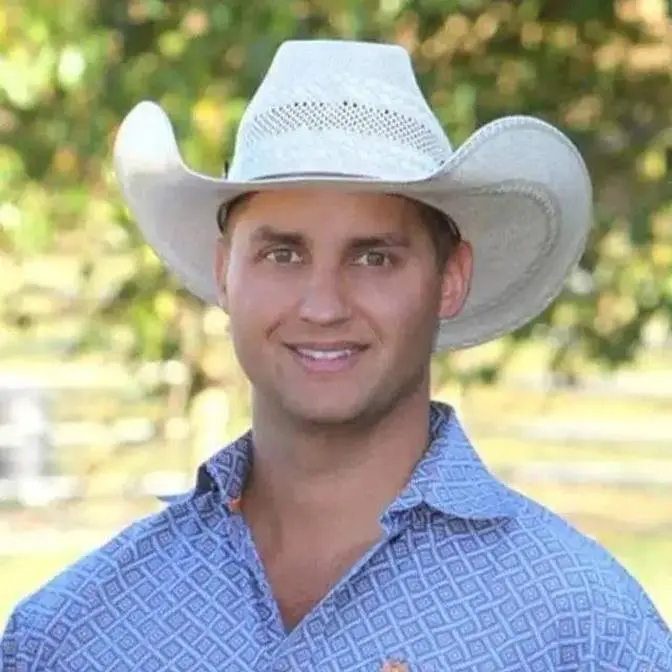
82 Video Views·Aug 12, 2025
In this video, I show an update of the horse that I sent off to training with Reining Champion Craig Johnson. If you want to ride with Craig Johnson at the Horseman's Symposium this year, the link to apply is below! Deadline is August 30th.
Application: https://docs.google.com/forms/d/e/1FAIpQLScmcsOD88KQTul4h_0DRaxN_Ym7U2AWuG9t6ACjqSIb4zEP9Q/viewform?usp=header
Patreon: https://www.patreon.com/ryanrosehorsemanship/
Equipment Ryan Uses: https://qualityhorseman.net
Promo Code: RR5
Website: https://rosehorsemanship.com/
Instagram: https://www.instagram.com/rosehorsemanship/
Facebook: https://www.facebook.com/rosehorsemanship/
Business inquiries: [email protected]
So, you guys aren't going to believe
this, but I actually sent my horse in
for training. Let's get into it.
>> If I do my ground work first, then as
soon as I step on, the horse is ready to
ride. But boy, was I getting ridiculed
from the performance, you know.
>> Okay, so a little backstory on this. Uh,
this is a horse named Queso. He's a
three-year-old that I bought as a
started 2-year-old, and he has about two
months of training. Okay, he has a lot
of potential for raining. And in my own
horsemanship journey, I'm wanting to get
better at raining. I have no desire to
compete in raining, okay? But I really
enjoy the raining maneuvers. And so I
like to play around with teaching horse
spins and slide stops and roll backs and
that sort of thing. And I find that very
fun. It's also very challenging to get
it to the level of of somebody like
Craig Johnson, who I sent this horse to.
Craig Johnson is an 18time world
champion, multi-million dollar reigning
horse trainer. He's he's doing a lot of
ranch trail, ranch riding stuff right
now. uh but he is a legend in the
industry and he's one of my mentors and
friends and so I'm uh super excited uh
for him to share with us today some of
the things he's working on with my horse
queso. So one of the things that I've
been working on with his groundwork
is um turning it into some things that I
can use a little bit more when I'm up
there. And one of the things that I
really focus on is how they shape their
body up while they're going around me. I
always look at it when I'm doing the
ground work. If I were up there, would I
like that? If not, I'm going to change
it from down here. Put some shape in it.
Play with their face a little bit so
they learn how to give. Watch their feet
and do the right thing with that. And
then it's mostly about the stop and the
turn. you know, I don't disengage
uh in my ground work, you know, because
for me that that disengage thing as I
advance them causes their front feet to
stop and their back feet to move. Well,
as we progress, they got to stop the
back feet and move the front feet. So,
we change things up just a little bit.
And I also am going to bump him right
where,
you know, right where I'm going to use
my leg instead of find a zone back there
to drive him at. You know, I'm just
going to use what I use when I'm up
there. So,
and your groundwork program is awesome,
obviously, but there's just a couple
little tweaks that I do that kind of get
them the idea of what I want them to do
when we start working at some next level
stuff about how they're going to use
their front feet, their back feet, the
shape, the softness. And when he's doing
it right, I kind of I like to keep my
hand right here at my belt buckle.
I might even
stick my hand in my thumb in my pocket.
That puts my hand behind his nose
rather than trying to lead him out here
like that. When I do that, he's supposed
to stop. All right. So, I don't send him
around like that. I get him going around
behind me and keep my hand back here.
Then, when it comes time to quit, it'll
be my idea, not his.
Cool.
All right. So,
and that wasn't perfect. He was He still
kind of stepped out behind, but what
what I'd like to have him do is just
stop with those back feet and wait with
front feet and decide what to do.
Generally, when I'm first starting it,
I'll make the full turn and we'll be
facing the same direction to stop him,
you know. But now he's kind of reading
the program a little bit. I don't have
to make that full turn. Off we go the
other way.
>> Do you like to use woe pretty much every
time you stop?
>> You know, I'm just now starting to use
woe on him. Uh I first teach him how to
stop,
right? And then start using woe. I I
learned that years ago from Ray Hunt.
We were doing a colt start thing and uh
came time to ride the colt and he said
go ahead and catch your colt and uh step
on and so my colt went by and I said
whoa and he didn't stop and he went by
and I said whoa and he didn't stop and I
said and about the third time Ray said
well how's that working for you well not
very good anyway he said stop him first
then say whoa and I've done that ever
since you know teach them how to stop
first
>> and then I can hook that word to
something they know how to do
>> that that makes sense
>> otherwise Guys, if I start saying woe
before they know how to stop,
in some ways you could turn woe into a
negative thing.
>> Yeah.
>> You know, they hear the word and then
think, "Oh my god, I know what comes
next." You know, so that word is
supposed to be a positive cue. It's a
reward.
I never use woe as a punishment.
>> Uh that's a great way to look at it.
[Music]
Okay. So, I'm going to kind of change
that here a little bit
just cuz he's still stepping out. So,
now I'm taking the left rain in my right
hand,
right rain in my left hand.
And the first thing I'm going to do is
pull here,
then send the front feet.
Notice as much as possible, I try to be
a swiveling post instead of walking
around with him
[Music]
there. Step the front end through. Go
again. So whenever one steps out behind,
I just hustle the front end.
Whoa.
hustle the front.
So, he's just learning stop the back,
move the front. Okay? And that will
relate as we get into the stopping
program of trying to do the, you know,
teach him how to do the wormy, but wormy
dog, you know, stop the back, move the
front. There's a lot of times when uh
you know I can be a little more
effective just clean it up on the ground
first instead of get up there and fight
with them. You know, I'd rather not have
a fight up there.
>> Yeah.
>> If I'm going to get through and maybe
fight's a bad word, but if we're going
to have a tussle, I want to do it from
down here where I have a little more
control of things and he can read me, he
can see me, and then I can get up there
and translate or transfer it.
>> Yeah. So you feel like if they have
resistance to pressure to what you're
asking or just in general, you'd rather
work through that on the ground more so
than just trying to teach a horse the
maneuver. You're trying to get through
the resistance.
>> Exactly.
>> Yeah.
>> Yeah. Exactly. You know, and whether
it's in the spin or the backup. A lot of
people, they'll sit up there and
struggle with the backup. And I can get,
you know, down here. Uh, and I have no
problem if while I'm riding one I think,
you know, I could step off and clean
this up in three minutes or I could be
up here for the next hour or two. You
know, as long as I can relate it to
something that I am trying to do from up
there. That's why I use the stick in the
rib cage, in the shoulder, in, you know,
wherever, whatever part I'm trying to
move.
>> And that way when I get up there and I
lay my foot in that spot, I should get
that response.
>> So, I was really interested to see that
he was doing ground work with him. I
did. I don't think I expected that. Now,
I know Craig is a fan of horsemanship
and doing ground work and that sort of
thing, but I didn't think with a horse
that's already riding that he would be
doing ground work. Um, at the same time,
it made a lot of sense to me that he
wants to get a feel for where the horse
is at and work through some of the
resistance that this particular horse
has. This horse is a pretty strong
willed horse. And um, when I first
started riding him, he he would really
kick out anytime the rider's leg came
on. He just had a lot of opposition
reflex to pressure. And I don't know if
that's more his personality or if it's
how he got started. I don't know. Um,
but he does have a lot of resistance in
there. Um, I've worked through a lot of
it, but I know that Craig is going to
challenge him to to level up. And, um,
it's, uh, for me, I'm finding it very
interesting what he's doing here.
>> You know, I get a lot of other benefit
by teaching the ground, you know, this
kind of ground stuff, you know,
especially the turn. I find it helpful
uh, just to even go in and clean his
stall and move him out of the way, you
know. I think it just makes a horse
safer to be around. Yeah, for sure.
>> They learn these drills.
>> Do you think that's unique to you or do
you think there's a lot of guys that are
that are doing the ground?
>> You know, I say that I remember uh and
it's worth talking about. I remember
when I first uh got involved in the
natural horsemanship and Pat, you know,
and and uh we became friends and I
started to try to figure out what they
were doing and he was showing me and
incorporating it and then tweaking it to
whatever work, you know, but I found
some obviously great stuff. But boy was
I getting ridiculed from the
performance, you know, cuz I'd go out
there at the rain and fraternity and I'd
do my ground work before I'd get on, you
know, and they go, "What are you doing?
Just step on that thing. Are you you
chicken?" You know?
>> Yeah.
>> Get on. You know, but I found some great
benefit um in that if I do my ground
work first, then as soon as I step on,
the horse is ready to ride.
>> Yeah.
>> And I don't like to step on one till
they're ready to ride anymore, you know.
And once they learn this drill, I can
step on usually within four or five
minutes. You know, doesn't take long,
you know. I don't lunge. I don't I don't
even have a lunge line. It's right here,
you know, is my ground work.
One of the ways I'm now that I'm up here
and trying to lighten up his rib cage a
little bit cuz he can be a little
numbsided as you know that before I
bump, I'm going to take my legs away.
All right. I'm going to do that first.
and then I'm going to bump. Okay. So,
instead of putting my legs on and
squeezing and trying to get him to go,
that actually creates a desensitizing.
And yet, if I take my legs away and then
bump,
then he'll start to realize
that I don't need to have my legs on all
the time. So, for me, I've got two rains
here and I'm using two hands.
But my inside rain is not the steering
rain. My inside rain creates softness,
position, and mental focus, but my
outside rain is always my steering rain.
And it's kind of a rainer thing. It's,
you know, we always say live or die by
the outside rain, you know, and uh so
we've got to because we are going to all
go one-handed at some point. That
outside rain is the most important rain
you've got, you know. So like here now I
don't even need the inside rain. He's
kind of got the idea.
But if I need it, I'll just bump it and
turn it loose
and hold him accountable for holding
that position.
[Music]
So this part of his circle, he's being
pretty good, but when he kind of leans
towards barn, he wants to drift that
way. So, of course, then I would let use
the outside rain, outside leg to keep
him from doing that.
But when he pushes against it, then I'm
just going to double him around and
disengage.
You know, I always say we got to quit
babysitting at some point. You know,
yeah, I could hold him on the circle I
want, but he's still leaving. You know,
if I've got to be there, he's still
leaving, right? But can I drop my hand
and totally leave him alone and he still
goes where I want him to? I, you know,
as you know, the truth always shows up
when you turn loose. So, if you want to
know the truth, turn loose, you know,
and then good luck. But until he can go
where I want him to without me being
there, what I'm going to do is
overcompensate the places that he leans.
Like, if he wants to go left, I'm going
to go right. If he wants to go right,
I'm going to go left. If he wants to
lean over there, I'm going to cut the
circle off. I'm going to create an
opposite anticipation. All right?
Because when he leans toward the barn or
he wants to leave that circle, that's
not a physical problem. That's a mental
problem. His brain left and he's taking
his feet with it. All right? So, I've
got to get his brain to think something
else. And so, I just take his brain and
put it over here instead of over there.
And then all of a sudden, he goes
through here. And and with repetition,
he's learned when I get to there, come
this way. All right. Now, all of a
sudden, he makes that decision to not
lean there. he wants to come here
instead. And then you just clean it up.
>> So, one of my biggest takeaways, which
it it never ceases to come back to me.
It's like peeling like layers of an
onion. So, I teach this as much or more
than anybody about giving a horse
responsibility, but then every time I
ride with Craig, he just shows me
another way uh more examples of how to
give a horse responsibility. And one of
the ones that I took away from this one
was not only being able to ride the
horse with your legs off and have that
horse maintaining forward movement, but
another one was um the way he was using
his reins. He wasn't like picking up
contact and just holding it the whole
time. He would pick it up and right away
release it and expect that horse to
maintain some levels of carriage. So,
he's starting to build that into the
horse where for me a lot of times I
would wait more towards the end of their
development before I start uh working on
self-carriage is what I would call it
where horses just holding themselves in
a frame. He's starting to pepper that in
as he goes right now. And um that's
definitely something I can a tool that I
can add to my toolbox and help my other
horses get better as well.
Remember I said that in everything I do
there's an approach. So, for example,
I'm getting ready to go to the right.
I'm going to set the position first,
then go to the right.
Now, I'm getting ready to go left. Set
position first, then go left. What a lot
of people will do
incorrectly is when they go to change
position or change directions or, you
know, go from a circle to a straight
line or to a different circle or just
steer around, they'll make the steer and
then try to correct the horse for the
mistake they made. Well, I set it up
first and then go make a good move. And
then the horse gets kind of a positive
attitude because I, as a driver, like
driving a car down the road, I know
there's a curve ahead. there's there was
a sign that said so, you know, so I
start to slow the car down. I get ready
for the curve, you know. I get them in a
position, then make the move. And that
way they learn a positive way because
what I want in the end is this thing
called duck on the water. And duck on
the water means that everything I want a
horse to do is under the water, just
like a duck going across the pond. You
know, the if you look at the duck, you
see nothing moving, but if you look
under the water, the feet are going like
crazy. So, the steering, speeding up,
slowing down, stop and turn, should all
be under the water with their feet.
Everything else above water, which is
about where my boots are, nothing should
happen there. Neck stays there, chin
stays there.
And like there, he left with his neck
soft, chin soft.
I think that every correction
that I would use, whether it's a steer
with the outside rain, take over with my
hands, change something, make a
transition, or something changes that
needs I've only got about one or two
seconds for that to work. All right?
And but what I try to do is teach them
how to respond correctly in that one or
two seconds and then leave them alone
and let them fill in the blanks until
it's time for me to do something else
and then leave them alone and let them
continually fill in the blanks till they
can fill it in further and a little more
and a little more. Right? But I've got
to put the tools in so that when I ask
for something in that one or two seconds
it happens, you know? So, we go through
the drills and the program showing them
how to get off the leg, how to get off
the foot, how to do those things
correctly and respond. Now, and I think
in my opinion, there's no such thing as
a correction.
What I view a correction as though is a
maneuver or a move made on purpose that
they already know.
>> Right? So, if I'm going to use this leg,
let's call it a correction. If I'm going
to lay that leg right there, and that's
a correction, I have to first teach him
what to do when I lay that leg there.
And then he understands, right? Because
I think a horse only has one or two
seconds to understand what it was I was
after anyway. After that, it's gone.
Because if you know, and I used to do it
all the time, I can always raise my
hand. I've made mistakes.
But, you know, I'd go to correct a
horse, but the tool wasn't in there. And
so, they resisted the correction. And
now I've got to end up correcting the
correction, and the original point is
gone, you know.
>> Yeah.
So they go through all these body
control maneuvers and steering and
speeding up and slowing down and we get
that timing right where when I lay the
leg they move over now and I pick up my
hand they give their chin now and they
you know so that then I can make that
adjustment because all I'm trying to do
get them to do is a different maneuver
that they already know instead of the
one they're doing. I'm just trying to
change their mind into something else
that they already know. Um, I I very
much get the responsiveness and that's
kind of a thing with him. Like that's
his personality. He's, you know, it's he
tends to be kind of dull and lazy and
and and
>> and then it's kind of like it's it's uh
your job to find resistance because if
you're not finding resistance, they're
not getting you're not challenging them
enough to get them better, right? But
was there anything that you felt riding
him that you're like you wished I hadn't
done that or something maybe that you
felt like I put in there or that should
shouldn't have been doing or should have
wished I would have put more emphasis on
something else. I appreciate you asking
that because and I don't know uh the
history of him, how long you've had him
and you know what all you did, what he
was doing before that, you know, who
knows. You know, I think horses are a
product of, you know, I call him a
yesterday animal. They only know what
they learn from all the yesterdays that
add up to right now. They He doesn't
even know there is a tomorrow. You know,
I figure what I show him today is
probably going to the results will be
tomorrow. Yeah. you know, for the most
part. But I've got to add in more
yesterdays, you know, and so that now he
knows this.
>> Yeah.
>> Now that said, is there anything you
did? The one thing I felt like on this
horse to me he he is whether it's his
tendency or whether it was created he is
overly desensitized.
>> You know went too far in causing him to
be nice to be or friendly to be around
which then in some in turn in my opinion
made him a little pushy.
>> Yeah. I think that a lot of times when
you take away
too much flight response, then you end
up having a horse that won't go
anywhere.
>> Mhm.
>> Now, if that's what you want, that's
great. But a lot of the maneuvers that
we make in whether it's the rating or
the cow horse, it's borderline a flight
response. You know, when they run down
there and stop and then crack and get
out of there in a roll back or
something, that's pushing a flight
response, you know. So, I think um you
know there's that delicate balance of
yes, you want them to be usable, but so
there's the two extremes. This horse
that you can't even lay a leg on, he's
going to learn I can lay the leg and I
can ride around with my legs on and just
get used to it, desensitize him. But
then there's the other extreme where the
horse could care less whether your legs
are on or not, you know, and then you
sit there begging the horse to go. But
that said, what I am trying to build
within, you know, the competitive
rainer, ranch horse, you know, whatever
the case might be, is a horse that has
more woe than go, but a delicate balance
of that.
>> Yeah.
>> You know, 60% wo, 40% go, which means,
yeah, I've got to start the motor. I've
got to get it going. All right. He's not
just leaving all the time.
>> All right. But that horse is 60% wo is
pretty easy to stop, too. You know, to
get there is my idea. the stop should be
his, you know, which means his brakes
are wired the whole way down through
there.
>> Yeah.
>> You know, just waiting for me to give
him the cube. To answer your question, I
don't know if I did or not, but you
know, he just felt like maybe he was a
little overly desensitized.
>> And I can't say you did it, but somebody
did. Or maybe it's just him.
>> So, I was actually really happy with
Craig's answer uh to this question. Um
because I I know that innately this
horse is very sticky and and has a
pretty strong stubborn streak and is
committed to his idea. So that didn't
surprise me at all. I think that is more
this horse's personality and maybe a
little bit how he got started. I was
more interested if there was something I
was doing wrong with some of the
exercises that I' had been doing with
him or maneuvers if you know if he
didn't like kind of how any of those
felt and those were all all checked out.
We're good to go. So I was really happy
to to hear that. But thank you very
much, Craig, for for showing them to me
and and showing what you've been doing.
>> Yeah,
>> appreciate it.
>> You're welcome. Enjoyed it.
>> Can't wait to see how he keeps going.
>> Yeah, good deal. Well, the thing I'd
like to present at the symposium is um
you know, how to read your horse and
recognize whether he's putting forth
some effort or not. And um you know, how
to get the effort, but do it correctly,
you know, without scaring your horse and
without, you know, creating more
problems. but also understanding that,
you know, there's certain things that we
are going to do as we ride uh that are
just going to come as instinct. It's
going to come naturally. And I think
this horse needs to, you know, all
horses need to get used to the things
I'm going to naturally do. I believe in
natural horsemanship, but there's
certain things I'm going to naturally
do, get used to it, you know, and so
we're going to talk a lot about that and
uh you know, how to make those things
work.
>> So, yeah, we have a greatunity to come
see Craig Johnson at the Horseman
Symposium. He's going to be presenting
both days. He's going to work with some
uh riders that are getting started and
he's going to work with some advanced
riders. Also, there's an opportunity for
six of you to ride with him that
weekend. So, if you guys are interested
in doing that, um I'll leave a link
below for the form that you need to fill
out. You do have to have a ticket to the
symposium to be there and uh we hope to
see you guys all there. We got about 50
tickets left and uh it's a great
opportunity. So, come check it out. So,
I just want to say a big thank you to
Craig Johnson. Um he's been I've just
learned so much from him over the years.
He's been a great mentor of mine and his
willingness to take take my horse in for
training um is a gift because he he
doesn't have to and uh he takes in a
very limited number of horses these days
and so I was just super happy to be able
to have the a door open to me and I just
want to say a big thank you to Craig for
for having me there.
>> Yeah.
>> So we can't wait to have Craig at the uh
2026 Oh jeez, my brain is not on this
right now. Yeah.
>> Yeah. One or the other.
>> All right. Luckily, I got a video
editor.