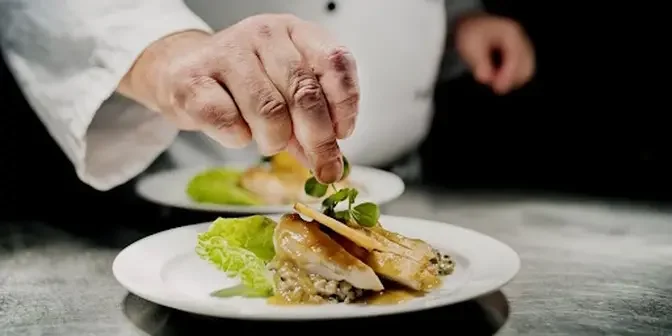
Caviar is often seen as a symbol of luxury, but its production raises ethical and ecological questions. Traditionally, harvesting sturgeon roe involves killing the fish—an especially problematic practice given that all 25 surviving sturgeon species are considered threatened. This report looks at a Swedish company, Arctic Roe of Scandinavia (AROS), which uses a non-lethal method to extract caviar by “milking” live sturgeon. The fish can survive multiple extractions, and the company claims this approach is more sustainable. However, the process is physically demanding for the animals, and recovery time is needed after each procedure. The report also touches on broader ecological efforts: Swedish limnologist Linnéa Jägrud is working to reintroduce sturgeon into the Göta älv river, where they had gone extinct due to human activity. Her work highlights the importance of biodiversity and the role sturgeon play in aquatic ecosystems. While some chefs embrace locally sourced, more ethically extracted caviar, others question whether the delicacy is necessary at all. The debate continues: Can caviar ever be truly sustainable—or ethical?
Comments are disabled for this video.
Caviar. To some, it's a taste of luxury. To others, it's an example of animal cruelty.
Harvesting caviar normally requires killing the fish.
Do we really need to eat caviar?
But might there be a bloodless way to produce the delicacy?
Caviar is the roe of the sturgeon, which has critically endangered the world over.
But now another method of caviar production promises to be more sustainable and ethical.
Epicurean delight and animal welfare need not be mutually exclusive.
Black caviar is the unfertilized roe of sturgeon.
And red caviar is the roe of salmon or trout.
The fish generally have to be killed to get at the roe.
The bigger, shinier and finer the individual eggs, the more expensive the product.
In southern Sweden, Arctic roe of Scandinavia, or Aros for short, produces the exclusive delicacy.
Nearly 2,000 Siberian sturgeon live in these tanks.
And the workers take a different approach to removing the roe.
We're not slaughtering our fish. That's the main difference between it.
We're keeping them alive. They are giving caviar multiple times, our fish.
We got fishes that are up to four times now that they've been giving caviar.
So that saves fish lives and sustainable caviar.
Each fish has a name. Harriet Tengner weighs in at 8.4 kilos.
She's due for milking today, as it's called at Aros.
This is done by massaging the roe out of the fish.
Tweezers help to open the female sturgeon's egg ducts.
The roe can make up as much as one third of the fish's body weight.
It can come due for the procedure about once every two years.
Do the fish experience pain?
The people at Aros have no doubt that their fish are living well.
But the milking is a rather arduous process, and the fish need some time to recover from it.
So this is our spa area, where we do keep our fishes after production.
They get to stay in a bit warmer water with added salt to stop any kind of infection.
It's like any childbirth.
The roe from these farmed sturgeon is made ready for consumption in the kitchen.
First, it's washed and rinsed in water twice, then dried.
At that stage, it looks like this.
It still has to be salted.
Three varieties are produced here.
The small-sized can starts at 640 Swedish crowns, or about 57 euros.
Co-founder Magnus Modalen sees another advantage to his company's caviar,
besides keeping the fish alive.
That is one very important issue, and it's getting more and more important.
The sustainability and also local, because to have local food is a bigger and bigger thing.
Just 100-some kilometres away, in southern Sweden's Småland region,
local produce is given priority, at least by those who can afford it.
PM & Venner is a bar, hotel, bakery and starred restaurant in one.
Head chef Anders Loring prefers to work with caviar from the region,
when, for instance, he garnishes a Japanese omelette in dill oil.
You can get top quality that is much more expensive,
and you can get some traditional quality that is more cheap.
This is in the middle, I think.
But it's not overpriced, not at all.
The caviar dish is one of the most often ordered items from the menu.
So, why do gourmets like caviar so much?
It's the taste, the flavours, the texture combined, and this very long taste.
In the gastronomy, we're always looking for long tasters.
Can the long taste of caviar really be had with a clean conscience?
Caviar farms are a far cry from the sturgeon's original natural habitat.
Europe's rivers once teemed with this migratory fish.
Today, all 25 surviving species of sturgeon are classified as threatened.
They have disappeared from Sweden completely.
Linnea Jägrud has plans to re-establish them.
She and her team are collaborating with German researchers to breed a new population
and release them into the Göta Elv river.
She's fascinated by sturgeons.
It can become 130 years old.
That's cool.
It can become four and a half metres and become very heavy as well.
Almost 500 kilograms.
That's a lot.
I find it very funny that they actually have a little bit of personality.
When we are handling them now, some of them are really...
Yeah, they're really divas.
They will...
Oh, I'm having...
I'm fainting.
And some of them are really tough ones, so that's cool.
They have a little bit of difference.
These fish are still young.
The research centre has cared for them since they hatched in July 2024.
Now they're ready for the wild.
First, they spend some time in this cage to get used to their new environment.
In two days, they're set free.
The aim of the reintroduction programme is to get a vital population of sturgeons
back into the river because they were once here and humans extirpated them.
So they are now extinct and we are trying to get it back.
And that is good because it's a piece of a puzzle in the ecosystem
that we can actively bring back, which will increase the biodiversity in the river
and it will also have a number of positive aspects on other species.
Linnea takes a critical view of farming sturgeon
for the production of an exclusive delicacy, even by sustainable methods.
I guess it's a step towards the right direction, yeah?
But it's still a fish egg that is not used as a fish, so it's still...
I mean, one can is still a number of fish eggs.
That's not a fish.
It would be actually better to have a fish that eat the fish.
But actually, do we need it?
Do we really need to eat caviar?
In the rivers or on the table, caviar remains controversial.
What do you think?
Can caviar be a truly sustainable delicacy?