
Is the Amazon hiding a Lost Civilization?
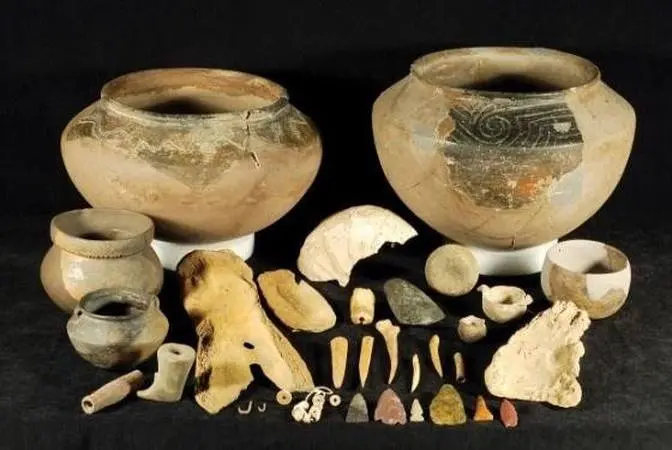
Aug 25, 2025 #Archaeology
#Archaeology#archaeological artifacts
Comments are disabled for this video.
For nearly 200 years, even the idea that an advanced or sophisticated civilization could
have emerged from within the heart of the Amazon was seen as completely impossible.
They said that the stories told by the Spanish explorers of 15-mile-long cities inhabited
by millions of people with huge stone walls and pyramids must have all been myths, fables
that the Spaniards made up to continue funding their expeditions.
But in May of 1925, the famous explorer Percy Fawcett set off into an almost entirely unexplored
region of the Amazon along the Xingu River.
He was warned about violent, cannibalistic tribes in this area, and he wrote a final
letter to his wife from Dead Horse Camp telling her that it may be up to two years before
she hears from him again.
The next day, Percy set off into the jungle and disappeared, never to be seen or heard
from again.
While Percy's expeditions drove over a hundred more ambitious explorers to follow in his
footsteps through the Amazon, the majority of which also disappeared in this deep wilderness,
his disappearance is largely seen as marking the end of the great Victorian explorers,
some even calling him the last of the great explorers.
Now when Percy disappeared, he was pretty much looked down on by the other aristocratic
members of the Royal Geographic Society who thought that he'd spent his life's search
in vain, and that finding an advanced or developed or sophisticated civilization in the heart
of the Amazon seemed impossible to most explorers and archaeologists of his time.
The Amazon was called by many of his contemporaries a counterfeit paradise, the green desert,
or the green hell, a place seemingly teeming with life, but only the deadliest kind, not
fit for sustaining any kind of significant human population, and especially not one built
by these quote-unquote primitive and savage people.
But these Victorian aristocrats were wrong.
The stories that the Spanish and Portuguese explorers had told 400 years earlier of massive
cities within the Amazon were not fables, it was all real.
Amazonians did build massive civilizations, including a city with an estimated population
of over 1 million people, that's the same size as ancient Rome.
These Amazonian cities were complete with highway systems, step pyramids, raised plazas,
sprawling geoglyphs, and astronomical observatories.
And in today's video I'm going to share with you why I firmly believe that the Amazon is
still hiding a lost civilization, or more likely, many different lost civilizations.
If you're still having a cup of coffee or cracking open an energy drink first thing
you wake up in the morning, you need to grow up.
Because for the first 90 minutes that you're awake, your adenosine system isn't even active
yet, which, long story short, means that caffeine is not as effective.
And that's why you find yourself needing a second dose of caffeine before you've even
gone to lunch.
What you need when you wake up in the morning are electrolytes, and that's why I've been
starting my mornings with Element.
Element is the best tasting, most effective electrolyte drink mix I've ever found, and
the lemonade salt is just to die for.
It's the perfect flavor for the summertime.
It's packed full of sodium, potassium, magnesium.
It has no sugar, and it helps boost your natural energy level.
When I take Element, even in the evening, I instantly notice a difference.
I have more energy, and I'm more alert.
I can't say enough about Element.
I love it, my wife loves it, and even my mom took some of it home with her.
And you can get some Element yourself and see why I love it so much by visiting
where Element is offering you guys a free gift sample pack, including their most popular
eight flavors with any purchase.
And Element is so confident that you'll love it that they have a no questions asked refund
policy, meaning that if for any reason you don't like it, they'll refund your money,
no questions asked.
So start your day off right, and notice the difference like I did by visiting
for a free sample pack, including their most popular eight flavors with any purchase.
And thank you to Element for sponsoring this video.
Now, back to the show.
So the Amazon rainforest expands approximately 7 million square kilometers and covers nearly
50% of the landmass of the entire continent of South America.
The rainforest itself is nearly the size of the United States, and it represents more
than half of the world's remaining tropical rainforests.
Most people probably aren't aware of just how treacherous exploring the Amazon really
is.
The dense jungle, impossible terrain, and lack of funding has led to less than 1% of
the Amazon being surveyed.
You have hostile wildlife, piranhas, jaguars, anacondas, electric eels, bullet ants, leaf
cutter ants.
I'm reminded of a story of when Percy Fawcett was on one of his expeditions, and in the
middle of the night, they heard a splash in the water, and they didn't hear anything coming
after that.
Now, typically, if you don't hear anybody calling for help, it's usually not a cause
for concern, as the Amazon is filled with all kinds of creatures, from small crocodiles
to large fish and sometimes even sharks.
And so usually, if you hear a splash in the water, it's usually just some kind of wildlife
falling in or jumping out of the water or something.
But then they wake up the next morning, and they find that one of their crew members,
the remains of his skeleton had washed ashore with only his boots remaining.
So apparently, he had gone out to relieve himself in the middle of the night over the
river, and he fell in, and the piranhas in the river had eaten him alive before he could
even come back to the surface to yell for help.
You have diseases and parasites, mosquitoes with malaria, leeches, bot flies, and quicksand.
And don't even get me started on the candiru.
Essentially, if you're in the Amazon, never, ever, ever use the restroom waist deep, because
there is a small little critter about yay big and about this big around that can swim
up your pipe, and it will enlodge itself, and it will never, ever leave.
And so you're essentially left with two options.
You allow your stomach to bloat and bloat and bloat until it fills up and you die from
the inside, or you cut off the part that the candiru has lodged itself in.
And there were actually explorers who were faced with this dilemma, all of which, as
far as I know, nobody opted for the cutting off option.
So they perished in the jungle.
Another story that I'm reminded of is the reality of small coral snakes.
Now, there's all kinds of super venomous snakes in the Amazon, but the coral snake can be
especially dangerous because it's so small, but if you get bitten by it, that's the end.
Teddy Roosevelt, while he was on his expedition through the Amazon in the early 1900s, one
of the local Peruvian indigenous people that he was with, one of his guides, was collecting
firewood for the camp at night, and beneath their logs was a curled up coral snake that
bit him on the finger.
And they had no option other than, Teddy Roosevelt describes this man going over to sit down
by a tree and his other indigenous friends going and sitting over him and performing
a mourning ceremony over him and crying over him, and they left him sitting underneath
that tree to die.
So the Amazon is extremely dangerous.
And that's not even mentioning the extreme weather.
Torrential rains can cause flash floods at night.
The heat can be well over 90 degrees Fahrenheit with 100% humidity.
This zaps your strength.
And while I have not experienced this in the Amazon, I have experienced it in Guatemala.
And let me tell you, it was the worst eight or nine days of my life.
I was so sick.
I was so tired.
The Guatemalan jungle, the humidity just completely zaps all the hydration from your body.
And getting water is already difficult.
I can't imagine what it was like 100 years ago when you're stuck out in the middle of
the Amazon and none of the fresh water is potable for you and all of it has to be cleaned
or boiled before you can consume it.
But I was so sick.
And the mosquitoes alone had torn up my arms.
It's probably impossible to see on camera, but my arms are completely scarred with mosquito
bites from Guatemala and the Peruvian Amazon when I went to go see Machu Picchu.
I was completely zapped of energy and there's absolutely no way that I could have done an
all day long expedition for months on end in the condition that I was in.
I was actually so sick that I was about 75% deaf in both ears.
It was quite alarming.
Then you have navigation difficulties.
Compasses spin in the wrong direction when standing over magnetic deposits in the ground.
And it's so far out in the wilderness that most GPSs probably aren't reliable.
And most maps for the regions that you're wanting to explore are outdated or are no
longer accurate as the landscape can change in just a few years in such a tumultuous environment.
And then you have limited resources.
Food and water is hard to come by.
Like I was saying a moment ago, the water is not potable.
So all of it has to be filtered, cleaned or boiled before it can be consumed.
And it's just really difficult.
Essentially impossible to filter or purify enough water to realistically sustain yourself
without getting sick in some awful way.
And then acquiring food is difficult because most of the plants in the Amazon have adapted
in this vicious environment and are not just orange trees and apple trees for you to go
pick and eat.
And then you have small game, which is plentiful in the Amazon.
But everything in the Amazon, again, has adapted to this extremely dangerous and deadly environment.
So all of the animal life, the small game that's there is completely stealthy and you
will never see them before they see you, which makes killing and hunting extremely difficult.
And finally, the most deadly thing in the Amazon, the very last thing you'd ever want
to come across is another person that you didn't expect to see in the Amazon.
You have illegal loggers.
You have drug traffickers.
You have semi-contacted or even worse, completely uncontacted tribes that still inhabit the
Amazon today.
And I can tell you all of those groups of people are not very kind to unwanted eyes
and outsiders walking onto their territory.
And many of these reasons are factors for why for the last 200 years, most experts have
believed that the concept of a highly developed, advanced, sophisticated civilization growing
from out of the Amazon was just basically impossible.
But what were these old stories that Percy had believed about ancient civilizations somewhere
in the unreached parts of the Amazon?
And what were the details that he and many other late explorers found so compelling?
Now, history books often cite Francisco de Oriana as being the first European to discover
the mouth of the Amazon River, but this isn't true.
Like so many figures throughout history, Vicente Yanez Pinzon has slipped through the cracks
of time and most people have never even heard his name.
But in the year 1500, 40 years before Oriana would be credited with the discovery of the
mouth of the Amazon, Pinzon was already at the mouth of the Amazon River and had already
seen the evidence of civilization along its banks.
No direct quotes from his log survive today, but later Spanish chroniclers tell us that
he observed the Amazonians, but they did not have the resources for an extended expedition
on foot or deep into the Amazon River.
But of course, we have Francisco de Oriana's legendary journey from the Pacific to the
Atlantic, navigating the entire length of the Amazon in 1541.
But it isn't from Oriana directly that we hear of what the men on the expedition saw,
but rather from a Dominican friar named Gaspar de Carvajal, who kept a record of the expedition.
In his journals, he says,
We came upon a very large settlement where there were many people and they came out to
meet us with their bows and arrows ready for war.
Riverside tribes farmed turtles and produced luxurious goods for unknown inland empires
with great skulls in their crafts.
We came upon a very large settlement where there were many people so numerous that they
filled the banks of the river and their houses stretched far along the shore.
The villages we saw were so great in number and size that they extended for leagues along
the river with houses closely set and many inhabitants.
We passed a town so large that it had more than 2,000 houses and the people came out
in canoes numbering in the thousands to oppose us.
The river was lined with settlements, some so populous that we marveled at their extent,
with fields and orchards stretching far inland.
We saw a city of such magnitude that its houses and streets seemed to rival those of Spain,
with people in great numbers living in order and abundance.
And for the next 100 years, more and more Europeans descended down into the Amazon River
as a result of colonizing South America's Atlantic coast.
They see more great cities with large buildings, houses, palaces, walls, and millions of people.
But by the early 1700s, something very strange was happening.
When expeditions were sent down the river,
none of the explorers or merchants saw cities of any kind,
only small temporary villages set up on the river's bank inhabited by skittish and sickly
looking people.
Before long, professional explorers and archaeologists would label the Amazon
a quote-unquote counterfeit paradise and a green desert,
completely lacking the resources needed to sustain the kind of civilization
that the Spaniard explorers described seeing.
Never again would any European claim having seen these large cities
that the Spanish and Portuguese once spoke of.
That is, except for a single document written by an unknown Portuguese explorer in 1753.
The explorer describes following a path through the Brazilian Amazon
which led to and past a waterfall and eventually to a large abandoned and gated city.
There is a large square in the middle of the city with an obelisk of black stone,
very notable, and in each corner of it is a spire in the style of the Romans.
Over the principal portico of the street,
there is an inscription of characters, which for not understanding, we could not copy.
On one side of the said square, there is a temple or principal church with statues,
and at its entrance, there is a figure of a man carved in stone
with a crown on his head and a bow in his hand.
The houses are of stone, well-worked, and some with roofs fallen in,
but many still standing showing great symmetry and order in their construction.
Beyond the city, there are fields that seem to have been cultivated
and roads paved with stones, leading to other places unknown to us.
And these documents were uncovered by none other than Percy Fawcett himself
while studying at the library of Rio de Janeiro in Brazil in 1914.
Now, Percy Fawcett, when he first arrived in the Amazon, was in the year 1906,
and he was working on behalf of the British Royal Geographic Society,
and he was attempting to map the border around Brazil and,
quite frankly, possibly working as a spy for the British.
But during this very first expedition,
he began seeing artifacts and pieces of pottery that didn't really make sense
and seemed to go against the, as he said,
narrow-minded convictions and preconceived notions about the Amazonian world
that the British had essentially handed over to him.
And he began hearing stories of these ancient, lost, grand cities and civilizations
that still existed somewhere in the farthest reaches of the Amazon.
And during this initial expedition, he became obsessed with this idea.
And it was also the discovery of a small obsidian,
transparent, almost glowing black stone statue
that he knew somewhere far off in this wilderness existed,
or once existed, a lost ancient civilization.
And while Percy knew that he was not actually looking for the exact same city
that was described in manuscript 512,
he used it as fuel or as evidence that this concept
of many different grand lost cities in the Amazon
or civilizations in the Amazon was probably true,
and that his expeditions were a worthwhile pursuit,
and that to find this lost city could completely rewrite world history
and change our perspective of indigenous Amazonian people
and South America as a whole.
And as an anthropologist who's incredibly invested
in the pre-Columbian world of Central, South, and North America,
I think that Percy Fawcett's motive and that his reasoning
and that his pursuits were completely justified.
And to a certain extent, he was exactly right.
Because even when I study pre-Columbian Andean civilization,
I can see the influence of an otherwise unknown
and as of yet undetected presence somewhere in the Amazon
that trickles into the Andean world and influences a city called Chavin de Huantar,
which in some ways is considered the mother culture of the Andean world.
And I think that the mother culture of Chavin is a civilization
that is thus yet unidentified somewhere off in the Amazon.
So Chavin de Huantar grows up somewhere around 1000 BC,
high up into the Andes.
And this is actually a band of people that come from the Keralsupe civilization,
which is on the coast of Peru.
Keralsupe was a pre-pottery, possibly even pre-religious, pre-art civilization.
And they were constantly getting hit by these cataclysmic,
apocalyptic tropical storms called El Niños and La Niñas.
And after many, many generations,
they decided to drop everything and flee up into the Andes
to have their civilization actually be preserved
and not be continuously destroyed by these tropical storms.
And it's right when they get to the Andes
that we know that they come into contact with Amazonians.
All of a sudden, we see these Keralsupe people.
We can follow their DNA sequences all the way up to Chavin
because we have burials going from one site to the other and back.
And we know that as soon as they establish Chavin de Huantar,
they are immediately coming into contact with the Amazonians.
They're producing pottery.
They have painted artwork.
They have what we consider some kind of religious pantheon
or like a shamanic religious tradition going on here.
And all of this can be traced to other pottery
that we have found just to the east, scattered throughout the Amazon.
Now, a piece of religious iconography that Chavin adopts
and that for a long time, they thought that Chavin invented,
but they certainly did not.
This comes from the Amazon, is this idea of a werejaguar.
I've spoken about this so much.
I even talked on the Joe Rogan experience about this.
This is one of the most infatuating things for me
with the pre-Columbian Americas
because it may be the first instance of monotheism in the Americas
long before the conquistadors tried to introduce Christianity.
But as Chavin de Huantar, we see these figures
that are anthropomorphic jaguars.
So they're jaguars with a human body
or they're humans that have fangs coming out of their mouth.
And on the eastern side of the temple at Chavin,
on the wall, there are what we call tenon heads,
which is a statued head that has a stone tenon on the back
and it can be slid into the wall.
And only on the east wall facing out towards the Amazon
are these tenon heads.
Now, today you can see a lot of these heads
in the Larco Museum in modern day Lima, Peru,
but they're facing out towards the Amazon.
So what I think it is, it is the people of Chavin
somehow honoring this feline deity,
this were-jaguar being or these were-jaguar people
and acknowledging them by looking out towards the Amazon.
And just as you study more and more Chavin
and you study the contemporary Amazonian cultures
of which we found some bits of pottery
but not really found the exact location
of where all of this artwork comes from,
you can see that Andean civilization
is actually being influenced by the Amazon.
And to me, the more I look into Andean civilization,
Amazonian civilization, ancient Ecuador and Colombia,
the more it becomes obvious to me
that the origin of South American civilization,
religion, iconography, artwork and pottery
must be coming from the Amazon.
And in fact, I believe it's Teddy Roosevelt's granddaughter
who discovered an archeological site
on the Southeastern coast of South America
that is about 20,000 years old
that has early, early, early,
very primitive pieces of pottery
in a place that we would have never expected.
So actually, some of the earliest evidence
that we have for habitation
going back 20,000 years in South America
is on the Southeast side of Brazil
on completely the opposite side of the continent
where we would expect to find
this early evidence of habitation.
And then we have LiDAR scans
that have come out in just the last decade
that utterly and completely vilify
Percy Fawcett's ideas about these lost civilizations.
And one was actually just along the Xingu River
called Kiriguyu.
And it had an estimated population
of over 1 million people.
And like I said earlier,
that's about the size of the height of ancient Rome.
Absolutely, completely gargantuan sized city
complete with step pyramids, terraces, plazas,
long highways stretching off
into the far distance in the Amazon.
And it was exactly near the Mato Grosso region
where Percy Fawcett told his wife
that he expected he would find a lost city.
When he set out into the area,
he was never heard from again.
And it's my belief that these lost,
ancient South American cities of gold
that were told to the Spaniards
and later perpetuated by the Spaniards,
these were not myths.
These were not fables.
These were real cities that actually existed.
It wasn't just one city.
It was many different cities.
And that's why you hear this idea thrown around
that the Native Americans were lying to the Spaniards
saying, oh, oh, yeah, yeah, yeah.
That city of gold you're looking for,
it's just beyond the horizon.
And then when they get over there
and meet that native civilization,
they say, oh yeah, it's just a little bit further,
just beyond that horizon.
You'll see it, you'll see it.
And then they're being pointed all over South America,
never actually finding these cities.
I don't think it's because the Indians
were lying to the Spaniards.
I think it's because there were so many
of these civilizations that had risen
and fallen in ancient times
and risen and fallen before Columbus
and the Spaniards even arrived in the Americas
that these legends of these great grand cities
were just floating and permeating throughout the Amazon
and throughout South America as a whole.
And they existed everywhere.
We have all of the evidence
of many different goldsmithing civilizations
all throughout the Andes.
And we know that gold was coming out of the Amazon as well.
And today, as you're walking through the Amazon,
you will reach what are sort of like gardens
that just appear
where you were just walking through a large track of land.
And then all of a sudden you hit a garden
with this deep, rich, black soil that we call terra preta.
And somehow, someway,
in this early primordial period in the Amazon,
ancient Amazonians invented a type of soil
that just completely blooms these gardens
in the middle of the Amazon.
And we have absolutely no idea
or any evidence of just how long ago this happened.
But I would say this is well over 10,000 years ago,
possibly pushing up to 20,000 years ago,
the ancient Amazonians were doing this.
So it's my personal bias, my personal opinion
that the origin of religion, artwork,
and civilization in South America
probably comes from somewhere deep within the Amazon
in an unknown and unexplored region
that hopefully someday as LIDAR technology
and other technologies in the archeological field progress,
maybe one day we will find the origin of civilization
in South America.
I'm Luke Caverns.
If you'd like more videos
on the history and mysteries of the old world,
well, please like and subscribe for more.