
Scientists Say This Ancient Indian Temple Is NON-HUMAN! You will be shocked...
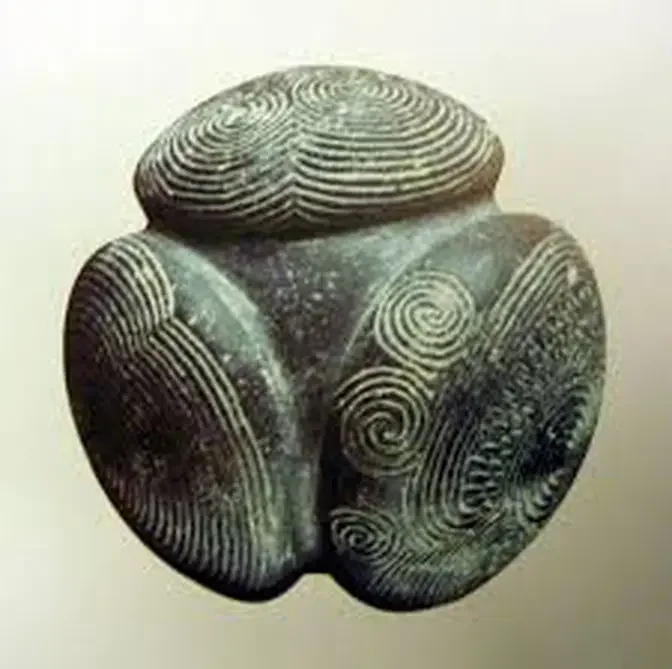
This is it. This is enough to convince me that India was a technologically advanced civilization.
You cannot deny it, it's just impossible. They found this temple in Maharashtra that blew their
minds. For thousands of years, we in the West had thought that the pyramids were the most
marvelous structures from distant antiquity. But ancient India completely shatters that thinking.
You just have to witness the sheer brilliance of those structures.
One thing is clear, it is non-human. Or if these were made by humans,
then historians have a totally wrong picture of what they were like. They were more advanced than
us. Deep in the rugged landscape of Maharashtra, India, stands a temple so extraordinary that even
modern architects struggle to explain its creation, the Kailasa Temple of Ellora.
Carved from a single gigantic rock, this 8th century marvel is not built. It is excavated
downward. The sheer audacity of its construction defies logic. Thousands of tons of solid basalt
rock were removed with such surgical precision that the temple's spires, pillars, and sculptures
remain perfectly aligned after more than a millennium. The mystery that surrounds it
is not just about artistry, it's about technology. What kind of knowledge, what kind of tools could
have made something so vast, so perfect, in an era we call ancient? Imagine this,
modern engineers equipped with laser-guided instruments and diamond-tipped drills
would find it nearly impossible to replicate Kailasa's complexity today. Yet legend tells us
that ancient Indian builders achieved it in just 18 years, a time frame that by every
conventional standard is impossible. To carve an entire multi-storied temple from the top down,
removing an estimated 400,000 tons of rock, with symmetry so precise that light filters
through its corridors exactly as intended, hints at something more than hammer and chisel.
It hints at an ancient technology, powerful, precise, and utterly forgotten.
The deeper one looks, the stranger it gets. The Kailasa temple isn't just a structure,
it's an engineering riddle. The builders carved directly into volcanic basalt,
one of the hardest stones on earth. There are no signs of scaffolding, no evidence of
incremental construction. Instead, everything, the columns, the corridors, the stairways,
even the intricate carvings of elephants and deities, was created seamlessly as one continuous
piece. It's as if someone had printed it from solid rock. In the modern age, that would require
advanced 3D modeling, precise measurements, and machinery capable of cutting through stone
with unerring accuracy. But in the 700 CE, that's a different story altogether. Ancient
Indian texts speak of vimanas, flying machines, vajra, weapons that could strike with lightning,
and yantras, devices capable of astonishing feats. These accounts, long dismissed as myth,
begin to sound eerily plausible when seen through the lens of the Kailasa temple.
Could it be that the temple was built with a lost form of energy manipulation,
something akin to sonic or vibrational technology? There are modern studies suggesting that certain
frequencies can weaken stone bonds at a molecular level, allowing it to be shaped more easily.
Could the ancients have known this secret? One theory whispers that the architects of Kailasa
may have harnessed sound or resonance to carve stone, an art that was once widespread but has
vanished from memory. Across India, there are hints, temples that sing when struck,
pillars that emit musical notes, and ancient Sanskrit manuals describing sound-based tools.
If one connects these dots, Kailasa might not be a miracle of manpower, it might be evidence
of an advanced, now lost science. But there's more, something unsettling. The precision of
Kailasa's geometry suggests a mastery of mathematics and design that rivals modern CAD systems.
Every pillar aligns perfectly, the floor levels follow exact proportions, and the central shrine
aligns astronomically with celestial points. These are not accidents of artistry, they are
the fingerprints of a civilization that understood cosmic order and translated it into architecture.
The builders of Kailasa were not merely stone cutters, they were scientists, engineers,
and astronomers wrapped in the robes of priests. What's even more intriguing is that there is no
record of how it was built, no inscription, no blueprint, no royal decree boasting of its
construction, nothing. For a project of such scale, silence is suspicious. Ancient kings recorded even
their smallest achievements, yet this monumental task was left unmentioned. Why? Were the methods
too sacred to document, or were they simply beyond ordinary comprehension? Some historians speculate
that knowledge was kept hidden, guarded by select initiates who possessed what might be described as
technology beyond time. Consider also the possibility that Kailasa was not merely a temple,
but a form of energy structure, a resonant engine of sorts. Ancient Indian architects
followed principles known as vastu shastra, where geometry, magnetism, and cosmic flow
were as important as aesthetics. Kailasa's central dome and surrounding courtyards create acoustic
patterns that amplify sound in precise ways. When mantras or chants are recited within its sanctum,
the vibrations seem to multiply as though the temple itself participates in the sound.
Could it be that this entire structure was designed to channel and harness vibrational energy,
a kind of ancient energy field generator cloaked in religious purpose? Archaeologists still scratch
their heads, engineers marvel, yet cannot explain. Some suggest armies of workers with primitive
tools, others hint at divine intervention. But both explanations feel incomplete. The temple
exists, tangible, measurable, and yet unexplainable. Every groove of stone, every flawless arch,
seems to mock our modern sense of technological superiority. Perhaps then Kailasa stands as more
than a temple. Perhaps it is a message, carved in rock, waiting to be decoded. A message that says,
once upon a time, long before the rise of modern science, humanity possessed knowledge that could
bend stone, shape geometry with cosmic precision, and turn faith into engineering. A knowledge that
fused spirituality and science so seamlessly that it left behind a monument which we, in our advanced
age, still cannot fully comprehend. As you stand before the towering spires of the Kailasa temple,
you can almost feel it, that hum beneath the silence, that echo from another age. It's as
if the stones themselves are whispering, we were not primitive, we were powerful. And perhaps,
hidden beneath centuries of dust and disbelief, the true story of ancient India's lost technologies
still waits, patient, eternal, carved into the heart of stone.