
Majestic Hermanus Whales: South Africa's Spectacular Ocean Giants.
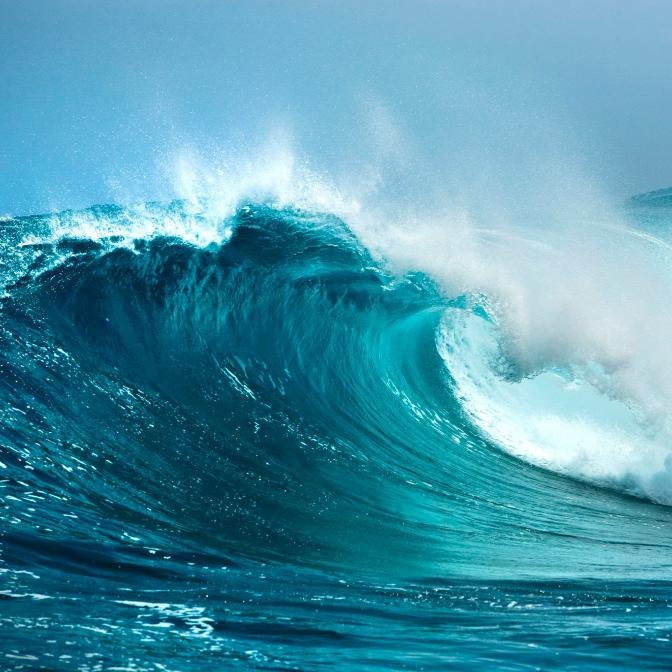
#SouthAfrica #OceanGiants #Whales
SOUTHERN RIGHT CHARTERS
Experience the breathtaking wonder of the Hermanus whales in South Africa! Known as the whale-watching capital of the world, Hermanus offers stunning views of majestic southern right whales as they migrate to the shores for mating and calving. From land-based lookouts to boat tours, witness these gentle giants breaching, tail-slapping, and playing in the waves. Learn about their fascinating behavior, the rich marine ecosystem, and why this coastal town is a must-visit destination for nature lovers. Don’t miss the magic of whale season in Hermanus!!!
South Africa, its southern coast is the destination of the Southern Rite whales
returning from their annual migration. From the west coast around the Cape Peninsula
to Hermanus and the southernmost tip of Africa and from there all the way up to Port Elizabeth
the Southern Rites can be seen coming home. One of the most beautiful and picturesque of
all these places has to be Hermanus. Renowned as the whale watching capital of the world,
Hermanus is located along a vast expanse of cliffs and beaches with its sandy shallow
coastline being the ideal location for the whales to mate, carve and race. From these cliffs and the
well-known cliff path that traverses the town for almost 12 kilometers, whale watchers have an
almost uninterrupted view of the bay and the whales below. The whales start to arrive around
early June, taking up residence along our coast until late November. Hermanus also offers
year-round experiences in the form of a lively village square, country markets, award-winning
wine farms, blue flag beaches and a range of other activities, all surrounded by breathtaking
mountains and oceanic views. Hermanus is also well catered for boat-based whale watching with
the new harbour at the edge of town offering whale watching trips on a daily basis from June until
November. My name is Leslie, I'm from Eastern Cape but I've been here for 13 years working for Southern
Rites Charters but I'm working on the boat now for seven years as a marine motorman which they
call engineer. My name is Sam, I've been working on Southern Rites Charters for five years working
as a crew doing whale watching.
June is usually the time when nature lovers celebrate the great whale's arrival home
from their annual migration to the sub-antarctic where they go to feed on the minuscule krill and
plankton that make up the diet of these massive mammals. Well nourished and weighing around 45
tons on average, the whales make their way individually or in pairs swimming back to
their winter home along the Cape whale coast where they will rest, mate or give birth. In the early
1900s these whales were hunted to almost extinction, gaining their name from being found in
the southern ocean and being the right whale to hunt. This was due to a few factors, namely their
slow lethargic swimming, undeterring curiosity of vessels, them being close to shore and the fact
that they floated when dead. This made them the southern right whale to hunt. As they begin to
arrive in the shallow waters around Walker Bay, the Southern Rites can easily be identified by
their very distinct v-shaped glows. This is one of the best ways to spot a Southern Rite as even
their 15 meter length can sometimes go unnoticed on the surface of the ocean. Another distinctive
characteristic is their facial callosity patterns that are as unique as our fingerprints. These
callosities are found on the head of the Southern Rites and are made up of calloused skin, whale
lice and other smaller bacteria. Often the arriving lone whales will gather together as a
sociable catch-up is required after their long journey. Unfortunately we can't hear what they
have to say as the vocals of Southern Rite whales are very deep and unelaborated in comparison to
other whales. Science tells us they make groans and belches which are inaudible to us without
specific equipment, so we just sit on the surface and watch.
From the time the Southern Rites arrive you stand a good chance of witnessing some impressive
behavior as they play and cavort as if knowingly entertaining us all.
Sailing is a rare sight. A whale will hold its tail high up in the air for a prolonged period
of time, often for 10 minutes or more, sometimes even pirouetting and showing off every angle of
its sculpted tail. Breaching is a firm favorite with the whales showing an impressive amount of
strength as it thrusts almost its entire heavy body out of the water. As the whale
crashes back into the sea the sound can be heard kilometers away. Most believe that breaching is
used as a form of above water communication but there are also theories that it's to remove some
of the irritation caused by whale lice. Others believe it's for the sole purpose of enjoyment.
As they're known for breaching repeatedly in a short space of time it's suggested that
onlookers keep a keen eye open to hopefully catch these magnificent giants breaching again.
Lobtailing is another action with an impressive sound effect
and a similar theory behind its use. It is caused by their massive tails slapping down
rhythmically onto the surface of the water. Their tails can grow up to seven meters in length
making the reverberation above and below water travel for kilometers. Thin slapping is a less
energetic form of lobtailing where a whale lies on its side with a fin up in the air
and smashes it down onto the water surface over and over again.
Spy hopping is when the whales watch us while we watch them raising their entire heads out
of the water to have a look around. Due to the southern right's monocular vision meaning they
see a different picture from each of their eyes this technique helps them to get a better idea
of their surroundings. There's a beautiful photograph known as a spy hop when they lift
their heads out of the water. At this close range you'll notice that their eyes are tiny in
comparison to the rest of their bodies. However, although this would usually indicate that they
have poor eyesight, whales have fantastic vision both above and below water. During the months of
June, July and August another beautiful whale passes through the Cape Whale coast along its
migratory route to the warmer waters of the Indian Ocean. The humpback whale also known as the
singing whale due to its harmonic call is both faster and more agile than its cousin weighing
in at around 15 tons a full 30 times lighter than the southern rights. Migrating in loose large
groups these magnificent whales can be seen coming into Walker Bay for a brief rest during their trip
even treating onlookers to a spectacular and energetic display of their capabilities.
Swimming at considerable speeds and aided by their long pectoral fins and tails
humpbacks are capable of propelling their entire bodies out of the water whilst turning slowly
and falling back into the ocean surface similar to that of the southern rights.
I've been seeing three species of whales which called a humpback southern right whale
and a bright whale but my favourite whale is the humpback whale. When the humpback breach
the whole body you just get visible out of the water the whole body. Due to their lighter build
humpbacks are also able to breach play and swim for longer periods of time making for a memorable
performance. Apart from relaxing southern rights also come to our shores to either carve or conceive
calves. Southern right mating groups can be seen from early July until late October with as many
as 15 whales gathering during the event. Within these energetic groups there are generally only
one or two females whilst the remainder are males vying for their attention and the chance
to successfully fertilize the female. This mating period is also known as a sperm competition
as each male tries to flush their predecessor's sperm from the female and replace it with his own.
As can be imagined this amount of activity can be tiring to the females as they wait for the
right amount of suitors to arrive which usually leads to her playing hard to get.
Turning over to reveal her stomach or even using a nearby vessel as a distraction
the female will try any manoeuvre to get away from the ball of testosterone following her.
Once the female is satisfied with her group of suitors she will allow them to mate with her
which is as non-aggressive as the southern rights are. The males will caress and coddle the female
to make her more comfortable even stroking her back with their fins. Between the males
there is also no aggression as they push shove and roll around for hours on end.
With all of this excitement the whales can become even more active
treating onlookers to an awe-inspiring show.
Once all the males have tried their luck with the female they will leave to find another
with the mummy-to-be not having the foggiest idea.
Southern right whales are extremely friendly and curious. This combined with their love for
shallow waters made them the right whale to hunt in the past lending to their name.
Thankfully the hunting of these gentle giants has now been disbanded
and the whales numbers have started to gradually increase.
It seems that even though they've endured the traumatic experience of being hunted to near
extinction these whales have not lost their curiosity oftentimes approaching vessels
and using their keen eyesight to take a look around. It's not uncommon to find boats stranded
amongst inquisitive whales while they explore at their leisure. My favourite whale is a southern
right whale because of the southern right whale is friendly to the people sometimes when we stop
want to see the southern right whale normally it come close to us so that you can see it nicely.
Due to their impressive eyesight they have also been known to inspect underwater cameras at close
proximity seemingly unfazed but curious about these unfamiliar objects so close to them.
During the whale season the national phenomenon known worldwide as the sardine run is also underway.
Some of nature's most beautiful creations can be seen right here on Hermannus's doorstep
during this time. Birdlife, dolphins and the resident Brutus whales another species of whale
that is much more elusive and less active than its cousin appear to feed on the massive shoals
of fish along the coast. You never know what you're going to see at the sea. You see whales,
you see some seals, you see dolphins, the birds, all marine life. It's what I like to be at sea.
The indigenous Cape fur seals and African penguins also known as jackass penguins due to their call
take full advantage of the run flocking to the coast to enjoy the speeding frenzy.
Among the less spotted animals the odd-looking and shy molar molar sunfish makes an appearance
as do hammerhead sharks and rays. Finally there are the dolphins swarming together
in massive feeding groups that turn the waters white. The two main species of dolphin found
along the coast are the bottlenose dolphins whose silver blue bodies are almost perfectly
camouflaged with the water and the common dolphins whose body is split between a blue grey
and yellow belly. Both species are highly active and take full advantage to play with passing vessels.
During all of this activity new life is not only being created but is also being brought into the
world as the expecting southern right mothers give birth to their calves. A southern right female
will carry her calf for around 12 months before giving birth in the same place that she conceived.
This gives the expecting mother time to return to the sub-antarctic to feed and gain the strength
needed to care for her calf during its first year of life. Once a single calf is born she will look
after and care for it as it grows and becomes strong enough to make the journey back to the
sub-antarctic a few months later. Once there the calf will be weaned off of its mother's milk
and start its own way through the ocean. A newborn calf can weigh up to one ton and measure anywhere
between four and six meters in length. While suckling the calf will drink from their mother
several times a day helping it to gain the strength and size that it will need for the
journey back to their feeding grounds. During this time the calf can grow at an astounding rate
of around two centimeters a day. As soon as they're born they need to start exercising their
floppy tails which consists entirely of muscle tissue. Swimming and copying their mother helps
them to learn the basics but it takes a while before they start to get the knack of their
powerful little tails. Southern Rites make excellent mothers with a near perfect record
for the survival of their calves. During their year together the two are inseparable and watching
a calf practicing its swimming skills alongside its ever-patient mother is one of the most
rewarding pastimes. Since hunting of the Southern Rites was banned in 1935
their numbers have grown to over 7 000 along our coast alone. Worldwide their numbers are somewhere
in the 18 000 with groups taking up winter residence along the coasts of South America,
Australia, New Zealand and South Africa. During the last few weeks of the whale season
humpbacks can once again be seen along the Cape Whale coast
as they make their way back to the sub-antarctic with their newborns in tow.
My favorite memory is there's another day we saw a Southern Rite whale with a humpback going
together so that was more interesting for me. By early December even the last of the mothers and
calves have left the bay with the newborns depending entirely on the nourishment and guidance.
Reflecting on all that happens during these months with the Southern Rites
we can't help but sit back in awe and appreciation for the vast expanse of life that our oceans
offer and the wonder of the circle of life right on our doorstep. This stunning example of the
cycle of life is a privilege to see in this natural and almost untouched environment.
It is therefore up to us to respect and care for these beautiful creatures
and the planet that keeps us all.