
New Viltrox 50mm F 1 4 Pro Full Frame Lens Review Game Changer
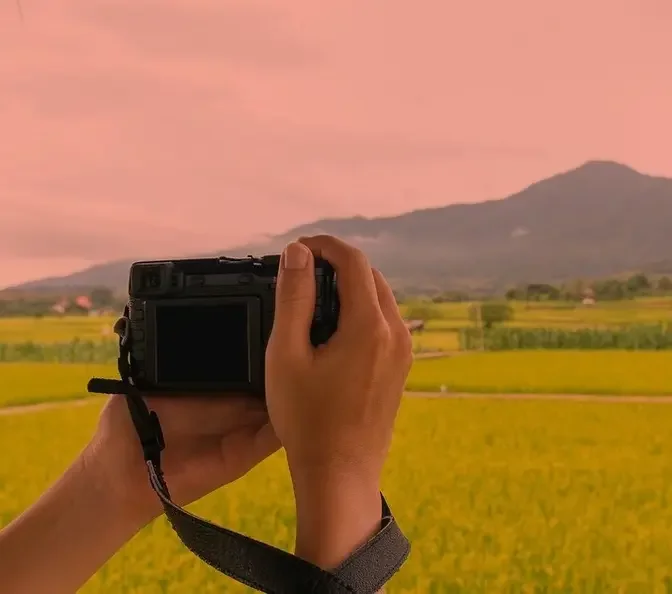
#PhotoCamera, #LandscapePhotography, #PhotographyExpert, #NatureShots, #ScenicViews, #OutdoorPhotography, #CameraGear, #LandscapeExpert, #TravelPhotography, #WideAngleShots, #PhotographySkills, #NaturalBeauty, #CameraTips, #PhotographyMastery, #LandscapeLovers
There's one focal length that should be in everyone's camera toolkit and that is 50mm.
However, there's so many 50mm out there, but today I have a very unique one.
This is Viltrox 50mm 1.4 Pro line and I'm going to test this out with my friend.
His name is Aaron and he's a professional photographer.
He's also got a channel named The Leiden Academy.
That's right.
So he's going to take some photos and tell me his first thoughts about this lens.
All right, so we just took a bunch of photos.
This is Aaron's first time, well, semi first time using Sony also,
but let me know what you think, man.
Okay, so the...
Hey, how's it going? Really good to see you here today.
All right, so I'm going to get straight to the point in terms of the uniqueness I just mentioned.
This lens right here is $549 starting.
What?
I thought it was going to be at least the same price as their 85mm Pro series, but no,
this is $549 and this is hard to get, but I did ask Viltrox for a coupon code for you guys.
So that's in the description below.
So if you apply that, this is going to be less than $549 for this kind of image.
Yeah, this video is done, guys.
See ya.
Just kidding.
There are plenty more unique things about this lens, keeping that price in mind.
So we're going to go over all of those.
In fact, in this video, I'm going to be showing you lots of real life examples.
So end of September into October, it's been a very, very busy season.
In case you guys didn't know, I officially second shoot for Vu from Envu Films.
And we just shot four weddings, one of them being two days long and another one being in Hawaii.
The intro you just saw, that's from Maui, Hawaii.
Aaron actually is local there.
So I'll show you a couple charts about this lens,
but most of the shots I'm going to show you are going to be from those weddings.
And I'm going to share my experience of using that for I don't know how many hours, days.
And yes, this is a Sony full frame E-mount lens,
but as usual, Viltrox is going to release a Z-mount pretty soon.
And hopefully L-mount lens because now the L-mount alliance is happening for Viltrox.
I'm very excited about that.
But optically, it should be very similar to this.
Now, when it comes to Sony full frame 50 millimeter, it is a very crowded space.
In fact, I would actually toss two of them out right away.
So the 50 millimeter 1.8.
Yeah, that really loud autofocus noise.
Focus not great.
All motor.
Toss that one out.
There's a Zeiss one.
That one's I think coming up on almost like 10 years.
Yeah, that's an old lens with old technology in terms of autofocus.
You can toss that one out.
But when it comes to Sony G Master 1.4,
that is going to be the gold standard in terms of 50 millimeters.
So I have some footage on that.
I did a whole entire little challenge of filming entire wedding just using that lens.
If you want to check that video out, it's going to be right here.
But I ended up with this lens right here.
So this is the Sigma DG DM 50 millimeter 1.2 aperture.
This is a beast of a lens.
Now, this is also a little over $1,500.
So it's not really a fair comparison.
But because this lens is so unique,
I want to do some comparison with this lens since I have it.
And as a disclaimer, yes,
Viltrox did send this lens for me to test.
However, this is not a sponsored video.
In fact, I reject all sponsored video for reviews,
especially because I like talking about gears in terms of pros and cons.
And this lens is no exception.
There's some limitation with this.
You should definitely be aware of.
But first, I want to give you some context in terms of build qualities.
And things you can't really tell from the pictures.
Now, I'll get to the first con of this lens right away.
And that is going to be the size and weight of this.
Depending on who you ask.
If I took this to a Canon photographer, a wedding photographer with 1DX.
And I say, hey, this is a new 50 millimeter 1.4.
Check it out.
And she'd be like, oh, wow, it's so light.
That is not the case if you give it to Sony users.
Yes, we're a little bit more spoiled.
So Viltrox is saying that this is approximately 800 grams.
I don't know why they say approximately.
So I have a feeling this might be slightly lighter.
Because they tend to do that.
So I'm going to go ahead and take the cap off.
And the bottom cap off.
And let's find out.
All right.
This is my trusty fooscale, which is no longer a fooscale, obviously, anymore.
And it is whole.
It is heavier than 800 grams.
OK, now it makes sense why they said approximately.
This is 809 grams.
And to compare to this Sigma 1.2 50 millimeter.
This is going to be lighter, isn't it?
Oh, wow.
737 grams.
So it is heavier than this lens.
But still, both of these are within gimbalable specs.
Now, this is the gimbal I'm using.
This is Zhiyun Crane 4, which is perfect about the size and the weight of that kind of lens.
So all the example you see in this video, it's going to be from this gimbal.
And then I did attach the DJI Osmo 360 on the actual handle itself.
And that's how I was able to get these kind of 360 shots.
But I'm not going to lie.
Like it definitely weighed on my wrist and my forearm.
So do I wish this lens was lighter?
Of course.
So that's the sacrifice.
But what do you really get in terms of that weight?
So in terms of the actual glass elements, there are 15 elements in 11 groups in this lens.
Now, Sony G Master F1.4, that one has 14 elements and 11 groups.
So it has one more element than this one.
And later in this video, you'll see why that extra element is going to really come in handy.
But in terms of actual build quality, this is going to be same as their 85 millimeter
pro series.
I mean, solid metal.
Even the focus ring is actually solid metal.
So one of the issues with Sigma lenses, and you'll see this issue after using it for several years.
And when you get salt, which is sweat into this rubber focus ring,
this starts to actually warp, especially in the summertime.
So that's one issue with the Sigma lens in terms of build quality.
But I mean, both of these are really solid, guys.
It has this very raised rubber gasket for weather seal.
I mean, for build quality, you just cannot believe this is $550.
There is one thing I noticed, and I experienced this with my 85 millimeter.
If you saw that video, I kind of mentioned this.
So the focus ring has a very slight...
There you go.
Squeak to it.
So I thought there was a possibility that 85 millimeter copy that I got had that issue.
But it seems like it's a pretty common thing with this pro series.
But it does eventually actually get smoothed out.
Just letting you know, if you get this as a brand new lens,
you're going to hear that a little bit initially.
And as you use it more, that noise will be diminished.
But in terms of actual smoothness, it's pretty smooth.
It doesn't really bother me much.
And this aperture ring, oh my goodness.
I mean, this thing clicks in.
All right, so that's the build quality.
But let's get to the fun part.
And that is actually looking at real life footage right here.
So the first topic is going to be the bokeh.
I mean, this is a f1.4 lens, isn't it?
So the Viltrox 50 millimeter f1.4 has the exact same number of aperture blades as a G Master one.
So there are 11 blades in here.
And you can definitely tell by these footage.
So these are some shots of Vu before we shot a wedding a couple of days before that.
We went to Lao Valley Mountain and we climbed up for about 10 minutes.
That's the most we could do.
But still, we got this opportunity to film this gorgeous bokeh background.
I mean, like, look at that.
There's Vu doing the signature YouTuber standing up in an epic environment shot.
Oh yeah, that's going to be his least favorite shot probably.
But just look at the bokeh on this thing.
So you can definitely tell in the corners, there are some cat's eye bokeh.
So this is where a videographer will have a slight different opinion about this.
Now, we love these kind of swirly bokeh.
It gives a lot of character.
I mean, there's a reason why we love Petzval lenses.
Now, this is not as dramatic as a Petzval lens, but it's got that little vintage vibe to it.
I actually love this.
I don't want clean, perfectly circle bokeh everywhere, especially towards the corners.
And here's an actual footage from that wedding from Hawaii.
And you can tell, like, that bokeh is beautiful.
And here's another good example what foreground bokeh looks like versus the background bokeh.
This is a wedding we did pretty much right after we came back from Hawaii.
Yeah.
And if you're wondering, man, I wish I want more bokeh, maybe I want f1.2.
I have to tell you guys, even with this lens at f1.2, I rarely use it at f1.2.
There is a certain point where it's just too much tone.
And you might be looking at these footage and going like,
oh man, there's something to it too.
I know it kind of looks like vintage, but there's something to it.
And that is because this lens right here in the middle, especially, this is one sharp lens.
All right.
So here's a shot of Aaron.
This is shot at f1.4.
And pay attention to where the water is breaking right where the focus plane is.
And look at the sharpness on that water.
Look at the sharpness around his hair and how it renders.
I mean, like, this is one sharp lens.
Now, I do have to tell you, all the wedding shots are with the 1.8 misfilter.
Now, this is a real life environment, which means because of the wedding and the way we shoot,
and this is the style that we go for, there is a misfilter on it.
So that sharpness is with misfilter, but I know what you're thinking.
Like, say, I need to see the actual sharpness without the misfilter.
So this is where I bring the chart.
So this is with no misfilter, 12 megapixel picture from my Sony a7S III.
Yeah, look at this sharpness.
So this is a comparison between the Sigma 1.2 and the Viltrox 1.4.
In the center, that is unbelievably sharp, both of them.
And I didn't really expect this.
If you go to the edges even, like, that is really sharp edge for being $550.
I would say it's pretty close to the Sigma 1.2.
Like, I can't tell the difference between these two.
And the Viltrox has slight barrel distortion,
whereas in Sigma, it's pretty much like a Dream Master.
It's a straight line and really clinical.
But as videographers, I kind of appreciate this kind of barrel distortion.
And if I were to really, really pixel peep,
I can tell you that in the corners, Sigma is pretty clean in terms of chromatic aberration at 1.4,
whereas in Viltrox, you can see a little bit of chromatic aberration in the corners.
So that's going to be our next topic.
And that is chromatic aberration, especially the center of the image.
This is probably the most epic chromatic aberration test I've ever done.
This is also on that Lao Valley mountain that we climbed.
So we got sunny skies and really dark shadow feather over here.
And look at the edges around that feather.
That is clean.
This is shot at F1.4, by the way.
So that feather shot is without the mist filter,
but this is what it looks like with the mist filter.
This is Groom getting ready.
And look at the edges around his hair against that bright sky.
That is so good.
This is the reason why this has 15 elements inside this lens.
And I have to also scream out in every section, $550.
$550, that kind of result.
That is unheard of.
A lot of the budget lenses, these are going to be the weak points,
the sharpness and the actual chromatic aberration.
But this is standing tall against a lot of these really expensive lenses.
So that is pretty unreal.
So the next one, also kind of unreal.
And that is going to be flares and contrast of the image.
This test, I just point this directly at the sun.
So this is where you get to see the trailing flare
and how much of the image is actually washed away.
But this is standing off its own.
Here's some better real life examples.
I would never directly shoot towards the sun.
But this is very much something we would do.
We love backlighting the subject in a tree shade like this.
And look at that.
I love that veiling flare, by the way.
So that flare is going to be unique to this lens.
So it is subject in some sense, but I love that.
But most importantly, it's keeping that detail and the contrast.
So when you apply this to real life, and I did take off my mist filter for this also.
And I am purposely shooting towards the light, by the way.
So we light all our receptions.
And look at the flare and look at the details on that.
That is pretty good for $550.
Before we go over the most important thing about autofocus lens,
I want to tell you guys one more thing that actually really surprised me also
is that this lens right here does really well in terms of focus breathing.
First, here's the focus breathing of Sigma 50mm DG DN F1.2.
And there is some focus breathing here.
But here's a shot of Viltrox 50mm F1.4.
And yeah, that is really good result.
I was impressed by their 85mm focus breathing.
But this is even better.
So that's something to note for videographers.
But we got to get to the most important thing about these autofocus lens.
And that is going to be autofocus.
For this Viltrox 50mm, I could not ask for better autofocus at this price range.
From days and days of filming wedding with this lens, I can tell you
I didn't have a single instance where the focus hunted wearily.
Once it locked into a face, it tracked really smoothly.
And I say that because I had that issue with the Sigma 1.2.
And I had this one wedding where I was trying to focus on this couple's face.
And it just kept hunting.
And I would just touch.
I mean, like I was just like slamming on that screen.
Focus, focus, focus.
But it's just not focused on that.
And I had several issues like that with this lens.
Whereas in the Viltrox one, not a single time like that.
Now, if I were to compare this Viltrox with the G Master,
the G Master, I mean, that is focus made in heaven.
Like that thing just tracks like no other, no matter how fast the subject is moving.
Whereas in the Viltrox one, if you really, really get picky at it,
there are times when the subject is moving really fast
back and forth like this on the dance floor.
And you can kind of see a couple frames that it is trying to keep up.
So maybe the motor torque is not as fast as the G Master
or maybe Sony on a Sony glass, they do some magic.
But in terms of video autofocus,
that's the only thing I could tell from G Master versus this Viltrox.
But when it comes to photos, this is where the con section is.
For single photos, it's fine.
The autofocus is snappy.
Long as the lighting is pretty good on the face,
it'll find that face every single time.
It won't miss.
However, when it comes to burst photos,
now this is going to be common among all Chinese third-party lenses.
But if you run towards the lens directly and do a burst photo,
you're just not going to get close to 100% hit rate.
For that instance, that was about 77% hit rate.
So there's that.
But when Aaron did the burst photos sideways,
yeah, that was 100% hit rate right there.
In fact, some of these photos are so far,
I'm totally posting that on IG.
So let's revisit that word unique.
So this Viltrox 50mm 1.4 has silent motor,
nano coating, weather seal, metal body construction,
great autofocus, especially for video.
Image quality like this.
Yeah, this lens should not be $550 or less if you use my coupon code.
Hopefully, as I'm making this video,
there's definitely more talks about Taros from China.
So hopefully, Viltrox can hold that off at that price.
So check the link in the description to check the price.
But thank you so much for watching, guys.
And I want to give special shout out to Vu and Aaron for helping me make this video.
And I want to ask you guys,
do you guys like this format better than my usual
showing you lots of charts and indoor tests?
Let me know in the comments below.
But we can't forget.
Let's see what Aaron had to say about this lens.
First time I ever used the Viltrox lens on a camera,
let alone the pro line, I guess.
It was pretty interesting.
First off, when I use a lens, I notice like the weight of it.
If it's more premium, you're going to have more glass,
can be a little bit heavier.
This one being premium, but still like great quality at a lighter weight.
I really appreciate that as a wedding photographer because I like to use primes.
And so this lens would be something that I would definitely be interested in using.
Six hours later.
Felt like it was able to keep up pretty well,
especially for a lens that I've never tried before.
So yeah, it was great.
Great first impression.
Here.
How much you want man?