
How One Farmer Raises 70,000 Free-Range Chickens on His Farm
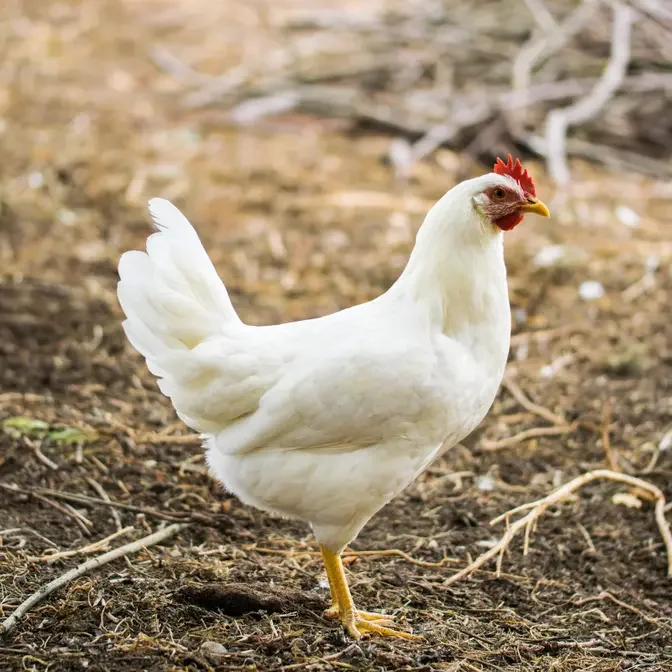
AI GeneratedMay contain errors
From the rolling hills of Fujian province to the digital screens of millions worldwide,
one farmer's chickens have sparked a conversation that stretches far beyond the barnyard.
Each year, the world consumes over 70 billion chickens.
Most race behind concrete walls and steel cages.
Yet here in southeastern China, more than 70,000 birds roam freely,
foraging under open skies and living in a system that defies the conventions of industrial
agriculture.
This is not just farming.
It's a living experiment in sustainability, animal welfare, and storytelling.
What began as a local curiosity has become a viral symbol of change,
forcing us to rethink what food production can and should look like.
Welcome to Agrinova USA, where we uncover the untold journeys behind the world's most
extraordinary farms.
In today's video, we'll follow the story of how one man's vision turned a chicken farm
into a global case study.
Along the way, we'll explore not just the methods, but also the bigger debates shaping
the future of farming.
So stick with us and don't forget to like, subscribe, and ring the bell to join us on
more eye-opening journeys into the world of food and agriculture.
From the outside, it looks like a scene out of a documentary.
Tens of thousands of chickens wandering through forests, fields, and open hillsides.
No cages, no factory walls, just a sea of birds blending with nature.
But this isn't fiction, and it's not a staged publicity stunt.
It's a farm in Fujian province, southeastern China, that has become a global phenomenon.
The farm is home to more than 70,000 free-range chickens managed by a farmer named Song Qing
Jun.
His approach doesn't just raise eyebrows, it challenges the very foundation of how we
think about food, farming, and the balance between profit and sustainability.
Before diving into his story, let's set the stage.
Chicken is the most consumed animal protein in the world.
From KFC buckets to family farms, billions of chickens are raised every year.
Most are raised in either small-scale traditional farms or in massive industrial complexes where
cages and controlled environments dominate.
These two models have defined modern poultry production, one prioritizing efficiency, the
other rooted in tradition.
And yet, here comes Sang, who manages 600 hectares not with high-tech automation, but
by leaning into nature's own design.
So how does it work?
In summer, feed costs plummet.
The chickens forage naturally for grasshoppers, beetles, and other insects, essentially acting
as mobile pest control.
In winter, when insects are scarce, their diet is supplemented with corn, fish, and
bone meal.
It sounds simple, but behind that simplicity lies a deep understanding of ecology.
The farm doesn't fight against the seasons, it works with them.
But here's where it gets fascinating.
Sang didn't intend to become a viral star.
Visitors to his farm were the first to notice how different his chickens looked, healthier
feathers, more vibrant behavior, and meat with a distinctive flavor profile.
Videos posted online took off, attracting millions of views on platforms like Daoyin
and Kuaishou.
Overnight, Sang wasn't just a farmer, he was an agricultural influencer.
His chickens weren't just livestock, they were a brand.
Now, let's pause here.
Why does this matter?
Because Sang's farm touches on one of the biggest debates of our time.
How do we balance animal welfare, environmental health, and human demand for affordable food?
Free-range sounds idyllic, but it's not without challenges.
Predators—hawks, foxes, raccoons—see chickens as easy meals.
Disease spreads faster when animals roam freely, and scaling such a model to feed entire nations
is far from straightforward.
To really understand this, let's compare with a story from Brazil.
In 2019, a farm in Minas Gerais tried a smaller free-range system with just 8,000 hens.
They loved the marketing advantage.
Eggs labeled cage-free sold at a 20% premium in supermarkets.
But after a few months, they faced rising losses.
Wild dogs and snakes claimed dozens of birds each week.
The solution?
Guard dogs, reinforced fencing, and interestingly, local shepherds who were hired part-time to
watch the flocks.
Their profits dipped at first, but consumer loyalty to higher-welfare eggs kept the farm
afloat.
Back in China, Sang deals with similar issues.
His land is vast, making fences impractical.
So he uses trained dogs and rotating patrols, paired with natural deterrents like noise
alarms to keep predators away.
Does it work 100%?
No.
He admits losing chickens is part of the cost of doing business.
But—and here's the key—his customers are willing to pay more for what they see
as ethically produced meat.
That premium covers the losses.
This model resonates globally.
Across Latin America, farms like Granja Monticera in Colombia are proving that free-range production
can compete with industrial farms.
Their hens roam inside large barns with access to outdoor yards.
Productivity remains high, with laying rates around 85%, even surpassing some industrial
cage operations.
Consumers, increasingly aware of animal welfare, are voting with their wallets.
But let's not romanticize.
Free-range doesn't automatically mean cruelty-free or environmentally perfect.
For instance, large flocks roaming outdoors can damage vegetation, compact soil, and increase
risks of avian flu.
Researchers in the Netherlands found that free-range flocks had higher exposure to wild
bird diseases than caged flocks.
So, while the chickens are happier, biosecurity becomes harder to manage.
This brings us to the bigger picture.
Why are models like Tseng's gaining attention now?
The answer lies in shifting consumer values.
A generation ago, most shoppers looked at price first.
Today, many also consider animal welfare, carbon footprint, and even the story behind
their food.
That's why companies like McDonald's, Nestle, and Unilever have committed to sourcing cage-free
eggs within the next decade.
For them, it's not just PR.
It's survival in a market where transparency and ethics matter.
And yet we have to ask, can the world really switch to free-range?
Raising 70,000 chickens on 600 hectares sounds impressive, but China produces over 14 billion
chickens annually.
If every flock needed that much space, we'd run out of land.
This is the paradox.
Free-range works beautifully in niche markets or for farmers targeting premium consumers.
But as a global replacement, that's far more complicated.
Here's where Tseng's story becomes less about chickens and more about innovation through
storytelling.
By turning his farm into content, he's expanded his revenue beyond meat sales.
His videos attract millions of views, creating advertising and sponsorship opportunities.
He's not just selling chicken.
He's selling an image of rural life, harmony with nature, and authenticity.
That in itself is revolutionary.
Farming meets influencer culture.
Let's bring in another real-world case.
In France, small duck farmers producing foie gras have started live-streaming their barns
and feeding routines.
They're under heavy criticism for animal welfare practices, but instead of hiding,
they showcase their work in real time.
The transparency doesn't erase ethical debates, but it does build trust with loyal
consumers.
Tseng's viral videos play the same role.
They turn farming into a two-way dialogue with the public.
So what can we learn?
First, that innovation doesn't always come from high-tech machinery.
Sometimes it's about observation, watching how chickens forage, how ecosystems balance
themselves, and adapting to those rhythms.
Second, that storytelling is power.
A farmer with a phone and a unique method can shift consumer perceptions on a global
scale.
And third, that the food we eat isn't just about calories.
It's about values, choices, and trade-offs.
As you finish this video, ask yourself, would you pay more for chicken raised in a system
like this, knowing the farmer loses some birds to predators but avoids cages and antibiotics?
Or do you believe large-scale industrial efficiency is the only way to feed billions
affordably?
There isn't one right answer, but by asking the question, we begin to see farming not
just as production, but as philosophy.
Thank you for joining us on this journey through the hills of Fujian and the debate over how
our food is raised.
If you found this video insightful, please support our work by liking, subscribing, and
sharing it with someone curious about the future of farming.
And remember, behind every egg, every chicken, every farm, there's a story, one that deserves
to be told.
Free-range farming may look like paradise, but it's also a test.
A test of resilience against predators, of balance between tradition and modern demand,
and whether consumers are willing to pay for values as much as for products.
The story of Sang Ching Jun's chickens is more than just a tale of 70,000 birds.
It's about the crossroads between efficiency and ethics, between feeding the masses and
respecting the land.
His experiment asks us a deeper question.
Do we see food as a commodity or as a reflection of our values?
As the world searches for sustainable answers, models like this remind us that farming is
never just about animals.
It's about people, culture, and choices that ripple through generations.
Thank you for watching.
If this video gave you something to think about, please support our work by hitting
like, subscribe, and share it.
And remember, behind every meal lies a story, one that deserves to be told.