
Lumix S1 II Review Incredible with 1 Major Flaw
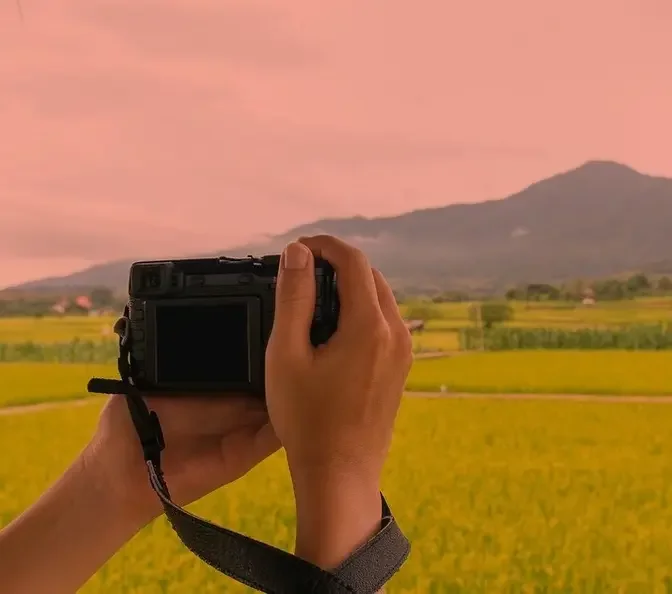
#PhotoCamera, #LandscapePhotography, #PhotographyExpert, #NatureShots, #ScenicViews, #OutdoorPhotography, #CameraGear, #LandscapeExpert, #TravelPhotography, #WideAngleShots, #PhotographySkills, #NaturalBeauty, #CameraTips, #PhotographyMastery, #LandscapeLovers
AI GeneratedMay contain errors
I used to be a huge fan of Panasonic cameras.
I owned five GH5s, and for years,
we shot every single F-stopper's video with those cameras.
But Panasonic fell behind,
and even though they had the best video features
compared to the competition,
they failed to implement the most important
new feature of all,
and that was reliable, continuous autofocus.
For years, it's felt like every camera brand
has reliable autofocus except for Panasonic, until now.
This is the Panasonic Lumix S1 II.
It's Panasonic's newest mirrorless camera,
and aside from one major flaw,
this is everything I want in a hybrid camera.
But can I recommend this camera?
More importantly, can I recommend the Panasonic ecosystem?
Let's talk about it.
For the last five years,
anytime somebody has asked me for a camera recommendation,
I give the exact same answer.
For the most part, every camera today is amazing.
You can't go wrong buying basically any modern camera
from Sony, Nikon, or Canon.
And this doesn't mean that other cameras
from other manufacturers are bad.
In some cases, they are better,
but it just comes down to the ecosystem and market share.
If you decided to buy into Pentax years ago,
I guarantee you are regretting that decision today.
In 2019, Panasonic launched the S1,
their first full-frame mirrorless camera
with a completely new mount.
I remember hearing about this camera and thinking,
who would buy into a brand new ecosystem
when there are so many other established brands already?
Panasonic knew this would be an uphill battle,
and they created the L-Mount Alliance
with both Leica and Sigma.
This meant that three major camera brands
were combining forces to create a larger ecosystem.
And believe it or not,
there are now more L-Mount lenses that you can buy
than Canon RF lenses.
You can get ultra cheap third-party L-Mount lenses,
entry-level semi-pro lenses like this one right here,
the 24-60mm F2.8,
pro-level lenses like these made by Panasonic or Sigma,
or outrageously priced lenses by Leica.
For example, why would you buy
Sigma's 50mm 1.2 lens
when you could buy the slower Leica version for 7,000?
Why buy Panasonic's fixed aperture 16-35mm
when you can buy Leica's variable aperture version for 7,000?
And if sports or wildlife is important to you,
Sigma just announced their new 300-600mm F4 lens,
which many people are calling
the greatest ultra telephoto lens ever made.
All right, so the lenses do exist,
but what about the hot shoe and flashes?
This camera does have its own proprietary hot shoe.
All standard dumb triggers will work on this camera,
but if you want automatic TTL metering,
you're going to need a trigger
designed specifically for Panasonic.
A few months ago, I did a big comparison review video
of all of the major speed lights currently on the market,
and sadly, only one of these brands
makes triggers and flashes
specifically designed for Panasonic.
Luckily, that brand is Godox,
who happens to make my favorite flash
and my favorite trigger.
So the Panasonic ecosystem is much larger than I thought,
but they're still at a massive disadvantage
simply due to market share.
For me to recommend that you buy a Panasonic camera
over anything made by Sony or Canon,
this camera is either going to have to be
significantly cheaper or significantly better,
and spoiler alert, it is not cheaper.
This camera is pretty expensive,
so it's going to have to be a lot better,
and I gotta tell you, it is in almost every way.
The S1 II feels great.
The button layout feels much more intuitive
than my Sony cameras.
The screen on the back flips in every direction,
even forwards, but it also tilts up and down in place,
which makes it even better than my Sony screens.
The electronic viewfinder on this camera is fantastic,
second only to Sony's newest A9 III's viewfinder,
which is so good, I sometimes forget
that it's not an optical viewfinder,
but when I compare the electronic viewfinder
to the Sony cameras that I actually own
that are a few years old now, there is no comparison.
The Panasonic looks so much better.
The S1 II is the most feature-rich camera I have ever used.
This camera has so many shooting resolutions,
aspect ratios, and frame rates
that they had to design a filtering system
so that you can actually find what you're looking for.
This is also the most customizable camera I've ever used.
If you like the way another camera works
or the location of certain function buttons,
you have complete control over every aspect of this camera.
The downside to all of these features and options
is that this camera will require days
or weeks to fully set up.
Gearheads will love it, but even I,
as somebody who shot Panasonic for years,
still feel lost in these menus.
Now, I could literally make a five-hour video
about all of the features of this camera,
but instead, I'm just gonna quickly touch
on a few of my favorites.
This is a 24-megapixel camera.
For video shooters like me, I can film in 6K.
It's perfect, but for still photographers,
they may want a little bit more resolution.
If you're taking pictures of a relatively still subject,
you can turn on high-resolution mode,
and it will take multiple pictures
and combine them to create a much higher-resolution shot,
but they also have a handheld mode,
which works incredibly well.
This camera has pre-burst shooting
that silently captures pictures in the background,
and when you decide to actually take the picture,
it will save images captured
up to 1 1⁄2 seconds in the past.
Panasonic cameras have always had
the best time-lapse functions.
You can either record video with a shutter speed
as low as 1⁄2 of a second,
and it will create a smooth time-lapse video in-camera,
or if you want longer shutter speeds,
you can shoot images, and after you're done,
the camera will turn those images
into a time-lapse video automatically.
We used this feature exclusively
when we filmed hundreds of time-lapse videos
for our Photographing the World photography tutorial series,
and it was a game-changer.
The S1 II can shoot video in 16x9 6K,
using the full width of the sensor,
or you can shoot ungated,
allowing you to shoot in a 3x2 aspect ratio
to take advantage of the entire sensor.
This makes editing vertical video
from horizontal footage easier,
and it allows you to shoot with anamorphic lenses,
and the camera has de-squeezing playback,
so you don't need an additional monitor.
If you shoot in 4K, you can turn on hybrid zoom,
which uses the entire width of the sensor
when you're zoomed out,
and as you zoom in physically on the lens,
it will digitally crop in,
and when you reach the end of the physical zoom
on your lens, it will have cropped in
to an APS-C-sized portion of the sensor,
giving you an additional 1.5x reach
without losing any resolution.
Apparently, there was a bit of an uproar
when it comes to the sensor read speed
and the rolling shutter of Panasonic's
last higher-resolution mirrorless camera.
I don't have the exact numbers,
but when I compare this camera to my Sony A7S III,
it looks comparable, if not a little bit better.
Autofocus on this camera finally works.
The S1 II finally has face-detect autofocus
that is reliable enough to be left on all the time.
When it comes to stabilization,
my Sony cameras aren't great.
The S1 II has the best stabilization I have ever used.
For true walking shots, you're still gonna wanna gimbal,
but I do this test just to show you
how powerful their stabilization is.
The highest level of stabilization is called Boost IS.
It's made to make handheld footage
look like it was shot on a tripod.
This is what handheld footage
at 300 millimeters looks like naturally.
This is what it looks like when I turn on Boost IS.
It's incredible.
In terms of low-light performance,
the S1 II seems to have around one stop
better ISO performance than my A7S III.
Sony does have three additional ISO stops.
However, I'm not sure how usable they actually are.
So it's been hard to find anything
that I dislike about this camera,
but I finally found something and it's a pretty big deal.
Probably my favorite thing about my Sony cameras
is the way their autofocus system works.
I leave my autofocus zone on wide,
which uses the entire sensor.
And then most of the time,
I leave human face detection on all the time.
If I ever wanna focus on something other than a person,
I just touch that object on the back of the screen
and it will track whatever object I click on.
The S1 II is not that simple.
You can either automatically detect subjects
or you have to turn that off and move into a tracking mode
if you want to touch to track something.
This itself is a massive inconvenience,
but I don't think you're gonna worry about that much
because this entire feature is basically unusable.
The tracking isn't accurate at all.
It will jump around the frame or turn itself off
as soon as the subject or camera begins to move.
What's so strange about this
is that Panasonic solved the hard part.
Automatically detecting and tracking a human eye
anywhere in the entire frame seems way more difficult
than tracking a small contrasty spot that I click on.
It seems like Panasonic could easily fix this
with a firmware update and Panasonic is known
to constantly improve their cameras with software,
but I still wouldn't hold your breath.
To convince new shooters to buy Panasonic
over the much more popular competition,
they needed to create a camera
that was objectively better
than what is currently on the market,
and that's basically what they did.
In almost every category,
the S1 II is the current king of hybrid shooters.
It has better ergonomics, better hardware,
better resolution, better stabilization,
better ISO performance, more features, more customization.
The L-mount ecosystem and lens selection
is far more robust than I realized.
Face detection autofocus actually works now,
but the other major autofocus feature,
the one that I use on literally every video job that I do,
spot tracking at this point does not work.
Even still, the list of advantages that this camera has
over the competition is gigantic,
and if you're looking for a hybrid video camera,
you should at the very least consider
the Panasonic Lumix S1 II.
Well guys, thank you for watching.
Hopefully you enjoyed this review.
I know most of the people watching this
are probably videographers,
but if you happen to be a still photographer,
we are running photography contests every single month,
and they are totally free to join.
You can check those out at fstoppers.com slash contest,
and we currently have one of the lowest prices ever
on one of our most popular fstoppers tutorials ever.
You can check that out and all of our other tutorials,
including photographing the world,
which we have filmed almost exclusively
on Panasonic cameras, all at fstoppers.com slash store.