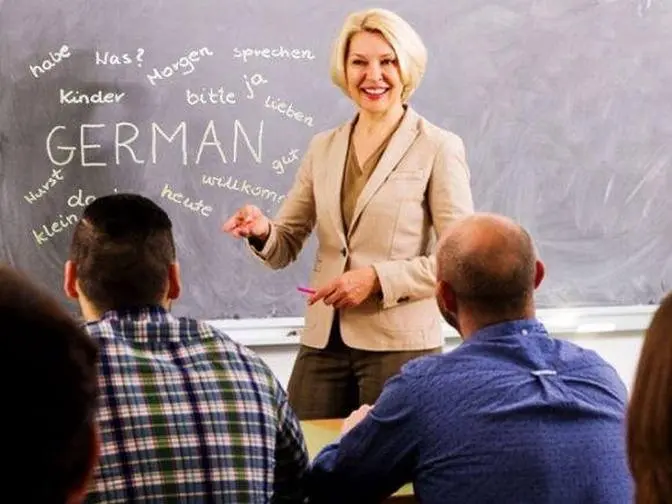
Absolute Beginner German for Every Day This is the best video to get started with German language https://goo.gl/ipEYpd Click here to learn Germanyesw twice as fast with FREE PDF! ↓Check how below↓
Step 1: Go to https://goo.gl/ipEYpd Step 2: Sign up for a Free Lifetime Account - No money, No credit card required Step 3: Achieve Your Learning Goal and master German the fast, fun and easy way!
In this video, we will teach you 25 german phrases, 25 german nouns, 25 german verbs and 25 adjectives that you must know if you're a an absolute beginner. This is THE place to start if you want to start learning German, and improve both your listening and speaking skills.
Follow and write to us using hashtag #GermanPod101 Facebook : / germanpod101 Twitter : / germanpod101
AI Generated·May contain errors
Want to speak real German from your first lesson?
Sign up for your free lifetime account at GermanPod101.com.
Hi, my name is Alisa.
Welcome to Top 25 German Phrases.
Let's get started.
Hallo.
It's usually used between friends and usually you add,
Hallo, wie geht's?
It's, Hello, how are you?
Guten Morgen.
Good morning.
Guten Morgen.
Good morning and obviously, it's used in a very casual would be just morning, Morgen.
Guten Tag.
Good afternoon.
Guten Tag means good afternoon or good day.
You don't usually say it to friends.
Guten Tag.
Na klar?
Of course.
Na klar means of course.
I actually use it a lot.
It's very casual.
Kannst du mein Auto heute waschen?
Na klar.
That would be really actually really good but it means, can you wash my car today?
Of course, who wouldn't want that, right?
Wie heißen Sie?
What's your name?
Wie heißen Sie means what's your name?
Wie heißen Sie is a very formal way to say it.
Between friends, it would be more, Wie heißt du?
Wie heißen Sie?
Ich heiße Alisa.
What's your name?
My name is Alisa.
Ich bin.
I am.
Ich bin heute gut drauf.
I am in a really good mood today.
Ich bin im Urlaub.
I am on vacation.
Wie geht es Ihnen?
How are you?
Wie geht es Ihnen?
And then, Mir geht es gut.
How are you?
I am good.
Es freut mich, Sie kennenzulernen.
Nice to meet you.
Hallo, wie geht's?
Es freut mich, Sie kennenzulernen.
Hello, how are you?
Nice to meet you is a very common sentence.
Mir geht es gut, danke.
Und Ihnen?
I'm fine, thanks.
And you?
Mir geht es gut, danke.
Und Ihnen?
I'm fine, thanks.
And you?
It's the answer to if you get asked, Wie geht es Ihnen?
When you're talking to friends, you can actually say, Mir geht es gut, danke.
Und dir?
Bitte.
Please.
Bitte also means you're welcome.
Danke, dass du heute einkaufen warst.
Bitte.
Thank you for going grocery shopping today.
You're welcome.
Bis später.
See you later.
Bis später.
See you later.
Bis gleich means when you're actually meeting in maybe five to ten minutes and bis später
is used mostly for example in the morning and you're going to meet during the evening.
Hallo, sollen wir heute essen gehen?
Ja, gerne.
Ja, dann bis später.
Hello, should we go have something to eat today?
Yes, sure, see you later.
Ich glaube schon.
I think so.
Ich glaube schon.
I think so.
Meinst du, wir können heute was trinken gehen?
Ich glaube schon.
Do you think we can go have drinks tonight?
I think so.
Ich glaube schon is kind of like an uncertain thing to say.
Danke.
Thank you.
Danke.
Thank you.
Danke is very casual between friends and family.
Wie geht es dir heute?
Danke, sehr gut.
How are you today?
Thank you, I am fine.
Gern geschehen.
You're welcome.
Ja, danke, dass du mir beim Umzug geholfen hast.
Gern geschehen.
Thank you for helping me move.
You're welcome.
Ja, yes.
Ja means yes and of course, it's a very, very common word in German.
You use it all the time when you're listening to someone.
Ja, kannst du heute bitte mit dem Hund spazieren gehen?
Ja.
Can you take the dog for a walk today?
Yes.
Nein.
No.
Nein.
No.
Hast du am Samstag Zeit?
Nein, leider nicht.
Are you free on Saturday?
No, sorry, I'm not.
Just saying nein is a little bit rude.
So people just add no, I am not free.
Okay.
It's more used with friends and family and not at workplace.
When I was a child, I wasn't allowed to say okay, for example.
I had to say yes or no.
Ja, nein.
And of course, okay is also used, for example.
Wie geht es dir?
Mir geht's okay.
How are you?
I'm okay.
Kannst du mir vielleicht deine Kamera heute ausleihen?
Okay.
Could you lend me your camera today?
Okay.
Entschuldigung.
Excuse me.
Entschuldigung.
Excuse me.
Entschuldigung, Sie haben gerade Ihre Schlüssel verloren.
Excuse me, you just dropped your keys.
So yeah, excuse me and I'm sorry means both.
Entschuldigung.
It's a very formal way to ask somebody for a favor.
Kein Problem.
No problem.
It's a very common sentence.
I use it all the time.
Kein Problem.
If somebody is going to be late.
Ich komme erst in 10 Minuten.
K.P. means no problem.
Wie viel Uhr ist es?
What time is it?
Yes, obviously when you want to know the time, you ask this and it's used at work.
It's neither formal or casual.
You can use it with friends.
You're in the city and you forgot your watch.
Entschuldigen Sie, wie viel Uhr ist es?
Excuse me, what time is it?
It's a very common phrase and used everywhere.
Einen Moment, bitte.
One moment, please.
You bought something and you want to return it.
Entschuldigen Sie, ich würde gerne etwas zurückschicken.
Einen Moment, bitte.
Excuse me, I would like to return something.
One moment, please.
Ich hätte gerne.
I would like.
Ich hätte gerne einen Salat mit Pommes.
I would like a salad with fries.
I would like a water.
Wie viel macht das?
How much is it?
Ich hätte gerne ein Kleid für eine Hochzeit.
Wie viel macht das?
I would like a dress for a wedding.
How much is it?
Zahlen, bitte.
The check, please.
Zahlen, bitte.
The check, please.
When you're ordering something and you're finished and you want to pay,
you usually say to the waiter or waitress, Zahlen, bitte.
Hilfe.
Help.
Hilfe.
Help.
Hilfe like help is when you're in need of something or you can't do it by yourself.
You scream or you say Hilfe.
Ja, ich bräuchte Hilfe heute Abend.
I need help tonight.
Thank you for watching.
Today, we did the top 25 German phrases.
Don't forget to subscribe.
See you soon.
Bye.
We're done?
Cut.
Hi, this is Alisa.
Welcome to top 25 German verbs.
Let's get started.
Sein, be means to be.
A little complicated because Ich bin, a version of Sein but because it's Ich bin, it changes.
So it's kind of like to be but then in English, it would be the same.
I am Alisa.
Ich bin Alisa.
Ich bin ab morgen im Urlaub.
I am going to be on vacation tomorrow.
Hawaii, I wish.
Haben, have.
Ich habe mir heute sehr viel vorgenommen.
I have planned a lot for today.
Tun, do.
Tun means to do.
Tun is used in a very casual way.
Tust du mir den Gefallen und machst heute die Küche sauber?
Can you do me the favor and clean the kitchen?
Sagen, to say.
Ich sage sehr oft okay.
I say okay a lot.
Meine Kollegen sagen, dass ich sehr gut arbeite.
My colleagues say that I work very good.
Bekommen, get.
Ich habe heute mein Gehalt bekommen.
I got my paycheck today.
Machen, make.
For example, meine Mutter macht heute einen Kuchen.
My mother is making a cake.
And if you've never tried German cake, it's really good.
I am going to put it in the oven.
Now it's done.
And then it's going to go with cream.
Gehen, go.
Gehen literally means to go or walk.
Ich gehe gerne mit meinem Hund spazieren.
I like to go on walks with my dog.
Gehst du heute zum Volleyball?
Are you going to volleyball today?
Wissen, to know.
Wer weiß was?
The three Ws.
Who knows?
In English, it's not the W, but in German, who knows what?
Oh and it's like W, W, W.
For example, weißt du, wie viel Uhr es ist?
Ja, ich weiß es.
Do you know what time is it?
Yes, I know.
Nehmen, take.
Ich nehme einen Regenschirm mit.
I take the umbrella with me.
Ich nehme an, du hast heute viel zu tun.
In this case, ich nehme an means I assume you have a lot to do today.
So it means something totally different because of the whole sentence, but that's really the magic.
Sehen, to see.
Literally, to see with your eyes.
Ich sehe mir heute einen Film an.
I am going to see a movie today.
So in this case, it means to see a movie.
Ich sehe, dass es dir heute viel besser geht.
I see that you are doing much better today.
Kommen, come.
Heute Abend kommt meine Freundin zu Besuch.
Tonight, my friend is coming to visit.
Ich komme gleich is actually a very casual thing to say.
It means oh, I am going to be there in a second or I am coming now or you can write it as a message
or when you are on your way to somewhere.
Denken, think.
Ich denke, dass dieses Video sehr hilfreich ist.
I think this video is very helpful.
Gucken, look.
Gucken means to look and it's kind of used between friends and more young people
and it's not very formal, it's more casual.
Ich gucke mir gerne den Himmel an.
I like to look at the sky.
Möchten, want.
Ich möchte im Sommer an den Strand.
I want to go to the beach in summer.
Die Blumen möchten Wasser und brauchen Sonne.
The flowers want water and need sunlight.
Geben, give.
Meine Freundin gibt mir heute ihre CDs.
My friend is giving me CDs today.
Ach, ich gebe jetzt auf.
I am going to give up.
Können, be able to.
It means be able to or can.
Ich kann mehrere Sprachen sprechen.
I am able to speak different languages.
It really means that you are capable of or you can do something.
Ich kann Kleidung designen.
I am able to design clothes.
Finden, find.
Ich finde means when you are expressing your feelings
or when you are expressing something you want to say to someone
or finden means really find something.
So as you guys probably know but Easter is really big in Germany
Die Kinder finden Ostereier im Garten.
The kids find Easter eggs in the garden.
Erzählen, tell.
Immer wenn ich aus dem Urlaub zurückkomme, erzähle ich die aufregendsten Geschichten.
When I come back from vacation, I always tell the most amazing stories.
Als Kind hat meine Mutter mir Märchen erzählt.
As a kid, my mom used to tell me fairy tales.
The most famous fairy tales, Märchen are from the Grimm brothers
and they are actually German.
And I really used to love Rotkäppchen.
It's red riding hood.
Fragen, ask.
When you are asking your teacher for example.
Hallo Herr Müller, ich habe eine Frage.
Hello Mr. Müller, I have a question or can I ask a question.
Arbeiten, work.
Gerade arbeite ich an einem Video für euch.
Right now, I am working on a video for you guys.
Die Bauarbeiter arbeiten an der Straße.
The construction workers are working on the street.
Scheinen, seem.
Scheinen has actually two different meanings.
So one is seem but one is actually to shine.
You are in a good mood.
Wenn ich gut drauf bin, dann scheine ich von innen.
When I am in a good mood, I shine from the inside.
Seem.
Es scheint mir so, als wäre Katrin gut drauf.
It seems like Katrin is in a good mood.
fühlen, feel.
Ich fühle mich heute sehr gut.
Today, I feel really good.
If you are buying a carpet and you say
Ich fühle den Teppich und er fühlt sich sehr weich an.
I feel the carpet and it feels really soft.
And also Ich fühle die Musik.
I feel the music.
Lately, I actually have been listening to a lot of music
and so I have been in a good mood.
I think music makes you feel really good.
versuchen, try.
This one is interesting because in versuchen,
there is also the verb suchen which means to search.
Ich versuche, jedes Jahr etwas Neues zu lernen.
I try to learn something new every year,
either if it's an instrument or reading something new
and something that I have never read before.
I think it's important to challenge yourself.
essen, eat.
Gleich gehe ich zum Mittagessen.
Soon, I am going to go eat lunch.
So eat is really eating.
glauben, believe.
Ich glaube, Karl hat heute eine gute Arbeit geleistet.
I believe that Karl did a good job today.
Thank you for watching the top 25 German verbs.
Don't forget to subscribe and I hope to see you soon, bye.
I love that.
wissen,
I want to be cute.
Hello, my name is Alisa
and today we are doing the top 25 German nouns.
Let's start.
der Name, name.
The plural version is die Namen.
Mein Name ist Alisa.
My name is Alisa.
Mein Spitzname ist Lieschen.
My nickname is Lieschen.
die Uhrzeit, time of day.
Wie viel Uhr ist es?
Die Uhrzeit ist elf Uhr.
der Mann, man.
die Männer, men.
Die typischen deutschen Männer sind groß und blond.
The typical German men are tall and blond.
die Frau, woman.
Die Frauen, women.
Die deutschen Frauen sind starke Frauen.
The German women are tough women.
die Person, person.
Die Personen, people.
Die Personen in Deutschland sind sehr freundlich.
The people in Germany are friendly.
die Sache, thing.
die Sachen, things.
So Sache, die Sache is more used in written German language.
Die Sachen in meinem Zimmer sehen chaotisch aus.
The things in my room look chaotic.
Die Sache is a very formal way of saying things.
So das Ding, die Dinge is a very casual way of saying things.
die Mutter, mother.
Einige meiner Freundinnen sind schon Mütter.
A few of my friends are already mothers.
der Tag, day.
die Tage, days.
Mein Tag hat heute sehr früh angefangen.
My day started very early today.
regnerische Tage, rainy days.
der Moment, moment.
die Momente, moments.
Was war dein schönster Moment?
What was your most special moment?
die Momente im Leben.
The moments in life.
der Vater, father.
die Väter, fathers.
Mein Vater ist Deutsch.
My father is German.
Die Väter in Deutschland lieben es Bier zu trinken.
Fathers in Germany love to drink beer.
I'm sure not only Germany but...
der Bruder, brother.
die Brüder, brothers.
Ich habe einen Bruder.
I have one brother.
die Freizeit, free time or leisure time.
In meiner Freizeit unternehme ich gerne etwas draußen.
In my free time, I like to be outside.
die Tochter, daughter.
die Töchter, daughters.
Ich bin eine komplizierte Tochter.
I am a complicated daughter, I think to my mother.
der Sohn, son.
die Söhne, sons.
der nette Sohn von nebenan.
The nice son from next door.
das Kind, child.
die Kinder, children.
Ich bin immer noch sehr oft Kind.
I am still a lot of times a child.
Die Kinder in Deutschland spielen gerne draußen.
The children in Germany like to play outside.
das Wort, word.
die Wörter, words.
Du wirst jetzt 25 Wörter lernen.
You will learn 25 words.
der Kopf, head.
die Köpfe, heads.
der rollende Kopf, the rolling head.
In German, if you do something bad,
it's a way of saying die rollenden Köpfe or your heads will roll.
It's the same saying as in German, die rollenden Köpfe.
die lustigen Köpfe der Klasse.
The funny heads in the classroom.
There are always some class clowns.
In Germany, we call them die lustigen Köpfe der Klasse.
der Freund, friend.
die Freunde, friends.
In German, it could mean my friend or also my boyfriend.
Meine Freunde sind super.
My friends are awesome.
Oh, ist das dein Freund, Freund oder Freund?
So Freund, Freund means is that your boyfriend or is it just a friend?
die Schwester, sister.
Die Schwestern, sisters.
Viele meiner Freundinnen sind wie Schwestern.
A lot of my friends are like sisters to me.
die Arbeit, work.
Die Arbeiten, work as in a plural version.
Was ist deine Arbeit?
What is your work?
die Woche, week.
Die Wochen, weeks.
Meine Woche hat sehr gut angefangen.
My week started very well.
Die kommenden Wochen werden heiß.
The next weeks are going to be hot.
der Monat, month.
Die Monate, months.
Mein Geburtstagsmonat ist Januar.
My birthday month is January.
Was sind deine Lieblingsmonate?
What are your favorite months?
das Jahr, year.
Die Jahre, years.
Welches Jahr ist dein Geburtsjahr?
What year is your birth year?
Die letzten Jahre vergingen sehr schnell.
The last years went by fast.
das Zuhause, home.
Ich fühle mich an verschiedenen Orten zu Hause.
I feel home in different kind of places.
die Nummer, number.
Die Nummern, numbers.
Das ist die Nummer 25 dieser Lektion.
This is number 25 of this lesson.
Thank you for watching the Top 25 German Nouns.
Make sure to subscribe to watch more videos with me.
Thank you, bye.
We're getting like really deep here.
Hello, my name is Alisa.
Welcome to Top 25 German Adjectives.
Let's start.
gut, good
Heute bin ich gut drauf.
Today, I am in a good mood.
die guten alten Zeiten.
The good old days.
neu, new
So depending on the article, the adjective changes in German as well.
das neue Mädchen in der Klasse.
The new girl in class.
der neue Hund meiner Nachbarin.
The new dog of my neighbors.
erste, first
Ich war noch nie Fallschirmspringen, also würde ich es sehr gerne ausprobieren und es wäre mein erstes Mal.
I've never gone skydiving before, so it would be my first time and that's exciting.
letzte, last
Ich war das letzte Mal am Meer vor circa einem Jahr.
The last time I was at the ocean was about one year ago.
lecker, tasty
Ich liebe leckeres Essen, wer nicht?
I love tasty food, who doesn't?
Ich finde scharfes Essen sehr lecker.
I think spicy food is very tasty.
krank, ill
Ich war letztens 10 Tage krank.
I was ill for 10 days actually.
klein, little
Ich finde kleine Hunde süß.
I think little dogs are cute.
laut, loud
Das Stadtleben ist laut.
The city life is loud.
die laute Musik
groß, big
Mein Hund ist ziemlich groß.
My dog is pretty big.
andere, other
So it is singular and plural.
Ich habe lustige Freunde, aber auch andere Freunde.
I have funny friends, but also other friends.
Wer ist die andere Person?
Who is that other person?
alt, old
Ich mag alte Schätze.
I love old treasures.
Ich mag alte Omas, die sind sehr süß.
I like old grandmas, they are really cute.
kalt, cold
Ich mag es überhaupt nicht, wenn es kalt ist.
I don't like it at all when it's cold.
müde, tired
Heute bin ich etwas müde.
Ich hoffe, ihr seht das nicht.
Today I am a little tired. I hope you don't see it.
gut gelaunt, cheerful
Ich bin meistens gut gelaunt oder versuche, alles gut gelaunt zu sehen.
I am most of the times cheerful and I try to see everything as cheerful.
verrückt, crazy
Ich glaube, einige Leute denken, ich bin verrückt.
I think a lot of people actually think I am crazy and I love it.
Ich finde, mit den besten Freunden kannst du immer verrückt sein.
I think with your best friends, you can always be crazy.
Those are the best ones.
lustig, funny
Ich finde mich immer sehr lustig, vielleicht andere nicht, aber ich.
I think I am funny, even though maybe other people don't, but I think so.
Einer meiner lieblingslustigen Schauspieler ist Ben Stiller.
One of the most funniest actors is Ben Stiller.
schön, pretty
Das schöne Mädchen, the pretty girl.
Der schöne Sonnenuntergang, the pretty sunset.
schwierig, difficult
Ich fand Mathematik immer sehr schwierig.
I always thought math was very difficult.
heiß, hot
Das Essen ist heiß.
The food is hot.
Or you can say also hot as in the weather is hot.
wichtig, important
Ich finde, das Wichtigste ist, sich selber treu zu bleiben.
I think the most important thing is to be true to yourself.
interessant, interesting
Ich finde Kunst sehr interessant.
I think art is very interesting.
Es gibt auch viele interessante Personen.
There are a lot of interesting people.
super, great
Das Essen war heute super.
The food was great today.
Eine super Erfahrung war für mich, als ich tauchen war in Ägypten.
One of the most greatest experience for me was to dive in Egypt.
schlecht, bad
Das schlechte Wetter would be the bad weather.
So there is an E again depending on the article.
Das schlechte Essen, the bad food
langweilig, boring
Mir ist nie langweilig. Ich finde immer etwas.
I am actually never bored.
I always find something to do or funny.
weit, far
Ich liebe es, weit weg zu reisen.
I love to travel to faraway places.
Die Strecke von meinem Haus zur Arbeit ist weit.
The way from my house to work is far.
Thank you for watching Top 25 German Adjectives.
Don't forget to subscribe to see more videos with me.
What was your favorite adjective?
Leave in the comments below.
Hope to see you soon. Bye!
Yeah, I didn't move too much.