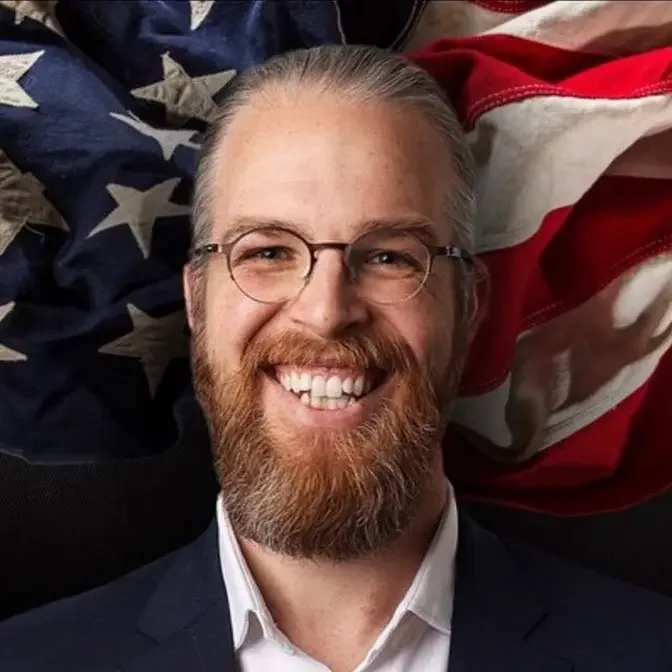
Mark Wilburn of Neos Capital joins me to expose warning signs behind the AI stock bubble, including circular financing, extreme market concentration, and the reported $35 billion collapse of the so-called “AI Nostradamus” fund. This video is for educational purposes only and is not financial advice.
Go to https://MIA-NEOS.com now to reserve your spot for the 2026 Freedom Trading Summit. It’s time to reclaim control of your family’s wealth from Wall Street & the government. Free LIVE virtual event August 27th & 29th.
Visit http://keet.io/maninamerica - Download it free, invite one person you trust, and start a conversation that belongs to you.
To learn more about investing in gold & silver, visit http://goldwithseth.com, or call 626-654-1906
Check out water & air filtration products at https://airwaterhealing.com, and use code SETH for a discount and free shipping.
NMN-3 from Brightcore – Cellular Health 25% Off with code: MIA at https://brightcore.com/mia Or call (888) 575-6488 for up to 50% OFF and Free Shipping – ONLY when you call!
Go to https://nutronicslabs.com/SETH for 50% off with autoship + a FREE platinum bottle of IGF-1. Use code “SETH” for an extra 10% off.
For high quality storable foods and seeds, visit http://heavensharvest.com and use promo code SETH to save 15% on your order.
Kimchi One from Brightcore – Improve your health, improve your life. 25% Off with code: MANINAMERICA at https://mybrightcore.com/maninamerica Or dial (888) 575-6488 for up to 50% OFF and Free Shipping – ONLY when you call!
To learn more about Red Light Therapy, visit http://myredlight.com and use promo code SETH to save.
The video warns of a massive economic bubble driven by AI hype and the \"Magnificent Seven\" tech giants. It highlights systemic risks like \"circular funding,\" compares the current market to the 2008 financial crisis, and explores the spiritual hubris of Silicon Valley. The discussion concludes by advocating for financial literacy and privacy tools to protect individuals from market crashes and social control.
I've talked a lot on this show about AI, FLOT cameras, and these
massive data centers going up all across the country.
But there's another side of this story that I think that we need to be paying
very close attention to. The money. Because
underneath all this hype surrounding artificial intelligence and data centers,
there are some serious, serious warning signs
that are flashing. So just look at what happened to this guy
So he was called literally the Nostradamus of AI.
At just 22 years old, he published a 165-page manifesto that
predicted where AI was headed. It went super viral and he became one of the
hottest names in the AI world. And then he eventually launched his own
investment fund called, ironically, Situational Awareness. So at its
peak, the fund managed around $45 billion.
But then last month, it got absolutely crushed.
So in a matter of weeks, this so-called Nostradamus of AI
reportedly lost around $35 billion dollars, about two-thirds of his
investor's money. But think about the irony of this. A guy
whose entire reputation was built around understanding what was coming next and
whose fund was literally called Situational Awareness,
he didn't see this coming. But I think the story is
much bigger than one guy making a few bad trades because
there is an insane amount of money pouring into artificial intelligence
right now. In the first quarter of this year alone,
AI companies received close to a quarter trillion dollars in investment.
That's roughly 80% of the global venture funding.
And increasingly, some of this is being fueled by something called
Basically, Company A invests billions of dollars into Company B.
But then Company B turns around and uses that money to buy
Company A's chips, computing power, cloud services, etc.
So the money goes out one door and comes right back in through another.
And every time it makes this trip, the valuations climb,
revenues grow on paper, and everyone gets richer. At least
until the music stops. We've seen the versions of this movie before.
The dot-com crash that wiped out nearly 80% off the peak of Nasdaq from
its peak to its bottom. The 2008 crisis which destroyed
retirement accounts and wiped out huge amounts of household wealth.
And in both cases, it's ordinary Americans who bought into the excitement
near the top that were the ones left holding the bag.
So what do you do? Well, you can sit on the sidelines and hope that
everything just works out. Or you can actually learn how these
work and take control of your own financial future.
And that's exactly why I wanted to bring today's guest on.
Welcome to Man in America, a voice of reason in a world gone mad.
I'm your host, Seth Holhouse. On this show, we talk to real Americans
with real solutions. We help you to connect what's happening today
to decisions that powerful people made in the past so we can learn something
from it and build something better.
So today's guest is a guy named Mark Wilburn, and he's the president of
He's the author of a book called Understanding the Matthew Effect,
unlocking the mystery behind why the rich get richer.
So Mark has built an incredible track record of anticipating major market moves,
including stocks like Tesla, AMD, and Meta, even Bitcoin, and then even Target,
their rally this year where he warned people to take profits before the drop.
Now, whether you're a complete beginner, or you've been investing for years,
and you want to understand what's happening right now,
pay attention to what Mark is talking about. This guy knows his stuff.
But what's also good is that Mark is also hosting a free virtual event
called the Freedom Trading Summit. Again, this is free.
It's August 27th and August 29th, and he's going to be breaking down
what's really happening behind the smoke and mirrors.
He's going to show you strategies for protecting your family's money
and building wealth, but he's also going to be doing live Q&As amidst this.
So again, if you enjoy today's show, you enjoy the conversation,
you should check out his free summit. It's free to register.
And so to visit this, just go to mia-neos, that's N-E-O-S dot com.
I'll make sure that that URL is in the show description.
And you go on there and just click on this little green button to reserve your seat.
And again, it's free, so you can include it.
There's going to be a Q&A, lots of back and forth.
And again, this is August 27th to 29th. Again, it's mia-neos.com to register for that.
Okay, let's go ahead and jump into this interview with Mark Wilburn.
Mark, man, it's good to have you back on the show, man.
Thank you for being here with us today.
It's my pleasure, Seth.
I love coming on here with you guys and really enjoy our pre-chat,
the time that we have talking before we actually get recording.
We should probably start recording some of that stuff.
Oh, and I think that our pre-chat will be longer than the interview ends up being.
But again, that's just what happens.
We've got so many things in common that we're checking on.
Okay, tractors and kids and community and the apocalypse.
So we have to touch on all those important things.
But so speaking of the apocalypse, let's talk about the AI apocalypse.
And we're not going to be getting into the Skynet, you know,
drones blowing up your cattle and that kind of stuff, but more so looking at the
potential, you could call it maybe like a financial apocalypse, right?
The AI bubble.
Because I think there's a lot of excitement about the stock market
right now and people that have had Nvidia and whatnot, and they're thinking,
oh my gosh, we're hitting all these highs.
But there's just, there are so many warning signs that I think people,
especially that are kind of caught up in the excitement of it,
are maybe choosing to ignore.
And so you're going to help us understand those today, right?
Absolutely.
So I want to start just with this one story in particular, because there's a lot to this.
So this guy right here, and I think we'll play, I've got a little video of him laughing,
which I think is probably worth us watching.
This guy right here in the forefront, Leopold Aschenbrenner, who they've literally have hailed
as, they're calling him the Nostradamus of AI.
And his fund is called Situational Awareness, which is typically meaning that you're looking
for all the threats and you're acting before the threats come on, where I think that he's
looking at it and he's saying, well, he's situationally aware of all the opportunities,
make all this money, yet he just lost a ton of money.
I think this is a little kind of micro bubble example.
So walk us through what happened with this guy.
What's going on here?
Yeah.
So we have a guy here who, from an academia standpoint, is brilliant.
I mean, if you look at his college degrees and everything that he's done,
he's a very intelligent young man.
Unfortunately, if you start judging things by its fruit, it's not the best, right?
Jesus said, you'll judge by its fruit.
A good tree bears good fruit.
And if we look at his track record, in that article that you're referencing there,
because I did read that one, it actually says that there's only a handful or a couple hundred
people that really know what's going on, and he happens to be one of them.
Basically saying, he knows what's going on.
He's situationally aware, but no one else is, right?
Yeah, here's his quote.
Yeah, he wrote this in an essay, which really was what led to him really blowing up,
was this essay that he wrote.
But he says, right now, there are perhaps a few hundred people,
most of them in San Francisco in the AI labs, that have situational awareness.
Through whatever peculiar forces of fate, I have found myself among them.
So he's obviously in this elite Silicon Valley crowd.
It's the mindset of that elite liberalism.
I'm smarter than you.
I know what's going on.
And then when you look at his track records, his first job was with FTX, Sam Friedman,
and that ended up being a giant Ponzi scheme.
The whole thing imploded.
He went to prison, right?
So not really situationally aware there, were we?
Number two issue that he ran into is he gets hired from open AI
and then gets fired for trying to leak secrets.
So if you look at the integrity standpoint, not situationally aware there.
And then recently, his actual fund, where he had $45 billion,
and unfortunately, was leveraged to the hilt.
What that means is he borrowed extra money, almost like $4 to one.
So he borrowed for every $1 he had investment, he had four borrowed
in different AI names that were really popular, like a Bloom Energy,
some data storage companies like SanDisk.
And when those dropped 55% in six weeks, his entire fund went kaput.
He lost over 60% of his investors' money in a matter of six weeks,
which to me, that's impressive.
If you want to get into impressive stats, losing that much money that quickly,
that's pretty impressive.
So I'll give him that.
But he wasn't aware of the downside risk.
And then you have Citadel Capital that came in, swooped in,
and bought it for pennies on the dollar and kind of rescued that guy in that event.
And so for me, what it really shows, Seth,
is the danger in the bubble that AI is creating.
Because here's the guy who he's in the know,
he's situationally aware, he's among the elite in the AI labs,
and his very fund blows up.
This is a different article on Forbes.
I'm going to read just this little summary right here,
because it's pretty wild when you look at the actual numbers.
So it says, the Situational Awareness Fund,
led by this Leopold guy,
suffered a $35 billion AI trading loss, topping historical records.
After gaining 439% by June, the fund plummeted 67% in July.
This massive reversal stemmed from extreme concentration in AI stocks
like SanDisk and Micron, coupled with up to 400% leverage.
When these holdings fell sharply,
margin calls forced the funds into distressed selling.
Citadel capitalized, acquiring $16 billion in assets at discounts.
The incident underscores how leverage can strip investors of control,
forcing liquidation even if the long-term investment thesis remains sound,
turning a successful strategy into a forced exit.
So this is kind of crazy.
He had a fund of $45 billion that obviously had blown up, right?
So he had gained 439% by June.
This guy is probably thinking he's on fire.
He's investing in all these AI and tech stocks.
Yet in July, his fund plummeted 67%.
So he lost about $35 billion out of $45 billion.
But the thing is, it seems like this guy was doing
what all the mainstream investors are advising.
Capitalize on the AI growth, invest in the tech companies
that are going to see a need in an AI-driven society.
Yet obviously, there's something that went wrong there.
So am I correct in thinking that what we saw with him
is maybe it's a little bit of a preview of what the AI bubble would look like?
It's definitely a preview of what could happen.
And to me, looking at him, he made cardinal rule mistake number one,
which is you're not taking profits.
You're leveraging even more.
And so one of the things that we love to show people is
when you have these outsized gains, 469% is remarkable.
You take profits to protect those gains.
So that if something happens, you don't give it all back,
much less blow up your fund, right?
And so we teach that on a basic level.
And apparently, he forgets that kind of stuff.
But to get to the point, what we're seeing here
is a massive bubble that could really dwarf the dot-com
that we had in 2000 with tech.
And if you'll remember, going all the way back there,
the NASDAQ dropped 83%, and it took over 16% to recover to its high.
And so if I'm heavily invested in tech,
which is what everyone's telling you to do,
do you want an 83% potential drawdown?
Absolutely not.
And also, if that were to happen-
People that aren't even invested in tech,
because the stock market is tech, right?
So even if you're investing in old school,
blue chip stocks that they refer to them as,
even if you're really safe, if the AI tech Titanic sinks,
it's going to pull down all the boats around it, right?
Absolutely.
Everything has the potential to drop.
And right now, the way that markets are valued is
you kind of have what's called the Magnificent Seven,
which is your Nvidia, your Apple, Amazon, Microsoft,
those really big popular names.
And they're so heavily weighted that when just those names drop,
the rest of the market drops with it.
So companies like a Boeing or Lockheed Martin
that are kind of out of that space still go down.
Visa still goes down.
Companies that you would think would be safe here
could still drop if the entire thing collapses.
And to me, he's a poster child of this very thing.
Robert Leonard. Well, I guess here's something to look at,
right?
This is just showing, this is just the Magnificent Seven stocks
versus the Chinese stock market, right?
So the entire Chinese stock market is a $12 trillion market cap.
You're looking here, the Mag Seven combined
are probably a good 30%, 40% more than the total Chinese stock market, right?
And then we're looking at Apple, Nvidia, Microsoft, Google, Amazon, Meta, and Tesla.
So yeah, just the amount of money that's sitting in these companies.
And yeah, I've also, you just mentioned about,
I've heard that there are a lot of experts I've been following,
they're saying that, and they're analyzing this objectively,
are saying this dwarfs the .com, this dwarfs the housing market.
Because you look at even the housing market,
that was just the housing market.
Obviously it's a big market, but this is the everything market.
Well, a couple of things there.
I mean, like even that chart you were showing in video
a $3 trillion market cap, right?
Is that what it says?
Apple's 3.4, that's way outdated.
I mean, Nvidia's market cap right now is over 5.2 trillion,
Apple sitting at about 4.6, Google's at 4 trillion.
So that's actually an outdated chart,
which means that this thing has inflated even more.
And if you couple that with a stagnant housing market,
which is what we're seeing, it's definitely a buyer's market.
People aren't being able to sell homes as easily as they were
because interest rates are higher.
Inflation has driven prices up.
If we see a double bubble bust, that's not a good thing,
unless you know how to position yourself and take advantage of it.
You're invited to a very important live stream.
You know that right now there's a globally coordinated attack
on liberty and privacy to a level
that's never been seen before in humanity.
You know that most of the news articles you read
are designed to be distractions for the real agenda,
the rollout of a social credit system in the West.
And that's exactly why I've asked Glenn Meter,
an online privacy expert, to give you a special online class
on Thursday, August 27th at 8 p.m. Eastern,
where he shows you all the necessary steps
to take back your privacy online.
It is a lot easier than you think,
especially if you know where to start
and you've got a privacy expert that's guiding you.
Glenn's class is titled
Exposing a Coordinated Attack on Liberty and Privacy.
You don't have to be tech savvy to take back your privacy.
You don't need any high-level technical skills or hacking skills.
All you need is the ability to use a browser
and a desire to protect your freedom.
So Glenn is even going to stay on afterwards
to answer your questions live.
So if you feel overwhelmed
because you think there's no way to protect your online privacy,
you need these strategies that Glenn is giving away for free.
So it's time to take back your privacy.
So to register for the free webinar,
visit privacyacademy.com slash man in America,
or just click on the link in the show description.
Here's another thing to look at.
Now, this is only looking at 23 to 24,
but here it's like you're seeing,
this is showing the MAG-7 versus the S&P 500.
And you can see, I know that if I found a more recent chart,
it's accumulating even more,
where you can see more and more concentration
moving into just those stocks.
So one thing is, if you look at the housing market,
which one of my favorite movies is The Big Short,
just for a lot of reasons, this is such a well-done movie.
But if you look at just the housing market crash,
it wasn't just natural circumstance, right?
We know that it was primarily
through fraudulent financial behavior.
It was through banks, A, and mortgage companies
giving out loans to people
that should not have qualified for loans.
But then it was the banking industry
that was taking all those bad loans, repackaging them.
It was the corrupted rating agencies
that were giving them all AAA rating,
even though they're a bunch of junk shoved together.
And you can see that they really,
it's like they poured gasoline all over the base of the shed.
And then when it lit up on fire, it's like,
oh, well, it's not our fault.
But what you see with The Magnificent Seven
is they have this circular funding.
And so this is something that I think
that you know way better than I do.
But I have a little kind of chart
I wanted you to look at here with me.
So explain to us what this circular funding is,
because am I correct that this is one,
this is kind of like the equivalent
of the nefarious banking activity in 2008,
only on a much larger scale, right?
Yeah, it's very similar.
And you can see kind of at the center of that,
NVIDIA is in the center here.
And I'm trying to look into it to show you,
but you see how the money is flowing
from services through different companies, right?
So just take, we'll take OpenAI here.
So you've got NVIDIA investing into OpenAI
as a quote investment.
And then you have OpenAI paying NVIDIA
through their investment with chips, GPUs, et cetera,
using those exact same funds.
And it really looks like a big Ponzi scheme.
Money's not being created,
it's just being moved around on a balance sheet.
And so when there's no more propping up here,
that's when things start to fall apart.
And you see companies like CoreWeave is up there.
That was one that had a huge drop
earlier this year from its highs.
And when these things do start to pop,
because of the,
I'm gonna use the creative accounting metrics
is probably a good way to say it,
because you're able to,
when I buy GPUs, I'm able to write that off
over the next five years,
even though I'm buying the brand new one
that comes out to stay ahead.
And the one I just bought is basically irrelevant
in a single year.
They're writing that depreciation off over five years.
So it makes their books look really good.
To explain it to the average person,
this is kind of what's going on.
It's the adage of I'm robbing Peter to pay Paul.
And so I have a credit card balance here.
And instead of paying the credit card balance,
I'm just getting another credit card
and putting that balance on the credit card.
And then I get another credit card
and I put that balance on the credit card.
And eventually the cards collapse
because the bill comes due.
And that's what we're seeing happen here.
And this graph actually does a really good job explaining
how that money is moving.
And when this thing pops,
how much actual money could just dissipate overnight.
It's almost like a Ponzi scheme.
If you look at Madoff and how he ran things,
it's kind of similar.
So I'm just going to look at this trace
a few things in here, right?
So we have, okay, let's look at OpenAI, right?
Which is ChatGPT, Sam Altman.
So it's like, okay, so OpenAI,
you follow there's this blue arrow.
OpenAI inks a $300 billion cloud deal with Oracle.
So then Oracle, right?
So Oracle is now spending tens of billions on NVIDIA chips.
Now NVIDIA is also investing $100 billion back into OpenAI, right?
So, but then OpenAI is, you know,
the same thing is happening, right?
So it's almost like you have this small community
where you have like a baker,
you have a farmer
and you have the grocery store
and you have this outside money.
Everyone thinks, oh, this community is blowing up.
This community, this small little community somehow,
you know, this baker sold $30 million worth of donuts, right?
How's that happening?
What you realize is everyone's pouring all this money in.
So it's almost like they're putting all this money
into the bank, the baker.
The baker is then kind of,
then buying all this wheat from the farmer.
But then the farmer is also,
because now the farmer has all this money coming
and the farmer is now agreeing to buy all the donuts
from the baker.
And then the grocery store is doing the same thing.
And so it's like you have this circular community
where all this money starts flowing
and you feel like there's all this huge financial activity,
but it's actually that people in a sense got duped
to all put their money into this thing.
And they're just shuffling the money among themselves,
which makes it feel like you see these headlines of
OpenAI inks a $300 billion cloud deal with Oracle.
It's like, wow, what a booming industry.
But we had Oracle then takes that money
and they're gonna spend billions on NVIDIA chips.
And NVIDIA then is investing that money back into OpenAI
and OpenAI is then buying.
It's almost like this incestuous
criminal enterprise or something.
And it also makes it with using such large numbers,
it confuses people
because it's hard to conceptualize $300 billion, right?
Like that's a very hard concept
for the average person to conceptualize.
So, and really wrap your mind around.
So when you're using those numbers, it's really confusing,
but it's just moving numbers.
That's all they're doing.
It's like, oh, here's your piece.
Oh, give it back to me now.
Oh, let's give it over here.
And so it's almost like a shell game.
It's like a shell game or I can say musical chairs,
but then the problem is just that
it's just the average retail investor
that ends up getting screwed at the end of it.
Like this is the unfortunate thing.
And they're just laughing at us actually.
And so let me play.
It's like, okay, let's play the Leopold laugh, okay?
So this is Leopold in an interview.
How long?
This is a couple of years ago.
Anyway, I'm just gonna play this
because it's like, okay, this is the guy.
This is the AI Nostradamus.
Okay, let me hit play on this.
Yeah, I guess that would be nationalized.
That's the short summary of my post
or my view on the project.
Okay, so before we go further,
not to pick on him because of his laugh,
but it's like, this is the AI Nostradamus
who just lost $35 billion.
It just seems like they're mocking us.
And sadly, what they're saying is,
oh, you had the right premise, just the right timing.
Timing actually matters.
Timing matters.
So if I were to shoot a deer at the wrong time,
it's gonna get away.
Same situation here, right?
This guy blew $35 billion of people's money.
Can they recoup that?
Maybe.
Hopefully for them, they can.
But at the same time,
these are people that also have $25 million minimum buy-in
in that particular fund.
So you see this playing out.
You see his bubble bursting.
His situational awareness bubble is bursting.
And the hope is it's not a future prediction
of what could happen to the overall market.
Most likely, it could.
So how do you protect yourself?
And I wanna bring something in along with that
is just the framing of this.
Because I know that before we started recording,
we were kind of talking about this.
Where is this all sitting spiritually, right?
And because I think you see a lot of this
it's funding AI.
It's almost like you go back in time,
imagine them raising all this money to build this tower
that was gonna reach heaven, right?
This Tower of Babel, right?
And then actually this article right here,
Searching for God in Silicon Valley,
it says, the work of building frontier AI
has brought us to the edge of where he might be.
I mean, even that to think that
the edge of where he capitalized might be.
People think that they can reach God through AI.
And so it's funny, it's written in the faith section, right?
Which is weird.
But this woman, this is Leopold's wife.
That's his wife.
That's his wife writing about this.
This is a running joke at Bay Area parties
is that AI researchers are building God.
And of course, she kind of downplays it.
This is, oh no, they're being grandiose
and they're just trying to do.
But no, you can see that there's something
much bigger happening with this AI bubble.
I feel like it's almost as if it represents mankind's,
the Tower of Babel 2.0, what's happening.
And we all know what happened there.
But how do you look at this?
Well, it says that they're basically making that God,
but they're making God in our image
when he made us in his.
And anytime humanity has flirted with this idea,
it's not really turned out well for humanity, right?
No.
In fact, if you even go look at Romans,
it says that because they took the image,
Romans chapter one, they took the image
of an incorruptible God
and made him in the form of corruptible man.
He turned them over
to the unlikely passions of their heart, right?
He's talking about idolatry there.
Moses and the children of Israel.
Moses up on the mountain, the children of Israel
make a golden calf so that they can worship
something that they make.
Doesn't turn out too well for them, right?
Over and over and over again,
we see these same stories,
which is one of the reasons I love
what you're building with the Ark,
as it was in the days of Noah,
so it'll be in the coming of the Son of Man.
And it is a very dangerous thing here.
And so I'm very weary of AI.
Is it here?
Yes, it's here.
There's nothing you can do about it.
And I think it could be a very good tool,
but a terrible master.
And these people in Silicon Valley
are taking a spiritual stance
that is extremely dangerous.
And one of the tools I have learned
from the very liberal left
and or honestly the demonic,
not to call the liberal left demonic,
but both of them play with this same scheme
is they'll tell you what they're going to do,
but they'll tell you what they're doing in a joke.
So that you'll laugh at it.
You'll think it's funny as a running joke
in Silicon Valley, right?
That's even how she starts it out
as a running joke.
This is what we do, right?
I'm telling you what we're trying to do.
And so they say that so that you think it's a joke,
when in reality, it's not.
Let your yes be yes and your no be no.
Scripture is super clear about that.
And I find it very funny how Jesus even says
that the kingdom is within.
So why are we trying to make this other thing
when he gave us Holy Spirit?
And that points us to the Father.
So there's a very interesting underlying current
spiritually here that people should be aware of.
Well, you also mentioned a few different examples, right?
And saying, look how that turned out for them.
And I think that this is also the case.
And I would say that, you know,
the idea of living in the days of Noah, right?
I think that we live in just a time in history
where man's morality has plummeted.
There's still a lot of good people
holding on to that tradition,
holding on to the virtues and faith
and all the things that are good.
But you can see that by and large,
the cultural Marxism and just the moral fabric
of our world has really been eaten away at.
And I think that, especially if you look at,
and there's even an article mentions
how a higher percentage of people
working in AI and tech are atheists.
And they're godless in essence.
And I think that what happens is that
when you have a society that gets further
and further away from God,
man becomes more arrogant, has more hubris.
He mocks God more.
And I think that he becomes
even more convinced that he is God
or that he can do things as God would.
Like we're saying that they're making,
they're building AI,
which could be supposedly in God's image,
but in man's image.
And I think that whenever you have
that situation of man mocking God
and feeling like the way that
I think a lot of these people do right now,
that they are in control.
They're so powerful.
God has this pretty amazing way
of resetting the scales.
And we have numerous examples of that.
And so you could almost be able
to talk about the AI bubble.
It's a question is like,
is the popping and the destruction
of the AI bubble,
is this kind of like the modern Sodom and Gomorrah?
But it's destroying all that is wicked.
No, I mean, that's a great thing to ponder.
And it absolutely could be
that type of judgment coming down.
Whether that turns into a brownout event
that just fries all technology
and sets us back to 1970s,
which may not be a terrible thing, right?
If your kids go outside and play more,
get them off screens.
Or if it's just the bubble popping
and I hate to say killing two birds with one stone,
but you see the AI bubble dropping
and then all the financiers
lose what they deem most valuable,
which is typically their money.
And so it's the Lord just showing up
being like, hey, I'm God.
You're gonna worship me.
But there's a lot of good people
that are also sucked into this, right?
Is it like when they're watching the show
or listening to the show right now
that are thinking,
oh, my 401k is pretty heavily weighted in NVIDIA
or anything of the sort.
And so how would you speak to that person, right?
To the person that is saying,
okay, I get this.
It's all well and good.
Mark of the Beast, Tower of Babel.
I understand it all.
However, my financial advisor
has put two thirds of my 401k
and half of the IRA into the stock market, right?
So for people that are thinking like that,
how do they weather this storm?
Excellent question.
The biggest thing is getting your knowledge,
getting your knowledge base
so you either know what questions to ask
your 401k managers
or even starting to learn
how to do this thing for yourself.
But education is potential power, right?
You have to actually put it into action.
That's why I used the word potential there.
It's not kinetic.
You've got to put it into action.
You've got to do something with it.
And coming and learning
on how to make these right decisions is paramount.
The market is a wonderful tool
that you can utilize to make capital.
That's how I make a living.
I trade every single day.
We swing trade, we day trade.
We were talking about earlier
some of the call-outs that we had,
especially in silver.
I know that got you.
We're kind of looking at different entry points
and what we were doing there.
That's how I've lived my life
for the last 20 years.
And it's been a phenomenal tool,
but it's nowhere close to my God, right?
And so the goal that we love to teach people is
you need to have money,
not let money have you.
And there's a big difference there.
So learning how to weather that storm,
learning how to ask,
hey, if this bubble starts to pop,
can you put my money in an inverse ETF?
What is an inverse ETF?
That's where it goes up
if the market goes down.
There's vehicles that do that.
Absolutely.
And you could actually allocate
some of your funds over to that
just in case it were to happen, right?
Or once you start seeing the signs
that it is happening.
And there's different ways
that you can communicate to your 401k manager,
your financial advisor,
whoever it is making those decisions
or better yet,
empower yourself to make your own decisions.
So basically it's two pronged, right?
I guess one way is you learn enough
that you actually just take control, right?
You just say, okay,
I'm no longer going to let you manage my money.
I want to take control of it.
And you learn just the basics of how to do that.
Or the other thing is that
it's kind of like you look at
what's happened with medicine.
And I think I've been kind of hitting on this theme lately
is that COVID hit
and all of a sudden a lot of people are saying,
I can't just trust that guy
in a white lab coat anymore.
I'm not going to just walk in and say,
okay, hey, what's the next thing
you want to squirt into my shoulder
to make me feel better?
And so people are realizing,
I need to take control over my own health.
I'm going to start reading the ingredients.
I'm going to ask the doctor for the ingredient.
Where's the white paper that has all the ingredients
inside that vaccine you want to give me?
I want to look at that.
So people are becoming more diligent with their health.
I think that-
What are the side effects from it?
Exactly, right?
And so I think that what you're doing
is kind of the financial version of that.
So instead of me having Dr. Brian Artisan
who's going to tell people,
okay, here's how you can fix these things
without going through your doctor's
pharmaceutical solutions.
That similar, I think a lot of doctors
are the same as a lot of modern financial advisors
are saying, hey, here's the,
here's your kind of stock market package.
They're getting their kickbacks on it.
Whereas what you're doing is you're showing people
how to take control of their own financial health, right?
That's an awesome analogy.
And that's exactly what we want to do for people.
We want people to learn how to read charts,
understand entry points, exit points.
Why am I in this, right?
What is my financial risk if I do get into this, right?
If I'm going chasing MU or SanDisk
at these all-time highs after a 6,000% move
or 5,000% move, whatever it had,
what's my downside risk here?
That's a lot versus what's my downside risk
if I were to get silver here.
Big difference.
And knowing how to read and understand that,
like I said, is very important.
And that's what we want to teach
and instruct people on how to do.
So I joined one of your seminars,
your webinars, because they're free, which is cool.
So I was like, okay, hey, I'm going to join this
and see what it's like.
And I'm like a very non-stock person guy, right?
It's just kind of like, okay, it's all corrupted.
Anyway, I was really surprised.
Actually, I'll pull up right here.
So we're looking at, say, for instance, silver.
And so in your presentation you gave,
I've always looked at these kinds of charts
and my eyes start crossing over.
It's like, okay, what's going on here?
Obviously, the red line is down.
That's a bad thing.
The green line's good.
It's like, okay, what are these bigger lines?
What's happening here?
So in your training, though, you walked through,
you broke down how to look at candles,
how to look at the trends of candles,
how to understand what these little lines do.
So I felt like what it was is that you were just teaching,
these are the fundamentals of how to understand
what's happening in the stock market.
And these aren't things that the financial advisors
are teaching you.
It's like, why would they teach you their tools?
And the thing is, they're not even looking at this stuff.
They're probably looking at a morning email they get.
Okay, hey, sell these stocks to your clients.
Sell these investment vehicles.
And so anyway, yeah, I mean, I felt like I learned more
about stock market finance in that time
than I've had in almost the entire adult life for myself.
That's awesome.
That's our goal.
And I think one of the things
that people walk away from these events
is how simplistic it actually is.
I mean, it is a really simple thing to do.
It's just not easy because we get in the way of it, right?
We get in our head.
We get in our emotions as humans.
We allow that to speak a lot louder than a chart.
We may get really scared or get really excited
because the stock moved up and hit targets.
It's the very simplistic nature of reading a chart
and just knowing what's going on is a huge step
in actually taking control
of your financial future for yourself.
And so just, I mean, obviously this is a quick thing,
but this silver chart right here,
what are we seeing here?
What's actually going on?
How can I make sense of this?
What does this tell you?
So this actually shows you the spot price of silver
for the timeframe that you're looking at.
And if you come to our free event
that we're hosting Thursday or Saturday,
you'll get your choice of it.
You can walk out knowing exactly
what you're looking at on this chart,
but essentially this is what we call a transition in silver.
And we're actually looking for some upside move here.
And on that free event that we're hosting on the 27th,
you can come in and we will walk through these charts
and I'll show you where we're looking to get in,
where we're looking to get out, what our targets are.
This is one of the things I know you love gold and silver.
We've had numerous conversations about that.
I know you've got some in your safe,
but the cool thing is when you have it
in your brokerage account,
you don't have to have the pullback
and hold through from 120 back to 57.
You don't have to hold that 50% retracement.
You can actually get out at the highs,
turn that into liquid cash immediately.
And then when it drops back down into the 57, $60 area,
that's where you know,
hey, this is where I wanna start accumulating even more,
either adding it to what I have in my safe
or put my funds in it so that I can make this 12% move
that it's currently made
from when we called it out at 60 for our members.
So you're not running like a investment company.
You're not taking people's money
and managing it for them for a fee.
You're teaching, right?
So if I came and I took a couple of your webinars,
learned your stuff, I can just say,
okay, thanks, buddy.
See ya.
I can go off and use that trade of my own, right?
So it's not like you're wrapping people up and saying,
okay, hey, now it's time to invest in this
and let's have everyone kind of write a check.
Here's $100,000.
And you're gonna start making all this money
by managing other people's money.
You're teaching people to,
well, in essence, you're teaching people how to fish.
Right?
100%.
Yeah.
We have a saying with me and my wife,
we own this company together.
So we have a saying,
we don't ever wanna hold someone hostage.
And when you say,
hey, give me 10,000, 100,000, 200,000,
whatever the dollar is,
25 million in Leopold's case,
give us this money for the next three, five, 10 years,
it feels like you're stuck.
But when we empower you with education,
you can go out and do this for yourself.
And so that's the route that we've taken.
Anytime we can allocate power back to a person,
that's what we want to do.
And so that's why we focus on the educational portion of it.
Makes perfect sense.
So Mark, walk us through this upcoming event
that you've got here.
So it's what, August 27th or 29th, right?
It's live.
Tell us what to expect.
And I'll have all the links for this,
it'll be in the show description to access here
and to reserve your seat.
But walk us through this.
Yeah.
So you get to choose your date,
August 27th, which is Thursday at 4 p.m.
or August 29th, which is a Saturday, that's 11 a.m.
And if you click the reserve your seat button
for me there, Seth, and you'll see it pop up.
You get to choose your date.
All you gotta do is put your name, email, phone number in.
You'll get some email reminders from us
leading up into the event.
And again, it's absolutely free and it's live.
This is not prerecorded.
We will be there with you.
I'll be teaching this both days.
And typically we go for about two hours of actual education
and you will walk out knowing significantly more
than when you started, right?
You'll understand charts.
You'll understand the candlesticks.
You'll know what it means.
You'll know your buy and sell points.
We will walk you through all of it.
And most importantly, Seth,
we'll walk you through understanding your risk,
the risk that you have in those trades.
And on this one, we actually have some stuff
that's at a pretty good buy point.
And so I'm gonna be sharing some of those ideas
with the group absolutely free.
Like, hey, here's some stocks that we're really watching.
Here's the buy points.
Like, you mentioned silver there.
We actually started putting a buy point
on silver around 60 as well.
There's a few other ticker symbols
that we're looking at buying and investing in.
And we'll give you the actual blueprint
that I'm looking at for those names when you join us live.
I see.
Okay.
It makes perfect sense.
And I can speak from my own experience in attending it.
It's kind of cool
because you're constantly asking for feedback.
You're constantly, there's a really active chat.
And you're saying, okay, hey, tell me what you think.
You know, what's this?
You're taking questions.
So the whole thing is very back and forth.
And so, and it's just free, right?
So it's, I mean, it's kind of a no brainer,
at least to just to give it a try
and see what you can take away from it.
Yeah.
If you're wanting to increase your financial knowledge at all
and you're like, where do I start?
This is an amazing place.
It's free to attend.
The only cost is your time.
And you walk out with a really good,
solid foundation of understanding
how to read these charts.
It is back and forth.
I'm kind of, my wife calls me a Labrador.
She's like, if you were a dog, you'd be a Labrador.
I'm like, no, I wouldn't, I'd be a pit bull.
She's like, you're a Labrador.
I'm everybody's friend.
I like to talk.
I like to make friends.
And so we'll talk in the chat and I'll be like,
hey guys, where are you from?
You guys understanding this?
Are you following this?
Do y'all have any questions so far?
And then we'll spend probably 30, 40 minutes just in Q&A, Seth,
because we truly want you to walk out
with value of what you came for,
which is understanding how you can avoid
losing this much money like Leopold did
in your own personal finance.
It would be great if you could make that money.
Maybe if I made $25 billion, I'd take you out to dinner.
Like a nice steak dinner.
No, I hope it'd be like maybe a Ruth Chris or something.
I'll buy you a steakhouse.
Something nice like that.
No, we have tons of people that walk out of these events
and they start putting what they've learned into practice, right?
So I'll give you the kinetic or the potential energy.
It's your job to turn it kinetic, put it into practice.
And we have tons of students who walk out
and then in just a few months,
we're making hundreds, thousands, tens of thousands of dollars.
Not all of them do it.
And I can't promise you'll be the one to do it.
But what I can say is that you won't even have a shot if you don't attend.
That's a good point, man.
So I'll bring it up again.
So the URL is mia-neos.com.
And I'll make sure that that link is in the show description as well.
The event is August 27th and 29th.
And if I'm correct, if you reserve your seat,
yet you somehow you can't make the event, something pops up,
you can still access the event afterwards, right?
Obviously, you can't ask questions.
It's not live, but you can still access the information, right?
That's correct.
So we actually will send out a replay of whichever day that you sign up for.
We'll send out that replay so that you can go.
We'll post it on a page.
You can watch it as many times as you want.
So we have a ton of people who actually watch that over and over and over again.
Because again, it is a lot of information that we put into a two-hour training.
And so you'll get to go watch that replay numerous times until I think Tuesday.
We take it down on Tuesdays.
So I mean, I'd even say, even if you're on the fence,
maybe or maybe think you probably can't attend it because you're busy or whatever,
still sign up for it because you'll get access to that replay, which is that's valuable, right?
Obviously, if you can go in person or you can go live, that's great.
So anyway, well, Mark, thank you for doing what you're doing.
And thank you for giving us your time.
I think that we can just keep going and going
because I think we can just talk for hours and hours,
which is why we always start recording late because we get lost in conversation.
But anyway, I really appreciate you give us your time.
And it's always a joy talking to you.
Oh, man, thank you so much.
And like you said, there's so many rabbit holes you and I could go down,
whether it's the spiritual rabbit hole.
You know, I mean, I love talking about the Lord or finance or business or homesteading.
Like we can get into all of it if you want to.
And in fact, my wife is at a RCC meeting.
It kicks off today.
So for homeschool.
She's there doing the classical conversation kickoff today with all the kids.
So I mean, we could talk about all this kind of stuff
just because that's how we want to live.
And that's what we want for everybody else.
We want you to live with freedom.
That's why we call it the Freedom Trading Summit.
And you take control of your own finances so you can do what God's called you to.
Exactly.
Being sovereign in every way.
All right.
Well, Mark, it's great talking to you, man.
Just a reminder, everyone, sign up.
Even if you think you might not be able to get to it,
still go on there, hop on there, click the green button, reserve your seat.
Just name, email, phone number.
And yeah, Mark, thank you again, man.
It's always a pleasure speaking to you.
Thanks, Seth.
Here's an uncomfortable question.
Why should your messaging app need to know anything about you?
Most of us have already accepted that technology companies
collect enormous amounts of information.
What we click, where we go, what we buy and who we interact with.
That information is valuable because your attention is valuable.
Keet takes a radically different approach.
So Keet is a free messaging, file sharing, and video calling app built peer-to-peer.
So there's no centralized company database that's holding onto your conversations.
There's no metadata tracking and no phone number or email are even required to use it.
Your messages are end-to-end encrypted and move between the people in the conversation.
Your private life shouldn't be another crop in someone else's data farm.
So to get this today, visit keet.io slash man in America.
That's Keet, which is K-E-E-T dot I-O forward slash man in America.
So download it free and write one person that you trust and start a conversation
that belongs to you, not some big data harvesting company.