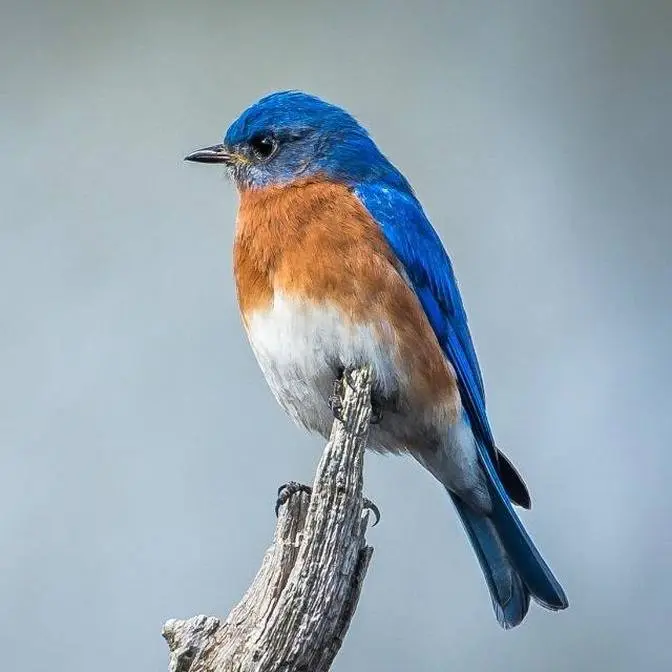
When we think of a bird, we picture a small creature that sings and flies. Yet, there are species that defy all these conventions: some are flightless, others hunt like reptiles, some perform dances to woo mates, and there are even species that look like they stepped straight out of the age of dinosaurs. In this documentary, we encounter eleven of the planet's most extraordinary bird species. You will see birds with incredible beaks; plumage that resembles gemstones or absorbs light much like a black hole; birds born with claws on their wings; others as heavy as a young child that never leave the ground; and some capable of mimicking almost any sound they hear. Each species is a marvel of evolution. Eleven bird species so extraordinary, it is hard to believe they actually exist.
AI Generated·May contain errors
Video Summary
AI Generated
This video showcases the extraordinary diversity of the avian world, highlighting species with unique physical adaptations and behaviors. From the prehistoric shoebill and the intelligent kea to the echolocating oilbird, the content explores how specialized evolutionary traits allow these birds to thrive in diverse environments across the globe.
Birds seem like familiar creatures to us. Here is a sparrow outside the window,
there is a pigeon in the square. But you only have to peek into the most remote corners of
the planet to discover that true wonders of nature are hiding among the birds.
One digests leaves like a cow, another carries a beak longer than its own body,
another feeds only on bones, and yet another sings with the voices of the whole forest at once.
We will travel all the way around the world, from the African swamps to the islands of the Pacific,
and at the very end, we will meet a ghost bird that almost no one has ever seen.
Ahead of us are the 11 most unusual birds in the world. Let's begin in the African swamps,
where the shoebill stands frozen among the reed beds, a bird that looks as if someone from a long
vanished age had come back to life. Everything about it is exaggerated and strange. The height
of a person, the heavy gaze of unblinking eyes and, of course, the beak. Huge, swollen,
shaped like a wooden clog, it is one of the three longest beaks of all the birds in the world.
For such an outfit, the shoebill was nicknamed the king of the swamps,
although its close relatives are not the storks at all, as was once thought, but the pelicans.
This bird hunts with astonishing patience. The shoebill can stand in the water for hours,
completely motionless, blending into the vegetation like a statue, only now and then moving its head.
The prey, suspecting nothing, comes right up close, and then follows a lightning-fast strike
with the whole body, and the mighty beak, with its sharp edges and a hook at the tip, does not
miss. This ambush tactic succeeds far more often than it does for most marsh birds, because
other creatures fail to notice the motionless giant until the very last moment.
The shoebill also has its own strange way of communicating. Most of the time it is silent,
but near the nest, or when meeting another of its kind, it begins to clap the two halves of
its beak together forcefully, producing a dry rattle that sounds like a burst of distant machine
gun fire. This bird lives a secretive, solitary life, and there are few of them left in the world,
by various estimates only several thousand. That is why an encounter with the king of the
swamps and the wild is considered a rare stroke of luck. The shoebill's wingspan exceeds two meters,
and it jealously guards its patch of swamp, keeping strangers away. The bird also has an
unsettling habit. After studying a newcomer for a long while with its heavy gaze, it suddenly makes
a deep bow, a gesture that sends a chill down the spine. The shoebill feeds on large fish and other
swamp creatures, and it also lives a long time, up to several decades, thanks to its fearsome
appearance and its rarity. The shoebill long ago became a coveted target for those who travel to
Africa in search of unusual birds. Let's move to the warm river floodplains of South America,
to the coastal thickets and swamps, home of the hoatzin, a bird built in a completely different
way from all the others. It looks comical, reddish-brown plumage, bluish bare skin on the face,
and a spiky crest resembling a tousled mohawk. But the hoatzin is famous not for its looks,
but for its smell. It reeks of manure and rotting leaves, which is why it was nicknamed
the stinkbird. The secret of this perfume lies in its unusual digestion. The hoatzin feeds almost
entirely on leaves, and it digests them the way cows do, not birds. In its enlarged crop
live special bacteria that ferment the tough greenery. There is no other bird like it in the
world. Only the hoatzin has acquired this kind of fermentation at the front of its digestive tract.
A side effect of this inner kitchen is that strong stench, and clumsiness as well. The bulky crop
crowds the breast muscles, so the hoatzin turns out to be a rather weak flyer. But the most
astonishing thing is hidden in the young birds. Hoatzin chicks have real little claws at the
bend of the wing, which they use to grip branches and climb trees like small ancient lizards. If
such a chick falls into the water, it knows how to get out and clamber back up to the nest,
clinging with those hooks. Because of these ancient traits, the hoatzin is called a living
fragment of the distant past, and its inedible smell, moreover, reliably drives away anyone who
might covet it. The hoatzin stays in one place and hardly drinks at all. The juicy leaves give it
enough moisture. These birds are loud and noisy, answering one another in chorus and filling the
thickets with harsh, grating sounds. And in one South American country, the hoatzin is so prized
for its rarity that it was made the national bird, a rare honor for such an oddball. The hoatzin
builds its nests right above the water, on branches leaning over quiet backwaters. Its kinship with
other birds is so distant that scientists took a long time to decide where to place it on the bird
family tree. And now to the high Andes, to a bird that seems to break every rule of proportion.
The sword-billed hummingbird is the only bird on the entire planet whose beak is longer than its
whole body, not counting the tail. Thin, straight, and incredibly long, it juts forward like a rapier,
and against the tiny little body it looks almost implausible. It is also one of the largest
hummingbirds, and it lives in the cloud forests of the mountains from Venezuela to Bolivia.
Such an astonishing beak did not appear by chance. The sword-billed hummingbird feeds on the nectar
of flowers with very long tubular corollas, whose depths no one else can reach, and the two seem
made for each other. The bird and the flower changed together over the centuries, matching
the length of the beak to the length of the corolla. Hovering in the air, the hummingbird
plunges its sword deep into the flower, obtaining nectar that is out of reach for its rivals.
There is a price to pay for such a marvelous tool. The beak is so long that the bird cannot
use it to clean its plumage, as all other hummingbirds do, so the sword-billed has to
tidy its feathers with its little feet. In flight, it holds its beak raised to balance its weight,
which makes the tiny bird look as though it were proudly carrying a slender sword before it.
You will not find a living example of such extreme specialization anywhere else in the world.
The beak itself stretches a good 10 centimeters, and this bird gladly visits the feeders hung up
for it. Like all hummingbirds, the sword-billed can hover in one spot, and even fly backwards,
only it does all this with an enormous load sticking out in front. To keep it fed,
the small heart of such a bird beats with unimaginable speed, and it is seldom seen.
It lives scattered, and an encounter with it is a real stroke of luck for bird lovers.
Such a close alliance of flower and bird is a great rarity even in the Andes,
a place so rich in wonders. Let's go to the forests of Australia,
in search of a bird whose main gift is hidden in its voice. The lyrebird. On the outside,
it is a rather modest, ground-dwelling bird, about the size of a chicken. But in the courting season,
the male unfurls a magnificent tail whose curved feathers form something resembling
an ancient lyre. For this show, he comes out into an open clearing in the forest,
and freezes, his fan spread wide. The real wonder, however, is the way it sings.
The lyrebird is an unrivaled mimic. It precisely reproduces the voices of dozens of other birds,
weaving them into a long, unbroken song. Having heard someone else's trill just once,
it memorizes it, and repeats it so faithfully that even the very birds whose voices it has
borrowed can be fooled. From fragments of dozens of different songsters, the lyrebird weaves its
own medley, which sometimes rings out over the forest for many minutes on end. This mastery
helps it win over a mate. The richer and more accurate the male's song, the better his hopes
of attention. For all the power of its voice, the lyrebird is astonishingly secretive and wary,
so it is heard far more often than it is seen. Scientists still argue about why it needed such
a stock of borrowed voices, and how a whole forest choir fits into a bird's small memory.
The lyrebird is one of the largest songbirds in the world, and its lavish tail is made up of
sixteen special feathers. As it scratches through the forest litter in search of food,
it loosens and turns over the soil along the way, which is why it is sometimes called the
gardener of the forest. This mimic sings with particular zeal in the cold season,
when the forest falls almost silent, and its concerts can be heard far and wide.
And in the middle of his song, the male throws his magnificent tail forward, covering himself
with it like a shimmering, silvery canopy. The lyrebird imitates with such skill that recordings
of its songs sometimes cannot be told apart from the forest's real chorus of voices.
Now we head for the mountains of New Zealand, home of the world's only true alpine parrot,
the kea. Olive green, sturdy, with a curved grey-black beak, it is unremarkable,
until it spreads its wings. Then, bright orange and red plumage flares up underneath.
Unlike its tropical relatives, the kea has settled among the harsh ranges of the South Island,
where there is snow for half the year, and it feels perfectly at home there.
The kea is famous for its intelligence, which has few equals in the bird world. It solves puzzles
that take several steps, works together with its companions, and even uses tools in the wild.
For example, it adapts little sticks to reach what is otherwise out of reach.
For its ingenuity and liveliness, it was nicknamed the feathered monkey. In sharpness of mind,
this parrot is comparable to true primates. The kea looks at everything in the world with
insatiable curiosity, and is not at all afraid of the new, so it pokes its beak into every novelty.
It was precisely curiosity that made the kea both famous and mischievous.
Near mountain huts and ski resorts, it boldly plunders anything poorly stowed.
It tears off rubber seals, rips open backpacks, and takes apart the gear of careless hikers
piece by piece. For its character and striking looks, the kea earned a place on a local banknote,
but in the wild, there are worryingly few of these clever birds left.
The kea stands about half a meter tall, nests right on the ground and crevices between the rocks,
and lives a long time for a bird. For its tireless, playful nature, it was nicknamed
the clown of the mountains. The kea loves to fool around and play, and in a snowfall,
it rolls about and slides down the snowdrifts with obvious pleasure. No wonder everyone who
has climbed into the New Zealand mountains is sure to remember meeting this bold and curious parrot.
In captivity, the kea reaches a very old age, and in the wild, it keeps to small,
noisy groups, exploring everything around it together.
Let's climb even higher, to the heights of the mountain ranges of Europe,
Asia, and Africa, where the bearded vulture soars. It is one of the largest birds sailing
over the peaks, with a wingspan of a good couple of meters, but even more astonishing than its
wingspan are its tastes. The bearded vulture feeds almost entirely on bones, a case unique
of its kind among birds. Where others make do with soft prey, it collects what is left
of other animals' feasts—gnawed bones. To get at the nourishing marrow, the bearded
vulture came up with a trick worthy of a true master. A large bone that cannot be swallowed
whole, it grabs, rises high into the sky, and drops onto the rocks, then flies down
for the broken splinters. Small bones it swallows whole, and its stomach copes with them.
The juice in it is so caustic that it dissolves even hard bone. The bearded vulture has plenty
of such food, since it has almost no rivals for it. This bird also has a strange grooming habit.
By nature, the bearded vulture's breast and neck are pale, but it deliberately bathes in puddles
and springs rich in reddish, iron-laden clay, so the feathers on its breast and head are dyed a
warm, rusty red. Why it needs this outfit, scientists still argue. Perhaps it shows off
its age and strength this way, or perhaps it simply follows an old habit. Either way,
you will not find another feather dandy in the world that dyes its own feathers.
The bearded vulture can swallow astonishingly large bones, and the bird does not acquire its
adult outfit with the rusty breast right away. Some experts can tell the age of its owner by
how intense the colour is. Bearded vultures build their nests on inaccessible rocky ledges
that few are able to reach. It soars so lightly, and for so long, that from a distance it is often
mistaken for an eagle, until one makes out the characteristic wedge-shaped tail, and the tuft
of dark feathers under the beak, resembling a little beard which gave the bird its name.
At one time, the bearded vulture disappeared from many of Europe's mountains,
but it was brought back again, and now it once more soars over the Alps.
Let's move to the rainforests of New Guinea, the kingdom of the most lavishly dressed birds
in the world, the birds of paradise. There are dozens of species here, and each one shows off
an incredible finery. Long, iridescent feathers, showy collars, crests and ribbons such as no one
could invent on purpose. But the main wonder is not the outfit itself, but how the males
put it to use. In the courting season, each species puts on its own show. One male opens
a velvety black collar and an iridescent blue-green shield on his breast, arranging
them into something like a glowing mask and starts dancing with gusto. Another hangs upside
down to display himself in all his splendor. A third clears a stage on the ground in advance
and keeps it tidy. Each of these performances is a carefully rehearsed dance, polished down
to the last detail. All this brilliance exists for the sake of choice. The females judge their
suitors demandingly, and the best outfit, together with the best dance, decides the outcome. It was
precisely the strict taste of the females that, over the centuries, honed all this splendor,
pushing feathers and movements to an unimaginable extravagance. These shows unfold in the depths of
the humid forest, far from prying eyes, and only a lucky few manage to see them with their own eyes.
Altogether, there are about 40 species of birds of paradise, and most of them live only in New
Guinea and the neighboring islands. They could afford such sumptuous finery for good reason.
They have few enemies in these forests, and instead of hiding, the males competed in beauty
for centuries. For the sake of their dance, some males hone their skill for years, repeating the
movements again and again until they reach perfection, because a second chance to make
impression may never come. And some species are so closely related that they sometimes produce
never-before-seen hybrids, the likes of which are found nowhere else. From dry land, let's move out
to the open sea, in search of a bird that spends almost its whole life in the air, the frigatebird.
The male of this large seabird has an astonishing ornament under its beak, a bright red throat pouch,
which in the courting season he inflates like a big red balloon to show off to the females.
From a distance, those scarlet spots against the blue sky and sea look like a trail of little
lights. The frigatebird's true element is flight. Light with huge, narrow wings, it can stay aloft
for weeks, gliding over the ocean on rising air currents and barely flapping its wings.
It even manages to sleep on the wing in short snatches without coming down to the water,
and in lightness of bone relative to its wingspan, it has few equals among birds.
This airborne life has its reason too. The frigatebird's plumage is not waterproof,
and it simply cannot settle on the waves because otherwise it would never take off again.
That is why it snatches its prey right at the surface, on the fly, and sometimes even deftly
steals the catch from other seabirds in midair. Its whole life passes between sky and sea,
and it comes down to dry land only for a while to rest. The frigatebird's wingspan reaches more
than two meters. Rising on updrafts, it climbs to enormous heights and can cover hundreds of
kilometers over the ocean while spending almost no energy. And the male does not inflate his
scarlet pouch all at once. Filling it with air to the brim takes quite some time. The frigatebird
sleeps right in flight, in snatches of a few seconds, switching off only half of its brain
while the other half keeps steering the flight. These birds often accompany moving ships and
hover over schools of fish, scanning for prey right at the surface of the water.
Let's return to dry land, to the African savanna, where the secretarybird strolls about,
a bird of prey like no other. It looks curiously gangly. An eagle-like head and hooked beak are set
on long, thin, crane-like legs, and on the back of its head sticks out a tuft of feathers resembling
the quill pens behind the ear of a clerk of old, which is why it was nicknamed the secretary.
The most unusual thing is how it earns its living. Almost all birds of prey spot their
quarry from on high and strike from the air, whereas the secretarybird hunts on foot. For days
on end, it walks through the tall grass, covering many kilometres a day, flushing small creatures
out from right under its feet. Its long legs raise it high above the ground, letting it see
far over the grass and walk confidently where other birds would have to take to the air.
For all its life on the ground, the secretarybird is a superb flyer,
and to spend the night, as well as to nest, it flies up into the flat crowns of trees.
Pairs of these birds stay together and circle together high in the sky,
then descend again to the open grassland. The slender silhouette of the secretarybird striding
across the savanna on its stilt-like legs has become one of the most recognisable images of
African plains. For its bearing and striking appearance, the secretarybird was placed on a
national coat of arms, a rare honour for a feathered hunter that preferred solid ground
under its feet to the sky. Its wingspan exceeds two metres, and in the air, it looks very different
than it does on its thin stilt legs. And for the local pastures, it is a welcome neighbour.
It unfailingly clears the grass of all the troublesome small creatures.
Let's go underground, into the dark caves of northern South America, home of the oilbird,
a bird that has chosen a life more like that of a bat. By day, it hides deep in the caves,
crowding there in noisy, numerous colonies, and it goes out to feed only when darkness falls.
It is the only nocturnal flying bird in the world that feeds on fire. The most astonishing thing
is how the oilbird finds its way in the absolute darkness underground. Flying where not a single
ray of light gets in, the bird gives out short clicks and, from their returning echo, understands
where the walls are and where there is a clear passage, just like bats with their natural sonar.
Among birds, only a handful of species have this ability, and the oilbird is the most famous of
them. At night, after leaving the cave, the bird searches the forest for the oily fruits of palms
and laurels, relying on its keen sense of smell and its large eyes adapted to the dark. When it
finds a tree with ripe fruit, it plucks them right on the wing, without landing on a branch. Then it
flies back again to its home cave, where it is greeted by the discordant clamour of hundreds
of its fellows, which echoes in the darkness around the clock. Under the vaults of a single
cave there are sometimes thousands of oilbirds, and the best known of these caves long ago became
a local attraction. As it eats the fruit, this bird scatters seeds through the forest,
unintentionally helping it spread, and it nests right there in the cave, on high ledges above the
And so, dividing the night between cave and forest, the oilbird lives in a way not at all
like a bird. At dusk, the birds pour out, and towards morning they return in an endless stream.
By day, deep in the cave, eternal twilight reigns, and only the clicks and clamour of the birds
betray that life is teeming here. And finally, a bird that the islanders themselves nicknamed
the Ghost of the Forest. The kagu lives on just one remote island in the Pacific Ocean,
in the forests of New Caledonia, and is found nowhere else in the world. Pale ash-grey,
as if dusted with mist, with bright red legs and beak, and a tall crest like a cockatoo's,
it truly resembles a disembodied shadow gliding across the forest litter.
The kagu can barely fly, and it spends its whole life on the ground. It has a feature that no
other bird in the world has. The kagu's nostrils are covered by special leathery flaps, which are
called, precisely that, nasal corns, and they are thought to protect it from dust and debris
while the bird probes the soil with its beak in search of insects. What is more, the kagu is the
last surviving member of an entire family of birds. It has no close relatives left at all,
and stands completely alone on the bird family tree. And every morning, even before dawn,
the forest rings with its drawn out call, which sometimes lasts a quarter of an hour.
The very ghostly cry that gave the bird its name. The kagu's plumage is covered in a special powder
that protects the bird from the dampness of these forests, and it spreads its short wings wide
during its elaborate dances and territorial disputes. The islanders made the kagu their
symbol, and there was a time when its call even played on local television at the end of the day.
The kagu is nimble on its feet, too. When fleeing danger, it does not take off, but races along the
ground in long bounds, zigzagging between the tree trunks. A pair of kagu stays together and guards
its patch of forest, making it ring with their duet. But behind all these wonders lies a worry.
The kagu is rare and vulnerable. Predators brought to the island, and the loss of forest pushed it
to the very brink. And there was a time when it seemed the ghost of the forest was about to vanish
forever. It is also built in a very peculiar way. Its blood contains an unusually small number of
red blood cells, but each of them carries three times the usual amount of the oxygen carrier,
a puzzle that scientists are still pondering. In protected corners of the island cleared of
introduced predators, the kagu is gradually returning, and that inspires cautious hope.
Whether this strange bird, unlike any other, will manage to hold on to its one and only island
is a question to which, for now, no one has an answer. Take care of nature's feathered wonders.
Behind each of them lies a whole world with its own secrets, found nowhere else.
Thank you for watching.