
Filippo Maria Gherardeschi (1738-1808) - Messa in re minore
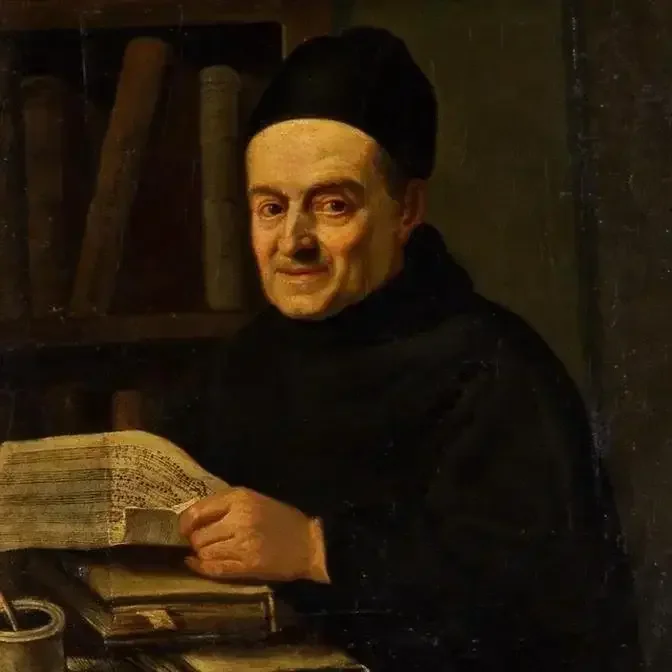
Buon compleanno Filippo Maria Gherardeschi! 🙏🏼🍷
Composer: Filippo Maria Gherardeschi (1738-1808)
Work: Messa in re minore
Performers: Camerata Musicale;
Coro Polifonico Sаn Nicolа; https://tinyurl.com/yc88u8w2
Stefano Bаrаndoni (conductor); https://tinyurl.com/5y59rdme
Messa in re minore
1. Kyrie 0:00
2. Gloria 3:37
3. Credo 9:07
Painting: Unknown artist (18th Century) - La piazza dei Miracoli di Pisa
HD image: https://flic.kr/p/2sFbzGU
Further info: https://imslp.org/wiki/Category:Gherardeschi,_Filippo_Maria
Listen free: No available
---
Filippo Maria Gherardeschi [Gherardesca]
(Pistoia, 11 October 1738 - Pisa, 30 September 1808)
Italian organist and composer. He began his musical education in his home town, where his father, Giuseppe Gherardeschi, was organist at the churches of SS Trinità and Santa Maria dell’Umiltà, and his uncle, Atto Gherardeschi, was cantor in the chapel of Pistoia Cathedral. He continued his studies in Bologna with Giovanni Battista Martini from 1756 to about 1761, when he was admitted to the Accademia Filarmonica. In 1763 he was appointed as maestro di cappella in Volterra, at the same time as he functioned as organist in Pisa. There he soon attained notable fame, being invited to play the harpsichord at court, for the patrician families of Pisa, and at the town theatre of the Accademia dei Costanti. In 1770 he obtained the post of director at the Pistoia cathedral. In 1771 he resigned from the cathedral, and the post was taken up by his brother Domenico Gherardeschi (1733-1800), who was already organist there. In 1783 Pietro Leopoldo, Grand Duke of Tuscany, appointed him 'maestro di musica' to his children and director of concerts (when the court was resident in Pisa), and in 1785 appointed him organist and maestro di cappella at the Chiesa Conventuale dei Cavalieri di San Stefano at Pisa, a post he retained until his death. Despite he spent his whole life in Tuscany, he corresponded with Padre Martini until the latter’s death in 1784 (39 letters). As a composer, his music is little known, but includes seven operas, 10 sonatas, a concerto, and numerous sacred works, as well as a treatise, 'Elementi per suonare il cembalo'.