
Constant Lambert - The Rio Grande (1927)
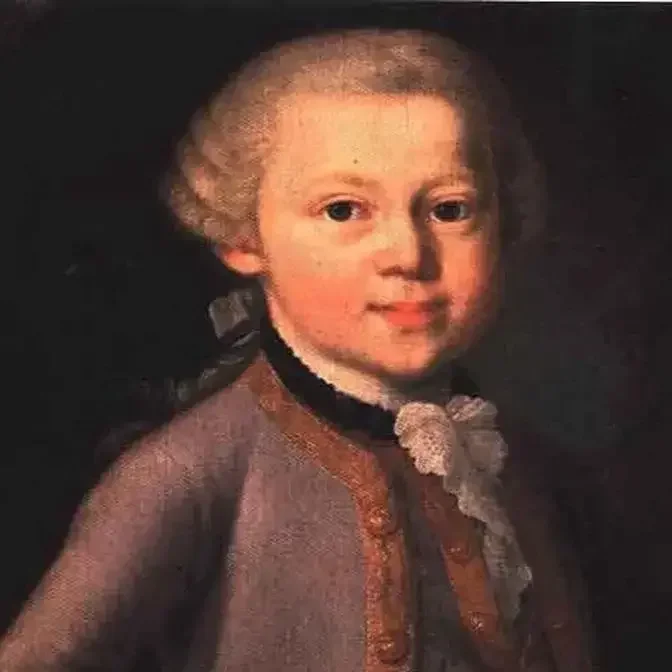
Leonard Constant Lambert (23 August 1905 – 21 August 1951) was a British composer, conductor, and author. He was the founding music director of the Royal Ballet, and (alongside Dame Ninette de Valois and Sir Frederick Ashton) he was a major figure in the establishment of the English ballet as a significant artistic movement.
Please support my channel on
https://Ko-fi.com/bartjebartmans
The Rio Grande (1927) Ballet for alto soloist, mixed chorus, piano, brass, strings and percussion.
Librettist: Sacheverell Sitwell (1897–1988)
Dedication: To Angus Morrison
Cristina Ortiz, piano
Jean Temperley, mezzo soprano
The London Madrigal Singers and London Symphony Orchestra conducted by André Previn.
The Rio Grande is a secular cantata by English composer Constant Lambert. Written in 1927, it is a setting of the poem by Sacheverell Sitwell. The piece achieved instant and long-lasting popularity on its appearance on the concert stage in 1929. It is an example of symphonic jazz, not unlike the style of George Gershwin's Rhapsody in Blue, although it is very much Lambert's individual conception. It combines jazzy syncopation with lithe Latin American dance rhythms that create an air of haunting nostalgia. It was dedicated to Angus Morrison, who played at its first (broadcast) performance.
The text is a poem by Sacheverell Sitwell, first published in his collection The Thirteenth Caesar, and other Poems (1924). It contrasts the lively urban dancing in the city with the slow courtly dancing of the sarabande on the grassy banks of the river, and the singing of "forlorn madrigals". Andrew Motion has suggested that Lambert's music brings out the underlying sadness behind the poem's extravagant words, "suggesting such freedoms are exceptions to the general rule. Created between two world wars, in the aftermath of the general strike, it admits to an element of guilt in its escapism, and of guilt in its melancholy".
The poem refers to a river in Brazil which flows through a town and over a waterfall, although it is not clear if it is meant to refer to a real location or if it is entirely imaginary. There is a river called Rio Grande in the states of Minas Gerais and São Paulo. There are also states named Rio Grande do Norte and Rio Grande do Sul, as well as a city in the latter state called Rio Grande.
By the Rio Grande
They dance no sarabande
On level banks like lawns above the glassy, lolling tide;
Nor sing they forlorn madrigals
Whose sad note stirs the sleeping gales
Till they wake among the trees and shake the boughs,
And fright the nightingales;
But they dance in the city, down the public squares,
On the marble pavers with each color laid in shares,
At the open church doors loud with light within.
At the bell's huge tolling,
By the river music, gurgling, thin
Through the soft Brazilian air.
The Comendador and Alguacil are there
On horseback, hid with feathers, loud and shrill
Blowing orders on their trumpets like a bird's sharp bill
Through boughs, like a bitter wind, calling
They shine like steady starlight while those other sparks are failing
In burnished armor, with their plumes of fire,
Tireless while all others tire.
The noisy streets are empty and hushed is the town
To where, in the square, they dance and the band is playing;
Such a space of silence through the town to the river
That the water murmurs loud -
Above the band and crowd together;
And the strains of the sarabande,
More lively than a madrigal,
Go hand in hand
Like the river and its waterfall
As the great Rio Grande rolls down to the sea.
Loud is the marimba's note
Above these half -salt waves,
And louder still the tympanum,
The plectrum, and the kettle-drum,
Sullen and menacing
Do these brazen voices ring.
They ride outside,
Above the salt-sea's tide.
Till the ships at anchor there
Hear this enchantment,
Of the soft Brazilian air,
By those Southern winds wafted,
Slow and gentle,
Their fierceness tempered
By the air that flows between.