
Joseph Haydn - Canons Nos. 10-19 from XXVIIb (c.1798)
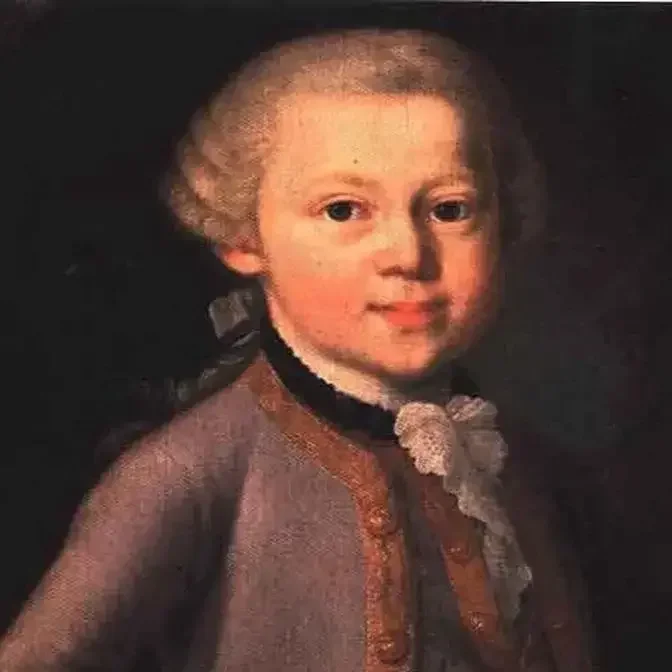
Franz Joseph Haydn (31 March 1732 – 31 May 1809) was an Austrian composer of the Classical period. He was instrumental in the development of chamber music such as the piano trio. His contributions to musical form have earned him the epithets "Father of the Symphony" and "Father of the String Quartet".
Haydn spent much of his career as a court musician for the wealthy Esterházy family at their remote estate. Until the later part of his life, this isolated him from other composers and trends in music so that he was, as he put it, "forced to become original". Yet his music circulated widely, and for much of his career he was the most celebrated composer in Europe.
He was a friend and mentor of Mozart, a tutor of Beethoven, and the older brother of composer Michael Haydn.
Please support my channel:
https://ko-fi.com/bartjebartmans
9 Canons from Gruppe XXVIIb (c.1798)
10. "Vixi!". 3 voices (0:00)
lyrics: based on Horatius (Horace) by Friedrich von Hagedorn (1708-1754)
11. "Der Kobold". 4 voices (1:42)
lyrics: Magnus Gottfried Lichtwer (1719-1783)
12. "Der Fuchs und der Marder". 4 voices (3:10)
lyrics: Magnus Gottfried Lichtwer (1719-1783)
13. "Abschied". 5 voices (4:04)
lyrics: unknown
14. "Die Hofstellungen". 3 voices (5:06)
lyrics: Friedrich von Logau (1605-1655)
15. "Aus Nichts wird Nichts - Nichts gewonnen, nichts verloren". 5 voices (5:35)
lyrics: M. Richey (?)
16. "Cacatum non est pictum". 4 voices (6:51)
lyrics: Gottfried August Bürger (1747-1794)
17. "Tre cose". 3 voices (8:20)
lyrics: Gennaro Federico (? - 1744) The text is from Pergolesi's "La Serva Padrona".
18. "Vergebliches Glück". 2 voices (11:20)
lyrics: From Arabia
19. "Grabschrift". 4 voices (11:52)
lyrics: Peter Wilhelm Hensler (1742-1779)
Györ Girls Choir conducted by Szabó Miklós
Here is an interesting observation about No. 19:
"It is this epigram that Carpani quotes in his ‘Haydine’ (Milan 1812), after having spent more than a dozen years in imperial service in the German-speaking region of Austria, on p.121 as ‘Here lies Hausbau with his wife.’ He considers it to be in the Lower Austrian dialect and connects one of his grotesque reflections to Haydn’s house in Gumpendorf. By the way, it’s peculiar to see from the sketches in the Aut. WoNB how much Haydn was preoccupied with this text".
Joseph Haydn composed a large body of unaccompanied canons for 2–8 voices, written in German and Latin, many with humorous or literary subjects, originally intended for private entertainment and later published in 1810 by Breitkopf & Härtel. Haydn wrote 56 unaccompanied canons in total, including 10 “Ten Commandments” canons from his London years (1791–1794) and 46 secular canons.