
Ernest John Moeran - Sonata for 2 Violins (1930)
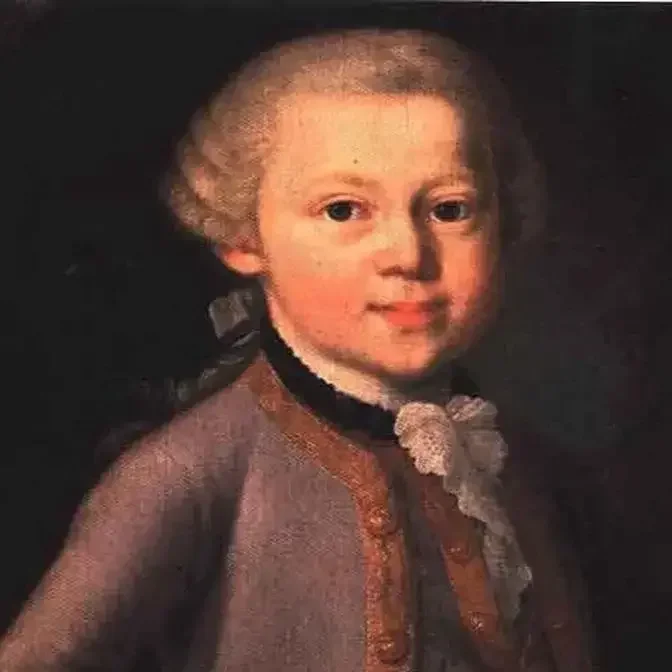
Ernest John Smeed Moeran (31 December 1894 – 1 December 1950) was an English composer whose work was strongly influenced by English and Irish folk music of which he was an assiduous collector. His output includes orchestral pieces, concertos, chamber and keyboard works, and a number of choral and song cycles as well as individual songs.
Please support my channel:
https://ko-fi.com/bartjebartmans
Sonata for 2 Violins (1930)
1. Allegro non troppo (0:00)
2. Presto (5:57)
3. Passacaglia (9:33)
Philippa Mo and Harriet Mackenzie, violins
The Sonata was written during a difficult time in Moeran's life.
An accident early in 1930 led to a period of convalescence which provided an opportunity for Moeran to reconsider his style. Gradually, new works were forthcoming: the Sonata for two violins (1930), the String Trio (1931), two orchestral pieces – Wythorne's Shadow (1931), and Lonely Waters (1932). A choral work, Songs of Springtime, a setting of seven Elizabethan poems, followed in 1933. Wythorne's Shadow was written possibly as a memorial for Heseltine. Several songs, including a cycle of six Suffolk folksongs, indicated the continuing importance of folk music to Moeran, and in 1931 he rejoined the committee of the Folksong Society. He also wrote some sacred music, to which he attached little value – "this tripe for the church", he called it, adding that he only did it for the money.
Moeran led an itinerant life in the 1930s, staying at his parents' various homes or with friends. However, as the decade progressed, he became more interested in his Irish roots and began to spend large parts of the year in a cottage in Kenmare, County Kerry, where he became a well-known and popular figure; Arnold Bax recorded a local comment: "If ever there was a move to elect a mayor of this town, Jack Moeran would be everybody's first choice". The peace that he found in rural Ireland inspired him to return, in 1934, to the long-abandoned symphony project. In the midst of this burgeoning creativity, Moeran continued to experience problems with alcoholism. In January 1935 he was ordered to spend nine months in a nursing home, having been found guilty in Cambridge of being drunk in charge of a motor vehicle. This interrupted but did not derail his work on the symphony, which was finally completed in 1937 and received its premiere in January 1938 in the Queen's Hall, under Leslie Heward. Heward went on to make an acclaimed recording of the Symphony with the Halle Orchestra at the end of 1942.
The years following the performance of the symphony were fruitful and produced a number of significant works. These included the Violin Concerto (1937–41), written largely in Ireland and reflecting strong Irish influences; the madrigal suite Phyllida and Corydon (1939), possibly influenced by the music of Bernard van Dieren; the Rhapsody in F ♯ for piano and orchestra (1943), written for the pianist Harriet Cohen; the short Overture for a Masque (1944), commissioned by the Entertainments National Service Association (ENSA); and the Sinfonietta (1944), inspired in part by the hills of the Welsh border country in Radnorshire, the latest location of the family home.
Read more about Moeran's life here: WWI, his friendship with Hesseltine, etc. etc.
https://en.wikipedia.org/wiki/Ernest_John_Moeran