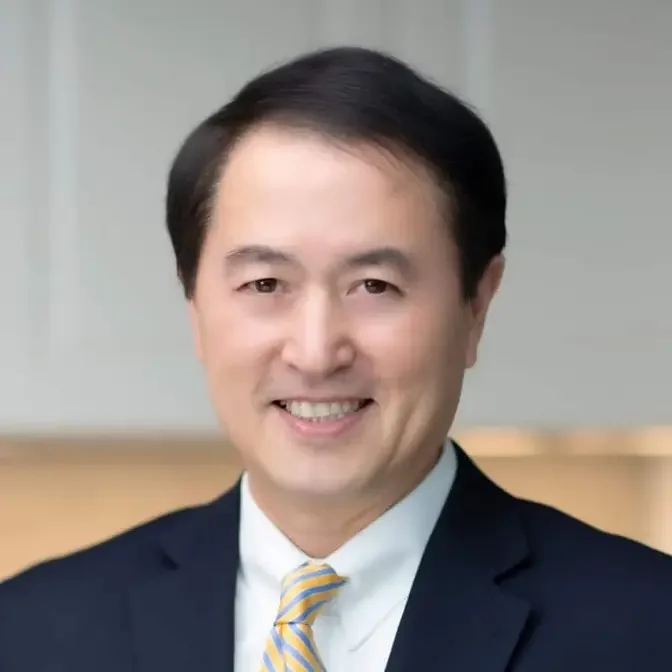
Dynasties come and go, yet timeless Chinese cultural and spiritual heritage always passed down from one generation to the next. All these, however, took a sudden turn since 1949 when the communist party came to power and it made every effort to disconnect the masses from their storied past.
Where does that leave today’s Chinese people? Join me to find out more about these stories from the past to the present.
Welcome to Tea with Erping.
Two weeks before the new year,
China celebrated another lunar milestone.
In December 2020,
China's Chang'e 5
successfully returned from the moon
with lunar rock samples.
I find these lunar missions quite curious,
not only because both China and the US
have great interest in space exploration.
Chang'e is China's goddess of the moon.
Perhaps until now,
you haven't paid much attention
to the name of China's spacecraft.
Chang'e, like the lunar rover Yutu,
are legendary names
known to virtually every Chinese person.
Just like how Western companies
draw ethereal inspiration from Greek mythology,
the Axis Communist Party
also turns to China's spiritual roots
to name its space probes.
China also has a new mission to Mars
reported to have entered
its planetary orbit in February.
Like Chang'e,
it has also been given a philosophical name,
Tianwen.
Translated into English,
Tianwen means questions to heaven.
It's named after a famous poem
by one of the greatest poets of ancient China,
Qu Yuan.
This poem has been described
as the written treasure of Chinese mythology.
These ancient names
were not chosen out of nostalgia to the Party.
It's a way to subtly suggest
that China started its space exploration
much earlier than its Western competitors.
While the space mission named after Chang'e
was much more recent
than the US Apollo missions 50 years ago,
both names have ancient origins
and they have very different stories.
According to Chinese legends,
Chang'e is the goddess of the moon.
Her husband Houyi shot down nine of ten suns
so that people would not die of excessive heat.
Yu Tu, meanwhile,
is the jade rabbit
that keeps Chang'e's company on the moon.
Most other Chinese space exploration projects
have also been given other worldly names.
There's Tianzhou,
Shenzhou,
Tiangong 1 and 2,
and a space weather explorer called Kua Fu,
a giant in Chinese mythology
who died when chasing the sun.
But this is just about as far
as the Party will go
in terms of referencing
Chinese divinely inspired past.
China has been,
how should we put it,
much more down to earth
when it comes to their actual policies.
Taoist and Buddhist organizations today
are required to show support for the Party.
Underground Christians,
Uyghurs,
Tibetan Buddhists,
and Falun Gong practitioners
continue to be arrested or mistreated,
and some have become victims
of forced organ harvesting.
That's not all.
Even stage productions about Chinese history
are heavily censored.
Two years ago,
Chinese state media
criticized five popular TV dramas
for focusing on
internal power struggles in the imperial palace
and corrupting today's life.
Historical epics
are the most popular kind of drama in China
and will first need to be approved
by the authorities before airing.
So why the censorship?
Beijing seems to be afraid
that similar situations are going on
inside the Party's top bureaucracy today,
that people might start getting ideas.
Soon,
all five TV dramas are off the air,
even though four of them
were based on the Qing dynasty 100 years ago,
and one from the ancient Warring States period.
I seldom watch these TV dramas,
but this still bothers me.
Why should the government tell us
what religion we can follow
and what TV drama is good or bad?
In that case,
will we ever have a chance
to decide anything by ourselves?
How can we have ambitions for the future
if we are without reference to the past?
The reason for all this
is related to the Communist Party's philosophy.
As the Chinese idiom goes,
A good example to show this
is the infamous
Hundred Flowers Campaign
from around the time of the Apollo program.
There is a famous saying of Mao Zedong,
In 1956,
Mao began the Hundred Flowers Campaign.
He told the people of China,
especially intellectuals,
to freely come forth
to share their criticism of the Party.
With these,
millions of letters were sent in.
A few months later,
the campaign was no more.
Mao gave the order
to crack down on now poisonous weeds.
He betrayed the trust of the people.
Leading Chinese thinkers,
students,
and activists
were sent to re-education camps.
These are the principles
that China has promoted
to serve the great cause
of socialist modernization.
The new vision set forth for China
extends to all aspects.
Its policy on religion,
the cultural heritage,
and foreign culture,
art,
science,
and technology.
Existing ideologies should be replaced.
And if needed,
force and coercion
can always be relied on
to instate them.
Confucius once said,
Today,
I want to also show you
the rich,
divinely inspired Chinese heritage,
and what's been missing
in Chinese society right now.
Like the Greek civilization,
China's 5000-year culture believes
the world begins with chaos.
There are also timeless myths,
immortals,
demigods,
and people who have supernatural powers.
The legendary Yellow Emperor,
who was widely regarded
as the first Chinese ruler,
used supernatural powers
to fight off enemies.
According to the Taoist text Zhuangzi,
he later became a Taoist deity.
He was said to have created
the Chinese lunar calendar
that we use today
with inspiration from heavens.
The book Yellow Emperor's Inner Canon
has been treated as
one of the most important medical works
on traditional Chinese medicine.
Taoism is probably as old
as Chinese civilization,
although it was only after Lao Tzu,
the Taoist founder,
wrote Tao Te Ching
that Taoism became an established
mind-body belief system.
His teachings include
the idea of yin and yang,
believing in harmony with the way,
or law of nature,
and non-action.
Such concepts have helped
shape centuries of Chinese culture.
Eventually,
in the Ming dynasty,
about 700 years later,
Taoism became the imperial state orthodoxy.
What about Buddhism,
you might ask?
Buddhism,
in fact,
came to China from the West,
in the East Han dynasty.
In an early episode,
I talked about Emperor Ming
and his dream
about a flying golden person,
who his ministers believe
is a western sage called Buddha.
Because of this dream,
the Emperor Ming
sent his people to the West
to search for Buddhism.
They brought back two Buddhist monks,
along with Buddhist scriptures,
on the back of a white horse.
For the two visitors,
Emperor Ming
built the famous White Horse Temple.
They stayed there
and translated 42 scriptures.
These were
the first Buddhist scriptures in Chinese.
Sadly,
you won't be able to see
much of the treasure
from this White Horse Temple
if you go there today.
The sculptures,
palm leaf manuscripts,
a jade horse,
were all destroyed
during the Cultural Revolution.
Even the temple was almost burned.
In 1973,
when Prince Norodon Sihanouk of Cambodia
wanted to visit the temple,
Chinese officials
secretly shipped thousands of items
from other temples and museums.
The Cambodian visitor,
however,
didn't know anything about this
and was impressed.
Also during the Cultural Revolution,
religion was called
superstition and foreign infiltration.
Religious rituals and terms were banned.
Some monks were even forced
to destroy their own temples.
Over the centuries,
Buddhism has been held
in high esteem in China
and revered as a state-sanctioned religion
by emperors of many dynasties.
Its ideas of karmic relationship
and retribution,
reincarnation,
compassion,
and salvation
for all predestined sanctioned beings
have profoundly changed China's language,
fine art,
music,
and literature.
To make offerings to gods
is a Chinese New Year ritual.
The famous novel
Journey to the West
is based on the legendary pilgrimage
of monk Xuanzang to India
to search for Buddhist sutras.
In case you ask,
the name of his assistant,
Monkey King,
is now used in another space mission.
Of course,
we cannot forget Confucianism.
Confucius might be
one of the most misunderstood sages
today in China and abroad.
Confucius was also denounced
after the Communist Party came to power,
and especially during the Cultural Revolution.
Nowadays,
people remember him
as one of the greatest Chinese philosophers.
But in traditional China,
Confucius was actually known
as a spiritual teacher
for his role in teaching people
to follow the mandate of heaven.
Zhao Fasheng,
a researcher at
China Academy of Social Sciences,
wrote about this in his article
on Confucius' belief.
He said that
Confucianism is known as
the scholarship of heavenly beings.
According to Zhao,
even in the book Analects alone,
Confucius mentioned heaven,
or will of heaven,
19 times.
He thinks that
the heaven that Confucius spoke of
is not an abstract concept,
but rather a supernatural divine ruler.
But in Atheist China under Mao,
religious beliefs like Buddhism,
Daoism,
and Confucianism
were considered ignorant.
Radical revolutionaries
criticized Confucius as backward
and wanting to bring the country
back to the so-called feudal times.
Conservatives,
because they intended to protect his teachings,
tried to prove that he is actually progressive
by highlighting his humanist side.
The religious aspect
has an important role in Confucianism,
short of which,
we won't be able to comprehend
the true spirit of Confucianism,
nor would we be able to sort out
the sources and characteristics
of Confucius' humanism.
We would then have a flawed
and incomplete picture of Confucius.
And this is basically what happened today.
In today's Chinese culture,
the divine soul and spiritual traditions
are no longer there.
To the Party,
any revival of traditional religious practices
and cultural heritage
was a threat to its rule,
rather than something
that could bring the people together in harmony.
When the acclaimed New York-based
produced a dance program
that featured traditional Chinese dance,
music,
costume,
Beijing got nervous.
Their diplomats abroad
demanded hosting theaters
to reject or cancel Shen Yun performances.
Under their pressure,
a few theaters,
such as the Royal Opera House in Madrid,
canceled shows
scheduled between January 31st
and February 2nd, 2019,
even though hundreds of tickets
had been sold in advance.
Just as China used Confucius' institutes
to influence education policies
in other countries,
it is trying to manipulate
the world's cultural institutions.
The Communist Party believes
that the international community
should listen to whatever it says.
Socrates once said,
But the souls of the righteous
are immortal and divine.
In this digital age,
people around the world
are still able to find inspiration
through some form of spirituality,
or from their divine cultural heritage.
The Communist Party has done all it could
to disconnect 1.3 billion people
from their spiritual and cultural heritage.
To me,
this is the most harmful thing.
The Party says
it aims to serve the people
with its materialistic culture.
But I fear the opposite is true,
that it has been eroding
the very foundations of Chinese society.
There is a lack of trust
between people and government,
and even among people in general.
How do we mend from here?
Despite Beijing's rigorous repression,
religious revival among Chinese
does not appear to be abating.
A 2017 Freedom House report says
that there are more than
350 million religious believers in China.
They are primarily made up of
Chinese Buddhists,
Falun Gong practitioners,
Christians,
Muslims,
and Tibetan Buddhists.
In 2012,
a Pew Research Center report found that
more than 294 million people,
or 20% of the Chinese population,
practice folk religions.
In China,
Communist Party members
and government employees
are not allowed to follow any religious faith.
But many privately do,
even at the risk of
losing their career opportunities.
As an old saying goes,
you can kill all the roosters,
the dawn still comes.
Buddhism holds that
Man cannot live without a spiritual life.
We all believe in something.
Everything we do is actually based on
something we believe in.
Tens of millions of Chinese people
are still seeking China's spiritual traditions,
or joining underground religions and practices.
Their courage gives me hope for China,
and I hope you,
like me,
will support them.
St. Augustine once said,
Well,
where there is tea,
there is hope.
After all,
tea is liquid wisdom.
Thank you for watching.
Until next time,
peace and tea be with you.