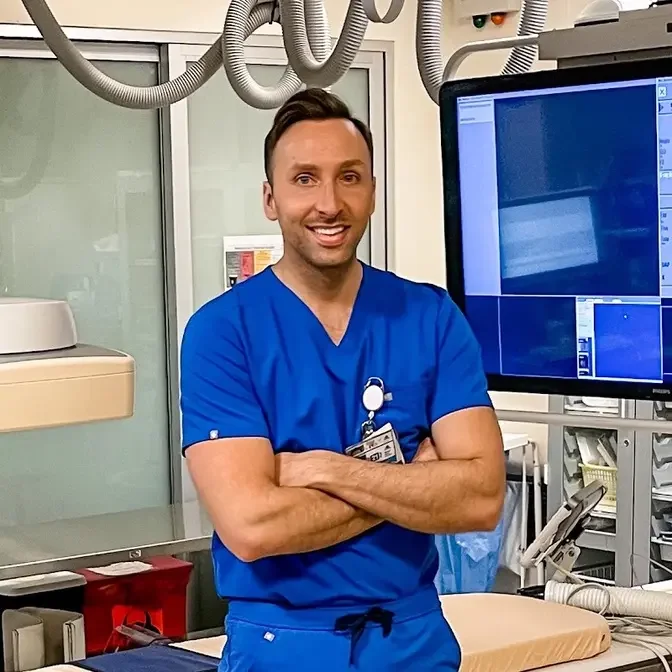
I've been out of medical school for a while now, so it's about time for me to reflect on things I wish I knew before med school. I listed 5 things I wish someone would have told me prior to starting med school, and hopefully it helps some of you all out as well!
What is going on everybody? Welcome back to my channel. For those of you who are new around
here, my name is Michael aka Dr. Cellini and I'm a sixth and final year interventional radiology
fellow in New York City. Now on today's video we are going to be talking about things I wish I knew
before going into med school because the hindsight is always 20-20. Maybe it can help you all out in
the future signing up for this whole med school route. So let's go ahead and get into it.
All right so like I said the hindsight is always 20-20 and I've had some time now to kind of think
back about things I wish I knew before going through this whole med school route and this
whole physician route. Maybe it'll help some people decide one way or the other. Number one,
med school is expensive. So I pulled up the U.S. News World Reports here. Kind of get a taste of
how much med school actually costs these days. According to the AMA or Association of American
Medical Colleges, the median four-year attendance for private med schools added to about $338,000
over the four-year course. That cost is 2% higher than in the prior year and it's around $82,000
greater than the median in-state cost of public medical schools in 2019 and 2020. Furthermore,
among the 48 private medical colleges that submitted tuition and fees to the U.S. News
World Reports, the average charge for the 2019-2020 school year was $57,937 a year. So a tuition of
almost $58,000 per year times four is $200,000 plus $32,000. So almost like $235,000 roughly.
That's a lot of money. Now I know a lot of people say doctors are notorious for having large
salaries upon finishing medical school and their residency training, you know about six to ten
years down the road. So a lot of people think that taking on this amount of debt really isn't
that big of a deal since, you know, physicians make such a larger salary on average. Taking on
a quarter million dollars in debt is a big deal and it's not something to look past. Now should
it sway your opinion one way or the other going to med school? Probably not, but I think it's a big
factor because a lot of my friends and colleagues that went to medical school have anywhere from
$100,000 to upwards of $450,000 in debt and it compiles year after year and interest is a
you know what. So you end up finishing residency with a pretty nice size chunk of debt. So a lot
of times I tell my pre-med students who reach out to me that you need to try and find the cheapest
school, the cheapest university you can go to and also the same thing for medical school as well.
There's little difference amongst all of the medical schools across the U.S. with the exception
of a few of the top programs. So like Harvard, you know the Harvard name means a lot, or like UPenn
or Yale, Stanford, those kind of top tier programs the name carries with you forever but if it's not
one of those top programs your medical training really doesn't matter. Your residency training
is what matters the most. That's where you learn how to be a doctor not in medical school. Some
people are going to hate me for that but it's the truth. So before you try to go to an expensive
private med school for $70,000 a year, try to get accepted to a cheaper one. And I know that's
easier said than done because you kind of have to take whatever acceptance you get but do your best.
Number two, it's very long. Medical school journey is extremely long and can vary anywhere from 12
to 14 to 17 years post high school. For me personally, I did four years of university,
four years of medical school, one year surgery internship or first year residency, four years
diagnostic radiology residency, and one year fellowship in interventional radiology, which
equates to 14 years of training. Some may say you don't want to waste your 20s or the best years of
your life studying in a book all day long and in some ways I agree with that. A lot of your 20s are
spent in a textbook if you go into anything medically related. But I think it's also an
investment at the same time because you can still have fun, you can still have those experiences
that normal 20-something year olds have, you just have to be more strategic in how you do them. You
may have to study a whole bunch during the week to prepare for that weekend or week trip but it's just
a little different. You can still get away and find time to have fun and hang out with friends
or whatever you want to do in med school. It's not the end of the world, everything's possible,
you just have to plan accordingly. And I mean after a test you're not studying for that like
entire weekend so just go out and have fun. But yes, the medical school process in becoming a
is very long. But you guys knew that already. Number three, nobody holds your hand in med school.
Now you kind of learn this the hard way because as soon as you start med school you're virtually
on your own. Everything is self-study and self-learning and it's up to you for how much
you want to succeed in medicine. Some people work way harder than others to land that golden
super difficult residency in Harvard classic surgery or whatnot and some just kind of do a
little bit in between. It's completely up to you and no one's going to hold your hand or tell you
otherwise or even give you guidance on how to do it or what to do. Like you're completely on your
own. From day one no one sits down and tells you how to study, what to study, what's important for
the rest of your life. No one tells you at the end of medical school how to get in a good residency.
No one tells you what the secret is. No one tells you how to write the best letter of recommendation.
It's all like trial by error. That's like the whole medical school residency journey. You just have to
get in there and figure it out on your own. Now luckily we have a whole bunch of YouTube videos
and tutorials and mentors that can kind of help us get along nowadays but you're still really on
your own and no one ever told me that. So if you're someone who needs someone to hold your hand the
entire medical school journey you may either have to break that or try something else. So again if
you're one of those people who likes their hand held throughout their life or throughout school
and tells you how to study and all this stuff you may want to reconsider med school or you may just
want to learn how to kind of be more productive on your own because no one's holding your hand
in med school I can tell you that much. Now I already talked about this a little bit but
medicine doesn't necessarily have to consume your life. You can do other things outside of medicine.
Now is medicine very time consuming and is studying medicine very time consuming? Yes. However that
doesn't mean you can't do anything but study medicine. In fact I encourage you to do otherwise.
You need to find hobbies outside of medicine and make friends outside of medicine because it's
nice to kind of get away and do things to clear your head and not be surrounded by medicine all
the time. This is most important in medical school and residency where your hours are very long,
you're studying a lot or in residency you're working a lot and every chance you get you just
need to do something else whether it be rock climbing, going to the gym which gyms are starting
to open now, painting, surfing, I don't know what. Do something active, do something fun and just do
something to get your mind off of medicine and that's really all I have to say about that one.
I don't know if I like this angle. I feel like this is a bad angle for me. All right now the last tip is
arguably the hardest and that is it's very beneficial to have a partner with you during
this entire process and I say that for multiple reasons. One it's an escape. You have someone to
talk to, you have someone to talk you through things when times are tough, you have someone
just to bounce ideas off of and talk with while you're going through these tough times and number
two it's also good because you have someone to help you out. So for instance as busy as I am during
residency my wife helps me out more than you would ever know. She makes breakfast for me, she makes
coffee for me, she gets up when I do to go to work and she doesn't have to go to work for three more
hours after me. I mean that's those are just little things. She does laundry, she keeps up at the house
because she knows I'm working like a dog over at the hospital but also I'm running this whole
YouTube business when I get home so I'm constantly constantly constantly working and I just don't have
time to do normal day-to-day activities so she helps out so much. Oh how about dinner too? I mean
she's the best and I don't think I could do this whole thing without her and now I know you guys
well it's hard for me to find someone blah blah blah. Yes that's true but it doesn't have to be a
significant other. It can also be a best friend and it can also be a classmate or a co-resident
as well but really it's just nice to have someone to kind of talk through things with. It's cathartic
and it's therapeutic in a way but for me my wife is that person. I couldn't have gotten here without
her and I don't think I could do any of this at all without her. She basically runs my entire life
outside of work and I'm okay with it. So whether it be a study partner, a co-resident, or a significant
other, having a good partner on your side makes all the difference in the world with this whole
process of medicine. So all right that officially concludes this video. I hope you all enjoyed it.
As always please leave a comment below. If I like it, I'll respond to it. Make sure you smash the
like, subscribe button, follow me on Instagram if you don't already. Otherwise I'll see you all on the next video.