
-Complete Walmart Kit for Overnighters.
2 Video Views·Nov 20, 2022
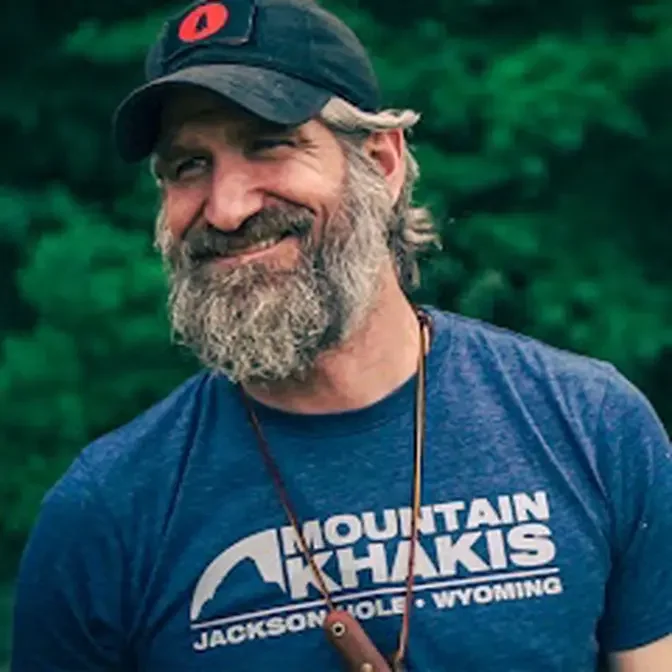
Hey everybody, this is Josh here, the Gray Bearded Green Beret. I wanted to do a quick video that's
kind of born out of necessity, flying back and forth from where we're at right now in
Northern California and the Adirondacks where I'm actually teaching physical classes and
in Ohio as well come spring. So, you know, most of the gear that I use for my videos is the same
gear that I use for physical classes, same gear I use in the field. But let's face it, baggage fees
are a real thing. So flying back and forth with that just wasn't something that was convenient. So
my main gear is in storage up near the Adirondack waiting for my next class at the end of next
month. So I've still got to go to the field here. So what do you do? Well, what I thought I'd do is
do a video going down to the local Walmart, source everything from my kit from there,
and see kind of how that compares. Really the question is, you know, I really don't like the
term better than nothing because I don't think we should set the bar at nothing. I think we
should set the bar at adequate. So the question is, can I duplicate the gear that I usually have
locally sourced, a little less expensive, probably a little less durable as well.
And two, is that gear going to be adequate for use in the field. So I'm going to do a quick video,
kind of an overview of all the stuff that I picked up, show you kind of how I put my kits
together, no matter what brand or product I'm putting in there, the needs that I'm trying to
provide for. And I'll kind of go into some more specifics on the individual kits in future
videos. And then I'm going to take this and use this in the field. I'm going to take it and do
some overnights up in the mountains here and find out if this gear is adequate and give you kind of
some pros and some cons of each piece of kit. And keep in mind, all this was sourced from the local
Walmart. Every good kit starts with some sort of backpack to put it in. And the backpack choices,
I gotta say, they were pretty limited as far as what I think of as a durable backpack. And I'll
admit this one is definitely a cheap model. The one that I chose is a lightweight hiking backpack
from Ozark Trail. Ozark Trail, I believe, is Walmart's brand. But this seemed to be the one
that would be big enough to sustain me in the winter in the mountains in Northern California.
So I went with this one. It's got a little bit of orange trim. So that kind of blends into my
signal kit. But that's the choice I went with. Ozark Trail lightweight hiking backpack. Then
every kit of mine starts the same way. You know, I want to provide for certain needs and I build
everything in kits. There's a fire kit, a shelter kit, a water kit, a food kit, first aid kit,
navigation kit, signal kit, and then lastly, some tools that help me facilitate all of my needs
while I'm out in the field. And within those, you know, essential kits, you'll also find the
10 C's. So there's some overlap right there. I just, when I think of kits, I think of them
as individual kits put together. All those kits contain the 10 C's at a minimum. So first kit is
the fire kit. For my fire kits, I like to have four different ignition sources. So I have some
redundancy. I also like to have some emergency tinder, even though I'm going to use natural
tinder most of the time. Sometimes I want to have that emergency tinder and I want to have
something to actually gather that natural tinder when I'm out in the field. So what I was able to
find is of course, some trusty Bic lighters. You can't go wrong with those. For matches,
I was able to get the Yuko Stormproof Match Kit, which if you know, these are my favorite matches
anyway. These are definitely an outstanding choice. So I was really happy to find those.
Then for the ferrocerium rod, I got a couple of different options because I'm not really familiar
with this one. This is the UST Strike Force Fire Starter. And apparently it has some tinder in the
handle as well. But you know, as far as a half inch diameter, this is all I could get. And I
probably only have, you know, two inches of working surface. So, you know, it's not what
I would normally carry, but I just want to know, is this adequate? Can I get a fire with it? Yes
or no? So that's what I got for a ferro rod. In addition, when we talk about my knife choice,
I got this, just a magnesium bar. This is also from UST Mag Bar Fire Starter. It's got a large
magnesium bar and a small ferrocerium rod on it. So it is redundant with this, but that magnesium
is a good emergency tinder. And the particular knife I chose is specifically designed for use
with that. So I kind of want to highlight that in a video. So that's really the only reason I have
this extra ferrocerium rod. Then for solar, solar was a little challenging to source there. I
couldn't find any Fresnel lenses. I couldn't find any small magnifying lenses. So I've got this big
three and a quarter inch dude that, I got this big three and a quarter inch magnifying lens that I
found in the sewing section actually. But it is a four power. So, and it has a little case in it.
So probably what I'll do is I'll take this ridiculous handle off of it and just use the lens
and I'll put it inside that protective case that it comes with. So that's what I've got for solar.
And of course I like to use solar anytime I can. As far as emergency tinder, I went with the UST
Wet Fire. I am familiar with these. These are very much like the Traxane fuel tablets, the fuel tabs
we used in the military. They work well even when they're wet. So this is a suitable emergency
tinder that I already have experience with. That's what I could find. That's what I chose.
Most of the time I'm going to use natural tinder. So I chose this, just a simple dry bag from
Outdoor Products. And I'm not sure about that brand. Never used them before. Outdoor Recreation
Group. But it seemed to fit the bill. It's a dry bag to put tinder in. And I think this is about a
0.5 liter. So about a half liter dry bag. Now it says five liter capacity. Okay. So I'm going to
get a lot of natural tinder in that. So I could probably put my entire fire kit in there, plus
fill it with tinder and be good to go. Right. So that's my fire kit. Every good shelter kit has
something to sleep under, something to sleep on, something to sleep in, and some cordage and stakes
to hold it all together. This one's no different. So what I did for something to sleep under
is I went with the UST again, Survival Blanket 2.0. I have used these in the past.
I got to say they have some shortcomings with the grommets, but this is in line with the five
minute shelter system that I teach and use. So this is at least something that I'm familiar with
for something to sleep under. As far as something to sleep in, no wool blankets or anything like
that. So what I got was a Ozark Trail again. That's Walmart's brand. It's a cool weather
mummy sleeping bag. The comfort rating is 30 degrees. Hopefully that'll be adequate in the
mountains of Northern California. We shall find out. As far as something to sleep on,
there were a lot of choices. There were yoga mats, there were fitness mats, and there were
camping mats. And the camping mats were actually more expensive and they weren't quite as thick. So
I actually went with a fitness mat because I liked how thick it was and I felt like it was
pretty comfortable. Just a closed cell foam fitness mat and it was actually one of the least
expensive options to use. So although I'm not going out there working on my fitness or anything,
I think it'll make a fine sleeping pad. We'll find out. And then as far as cordage and stakes
to hold together, I got just some regular ABS plastic tent stakes that I think will be fine
for the type of soil I've been encountering here. I've got six of those. I've got six of those
and a 100 foot hank of 550 cord from UST. I haven't opened these up to see how many
inner strands it has, but you know it's calling itself 550 cord. So we'll see. It's going to be
plenty enough for shelter applications that I'm going to be using it for. So 100 feet of paracord.
Couldn't find any bank line, but them's the break sometimes. Okay, so as far as a water kit,
I like to have some sort of container, some sort of pre-filter like a cotton bandana,
and I like to have some sort of way to thermally purify it. In addition, I don't mind having some
sort of water filter so that I can quickly make that water safe to drink while I'm on the move
and I expect to be doing some hiking up into the mountains. I won't always have time to stop and
boil water. So this is where some of the challenges came into play with the limited
products that were available. Normally I would take a single walled stainless steel water bottle
and I would just use that as both the container and the vessel that I thermally disinfect water
in, but they really didn't have any single walled options. They had double walled vacuum insulated
thermos style water bottles that were plenty large enough, but they were just
not something that I could thermally disinfect in. So I had to buy a kind of a cook set. This
is a cook set from Stanley. It's got a bunch of different things in it, a bunch of different
containers, spatula and all that that I don't need. I just need the stainless steel cook pot
so that I can boil water. And because I'm using that, I actually picked up just a couple of cheap
plastic water bottles so that once it's disinfected, I can put it in these containers
after it's cooled off and actually carry the water in that. But I don't really like the plastic
bottles because I can't disinfect the nose and I have to carry extra gear to thermally disinfect
and then put it back over rather than the stainless steel bottles that I typically use
that are single walled. I can just place right in the fire, boil the water in there, set it aside
to cool. Once it's cool, put the cap on and I can move on, but that wasn't an option here. So I'm
carrying a water bottle and I'm carrying water bottles with a cook pot so that I can take care
of what I normally take care of with one piece of gear. Then in addition, you know, kind of
something I'm also very familiar with is the Sawyer Mini. They had Sawyer Minis there. They're
about 20 bucks. These got a 0.1 micron filtration level so I can get water on the go. I can drink
directly from the stream. If you've seen my water resupply video, you've seen me use this and talk
about this a little more in detail. But I'm not going to completely rely on this because it is
wintertime and it is a possibility that this could freeze. And if it freezes and the filtration system
cracks on the inside, I would never know. But it would have, you know, obviously holes larger than
0.1 microns and it would allow pathogens to get through which could make me sick. So as long as
I'm positive that this hasn't frozen, I kept it in my pack, or I kept it insulated in my pack,
or I kept it close to my body and I was sure that the integrity of this was intact, then I've got
no problem using this. But just in case, you know, I want to be able to thermally disinfect back at
camp. And I also picked up just some Coleman water purification tablets. So if that one goes
down, I still have the ability to chemically disinfect on the move. So that's a little
different than my norm, but that's kind of what I went with and kind of why I chose that. Then
lastly, of course, a couple of cotton bandanas. These can be used as a pre-filter for my water.
They can also be charred, which I don't normally make char cloth in the field. I would char natural
tinder, but it is available for that. And this also becomes part of my first aid kit right here.
So anyway, a couple of bandanas. As far as food, I'll probably prep some pemmican back here,
probably prep some hardtack, and I'll probably take some supplies in to where I can make bannock
in the field. But there may be opportunities for me to do some fishing while I'm up in the
mountains. So I'm just going to be prepared for at least that as far as procuring food from the
wild. So I've got some simple braided fishing line. This is 65 pound strength, and all of them cost
the same no matter what the tensile strength was. I've got a couple of packs of snell hooks
and some barrel swivels, size 6 and size 4. That'll give me a couple of different options
for the type of fish that I expect to be landing. And I've also got some tin
removable split shot sinkers. So that's what I've got, just really simple fishing tackle
along with my traditional foods, and that's what I'll probably sustain myself on.
Now the next kit that I like to carry with me, especially when I'm carrying sharp objects and
using them in the dark and in the field, is anytime I grab a knife or an axe or anything
like that, I also grab my first aid kit. And that's a habit you should probably get into as well.
I was looking at the first aid kits there, and there wasn't a lot of choices that I was really
happy with. I'm not looking to get some sort of first aid kit for owies. I don't want a 100
piece kit with 99 band-aids and an alcohol wipe because neither of those are going to do anything
to take care of anything that was going to kill me anyway. I'm more interested in trauma, but there
is a possibility that you can get cut, and you could get cut far away from help, and you're going
to need to take care of yourself. I wasn't real happy with all the selections there, so I just got
five rolls of rolled gauze that I can use for an extremity laceration or some sort of puncture,
and I'll be able to take care of that and hopefully stop the bleeding long enough for me to
get back and get some real help. Not really happy with just having this, but this is definitely
better than band-aids and alcohol wipes and blister kits, just my opinion. I like to be able to take
care of things that were actually going to kill me to begin with. So five rolls of rolled gauze,
the tape, I like a wider roll of tape. These are one inch cloth tapes, but I need some sort of tape.
This is what they had. I don't really think those are wide enough, so I went ahead and got a couple
rolls of also not wide enough self-adhering elastic bandage, which is also one inch,
but at least this sticks a little bit better, especially when you're sweating. It sticks to
itself, so that's what I got. If I have to, I can improvise a tourniquet or improvise wound
coverings with the bandanas, so that's another reason to always have these in your kit. So that
is the first aid kit. As far as navigation, I didn't really have all the options I'm used to
having, so what I got was a UST Waypoint compass, and what I can say about this is two things.
It does point north, and it has a two-year limited warranty, so that way if you get lost
using this, if they find your body within that two-year period, you can reclaim it and get your
money back. But definitely a cheap compass, definitely not what I would recommend to anyone
trying to do this to take one of our courses, but it does point north, and that coupled with,
you know, a couple of decades of experience should make this adequate for me. We'll find out.
As far as pace cords, I'll have to make my own, and I will be using a USGS forestry service map
for any area that I'm going in, so I've got that. And protractor-wise, these do have scales on the
outside that I can improvise a protractor easy enough. So that's what I've got for a navigation
kit, just the UST Waypoint compass. Points north, two-year warranty. What else could you ask for?
For signal, I've got, of course, orange on my backpack. I've got orange on this blanket. I've
got some high visibility paracord. Other than that, I'm kind of down to this whistle, and this
whistle is from UST. It's the ICE whistle in case of emergency. So it's a compartment safety whistle
that has a waterproof compartment on it. You twist it apart. So in case of emergency, I can whistle
and try to get help, and if I don't get any help, then when somebody finds my body again,
they can unscrew that, and it'll have my next of kin information on there, and they can call
the long red braid and let them know that they found me frozen somewhere, like Otzi. Then, of
course, I like to have a headlamp that has a strobe function so that I can use it as a signal at
night, but for working around camp, this is fine. I chose the Energizer 315 lumens because it was
the highest lumens and the brightest headlamp that they had available that's water resistant,
not proof. So we'll see. We'll see how it does. We'll see how long the battery life lasts. We'll
see how durable it is. We'll see how it holds up to the weather, and of course, I've got some extra
batteries. So that's okay. So the last two kits are tools and gear repair, and of course, I don't
have my normal selections, but I went with what I thought would be great to test in the field that
was available there. I like to have a belt knife and a folding saw at a minimum. I like Bako and
Silky saws. I got Fiskars, all right, because that's what they had available in the pruning
section, you know, for lawn care and yard work. It's got a seven inch blade, razor sharp, non-slip
grip for comfort and control. This is a folding pruning saw. We'll see how well it works. I'm sure
it'll be fine for the amount of wood that I need to put down. I'm just curious as far as how durable
it is just because I don't have any experience with this particular brand. So I've got a Fiskars
saw. Then I chose this particular knife. It's outside of my norm, but this is the 499 Mod
Survival Knife from an Ontario knife company, and this is kind of a traditional military
air force survival knife. So, and it says right on here, survival, so it can't be wrong.
Made in the USA, leather handle. It's got a stick tang, but this is actually specifically designed,
not only this, this, you know, the kind of, they call it a saw blade, but it's not really a saw,
it's for ripping through the skin of the aircraft, and it's also perfectly suited
for scraping magnesium off of these bars. So now you know why I got this.
But anyway, this is kind of a traditional air force survival knife. So out of all the choices
there, this is the one I thought I'd go with just because I don't have one, and I was curious about
how it would perform in the field for the tasks that I needed to perform, and I'm sure it'll be
fine. It's a sharp edge. That's what I need, but some of the specs on that overall length,
nine and a half inches. Blade length is five inches, which is fine. High carbon steel,
which I believe because it's painted or coated to keep it from corroding.
55 to 57 on the Rockwell hardness scale. That's a little soft, so it should sharpen well, but I
bet it doesn't hold an edge very long. Handle material, again, is leather. It comes with a
sheath, and it looks like it comes with a little sharpening stone. We'll see how well it does for
me out in the field. So those are my tools, and then as far as gear repair, I typically carry
Gorilla Tape. I got Gorilla Tape, so this is a large roll. I'm not going to carry all of this.
I'm just going to take off what I think I'll need. I'll use it for a couple of different things.
So I have it, but I'm not going to carry this whole roll, but Gorilla Tape is outstanding
for gear repair. It's also the adhesive in this is extremely flammable, so it makes a really cool
bird's nest tender bundle in an emergency, which I hope to show you in future videos,
and a sail needle. This is a bunch of Homecraft needles, and one of these happens to be a sail
needle. There's also additional needles for leather, canvas, upholstery, etc. So I really
just want that sail needle out of there, and that's what I'll use, and I'll be back in the
game as far as what I'm traditionally what I'm traditionally carrying. I just had to buy the
entire pack to get that one sail needle. So that is tools and gear repair. Maintenance is included
in those tools because this has a small whetstone in the sheet. Okay, so there you have it. That is
my 100% local Walmart sourced kit, and I'm looking forward to using some of this stuff in the field,
using it on some overnighters, doing some videos with that. I'll show you some more in-depth things,
more in-depth videos on the individual kits and kind of how I'm making those work for what I need
them to do. So as always, thanks for watching. Thanks for liking the videos. Thanks for commenting
on the videos, and above all else, I appreciate you guys sharing this out. That helps grow the
channel, and until next time, I hope to see you in the woods. Thanks for watching.