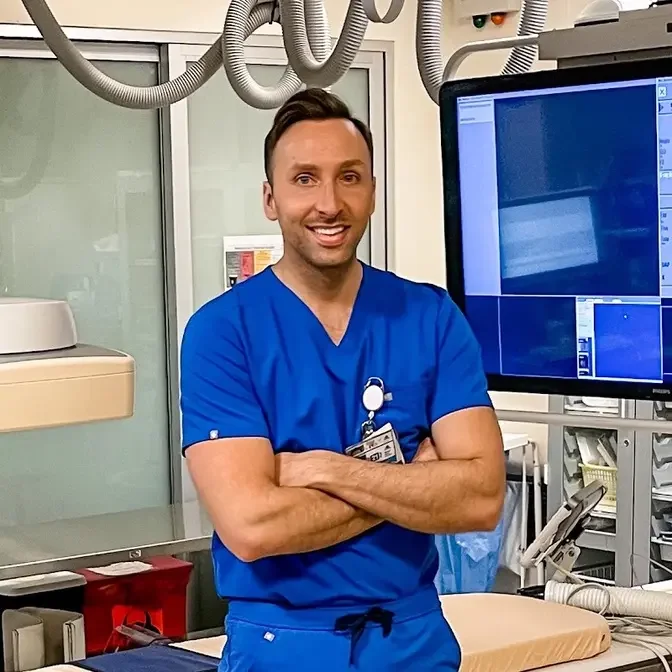
Since everyone enjoyed my "Least favorite medical specialties," I thought I would do an entire video devoted to my FAVORITE medical specialties!! I think there are a few in this video that will shock you for sure!
Let me know what your favorite specialties are in the comments below!!
Welcome back to the channel, everybody.
For those of you who are new around here,
my name is Michael, AKA Dr. Cellini.
On today's video, we're going to be talking about
my favorite specialties in medicine.
The reason I'm doing this is because
I did a video on my least favorite specialties in medicine,
and you all seemed to enjoy it.
So we're gonna talk about my favorite ones
in no particular order.
So let's get into it.
Let's go.
All right, so first and foremost,
if you haven't seen my prior video,
I'll go ahead and link it up here,
and you should watch it directly after this video.
So in that video, I talked about
my least favorite specialties,
or the specialties in medicine that I like the least.
And again, I'm gonna put out a disclaimer.
Just because I mentioned my favorite specialties
in this video, it does not mean
that the other specialties I dislike.
It doesn't mean that I hate those providers.
There's something for everybody,
and every personality type likes a specific specialty.
So these are just the ones I like.
They're not for everybody.
I'm not making fun of the other specialties
or the other doctors.
These are just what I like.
Let's get into number one specialty I like the most.
Now, I think you probably realize
that the number one specialty I like the most
is interventional radiology, for obvious reasons,
since I am an interventional radiologist.
The reason I went into this specialty
is for a million different reasons,
but number one, it's one of the most,
if not the most, technologically advanced field in medicine.
We get to save lives from someone who's bleeding.
We get to kill cancer.
We get to do many different procedures,
all under image guidance on many patients
in and out of the hospital.
And we get to kind of MacGyver certain procedures
and think outside of the box for every certain patient
and customize procedures for specific patients
is kind of why I like it, amongst many other things.
But we're not gonna get into my specialty today
because, obviously, I enjoy it.
That's why I picked it.
So let's get into the other specialties that I also like
and almost consider.
Okay, so the first specialty that I like the most,
and I almost went into
if I didn't go into interventional radiology,
is, as many of you know, urology.
Now, I've said many times before,
I just like the urological environment.
For some reason, I did a few rotations in this field
and everybody just has a good sense of humor,
including the patients.
A lot of the older gentleman patients
used to make me laugh so hard.
They would just say funny things,
which you can obviously imagine.
I'm not gonna get into that here,
but it was just a fun feeling.
On top of the patients, the colleagues, the ancillary staff,
I also love the procedural aspect of this field.
They do a lot of simple image-guided procedures
where they get in and get out,
whether it be injecting contrast in the bladder
to see the ureters, placing ureteral stents,
exchanging ureteral stents,
blasting stones with some shockwave therapy,
or many different other procedures.
They also had some pretty cool surgeries,
and the reason I didn't like it and didn't go into it
is because they have a lot of longer surgeries,
and that's just not for me.
So I did love the field, did love the procedures,
didn't like the surgeries, but overall, love urology.
In fact, many of you probably don't know
that urologists and interventional radiologists
work pretty closely together,
because oftentimes we have to access the kidney
via a nephrostomy tube or suprapubic tube,
and that helps the urologists out,
and we kind of work in tandem helping patients.
So you'll always find the urologists and interventionalists
are pretty tight in the hospital.
And I'm hot, so I'm gonna take a coffee break.
One thing about New York City, no central air.
It gets pretty hot in here.
Okay, the next specialty I like the most
may come as a surprise to you,
and that is rural family medicine.
Now, this is probably like out of left field.
You're probably like, what?
Not a surgery specialty?
Rural family medicine?
That's so specific and also so random, right?
Well, I'll tell you why I like this field so much,
and that is because it's the way medicine
is supposed to be practiced.
And I'll give you an example.
One of my very close friends, Jeremy and his wife, Angela,
they are both rural family medicine doctors
in the Southeast United States.
They have a small practice.
They see patients in that specific town,
in that specific area,
and you are the town doctor, for lack of better words.
So they go to you.
They listen to you.
The patients trust you.
You're like the doctor who does everything.
And when you're practicing in a rural area,
you become like the all-encompassing doctor.
You suture lacerations.
You're doing like every type of primary care medicine.
You're doing minor surgical procedures.
You do everything because there aren't many options
in these small towns,
and they go see you for like everything medically related.
And on top of that,
which is arguably the most important part
of working in this kind of environment,
is you develop long-term and lifelong relationships
with your patients,
and that is how medicine is supposed to be.
You get to know your patients.
You take care of them and see them
for many, many, many years,
and you become kind of like a close family member
that they can trust and they can confide in,
and it's just how medicine is supposed to be practiced.
I can't really describe it to you,
but if you ever do a rural family medicine rotation,
you'll know what I'm talking about.
And just a little aside,
it's just nice because you do good things
for these patients, and they respect you.
They love you for this.
There's just something about working
in that kind of environment that kind of warms your heart,
and I know my good friend loves working
in that kind of environment,
and his father also did the exact same thing,
so it's kind of a cool tradition.
The only reason I don't practice that way
is because, you know, I'm kind of a city guy.
Can't live in a rural, small-town America,
but if you can live in small-town America
and you enjoy living in that kind of place,
it's not a bad gig.
Rural family medicine, love it.
Another coffee break here real quick.
My next favorite specialty in all of medicine
is critical care medicine.
Now, you probably didn't think I was gonna say that,
but I really genuinely enjoyed my time in the ICU,
whether it be the surgical ICU or the medical ICU.
I rotated and spent time in both ICUs
and working with critical care physicians
in both separate settings, and I had a fantastic time.
I didn't think I would like it.
I don't wanna be an internal medicine doctor,
but I do like the field because it's all medicine.
However, critical care medicine is taking care
of the absolute sickest, sickest, sickest patients
in the hospital, and they deal with some pretty crazy stuff,
and you're trying to rack your brain,
trying to come up with what the heck
is going on with these patients
because they're super sick,
and the crazy part about it was
you got to see a lot of these patients
who were severely sick knocking on death's door,
do a 180, turn around, and walk out of the hospital
a few weeks later, which was crazy to me,
and you really get shown just how resilient the body is.
I don't know.
That always shocked me because when you see patients
in the condition that they are in in the ICU,
you're like, how are they gonna make it out of here alive?
And a lot of them do.
The cool thing about the ICU too
is you get to kind of think outside of the box
and come up with differential diagnoses
because you'll get a lot of patients
that are either just found down and very sick,
and you don't know what the heck is going on with them,
so you kind of have to start from square one.
Get a full imaging, get full labs,
come up with differentials, do a full physical exam.
It's very like house medicine,
and not to mention the team in the ICU is phenomenal,
or most ICUs, the nurses and physicians,
they're always top-notch.
They never have trouble getting IVs.
They do so much in those ICUs
taking care of these patients,
so for me to experience and see those patients
and treat these patients, it was very eye-opening,
and it really showed you what the human body is capable of
when they have a good team supporting them
and getting them better,
so I consider briefly going into ICU medicine
or critical care medicine,
but I think what I really liked about it
was taking care of sickest patients
and kind of using your brain to come up with diagnoses,
which is why I like radiology,
and then what I also liked is you get to do procedures
like arterial lines, central lines, chest tubes,
paracenteses, thoracenteses,
all those kind of simple procedures,
and then I realized I just like radiology and IR,
so that's critical care medicine.
I really enjoyed it.
It's fantastic.
It's fascinating.
Love it, love it, love it, but it wasn't for me,
and the absolute last favorite specialty of mine
that's also probably coming at a surprise to you
is transplant surgery.
Transplant surgery and interventional radiologists
are also very tight in the hospital.
It's kind of the same relationship with IR and urology.
Anytime transplant needs us, we're always there for them.
I don't know how it is at your hospital,
but that's how it is at every hospital
I've ever worked for.
Transplant surgeons are extremely bright.
The stuff they deal with with their patients,
the transplanted organs, are very time-sensitive
if anything goes wrong,
so we are always there to help them whenever they need us.
Say you have a transplanted liver
that has something wrong with the vascular system
that they connected.
We can go in there and stent it if they need it.
Say you have a transplant kidney
that also has a narrowing where they sutured in
the renal artery into the iliac artery.
We can go in there and balloon it open
and stent it if we need to,
and it's important that you act fast
when there is something wrong
with these transplanted organs
because they can fail pretty quickly,
and for that reason,
we are always there for the transplant surgeons.
That's not the reason I like this specialty.
I like this specialty because it's just crazy fascinating.
I mean, think about it.
A lot of you probably don't know,
but if someone dies and they're going to take their organs
and transplant them somewhere else,
they kind of alert the whole system around that area,
that local region.
The transplant surgeon will take a private jet
to whatever hospital that patient is at
that they're harvesting the organs,
and I know people don't like to say harvesting organs,
but are procuring,
I don't know what the correct term is,
but people don't like to say harvest organs,
so I'll just say borrowing those organs.
I don't know what you want me to say.
So they take a private jet to that patient,
operate, take their organs, put them on ice,
take a private jet back,
transplant that organ the same time,
quickly as possible, and that's that.
It's like crazy.
When they're on call and an organ's available,
they just hop in a jet, go pick it up,
take it back, and put it in a new patient.
Just think for a minute and say,
we have the ability to take someone's organ
and place it in somebody else,
and it's like nothing ever happened.
That's literally Frankenstein sci-fi stuff.
So I think that's one of the coolest specialties.
Again, we work closely with them,
love all the transplant people, and yeah.
So that officially concludes this video.
Hopefully you all enjoyed my favorite medical specialties,
and again, if you haven't seen
my least favorite medical specialties, link up here.
Make sure you leave a comment below
if you like any of these specialties
or plan on going into them.
Make sure you smash the like, subscribe,
and follow my Instagram and TikTok if you don't already,
and I'll see you all on the next video.
Bye.