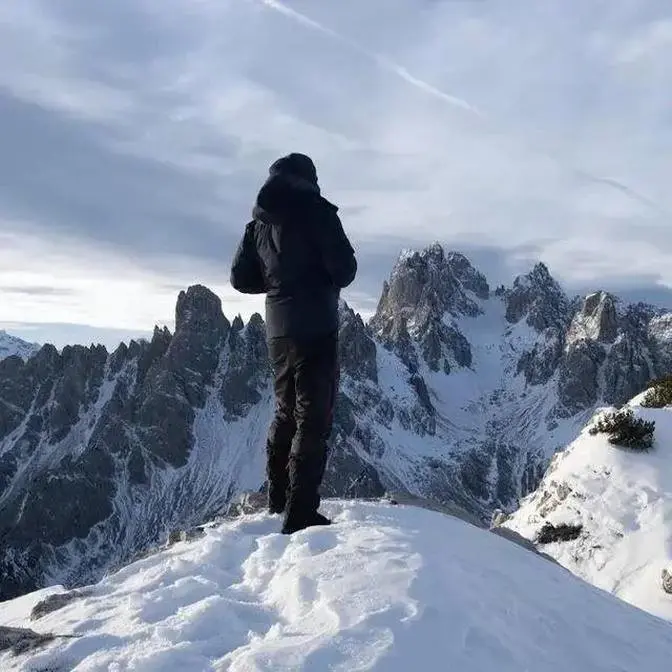
I’ve had the 24mp Fuji X-T20 for around 3 months now using it as a carry around camera, a back up and for shooting video. It’s accompanied me on a hiking trip to the Dolomite mountains and a camping trip to Iceland.
This isn’t really an in-depth review of all the cameras specifications and feature, more an overview on what it’s like to use and a look at it’s differences and similarities with the X-T2.
If you're interested in purchasing an X-T20 or any of the other gear I use in this video, and you enjoy my videos, please support my work by clicking on the affiliate links below. The US Amazon links are on the left, the UK ones are on the right. Thanks so much.
This is the Fuji X-T20. It's kind of like a baby brother to the X-T2 but it's only a little bit
more than half of the price. So what are the differences between them? Well I've brought
them both here to the Italian Dolomites where I'm going to be shooting landscapes with both of them
just to see how they perform and to see exactly what the differences are between the two cameras.
So the first thing and the most obvious thing that you notice is the size. The X-T20 is quite
a bit smaller than the X-T2 which has got both good aspects and bad aspects depending on what
you want to use it for. Now the great thing about it is that it's just such a small compact little
thing. Now I've got it here with the 18mm f.2 lens and it's just a tiny little thing. It's
very easy to carry around with you everywhere. I use it a lot as a backup camera. It takes up
very little space, very little weight in my bag and it's great for that. I also use it a lot for
filming. However the smallness on the other hand has got a few disadvantages for example
particularly in grip. It's not as deep here. The hand grip isn't as deep as on the X-T2
so you don't feel quite as solid with it in your hand and because this body is a lot
shorter I find that my little finger doesn't really have anything to grip with. Now you can
kind of get around this if you buy the Fuji's extra grip and it does work. I used to have that
on the X-T10, the predecessor of this model, and it really does work great. It makes it feel a lot
more like the X-T2 but I decided not to go with that for the X-T20 because I actually prefer to
have the smaller lighter package. It takes up less weight in my bag and I'm kind of getting used to
shooting with it. It's just my fingers a little bit more cramped and it doesn't fit into the hand
quite as easily and quite as snugly as the X-T2. So what about the controls? Well like all Fuji
cameras the controls are all on the outside. They're very tactile which is something I
particularly like about Fuji cameras. The aperture control is on the lens barrel
and then you've got the exposure compensation dial here. It's very tactile, very easy to use.
Smaller than on the X-T2 and this is a control I use a lot particularly when I'm
shooting portraits or I'm shooting street because I'm shooting quite on automatic. It's not quite as
easy to grip as the X-T2 but still works very well. You've got the shutter speed here. Again
the dial is not quite as big not quite as deep as the X-T2 but it's very functional. What it does
have that the X-T2 doesn't is this little button here which you can set to auto because this camera
is aimed more at beginners and entry-level users. You can switch it here and just put it onto full
auto and then on the far side is where you've got the big difference. Here on the X-T2 you've
got the ISO dial with the drive dial like on a second layer underneath. This camera has
only the drive dial so you can set it to shoot video on to the different bracketing settings
things like that. So the ISO is what I've done because it has a number of function buttons.
I've got the ISO on this button here so I press in the back the rear command dial and that brings
up the different ISO levels and you just scroll it backwards and forwards to select the ISO.
It's not quite as easy and intuitive as on the X-T2. It just takes a split second longer and
it's not really that much of a problem but I have to say I do prefer having the external ISO dial
that you've got on the X-T2. So moving around to the back of the camera it doesn't have the joystick
to control the focus point like the X-T2 has but what it does have that the X-T2 doesn't
is touch focus. Now this is kind of okay for some purposes and not for others. If you've got the
camera set on a tripod so it's very static and you've got the LCD on it's very easy to use a
touch focus. If you're shooting video and you're holding the camera out here it's very easy to use
a touch focus. However when you've got the camera up against your eye if you're shooting portrait
if you're shooting street touch focus is a bit of a pain and I don't really yeah I wish I prefer
the dial and do much prefer the dial on the X-T2 which is really easy to shoot when you've got the
camera up against your eye. One of the things that they had on the X-T10 was a dial here a
function dial here which they've now moved which is good news because I was always hitting that
with my heel and connecting it so I'd be trying to shoot. So I think the back is laid out a lot
better than the X-T10 was. It's also got the same tiltable screen as the X-T10 but not as the X-T2.
It only tilts horizontally like that you don't have the tilt in portrait mode. Again I kind of
missed that I don't know why Fuji didn't put that in. It's a shame because I do shoot a lot of
landscapes I shoot a lot of landscapes in portrait and I really do appreciate having a tilt screen
that comes out vertically. Just like the X-T2 you have the choice between the LCD and the EVF and
again what I generally tend to have mine set up on it's an automatic switch between the two so
it's generally showing me the LCD and when I put my eye against this then it shows me through the EVF.
Now the EVF is small it's the same resolution as the X-T2 but it is small it doesn't have the eye
cup it doesn't feel quite as comfortable against the eye and you don't get the huge big bright view
that you get from the X-T2 and that's one of the differences I noticed when I switched between the
two cameras it's a lot it doesn't feel quite as good up against the eye as the X-T2. A few other
tiny differences that are notable you like the X-T2 and they've also put in a screw in the die
here so you can use an old-fashioned mechanical cable release which again I use a lot because I
use an L bracket and when the camera is on the L bracket you can't get into this door here where
the cable release is normally attached. It has a microphone in button but it's only a 2.5 millimeter
connector rather than a 3.5 millimeter connector so I find because I use this for videos but I also
use the X-T2 for video like right now I'm speaking I'm using my X-T2 so I find I have to have an
adapter so when I'm using the X-T2 it's got a regular 3.5 millimeter microphone slot to use
that and I put the connector on when I'm using the microphone on top of this. It's a bit of a pain
it's something that you need to know before you go and shoot video with it because you'll find
that you just can't get the microphone into the slot. Okay so obviously I'm not in the mountains
anymore I'm at home in my living room and I am sorry if this is jarring if the changing continuity
is a little bit weird it's just that when I was reviewing the footage that I shot when I was in
the mountains to make the video I realized that part of it wind a really strong wind got up because
high up on the mountains about 2,000 meters and it just got really windy and you couldn't hear
clearly what I was saying so I had to basically bin an entire segment of the film that I recorded
I'm going to record it again here in my living room so again I'm sorry for the jar for the for
the for the change of continuity bit weird but there you go so X-T20. Now another one of the
changes that Fuji have done that I don't really understand is this with the battery door now on
the X-T1 the battery door is like this and it did annoy me a little bit because I kind of kept flicking
it when I was in my bag and the door would come open and then it was easy to catch the door when
you when you're taking it out of your bag and on the X-T2 they fix this by basically giving it a
spring-loaded clip so when you when you pushed it it closed but on this you actually have to
manually fasten it again it's a tiny thing it's a really small thing it's probably not even worth
complaining about but it's just one of those small things I think well Fuji why did you do that you
know you'd fixed the door with the X-T2 why not do it on all the cameras it makes sense but again
it's a small thing to to complain about a bigger thing is the lack of dual cards on the X-T20 now
again it's not really a complaint this is an entry-level camera and the X-T2 is a professional
level camera so you know you don't expect dual cards but it is something that I do miss I really
like having dual cards I like the fact that you can configure them to have them to mirror have
the cards mirroring each other as a backup or overflow what I particularly do the X-T2 is I
shoot raw onto one card and I have the jpegs and the 4k video go onto the other card which just
makes things easier for me in my head when I'm organizing things when I get home and I do miss
that on the X-T20 I miss having the dual cards but here's the thing this is only a little bit more
than half of the price of an X-T2 it's about $900 and the X-T2 is about $1,700 it's a little bit
more than half the price and yet the image quality the actual photographs that this takes
are exactly the same as the X-T2 it's got the same sensor it's got the same image process got
the same autofocus and this is something that Fuji do across the line with their cameras so the X-Pro
2 the X-T2 the X-T20 the new X-E3 the X-100 they've all got the same image taking capabilities
and it's something that I like that Fuji do that I particularly like is give the same image quality
capability to all their cameras from the more entry-level it's not really an entry level from
the lower level ones like this to the fully top-of-the-line models like the X-Pro 2 and the
X-T2 so when you think about that when you think about the fact that you've got the exact same
image quality it's utterly understandable that there are cutbacks that there are reductions in
other areas of the camera so things like the dual card slots and you know the change in the
controls and things like that it completely makes sense and this is so this is a hell of a lot of
camera for what you're paying it's basically to all intents and purposes giving you the same you
know it's an X-T2 in a smaller body which makes it a superb backup camera if you're using the X-T2
now I've never had a camera fail on me neither Fuji nor Nikon generally cameras are built to a
very high standard and I treat me I take my cameras to some difficult to shoot places but
just on the night before I when I was recording the video I had an issue when I was up on the
mountaintop shooting and I noticed that there was a lot of sensor dust on the X-T2 I've been
changing lenses it was very windy and a lot some smears would go on the sensor and I could see on
the on the screen on the back so what it was impossible is obviously it's not a situation
where you can clean the sensor so what I did was I just switched cameras and shot the landscapes
with the X-T20 knowing that the images would be exactly the same with the two cameras now the X-T2
I prefer to use it I like the larger form factor it feels better on a tripod but in a pinch it's
great to have this as a backup it weighs 380 grams in my backpack you don't notice it's there
and it's just great to be autonomous I can't use this so I can use this on other occasions when I
was in the Dolomites where I had the camera set up on a tripod I really like my composition I was
shooting a time-lapse but there's a fantastic scene over there having a second camera where
I could put a telephoto lens and put it on a small tabletop tripod this is the image here that I shot
and really gives you another option it means that you can shoot almost with two cameras at the same
at the same time now it's very rare that I need to do that when I'm shooting landscapes
but there have been occasions and it just makes it easier rather than basically taking one camera
come off completely changing the composition bolting on a different lens shooting a different
scene it's it's nice to have two cameras basically and the other thing is this is a great carry around
camera now after we finished in the mountains we spent a couple of days in Venice and I just
left the X-T2 in the room and walked around the city just shooting street photography with this
it's so small it fits so easily in your hand with a wrist strap on you it's just easy to carry around
all day you can even fit in your pocket if you if you've got relatively big pockets or drop it in
a bag and it's just a fantastic carry around camera it's not something that I've ever really
been able to use before even with a camera as small as the X-T2 this is the first camera that
I've ever had which has made a really good carry around camera so for those respects it's it's an
utterly fantastic camera and great value for money but now back to the Dolmites so what about
the image quality well as I said it's exactly the same as the X-T2 and I've already reviewed that
camera so I don't want to talk too much or go into too much depth looking at the images because I'll
probably be repeating what I said there because the images are essentially the same but if you
haven't seen that video if you're not interested in the X-T2 you're much more interested in getting
this camera what I'm going to do is shoot a few photos of this and then go back to Lisbon and we
can have a look at them there see what the image quality is like when I open it up on my computer
there's also the video quality which I haven't talked about which is excellent it's 4k just like
the X-T2 now there is some difference which I try to remember but I can't it's to do with the way
that the X-T20 the image is captured the 4k image is captured all across the center and on the X-T2
it's not and apparently it's supposed to be not as good on this but I use this video a lot I use
this camera to shoot most of my videos and I really don't notice any difference in the video quality
the previous generation of Fuji cameras the X-T10 and the X-T1 they both had rubbish video quality
to be quite honest and I could not ever use them for shooting video they were really bad they were
worse than the GoPro but the new video cameras and the new range are extremely good I'm really
happy with the X-T2 really happy with the X-T20 so again when I get back I'll have a look at the
video quality of this camera as well so let's just have a very quick look at the image quality on the
X-T20 so this is a shot that I took handheld in Venice it's with the 18 millimeter prime lens
which certainly isn't one of Fuji's best lenses but you can see here's a really I think there's
a really pleasing color rendition and despite the fact that it's handheld it really is quite a lot
of detail if we zoom in to 100% you can see the lettering on the bridge down here
and the detailing on his hat we can even zoom in to 200% when you're going to start to see the
the deficiencies of the camera but it still looks quite nice you know this the detail on the plant
here again on the bridge it's very nice there's a lot of detail being resolved the color rendition
is very nice and if we look over here in the shadows where it's dark now I don't actually
think you need to pull the shadow the shadow detail out because I'm happy with it being dark
but if we did push it out a little bit you can see here that there's right up to 100 there's very
little noise there's quite a lot of contrast the color rendition is still quite nice we're right
into the corner of the lens here so there's obviously some some softness and deformation
because as I say it's not Fuji's best lens by a long stretch it's just a lens that I use a lot
because it's very small and easy to carry around but that looks really nice and you can see that
we can we can pull that the highlights were blowing a little bit and there's sort of plenty
of latitude to bring them down so the dynamic range on the camera is really quite good let's
have a look at another one this is a landscape image now I don't have that many wide angle
landscapes that I took with the X-T20 because I was principally using the X-T2 but I took this one
when the X-T2 had sensor noise on it so I switched to shooting the X-T to the X-T20 the the big
blown out highlight here is the moon which came up and it's not certainly not a great landscape
shot but I'm just using it for this example to give you an idea of the detail rendition
so if we we can zoom in to 200% and you can see that that this you know really some nice
detail rendition on the on the on the rock peaks there the color rendition is nice this is about
an hour after the sun's gone down there was this lovely alpine glow in the skin like sort of being
painted onto the rocks it really was a spectacular scene but that's yeah that's not a great photo and
here is a telephoto shot that I did with the X-T20 now this one is notable because I was using the
X-T2 to shoot a long exposure in one direction when I noticed the scene off to my side so then
it's nice to have a backup camera which I could use as a second camera by attaching the 55 to
200 telephoto and shooting in a different direction without having to remove the X-T2
from the tripod or the shot that it was doing so again this is a completely unprocessed raw file
this is straight out of the camera and that was very windy and the camera to get the shot I didn't
have a second tripod so I basically had the camera laying on my camera bag and I increased the ISO
to to 800 just to get me a faster shutter exposure because it was incredibly windy
so there is a little bit of noise you can see here in the back but even so that's at 200% if
we just zoom out to 100% this is a really considering the conditions it was taking it's
a very sharp very acceptable image and sort of a nice thing to be able to have with a secondary
or a backup camera and then finally just to look at dynamic range this is actually a panorama that
I've stitched together but it hasn't really been processed yet I was just in the process of seeing
what I could do that it gives you an idea of the of the dynamic range of the camera how it deals
with very bright highlights this is a wonderful scene the light really was just about 45 minutes
before the sunset really streaming through the mountains and you can see here the level of detail
in the village that it's rendered and there's a really sort of pleasing
contrast between the the way that it's dealing with the highlights the way that the highlights
blend into the into the more into the to the regular exposure it's really nicely dealt with
and also the shadow the the contrast here the color is is very good so that's really it for
image quality as I said the images on the X-T20 are exactly the same as the X-T2 so if you want
to know more if you want to see more images check out the review I did of that camera so which one
should you get X-T20 or X-T2 depends entirely on what you need the camera for and what you want
from your photographer now me personally I prefer the X-T2 as a landscape photographer I much prefer
the the sturdier build the more rigid construction I like the bigger dials I like the bigger EVF
and things like the dual card slots but if you don't need those professional features this is a
fantastic camera with exactly the same image quality as the X-T2 it's a great all-around
camera it's got the wonderful tactile controls that you get on all Fuji cameras and it's just
a pleasure to use and it's only a little bit more than half price it's fantastic value so basically
whichever way you go you can't really go wrong they're both great cameras and I think that's
about everything so once again I hope it's been useful thanks for watching and take care