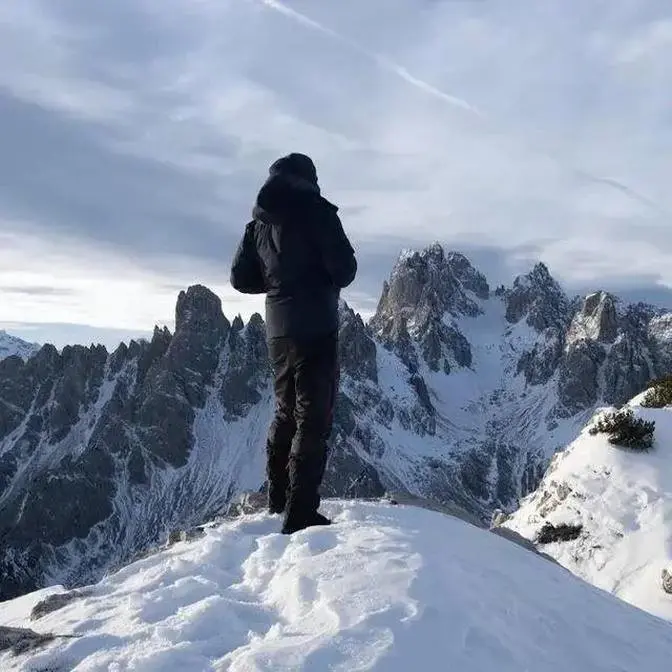
I took the new Fujifilm X-E5 with me on a trip to Madeira and the Azores to put it through its paces. It’s an update of the X-E4 with the 40mp sensor, X Processor 5 and image stabilisation. Thanks to Fujifilm Portugal for letting me borrow it.
If you’d like to join me for a landscape photography workshop, my 2026 and 2027 trips are already open. Check my website for more information https://www.andymumford.com/workshops/
If you're interested in purchasing any of the gear I use in this video, and you enjoy my videos, please consider supporting my work by clicking on the affiliate links below.
So, this is the Fujifilm XC5, the
upgrade to the XE4, and it's quite a
significant upgrade. You've got the 40
megapixel sensor. You've got the X
processor 5 with all of the auto
autofocus features of this present
generation, and you've got image
stabilization, which makes it very
similar in terms of specs to the X-T50.
And you've got the film simulation dial
as well. So, it's very similar to that
camera. Now, I've been using this for
about a couple of weeks in Mad and in
the Azors. And in this review, I'm going
to let you know what I think about it.
So, the camera looks lovely. It is a
really nice design. I really like the
shape of it. I've always had a soft spot
for these rangefinder cameras. And I
really did like the design of the uh of
the XC4.
Like a lot of Fuji smaller cameras
though, I do have a problem with with
gripping it. It's not great to hold in
the hand. You can see my my little
finger kind of waggles around
underneath. And the fact that it's so
flat along the edge, there's no real
hand grip here. That that's part of the
design. You get this on the XPro. You
get this on You had this on the previous
iterations of this camera. It's just
part of the rangefinder styling, but it
doesn't really feel as good in the hand
as something like the XS20 or the XT5. I
do find that I really like the layout of
the exposure dials. I use the XT5 a lot
and everything is pretty much the same
on that camera as on this camera. At the
front, you've got a dial beneath your
finger here. This is for the ISO because
there's no ISO dial here, but you can
just press it in and it will also change
the aperture if you're using a lens that
doesn't have an aperture ring. You've
got the shutter dial on the top, which I
have almost always set to T. And then
the dial at the back here, which will
control the shutter speed. So, that
works really, really well. Then, of
course, you've got the exposure
compensation dial here, but as I almost
always shoot in manual, I'm never really
using that. So, I really do like the
layout of all of the exposure controls.
It works very, very well for me when
I've been using this handheld and when
I've been using it on the tripod. Now,
this certainly feels a lot better to me
than the XE4. I It's a while since I've
used that camera, but if I remember, it
was quite minimalist and I think some of
the controls were a little bit buried,
so it didn't feel as intuitive to change
the different exposure parameters as
this does. But this camera, yep, I
really do like this a lot. However, some
of the layout of the controls don't work
as well for me. This is a a factor of
the rangefinder cameras because you've
got these buttons across the top here.
You've got the drive button, you've got
the play button. What I find is if I try
to operate those with my other hand and
I and I reach across, my hand is going
to go across the sensor of the EVF and
that's going to shut off the screen. So,
if I want to press the drive button, if
I want to press the play button, by
doing it with my left hand, I'm shutting
off the screen and the screen goes blank
and I can't see it. You don't get that
on the SLR style cameras like the XT5 or
the X-T50 because the viewfinder and the
sensor sit raised above and here in the
middle. It's only on the rangefinder
style cameras. So, it is part and parcel
of this really nice rangefinder design.
But, it is something that did get in my
way and slow me down quite a few times
when I was shooting with the camera,
particularly when I had the camera on a
tripod. So, there's no D-pad on the
back, but you do have this joystick,
which is used for navigating the menu,
which is used for moving the autofocus
points around the camera, and also for
going up and down in the drive menu.
Now, I I tend to use the drive menu a
lot because I switch from single shot
into bracketing mode. And this is also
where you put the camera into video
mode. Now, a lot of the cameras like the
XS20 or even the XT5, the video mode is
much easier to access. You'll have it on
a dial outside of the camera. here. You
have to dive into the drive menu to get
to it. And I think that's because Fuji
see this much more as a as a photography
related camera, as a stills related
camera that people will use video more
as an aside, which is fair enough. I
think the way that Fuji seem to see
their camera line is that the XS20 is
the line for people who use video and
things like this. And the X-T50, while
they're very capable video cameras,
they're much more they're much more
orientated around shooting photography
stills. And then finally, you've got the
dial for the film simulation, which is
over here. Now, I shoot RAW all the
time. So, the film simulation dial isn't
really something that I use. I don't
really use Fuji's film simulations, but
I do think this camera, like the XT50,
is much more marketed to those kind of
people who do shoot a lot of JPEG and
who do really like the film simulations.
And they are excellent on a Fuji camera.
There's a lot to choose from. And I do
like the way this dial is integrated. If
you don't care to use the film
simulations, it's not going to get in
your way. It's not annoying at all. It's
quite subtle. It fits into the into the
design. So, you just roll you just roll
through to get the different film
simulations. Now, there are so many of
them now that they can't all fit on one
dial. So, what Fuji have done is given
you three custom settings which you can
apply to the other film simulations that
aren't already on the dial. I think it's
a nice solution. As I say, it's not
something that I use a lot, but it I
think it is something that Fuji
marketing heavily. People do like it and
it does work. it is integrated very well
into this camera. I also quite like how
you've got the focus mode switch is
again it's a physical switch. I don't
have to dive into the menu to use this.
So you've got the switch from manual to
continuous to single focus here in a in
a physical slide on the side of the
camera. It's uh it doesn't really get a
nudge as I worried that it would be
easier to nudge at, but I think it it
works quite well. You've also got this
little dial here on the top of the
camera which is very reminiscent of an
old film camera. Now, what this does is
it enables the digital zoom. Now,
because you've got 40 megapixels on this
camera, you can actually you can crop in
using the digital zoom and still get a
relatively high resolution image. I'm
not quite sure what this gives you. I
think it's about 26 megapixels. So, that
effectively gives you two focal lengths
from one prime lens, but you do lose the
resolution. You're not going to get the
full resolution of of the sensor. But I
do think this is something that people
use, particularly people who tend to
shoot a lot with prime lenses if you're
doing street photography or things like
that. And when you switch to that, it
kind of zooms in on the viewfinder and
grays out the area that you're not
using. And then you've got the screen,
which is the same resolution as cameras
like the XT5 and XT50,
but I do quite like the integration of
the screen. I like this on the X-T4 as
well. So the screen does pop out. So it
is articulating horizontally, doesn't
articulate vertically. But what you can
do is pop the screen over the top like
that, which makes it really great if you
want to use it for for doing selfies, if
you want to use it for recording video,
like I'm using the camera here. So, I do
think this is a really nice solution
that works very well with rangefinder
cameras because they're flat along the
top. And then the EVF, no real
difference here between the XC4 or the
XT5. It is a little bit small if you're
use if you're used to using a camera
like the XH2 or the XT5. does feel quite
small, but again, it's something that
you get used to. It's not really a
dealbreaker, and you do expect it in
these cameras, which are a step down
from Fuji's higherend cameras. Now, in
terms of the build quality, this does
feel very well, very solidly made, and
it feels like a bit of a step up from
some of the cameras that Fuji have
previously put out, things like the the
XS20. It feels a bit of a step up from a
camera from the XE4. It feels more
sturdily made, a little bit more solid.
There's a lot more. It feels very, very
metal. The buttons and dials all feel
bigger and easier to press. The screen
is really nice, but with that comes
additional weight and bulk. It's not
quite as light as as the XC4, but
personally, I don't mind that. I like
the solidity of it. It's not classed
really as weather sealed, but I've used
this in quite a lot of bad weather in
spray, in rain, and mist and stuff like
that. It's never really been a problem.
None of it's leaked or or affected the
camera in any way, but I've been using
Fuji cameras now for 10 years. I've used
pretty much most of the of the cameras
that they've put out in the XS line and
the XC line and the X-T line. Uh some of
them weather sealed, some not. And I've
never really had any issue with weather
sealing before. So, yes, when I was out
shooting in seascapes with this, I
didn't really have any worry or any
concerns about using it. And it does
feel it does feel really good. It's a
really solid feeling camera. Now when it
comes to autofocus, the kind of shooting
that I was doing with this camera in
Medela and India isn't the kind of
shooting that's really going to
challenge any autofocus. It was mostly
on a tripod and I use manual focus a
lot. But I have the autofocus system in
this is exactly the same as in cameras
like the XH2, XH2S as in the XT5. It's
got that same Xrocessor 5. So you're
getting the same autofocus performance
as in those cameras. And I have used the
XT5 a lot. I've really put the autofocus
in that camera to the test. Shooting
things like monkeys moving through
trees, which is incredibly challenging
for autofocus, wildlife in Africa, polar
bears in Greenland. On on all those
occasions, I was also shooting alongside
other people who were using other brands
like Sony, Canon, or Nikon. And I found
the hit rate of the camera when it comes
to stills to be very, very high. I was
very satisfied with the shots that I
got. I wasn't really missing many. with
the autofocus was really capturing the
subject, following the subject, tracking
the subject very, very well. However,
when it comes to video, to shooting
video, I've often been a little bit
disappointed with the autofocus in the
XT5. It does tend to lose focus and
drift a little bit while it hunts to try
to find focus a little bit when I'm
recording videos like this. I often have
periods where the autofocus just drops
out a little bit. Even recording static
subjects like landscapes, occasionally
I'll see the autofocus drifting a little
bit, but this camera is really
orientated around still photography and
the autofocus for still photography with
the XProcessor 5 I found to be
excellent. Now, the battery in this is
the smaller battery that you get in
cameras like the XS20 and the X-T50, not
the larger battery that you get in
cameras like the XT5, XH2, and GFX,
which is a disappointing. It does have
an effect on the amount on the on the
length of time that you can use this
for. It is rated for about 310 still
images and 45 minutes of uh shooting 4K
video which is pretty much the same as
the X-T50. Now the XE4 didn't have image
stabilization. This does. Fuji rate this
as seven stops of image stabilization
the same as the XT50 and XS20. So that
is quite a significant upgrade over the
XE4. Now, seven stops of image
stabilization. I find image
stabilization, it's very hard to
measure. It really does depend on the
focal length. If you're shooting very
long at at 200 mm, then image
stabilization is less effective than if
you're shooting wide and also depending
on things like shutter speed, things
like that. Um, again, I've not really
been able to put it to the test on this
particular camera, but I have used it a
lot on other cameras like the XS20, like
the X-T5, which have the same image
stabilization model basically. And for
the and for a camera like this, which is
designed for handheld shooting, image
stabilization does work really well, and
it is a big upgrade over the XC4. Now,
when it comes to the kind of images that
you're going to get from this, it's the
same 40 megapixel sensor of the X-T50,
of the XT5, of the XH2. So, you will get
exactly the same image quality that you
get in those cameras. It is a big jump
in resolution from the XC4, from the 26
megapixel sensor that you got in that
camera. you're not going to see a
similar jump in terms of dynamic range
and or or low light performance, but you
will get more resolution, which means
you can print the images bigger. So,
analyzing the image quality of a camera
or sensor like this is always a little
bit challenging for a couple of reasons.
The first is that a lot of this is
dependent on which lens that I'm going
to be using. And secondly, you're going
to be seeing a video that I've that's
been compressed down to 4K and then
rendered and then compressed for
internet upload. It's very hard to get
an accurate idea of what the sensor is
capable. But anyway, here we go. This is
an image shot with the 16 to 50, which
is the new kit lens that Fuji provide
with quite a few cameras and is marked
as being capable of resolving all 40
megapixels that you get in the sensor.
So, you can zoom in here and have a look
at the kind of detail that you get
because really that's what you're
looking at with the sensors. How much
detail is it going to resolve? I think
if we just go over here, you can see
that it's 7,700 pixels along the longest
edge. That really means you've got a
native print size of about 70 75 cm
along the longest edge at 100 pixels per
centimeter. So, you can get really good
size prints out of this and you can
really, you know, if you really want to
uh to dive in deep, you can you can
punch in quite deep into the image. This
is a 200 uh 200%. You can see that the
image does start to break down a little
bit here, but that's really what you're
looking at when you want a larger
sensor. I think it's also worthwhile
looking at one of the older lenses in
the Fuji lineup that's not that Fuji
don't class as being capable of
resolving all of the resolution on the
40 megapixel sensor. Now, this doesn't
mean it doesn't work. It doesn't mean
that you can't use it. What Fuji mean by
that is that you're not going to get
it's not going to render every single
one of the pixels. So, you're not going
to get as good an image with with that
lens as you would with one of the lenses
that is kind of marked as being capable
of shooting with the with the 40
megapixels. So, this is with the 55200,
which I've been using for 10 years now.
It's a lens that I love. Um, you can see
that it is there is a little bit of
softness in the trees here, but it's
really not bad. So, if you're going to
be using it, I think particularly if you
look around this building here, there's
quite a quite a good bit of detail
there. This isn't one of Fuji's
expensive lenses. It's not one of the
red band lenses. Um, so it's never going
to be perfect, but it is very capable.
Here's here's another image shot with
it. And this again is at 100%. And you
can see it is quite capable of producing
quite a lot of detail. So, if you if
you're thinking of getting this camera,
if you're thinking of upgrading from
something like the XC4 or one of the
cameras with a 26 megapixel sensors and
worried what it's going to perform, how
it's going to perform, I've been using
this 14 megapixel sensor on the XT5 and
on this camera, and I don't mind which
lens that I use. I don't think that it's
it's something that you really need to
worry about too much. You can see the
detail down here on this fence post is
absolutely fine. Now, one of the things
about high resolution sensors is because
the pixel density is so much higher, you
can lose a little bit at higher ISOs.
So, I want to have a look at some higher
ISO images that I took that I've taken
with this sensor. Now, I didn't really
have an opportunity in the ASOS to shoot
high ISO images. This is with the XT5,
which has the exact same sensor. You'll
see the same result. It's just to give
you an idea of the level of noise that
you'll get. So this is at ISO 2000 and
you can see shooting the aurora in the
night sky. There's noise there, but it
is not bad at all. And when we look at
the areas with detail, it's absolutely
fine. The pebbles on the beach there,
the figure standing at ISO 2,000, I
think it's perfectly usable. Going up to
3,200 for an asteroid shot in Namibia.
Again, the details in the lit area, like
this tree, we we were light painting on
the tree, are absolutely great. I think
in the stars you can see there is noise
coming between the stars but it is it is
still very very acceptable. But when we
start to go down here into the deep
shadows then you start to see that the
the detail and the resolution does break
up around the grass. Then if we go to uh
4,000, this is about as high as I ever
tend to go as a landscape shooter with
um with ISO. You can see that it is
starting to get softer. It's losing some
of the detail. Again, I think I think
this is perfectly usable. I would use
this shot. It would need a little bit of
work cleaning up, a little bit of
sharpening. You can see in the sky there
is still some noise, but yeah, the
softness is starting to show in the fine
detail here. And then when we go down
into the shadows, areas like this grass
are are a little bit soft and not being
particularly well resolved. Now, when it
comes to video, despite not really being
orientated towards that, as I said, I do
believe that Fuji see this more as a
still photography camera, it is still a
very capable video camera and has pretty
much the same specs in that regard as
both the X-T50 and the XS20.
So, you've got all of the film
simulations to shoot in if you like to
get it straight out of camera, but
you've also got FLOG recording. You can
record up to 6.2K 2K at 30 frames pers,
4K at 60 frames pers, and full HD up to
240 frames pers. Now, I do really like
the video output that you get from the
camera. I use it a lot for shooting
B-roll. Having the image stabilization
makes it very usable handheld. So, yeah,
it's not really a video camera in the
same way that something like the XH2S
is, but for most people's uses, it is a
really, really capable camera. So, I've
really enjoyed using this camera a lot.
I used it a lot on my trip and do really
really like it. It is a big improvement
over the XC4. You've got significant
upgrades on things like the resolution,
on things like the autofocus, the image
stabilization.
There are it is heavier. It's a heavier
camera to use. You do lose some of that
minimalist styling, but I do find that
it is a more comfortable camera to hold,
although it's not as comfortable as
something like the XS20 or the XT5. And
it does feel like a much more sturdy and
betterm made camera. It feels closer in
terms of build quality to the higherend
cameras like the XT5, but it is also
significantly more expensive than the
XC4. And I think this is also noticeable
with the XT50 as well. There's a kind of
big creep going up in terms of the price
points that these cameras were at when
they used to be sub $1,000 or €1,000. A
big part of that is down to the
increased costs of the larger sensor. In
Europe, this is priced very similarly to
the XT50, which is fair enough. I think
that they match a lot of their
specifications and and performance are
very very similar. It's just really the
styling that's different. But in the US,
this is much closer in price to
something like the XT5, which make it a
little bit harder to kind of to to to
recommend. The XT5 has got a lot of pro
features like the bigger bigger battery.
You've got the dual card slots. You've
got higher resolution and bigger EVF,
better build quality, weather sealing,
things like that. Bigger buttons. It's
easier in the hand. So, to choose this
over something like the XT5 in the US,
you'd have to really like the
Rangefighter styling and not want to
wait for the XPro 4, XPro 5, if that
ever is going to appear. But taken on
its own merits, this is an excellent
camera and one that I really like a lot.
I usually like to have two cameras. So,
I'll have something like an XT5 and then
I have a secondary backup camera, which
at the moment is the XS20, which I'm
recording this video on. But, I think
that this may actually replace it. I
like using this a lot more. I do like
having the the same sensor in both
cameras. I like having the same kind of
dials and controls in both cameras. So,
I think this works really nicely side by
side with a with an XT5. It's very
small, so it it works well as a backup
camera, but it's also a lot of fun to
use and gives you something different. I
think the different feel uh gives given
me something different from the XT5 and
I have enjoyed using this a lot. So, um
that's pretty much it for this video. I
hope it's been useful. If you've got any
questions about the camera, please drop
them down below and I will get back to
you. And if you've enjoyed the video, uh
please give a like and subscribe because
it really does help support the channel.
And if you like my photography and you'd
like to join me on a trip like this to
Mada or Azour, all my workshops for 2026
are now open. Some of the 2027 workshops
are open and we will be opening more.
We're going to some amazing places like
Utah, Namibia, Nepal. We've got trips
coming up to Botswana, to Japan. You can
find all the information on all my
workshops on my web page. So, please
check that out and get back to me if
you've got any questions. And as ever,
thanks so much for watching and good
luck with all your photography. I'll see
you in the next video. Take care.