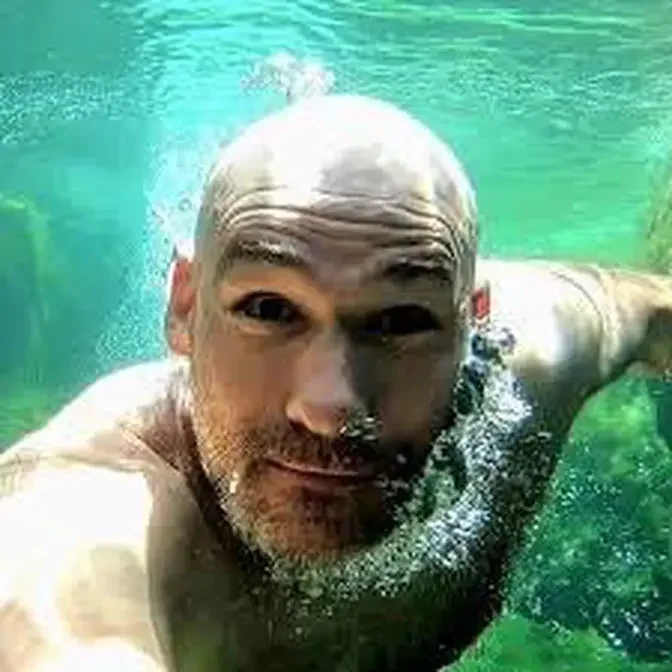
In this video, I break down all the gear that I carry with me in my backpack. This covers both day hikes locally and also international travel backpacking. Do I need everything in that backpack? What do you think?
I make outdoor adventure travel videos to inspire you to take your next trip and get outdoors. Life is short and there are so many interesting people, places and things to learn about and experience. Join me on my journey, SUBSCRIBE AND become a part of Team Infamous.
My name is Jesse St Louis (AKA Infamous JSL) and I'm an actor that likes to go on awesome adventures between gigs. I've been called a "no frills Bear Grylls" but mostly I've been called an Actor. Traveler. Smart-ass.
You've been asking me for a gear video.
What gear do I use?
What's in my backpack?
Is this planned?
No.
This thing has not been unpacked
since last time I was on the trail.
First thing I wanna talk about is this backpack itself.
The Duder Airlite 28.
This is the best backpack I've ever owned.
It's got this separation here
so your back doesn't get sweaty.
It keeps it nice and cool.
It's really well designed.
I really like this backpack.
I got it as a gift a couple years ago.
It's taken a beating and it's still in great shape.
I put this thing through hell.
I pack it to the brim.
It holds everything I need for a day hike,
sometimes extended couple day weekend hikes.
This thing's been through the desert,
the mountains, volcano, rainforest,
and it's still in great shape.
On the outside, I've got a whistle,
which is a combination whistle, compass, and thermometer,
which is helpful for navigation,
knowing the air temperature,
knowing the water temperature of something,
a small pocket.
Okay, so first up, we got batteries,
batteries for my cameras,
Panasonic extra batteries for the Lumix G85 that I use
that I'm shooting this on.
Then we've got the GoPro batteries.
So those aren't really hiking essential related,
but then we've got, okay, so this is Rubio Canyon Beta.
The last time we were on the trail,
we were doing canyoneering in Rubio Canyon.
So this is, beta is information
when you're rappelling into a canyon.
It tells you where the anchors are.
It tells you what to look out for.
People who have gone before you,
they write up these kind of trail reports about the canyon,
what to look out for, where the anchors are,
and how many rappels, what the drops are,
how long of a rope you need.
So that was in my small pocket.
And you print it out on the computer,
and I've been putting it in plastic bags
so it doesn't get destroyed,
and so we can reuse it next time we do that canyon.
I think this was like a last minute plastic bag
where I threw some, yeah,
threw some electrolyte packets
and some regular matches, I think these are, yeah.
Regular matches and a lighter just to make sure.
I wasn't sure if I had a fire source in my pack.
I can't remember what hike that was for,
but the electrolyte packets actually,
I found out the hard way about the electrolytes.
If you've seen my Buckhorn Falls video,
which is the hidden waterfall out by Cooper Canyon Falls,
I was shooting that with my friend Darius,
and we were out there for a good seven, eight hours
off trail bushwhacking, scrambling,
and doing like extra takes
of me jumping over boulders and stuff.
And by the end of the day, I was so cramped up.
I drank a lot of water,
but luckily Darius had some electrolytes with him,
but I had not packed any.
But since then, I've been keeping these in my pack,
the electrolyte packs,
because if you drink a lot of water,
it doesn't replenish the electrolytes, right?
We've all seen a Gatorade commercial
or something like that, right?
Let's see what else we got.
Oh, okay, two multi-tools.
So we got one multi-tool, little guy,
like a mini Leatherman, and another one.
I have no idea why I have two of these.
So you're gonna see,
this might be some redundancy in my bag.
It's not as streamlined, but luckily making this video,
I will know what I have duplicates of
and I can streamline my bag.
So I got two mini Leathermans,
and I think probably I have two
because I thought I lost one,
because when you travel internationally,
most of the time, if you go through a TSA,
they're gonna confiscate these.
And when I was in India, they did take one of these.
So I think I forgot that I had already thrown
another one in there, so that's those.
Okay, so we've got like a lens,
a polarizing lens for the camera
that I'm shooting this on,
which I can't even use this anymore
because I cracked the ring where the lens cap
and filters go.
I cracked that ring in Costa Rica.
This camera, I'm gonna do a separate review
on the Panasonic Lumix G85,
because this thing is a beast, man.
The weather sealing is awesome.
This thing, I've put in this thing
through torrential rains in Costa Rica.
I dropped it into a puddle,
face down into a puddle when I was doing
the Glen Canyon video,
and I thought it killed my microphone,
but the camera and the lens are doing great,
but I chipped this ring when I slipped on a big rock,
big mossy rock in Costa Rica,
so I can't even use this thing anymore.
I mean, I can, I gotta like hammer it in,
but then you gotta like pop it off,
so it's not, it's not ideal.
Been a while since I cleaned out my bag, can you tell?
Got some sunblock, you guys know.
I gotta lube up the dome here.
I might actually need to put some sunblock on
because the lights I got going on, as you can see,
it's starting to give me a little tan there.
So we got that.
We got some Aqua Four moisture treatment for my lips,
for some, any dry chapping,
if you're in the desert or anything like that,
you want some, it's basically Vaseline.
It's a fancy Vaseline, from what I understand.
What else do we have?
We have, this is a GoPro, what the heck is this?
Oh, okay.
So this is an adapter to plug a mic,
an external mic into your GoPro.
So that's more camera stuff.
This is another mic adapter.
I can't remember what this is for.
I think it's for cell phone.
I haven't used it in a while.
I think it's to plug like a mic into your cell phone
or something like that.
I don't remember.
I haven't used it.
That'll probably come out now
because I actually have a mic specific for a cell phone.
This is a great video, right?
Going into the big pouch.
What do we got in here?
First off, we got some goggles.
I like to pack the goggles.
This is relatively new since we're in Costa Rica.
We got the goggles.
And this is better than like a big, like snorkel mask.
It takes up less space.
It's a little more compressible.
So we've got the goggles in case we want to dive
into a pool, do a little snorkeling.
Obviously we don't have the snorkel,
but we've got the goggles.
You can see underwater.
We want to shoot some stuff underwater.
Okay, so this, I bought this case to protect my mic.
The Rode VideoMicro is what I'm shooting this on.
And then I also have this other mic
and this is the Rode VideoMic Me,
which is actually pretty cool.
You can connect this directly to your cell phone.
And so that's why I don't need that adapter cable
that I showed you that I was still carrying around
because this goes directly into the cell phone.
And this thing works great
if you just want to shoot stuff on your cell phone.
It comes with this windscreen dead cat.
The one thing I will say, if you use this mic,
shooting stuff on your cell phone,
just make sure you're in airplane mode
because the cell antenna,
when it's trying to connect the tower,
will actually cause an interference with this mic.
And I sent back like three of these
thinking that they were broken
until I saw a video where a guy said you have to turn it
into airplane mode to prevent that interference.
So this is actually pretty cool.
Obviously not hiking related
unless you're making YouTube videos,
but this is what I got in my bag.
And I carry this mainly as a backup.
I don't usually use my cell phone too often to shoot stuff
unless my big camera battery dies
or it's like a tight spot or I'm just tired
and I don't want to bother focusing.
The second half of the bridge to nowhere
hidden waterfalls video was all shot with my cell phone
because it's easier.
I was getting tired.
I can just pull it out of my pocket.
I don't have to focus it.
Pop that mic on if I want to talk.
The big camera had packed away
because I was kind of running and gunning at that point
because we're trying to hit that second waterfall,
Devil Gulch Falls.
And so usually I'll stick with the big camera
unless I'm getting tired or just want a quick shot.
Then I'll use the cell phone,
which is a Galaxy S8, Samsung Galaxy S8.
It can shoot 4K.
I usually shoot it in 1080 at 60 frames a second
because then I can slow it down and do slo-mo.
So usually if it's something I want to do to shoot slo-mo,
I'll shoot with my phone.
So what else I got here?
I got the, got my GoPro in here,
Hero 4 Silver with this thing on here,
which is good because I have lost this before.
And this thing will float and you see it right away.
The floaty spongy thing got in the waterproof housing.
I think eventually I'm going to upgrade to the Hero 6
because you don't need the housing.
So that way, if I want to do an underwater shot
and then like talk to the camera,
I don't have to take it out of the housing,
which is the problem with this is
if you want to talk to the camera
and you want to keep it waterproof,
you have to take it out of the housing
and then you expose it to the water.
So I got it right now.
I got it on the head mount.
I can't remember what I was shooting last with this,
but whatever it was, I had the head mount on.
So how do you guys feel if I just wear this
for the rest of the video?
Good? Good.
Okay.
No, I'm just kidding.
I'm not going to do that.
I'm not going to subject you to that guys, okay?
You deserve more than that.
Next up, travel towel.
Bam!
Sea to Summit, Sea to Summit travel towel.
And I haven't used this in a while,
but they're really convenient and they're really compact.
And why I usually carry this,
even on hikes where there may not be water,
I may not be going swimming or getting wet,
is it can also double as like an impromptu shelter,
give you a little shade.
So you can kind of like string it up, you know,
it's almost like a mini tarp.
So it could be like the beginnings
of an impromptu survival shelter if you needed it.
So that's why I carry it,
like even if I'm in the desert or a situation
where I know I'm not going to go swimming,
if I need a little shade or to stay warm,
or like I could wrap it around my neck
as like a scarf or whatever, man.
Whatever they call those things that go around your head.
You know, if I've suddenly wanted to maybe become
some guy that walked around the desert like this,
or maybe I decided I'm a blue ninja, guys.
I'm a Smurf ninja, right?
So I would just roll up like this,
like, hey, I'm a ninja, what's up?
You know, anyway, impromptu shelter cover,
but it is a travel towel, Sea to Summit,
highly recommend that.
One of two Eagle Creek bags that I have in here.
The other one is the first aid kit.
And this one is kind of partial first aid
and a few just miscellaneous emergency survival things
just in case.
The good thing about these Eagle Creek bags
is they are liquid sealed.
So like if you have any liquid or gel
in your first aid kit or anything in one of these bags
and it opens up, it won't get all over your pack.
So that's why I like this one.
And the bigger one I have in here is for the first aid kit.
So the stuff I have in here, I just have some twine
in case I got to rig something up, survival shelter,
lash something to my bag or something like that.
We got a solar blanket that basically keeps you warm.
Survival, kind of like another survival shelter type thing.
We got a bunch of crap in here, guys.
I don't know if I can go through all this.
Okay, we got some hand warmers.
Bam!
You know what these are.
Your hands are cold, you're skiing in your snow,
whatever, you stick them in your gloves,
crack them open, shake them, whatever you do,
you stick them in your gloves.
My wife's whistle, which she has somehow snuck into my bag.
Earplugs.
Now I started carrying these after I went to Havasu Falls
because if you guys know anything about Havasu Falls,
it's a 10-mile one-way hike in amazing,
beautiful, blue, giant waterfalls.
But a lot of people camp at the trailhead
in the parking area and then they leave early
in the morning.
And so we tried, well, we did that.
We drove from LA after work,
got out there at like two in the morning.
And we're trying to get a couple hours of sleep
before we take off at like five or six in the morning
to hike in.
And people were in the parking lot
just talking all night long because they were hiking in
and we were trying to sleep.
So after that, I started bringing the earplugs
just in case you're at a noisy campground
or whatever the situation is.
If you're traveling abroad, you're in a hostel
and people are up late partying,
earplugs are the way to go.
Actually, another great story.
I'm not gonna mention his name
because he might see this.
But we met a guy and we were traveling in Nepal.
We were trekking in the Himalayas
and we made a friend who he also made a friend,
a lady friend.
And they were in the room right next to us.
The walls were very thin.
The tea houses in Nepal, the walls are very thin.
And so we could hear everything that was going on.
And my wife and I looked at each other
and we're like, do we really wanna hear
what's about to go down over here?
And we decided perfect time for the earplugs
because whatever was going on in the other room,
we didn't wanna be a part of it.
We didn't wanna impose.
We didn't wanna invade their privacy.
Let them do what they're gonna do.
So another good use of the earplugs.
So I got a wire saw and a flint and a steel here.
So if you guys aren't familiar,
hopefully I don't set anything on fire,
but basically a good way to start a fire like that.
Can't do this out in Angeles National Forest
or anywhere because of fire restrictions.
Cause you know, you don't wanna be starting a fire,
making it rain.
So I got that as a backup,
got a bunch of lighters, waterproof matches.
So I think my fire needs are covered.
What do you guys think?
Got some food left over from the last outing.
Usually a packet in like, again, a Ziploc.
So I try to bring lightweight nutrient dense food.
So usually like nuts, bars.
I've got several packets of oatmeal here
just cause that's what we had.
So brought some oatmeal, brought some,
Oh, some of the primals, the primal strips guys.
I bet you didn't know that they made vegan jerky.
Okay.
Some of you may not know it, but I'm vegan.
So the primal strips, vegan jerky.
I prefer the hot and spicy to the other one, the teriyaki.
I would not recommend the teriyaki.
The hot and spicy is actually pretty good,
but the teriyaki, eh, not so much.
We've got some primal strips.
We got some almonds.
On my go-to is like a Clif Bar.
I usually like pack like two or three Clif Bars.
Always got the shovel just in case you gotta go.
Dig down eight inches usually, right?
And then you wanna cover it up.
You don't wanna do it near stagnant water.
You don't wanna do it in like a canyon.
You wanna make sure it's a spot
that's gonna turn over and decompose.
You don't wanna throw your paper in the hole.
You wanna pack your paper out.
So it's a good idea to bring extra Ziplocs, right?
So you can put your poopy paper
or your peepee paper in the Ziploc
because that stuff does not degrade.
It's not natural.
We go with the baby wipes.
So you can use them for your hands too.
Pack out your baby wipes, your dirty baby wipes.
The bigger Eagle Creek bag,
and this is what we use as our first aid kit.
I'm not gonna go through everything in the first aid kit
because there's so much stuff.
But basically you wanna have basic first aid essentials,
Band-Aids, pain relievers, ointments, stuff like that,
any medication that you need.
The good thing about traveling abroad in some countries
like India and Thailand is you don't need a prescription
to get stuff from the pharmacist.
So you can get like antibiotics and stuff.
If you need a prescription medication,
you can save space when you're packing.
If you're going to a country
where you can get it over the counter,
you don't need a prescription.
So it's good to stock up on like a Z-Pak
or other antibiotics if you're in a country like that.
Just in case like when we were in India,
my wife ended up getting a bad sinus infection
and we tried some local people gave us
their kind of herbal Indian Ayurvedic treatments
and it didn't work.
And finally we had a Z-Pak with us that we had picked up.
She took that, cleared up in a couple of days.
So it's a good add on to your first aid kit
if you're in a position to have an extra Z-Pak
or if you have some extra antibiotics on hand,
just use them sparingly, obviously.
So we got that.
The one thing I will say is what I usually like to keep
in the first aid kit that most people don't think of
is Krazy Glue.
Krazy Glue can be used in place of stitches.
Of course, you want to make sure it's not infected
before you seal it up.
You want to make sure it's cleaned out well, irrigated well.
And if you have access to stitches,
you want to get the stitches.
But in a tough situation,
if you're like hours and hours away from a hospital,
Krazy Glue is a great option,
especially if you're bleeding badly.
Krazy Glue, they call it Dermabond in medical situations,
but it's the same chemical that you can buy
in regular commercial Krazy Glue.
So next up we got headlamps.
You guys know the party doesn't stop when the sun goes down.
That's when it's just getting fun.
We've got some headlamps
because you know I'll be hiking out in the dark sometimes.
We got the two headlamps.
I carry my wife's headlamp.
See what a good husband I am, guys.
I carry her whistle.
I carry her headlamp.
I carry her towel, her goggles.
I'm so nice, right?
And the first aid kit.
In addition to the headlamps,
we always like to carry extra batteries with us
because you don't want to be in a pitch black scenario.
You're on the trail that's overgrown with poison oak
and you can't see where you're stepping, right?
We are getting close.
So I got actually two water filtration systems on here.
I got the Camelbak All Clear, which is my favorite.
I've made a couple other videos about it.
It's a UV purification system.
It comes with a cap that's a UV light.
So this is actually a UV light.
You fill the bottle up to the line.
You screw this cap on, turn it on,
and it counts down 60 seconds
and you just shake it back and forth for 60 seconds
and this kills everything.
The UV sanitizer is the only thing on the market
that's gonna kill everything, including viruses.
So the SteriPen is another example
of a UV purification system.
The reason why we opted to get the Camelbak All Clear
over the SteriPen is because the way the SteriPen is built,
if that tip, which it's kind of brittle,
the way it's built is just a tip dangling there.
Not dangling there, I mean, it's one piece,
but all it takes is for that tip to break off
and you're screwed.
The way this is constructed,
I mean, you would have to have a direct hit on this light
and it's kind of protected by the rim here.
So the All Clear is a lot more durable than the SteriPen.
Same idea, UV purification,
taking this thing all around the world,
Central America, India, Nepal, Thailand, Malaysia,
Indonesia, all over the US.
This thing is awesome, I love it.
The only thing I don't like about it
is it only does 750 milliliters at a time.
So if you're filling up like a bladder,
like a three liter bladder,
you got to do this like four times,
which is why we picked up a second water purification system
and I've also started to carry that with me
because that will do four liters at a time
or is it three liters or four liters?
I don't remember if it's three or four liters,
but this is the, we've got this platypus,
we got this thing on sale
when we were out in Grand Staircase Escalante.
And so the way this thing works, what does it say?
Four liters.
So it's basically like two bladders
and then it has this cartridge in between.
So this cartridge wears out
and that's what you have to replace.
You fill up, there's like a dirty bag.
You fill up the dirty bag and you just hang it from a tree
and it drips down to the clean bag
and then you can fill up your bladder.
And so it's more passive than the all clear,
you have to actively shake it.
This, I can just hang it on the tree,
let it filter while I go swimming
or while I'm cooking or something like that
and it does a larger volume of water.
The only thing is this is not gonna do viruses.
So this is good for like local,
like in first world countries, I would say.
The virus thing you're gonna deal with
in third world countries where they have issues
with stuff getting into their water supply.
So for the most part,
something like this in the States is gonna be okay.
But if I were to be overseas in Asia
or parts of South America,
I would use the all clear.
So that's the platypus system.
What is this called?
Gravity Works it's called, the Platypus Gravity Works.
I love this thing.
We used it, Grand Staircase Escalante, Coyote Gulch.
That water was like,
it was like Willy Wonka's Chocolate River
and cause it had like clay and sediment in it
and this thing worked great.
I got my bladder in here
and so I use a platypus, three liter platypus bladder.
And the only reason I use a platypus over a CamelBak
is because my last backpack was a platypus backpack
and it came with the bladder.
My wife has a CamelBak.
They're both three liters.
I like the bite valve on the platypus a little bit better
because it's a little bit beefier
and it doesn't get blown out as quick as the other ones.
Like those CamelBak bite pieces,
you could tell they make them to be replaced a lot.
This thing is like stood the test of time for sure.
So that's pretty much it, guys.
That's the gear that I carry on the trail,
whether I'm in a foreign country or day hike,
this is pretty much what I bring with me.
Occasionally the camera gear will change
and some of the other stuff will change,
but that's all the stuff I carry.
I just weighed it, it weighs 16.8 pounds.
My bladder's not full,
so it'd be a little bit heavier with a full bladder.
I have an Amazon store with pretty much all of these items.
If you need any gear, it would help me out.
If you click the link in the description
and bought it through one of my affiliate links,
that would help me offset the cost of future adventures
to share with you guys.
I hope you enjoyed this video.
Let me know in the comments
if you wanna see more videos like this,
if you wanna see gear reviews,
other type of gear I use and stuff like that.
I'll probably do a more in-depth review on my camera.
I love it.
Did I forget anything?
What do you think?
I'd love to hear if there's anything I forgot
that you guys bring with you
that is absolutely a critical necessity
or any suggestions on how I can improve.
Clearly, we see there's a lot of places
I can drop some weight here.
Like, I don't need the two multi-tools and a pocket knife,
so I'm gonna be thinning out some of this stuff.
It's been good, though, carrying the extra weight,
you know, getting me in shape for the summer.
Drop me a comment down below.
Hope you enjoyed this video.
Get out there, find your adventure, and be infamous.
Infamous.