
The Tudors: Henry VIII - Henry VIII's Foreign Policy - Episode 16
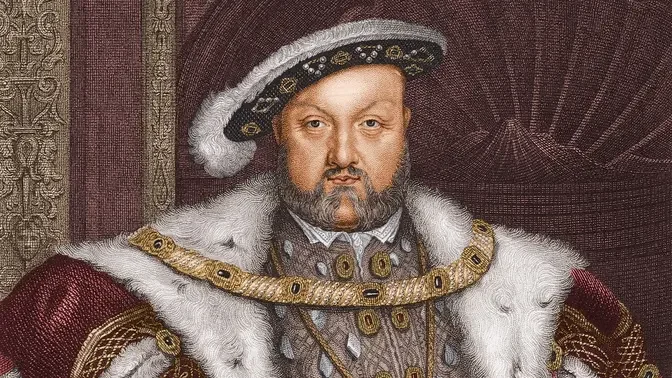
This is I'm Suck and in this video we will be looking at Henry VIII's foreign policy.
So first of all we will look at the foreign policy in the years 1509-1514. Now this is
because Henry VIII's reign began with a contrast between himself and his counsellors. Now while
Henry VIII advocated an aggressive foreign policy, his counsellors pushed for the continuation
of peace. Now by pushing for the continuation of peace, in 1510 his counsellors negotiated
the renewal of the Treaty of Atap, which was previously signed in Henry VII's reign. Henry
VIII's different views were confirmed however when he sent the Archbishop of York, Christopher
Bainbridge, to Rome so that he could join Pope Julius II's Holy League. Now England
joined the Holy League in 1511 and the Holy League was an anti-French alliance consisting
of England, Spain, the Holy Roman Empire, Venice and the Papacy. Now as part of the
Holy League alliance, Henry VIII sent an army of 10,000 under the leadership of the Marquis
of Dorset to France in 1512. Nevertheless he achieved very little with the only result
of demoralised troops and an increasing expenditure, which was a lot of money being spent. Now
King Ferdinand of Spain however used this as a diversion as he conquered Navarre. Now
the ultimate result of this was one of embarrassment for both England and Henry VIII as Spain had
used this as an advantage whereas England were left embarrassed. However later on in
1512, Henry VIII turned to Wolsey to organise a second expedition and in 1513 Henry led
an army to north-eastern France. Now this was deemed as a success when the English won
the Battle of Spurs. Now this meant that they captured the towns of Tournai and Téhérouane
and this was left under English control after Wolsey negotiated the Treaty of Saint-Germain-en-Laye
in 1514. Now this also gave Henry VIII an annual payment for agreeing to give up the
claims to the French throne. Now Tournai was eventually sold back to France for a fee less
than what the English had paid in reconstructing it however and the renegotiated pension from
the Treaty of Atape was also lost. Now although a further campaign was contemplated in 1514,
it was abandoned when Ferdinand and Maximilian made separate peace treaties with France.
However the real big event of these early years actually took part in Scotland when
Henry VIII was out of the country. So when Henry VIII was in France in these expeditions,
the Scots who had signed a treaty with France in 1512 and always had an alliance called
the Old Alliance, led an army to the north-east of England. Now without Henry VIII in the
country, his wife Catherine of Aragon was acting as regent and the Earl of Surrey was
given the instructions of repelling the invasion. Now this Anglo-Scottish conflict was called
the Battle of Flodden and it took place in 1513. Now it was the last major medieval style
battle in England and overall 1,500 English troops were killed yet 10,000 Scottish troops
were killed and this included James IV. Now the death of James IV both enhanced the image
of the English army and severely weakened the Scottish. Now this meant that the Scottish
would not be an active threat to Henry VIII for a long time seeing as Margaret Tudor,
who was Henry VIII's sister, and her one-year-old son James V would come to rule. Now these
campaigns were of limited success however because Henry VIII was forced to liquidate
his assets, which means that he converted all his assets into cash, and to fund the
wars nearly led to a rebellion in Yorkshire which was similar to what could have been
like the Yorkshire Rebellion because of all the taxation which was needed. So the next
years to look at is the years between 1514 and 1526 and there were limited major themes
which dominated these years however the three main points which can be concluded from this
era were that England remained a minor power in comparison to countries such as France
and Spain and Henry VIII significantly overestimated the power of English troops. So by the end
of 1514 Henry VIII had also run out of money so he was unable to continue his aggressive
foreign policy. Now this meant that he was unable to exploit the weaknesses of Scotland
after the death of James IV and he had to seek peace with many of the countries including
France. And in order to seek peace with France he organised the marriage between his younger
sister Mary and the French king Louis XII. So in order to create peace with France Henry's
younger sister Mary was married to Louis XII on the 9th of October 1514. However the problems
with the marriage came from the disparity between the ages between the young princess
and her much older husband. So this meant that Louis XII soon died on the 1st of January
1515 and within weeks Mary married the Duke of Suffolk. Now this marriage meant that Mary
couldn't be used for diplomatic purposes and this infuriated Henry VIII and it took
a long time for him to reconcile with his sister and his former best friend the Duke
of Suffolk. Now this era also marked the emergence of young monarchs. So the death of King Louis
XII in 1515, Ferdinand of Aragon in 1516 and the Holy Roman Emperor Maximilian I in 1519
severely shifted the balance of power as suddenly Europe was populated with young and
competitive monarchs. Now when Louis XII died the man to take over was Francis I and he
and Henry VIII soon became intense rivals and soon after he came to the throne Henry
looked for an alliance with the Spanish. However when Charles V came to the throne in 1516
he and Francis I created an alliance with themselves. So when the Emperor Maximilian
agreed the Treaty of Cambrai with the French this left England extremely isolated. So this
isolation meant that Francis I was unable to undermine Anglo-Scottish relationships
by getting the heir presumptive Duke Albany and the heir presumptive is the person first
in line of succession but could be displaced when an heir comes along to be appointed as the
regent of the Scottish throne and seeing as the English saw him as a French agent this concerned
them. However on the other hand his influence was limited because of the divisions in the Scottish
nobility. So the next major event came in 1519 when Maximilian I died and when he died
Charles V became the Holy Roman Empire in addition to the King of Spain and the Duke
in the Netherlands. Now this meant that Charles V commanded a vast empire which stretched from
the Americas to Western and Central Europe. Charles also inherited his grandfather's efforts
in pursuing the imperial claim in Milan. Now this was currently under French control thus bringing
conflict between Spain and France and there was no way in which Henry would be able to compete
with him. However England were successful in 1518 because in 1518 Leo X, who had become Pope in
1513, called for a crusade against the Ottomans and this would prevent the spread of Ottoman power
in Eastern Europe. And the Ottoman Turks had become powerful by the 15th century and they
were Muslim and they hoped to spread their religion all over Eastern Europe and they had already
conquered Constantinople in 1453 and they wanted to build an empire. And although Wolsey saw this
scheme of Leo X as very optimistic he also saw it as an opportunity to place England at the centre
of European diplomacy and he called for the major powers of Europe to live under universal peace
and around 24 countries signed the resulting peace treaty. And this treaty committed countries to
avoiding war or risk being attacked by other signatories and this treaty was of great success
to England as Wolsey was able to end their isolation and instant fame was brought upon
Henry VIII. Now Wolsey was also appointed papal legate in England. So Henry and Wolsey were able
to play out their rules as power brokers in Europe until Charles, as we've mentioned before, became
the Holy Roman Emperor and became this massive figure. So after 1518 now the relationships
between England and France had started to improve and England had agreed to return
to a knight of France and the French would compensate them with a pension. Now the French
would also keep the Duke of Albany who was the heir presumptive and who was being kept in Scotland
but now they would keep him out of Scotland to ensure peaceful relationships between Scotland
and England. Now the French were most worried about the rise of Charles V and this
encouraged them to enter into these peaceful negotiations with England and this diplomacy was
reinforced with the expensive diplomatic encounter at the Field of the Cloth of Gold. Now the Field
of the Cloth of Gold was a two-week meeting between Henry VIII and Francis I which took place
which was under English control and each king was accompanied by an extremely large retinue
and they set it up in a lavishly decorated pavilion. Now the event cost Henry VIII around
£15,000. Now there were some tensions however when Henry VIII lost a wrestling fight against
Francis I and in diplomatic terms the results from the event were minimal and in August 1521
Wolsey negotiated the Treaty of Bruges with Charles V. Now this had a number of advantages
including the possibility of improving relationships with the Pope who wanted to
decrease French control in Italy, the possibility of gaining land in France and the marriage between
the Emperor of Spain and Henry VIII's young daughter Princess Mary. So after the treaty
with Charles V, Henry VIII promised to send a great army into France of 30,000 men. However this
appetite for war proved costly and Wolsey was still soon demanding revenues from Parliament
who were reluctant to give extraordinary revenue and the church. He also set up a national survey
in March 1522 to see how much tax people could pay. Now on May the 1522 the Earl of Surrey invaded
northern areas of France but the effects were minimal so the next year Wolsey called for more
money for the grand invasion of France and this meant that in the summer of 1523 under the command
of the Duke of Suffolk 10,000 men sailed into Calais with the objective of invading Boulogne.
Nevertheless Henry and the Cardinal urged him to march upon Paris and ultimately the allies were
captured and were forced to flee from danger. Victory however came in 1525 when the Spanish
imperial won over an overwhelming victory in the Battle of Pavia. Now the Battle of Pavia was part
of the recurring Italian wars where both France and Spain and the Holy Roman Empire saw Italy as
their main strategic focus and in the Battle of Pavia the French king was taken prisoner and much
of the nobility were killed. Now after the battle Henry VIII proposed another grand coalition with
Spain to invade northern France yet Charles V was unwilling to share the victory especially
as he didn't require the support from Henry VIII anymore. However at Henry and Wolsey did try to
earn money for a further campaign by introducing the amicable grant which we talked about in our
government video last time. Now the people of England however were tired of war and which was
only being used for the king's own benefit and this is why they revolted against this taxation.
Now the aftermath of the Battle of Pavia had three major consequences. First Henry was forced to back
down and his ego was therefore bruised. Charles V soon after rejected the marriage which he had
previously agreed with Princess Mary and Wolsey was never really able to recover from this domestic
failure of the amicable grant which would later lead to his downfall as well as the failure to
secure the divorce from Catherine of Aragon. Now the fracturing of the Anglo-Imperial alliance led
Henry and Wolsey to a pro-French foreign policy so this meant that Henry offered support to the
League of Cognac which was set up by the Pope to fight against the excessive power of the Emperor
held in Italy after the Battle of Pavia and along with the king's great matter which we'll talk
about soon, this exacerbated the relationship between Henry VIII and Charles V. So next we
will look at the time between 1527 to 1540 and the failure of Henry VIII to resolve his great
matter by diplomatic means and the great matter is basically his wish for a divorce from Catherine of
Aragon, emphasised the way in which Henry remained a minor power in Europe and due to their weak
position Henry and Wolsey made an anti-imperial alliance with the French at the Treaty of Amiens
in 1527. Now Wolsey tried to pressurise Charles V when he introduced a trade embargo on the
Burgundian lands however this failed and it only created widespread unemployment and social issues
in England. Now meanwhile Charles was continuing to improve his strength when he was victorious
over the French in the Battle of Landriano in 1529. Now Charles was therefore dominant over
the Pope and this can be shown by the Peace of Cambrai which was secured and the Peace of Cambrai
temporarily secured peace in Italy where Charles V had achieved total dominance and this also
proved the Pope's political dependence on Charles V which was why he was unable to grant a divorce
as he did not want to upset Charles V who was the nephew of Catherine of Aragon. So in 1532 Henry
tried to consolidate his weak position with an alliance with France however France were already
in a weak position and they were unable to put any pressure on the Emperor therefore France is the
first sought to marry his son Henry to the Pope's niece Catherine de' Medici. Now this meant that
Henry VIII was forced to solve his great matter by breaking with Rome which is an extremely
important event and we will go into more detail in another video. Now although the Catholic world
was horrified Charles V was preoccupied with the threat of the Ottoman Turks to the Christian
Empire and was therefore unable to launch an attack on England. So in order to find a suitable ally
Henry joined the League of Schmalkalden. Now although Cromwell negotiated with the League
no anti-Habsburg or anti-French alliance was agreed upon. Now fortunately for England their position
was soon improved with the death of Catherine of Aragon and the execution of Anne Boleyn which
both happened at the start of 1536. Now this opened up possibilities of a renewed alliance
with the Emperor and there was also the renewal of fighting between the Emperor and Francis I
in this year. However once again Henry's position weakened when in 1538 Charles V and Francis I
agreed to break off connections with England in the Treaty of Nice. Now Pope Paul III also published
a bull which excommunicated Henry VIII from the Catholic Church. Now this excommunication
meant that English Catholics didn't need to obey their ruler. Now the Pope also sent envoys to
France and Scotland to raise a crusade against England. So therefore there was a massive risk
of an invasion from Charles V and Francis I and this may explain why Henry insisted the publication
of the six articles in June 1539 which reinstated some clear Catholic doctrines. Now it also explains
the marriage of Henry VIII to Anne of Cleves who was the Duke of Cleves' sister and this strengthened
England's relationship with the Protestant countries. Now despite the fact that the marriage
didn't last long due to Anne's appearance it soon became unnecessary when the relationship between
Charles and Francis broke down so this left Henry VIII in a secure position. So finally we will be
looking at the last years of Henry VIII's foreign policy from 1540 to his death in 1547 and in
Henry VIII's last years his foreign policy reverted back to the aggressive foreign policy which
characterized his early years. Now this may have been due to a desire of creating a united British
isles simply to achieve some military glory or to punish James V for harbouring rebels,
marrying French princesses or ignoring pressure from Henry VIII to break from Rome and James V
had returned the problem of security when he had adopted a pro-French foreign policy including the
marriage to Mary of Guise. Now although Henry tried to negotiate an agreement with James he refused
so this meant that in 1542 Henry sent the Duke of Norfolk to Scotland and this was met with
immediate military success when the Scottish army were defeated at the Battle of Solway Moss
and this also led to the death of James V who died of shock leading to his one week old daughter Mary
taking the throne. Now Henry could have taken advantage of this however his main aim was to
invade France. Now therefore he tried to arrange the marriage between Edward and Mary in the Treaty
of Greenwich however Scottish parliament refused to ratify the agreement and this prompted Henry
to send the Earl of Hertford who was Edward Seymour and later known as Protector Somerset
in Edward VI's rule to carry out raids on Edinburgh, Leith and St Andrews. Now buildings were
burned and people were killed indiscriminately in what was known as the rough wooing of Scotland.
Now these attacks simply served to antagonise the Scots further. Now ultimately Henry's foreign
policy in Scotland in these late years had failed because he failed to secure his Scottish policy
after Solway Moss and he didn't listen to Sir Ralph Sadler's warnings about Scottish hostilities
towards England so he could have taken advantage when they were left with just Mary in charge
however they didn't and they served to antagonise them instead of actually getting anything done.
So after the victory in Scotland Henry VIII allied with the Habsburgs against France and both sides
promised to invade France within two years and despite his deteriorating health Henry VIII sent
a 48,000 army to Calais and here Henry was able to successfully capture Boulogne. However Charles
became fed up with the war and he made a separate peace treaty with Francis I. Therefore England
were once again under pressure when Francis I sent troops to Scotland for a possible invasion
of England. Now the English were defeated at the Battle of Ancramore by the Scots and a separate
French force landed in the Isle of Wight and the Mary Rose also sank in the Solent. Nevertheless the
French failed to recapture Boulogne and in 1546 the Treaty of Ardres was signed. Now this meant
that payments of the pension money from the French would be renewed and Boulogne would be returned
to the French in 1554. However the war had proved extremely expensive and Henry VIII was only able
to fund it by selling monastic land, borrowing money and debasing the coinage. Now the debasement
of the coinage was where silver coins had their silver content reduced by substituting in cheaper
metals such as copper. Now ultimately the consequences of this aggressive foreign policy
were extremely severe. So thank you for watching and see you soon, bye!