
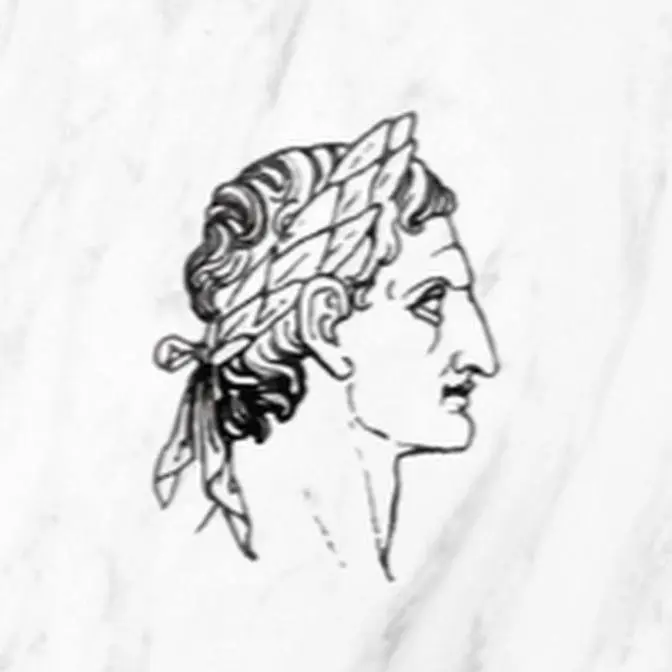
Почему римляне всех побеждали?
6 просмотры видео·7 окт. 2023 г.
Ножи от компании Барк:
TG: https://barknives1.nozhmaster.ru
VK: https://vk.com/write-200385056?ref=TIM&ref_source=history_finka_c_07102023
Почему римская армия была такой неудержимой? Короткий ответ - потому что они отказались от воинов в пользу солдат.
Более длинный ответ заключается вот в чем. Рим стал первым античным государством, который объединил все сильные военные стороны своих соседей в одну систему. Римляне не изобрели ничего из этого, но сочетание всех и сразу, достигнутое в период реформ Мария, стало уникальным...
This is a Fink NKVD sample of 1934 from the Bark knives, a handmade work of a real blacksmith with 20 years of experience.
The handle is made of wenge, and the blade is of hardened steel 95 chrom 18, which gives hardness 58-59 units per Rockwell.
The knife can withstand any load and cut everything that is not nailed.
It can cut a coin, a metal profile, a wire, a car wing, anything.
There is a certificate that the knife is not a cold weapon.
The blacksmith gives a lifetime warranty on his knives, plus free sharpening for all time.
I recommend the Bark blacksmith.
Go to their Telegram or VK through the links in the description and order cool handmade knives.
And according to the code word Ask History, you will get a 5% discount.
Why was the Roman army so irresistible?
The short answer is that they refused wars in favor of soldiers.
The longer answer is this.
Rome became the first ancient state to unite all the strong military sides of its neighbors into one system.
The Romans did not invent anything from this, but the combination of all at once, achieved during the reform of Mary, became unique.
In the 100th year BC, the Roman army was stronger than ever, and practically no one could stop them.
The only one who remained undefeated by the Romans were the Parthians in the east.
The Romans lost battles, but did not lose wars.
Rome was stubborn to the impossibility.
If the battle did not end in victory, if thousands of people were lost, it does not matter.
The Romans did not admit defeat and fought until the last soldier.
After the Battle of Cannae, Hannibal completely destroyed the largest army that Rome had ever assembled.
Any reasonable state would give up right away or try to negotiate, but the Romans did not.
They assembled a new army and rejected any idea of capitulation.
In Rome, they announced full mobilization of the male population.
The word peace was not allowed to be pronounced.
Traura was limited to 30 days, and even women were forbidden to shed tears.
There were cases when Rome lost a battle, but this never concerned the outcome of the war.
They won, even if it cost complete exhaustion.
Hannibal won all the battles except one.
No matter how good he was, Rome continued to advance, and after decades of conflict, Hannibal lost.
Thus, Carthage is considered the most formidable enemy of Rome ever.
The Roman legion was irresistible, because it relied on a good organization,
reacted quickly to changes in battle and offered one of the best social incentives among the armies of its time.
Around the 1500s BC, the time of Roman expansion began.
During this time, changes in military tactics and the organization of the legion took place.
It is interesting that the Roman leaders adapted the military training of the legions
based on clashes with peoples outside the Roman borders.
The early Roman armies were not armies in the usual sense.
These were phalanxes, built according to the Greek model and organized according to economic status.
The poorest are ahead, the richest are behind.
Such an army of militiamen was a normal phenomenon of early antiquity,
but a little later the economic status was replaced by military experience.
Now the newcomers were ahead, and the veterans were behind,
which contributed to the correct distribution of experience.
They decided to abandon the Greek phalanx style of construction.
Instead, the legionaries were armed with swords, shields and throwing spears.
The structure of the legions effectively resisted almost any enemy,
because each separate legion was a small mini-army.
The idea of such an organization, almost two thousand years later,
inspired Napoleon to create a system of army corps, which is still used today.
A small and full-fledged army allowed to create a set of military forces,
which is easier to manage than one large army.
You can have several legions, each of which will have the same equipment,
training and tactical mobility.
However, this is not the main thing.
In fact, the Romans were the first to realize
that the locomotive of any long war is logistics.
Unlike the neighbors, who preferred rivers and seas,
the Romans paved hundreds of kilometers of high-quality roads,
which allowed to supply the army without interruption,
fighting to move away from Rome itself.
So, in the economy of ancient and medieval states,
land transport often took a secondary place compared to water.
In Egypt there was Nile, in Mesopotamia there were Tigris, Euphrates and various canals.
Ancient Greeks built several large and strong roads connecting Sparta,
Arcadia, Athens, Argos and so on.
These routes could serve military and economic purposes,
but none of them was too long,
and trade between the poles of Greece took place by sea.
The main routes of communication between the Athenian, Carthaginian,
Venetian and Ottoman Empires were by sea.
But even in the Middle Ages in England,
goods and grain from the center of the country were delivered down the river to ports on the coast.
Water transport is faster than land transport and has a much greater capacity,
but obviously it works only where there are shipping routes.
However, the empires like Rome had to control vast territories
where it was not possible to use ships.
Around the 5th century BC, the Romans built the first road.
After 150 years, the first roads with solid coating appeared.
They greatly accelerated the transfer of troops to the main directions of conquest,
and at the same time developed trade.
Roman road construction did not arise in a vacuum,
but became the result of the adoption of technology from the Greeks, the Russians and the Gauls.
The Greeks used limestone solution,
the Romans added volcanic pozzolan and cement,
obtaining concrete.
As the roads improved, they began to have a multilayered structure,
and they also had a standard size,
probably established by the law of 12 tables,
which prescribed a minimum width of 8 feet
and 16 feet at turns.
And some bridges, built by the Romans,
are still used today, 2000 years later.
For example, the Fabrice Bridge across the Tiber River.
Thus, roads built by soldiers played a big role in the military successes of the Romans
and allowed them to quickly transfer reinforcements to difficult areas.
Apparently, the Romans were pioneers of field fortification.
I mean, the fortresses, of course, were built before them,
but the Romans were ahead of their time
by building a fortified camp after the march.
It seems crazy,
but the Roman legionaries traveled with a set of equipment,
which allowed them to carry out basic construction work.
Each detachment had a huge donkey,
and every night the Romans stopped,
built a fort with walls,
and only then broke up tents.
In the battle of Alesia, Caesar drove the Gauls into a trap in a large city.
In order not to let them escape,
he built many-kilometer walls around the city and completely surrounded the Gauls.
However, another Gaulish army was approaching the city to help its own,
and Caesar built another ring around the first wall.
No other army could have done this.
To sum up, there is no one reason why the Romans defeated everyone.
This is a combination of factors and a refusal from the warriors
in favor of a full-fledged army consisting of soldiers.
Many believe that Rome fell from its own ambitions,
from the Germans, from the trading generals, and so on.
In fact, Rome destroyed nature itself.
Two factors caused damage,
the consequences of which slowly accumulated until the end of its existence.
The end of the climatic optimum
and, as a result, the decline in the yield of various cultures led to the fact
that a deep economic decline and mass migration of the population began in the empire.
The second factor is the plague epidemic,
which struck the empire several times,
starting from the 2nd century BC.
As a result of their joint action,
the economy, and, accordingly, the finances of Rome,
began a military decline.
In the 240s of our era, there was a severe drought,
which caused mass starvation throughout the Mediterranean.
And then the pandemic, known as the Cyprian Plague, broke out.
What caused this disease remains a mystery,
but it led to the death of a huge part of the population of the empire.
A demographic crisis arose,
which led to the complete collapse of the entire imperial system,
which received the name of the crisis of the 3rd century.
Enemies flooded across all borders,
penetrating those areas of the empire
that had not seen wars for several centuries.
One emperor after another seized the throne.
Everyone was looking for a savior, but no one could help Rome.
New data on the paleoclimate also help explain
why the Huns suddenly moved west.
At first, they lived in the Eurasian steppe,
which stretched from Hungary to Mongolia.
This is a dry zone,
which depends on the western stormy streams that bring rain.
The rings of the trees indicate
that the mega-drought in the middle of the 4th century
could have made these nomads despair
and find greener pastures in the west.
Thus, their migration began,
which led to the fact that after a while,
the Goths, fleeing the Huns,
knocked on the doors of Rome in 376.