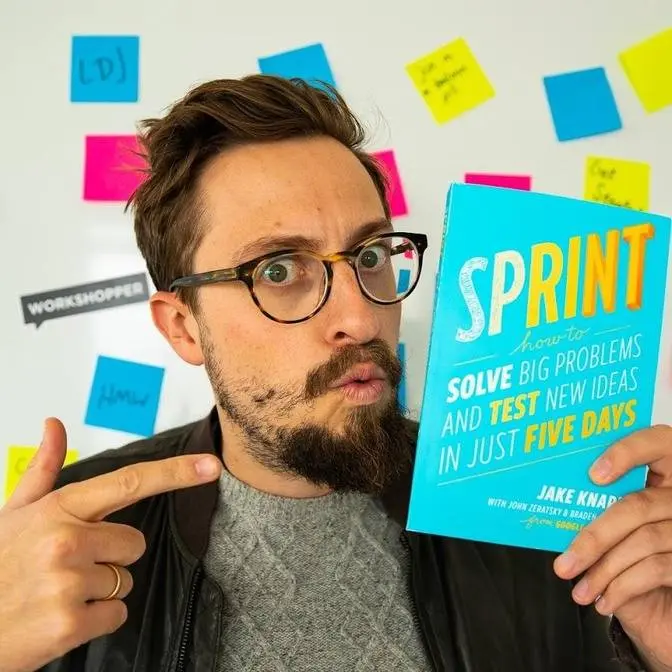
Are you planning on designing a workshop for your team or a client but you don't know where to start? Well in this video, AJ&Smart CEO and Expert Facilitator, Jonathan Courtney shows you how to design an amazing team collaboration workshop using the 4C's framework and how to capture the information provided by the client correctly.
This video is a recording of a live training we ran for members of our facilitation community and has been slightly edited for a smoother viewing on YouTube.
0:00 Intro 0:24 Who is AJ&Smart 1:32 The Client Brief and how to capture information 11:14 The 4C’s framework for designing workshops 12:51 Start of the workshop design 14:34 Collect + Choose phase - The Sailboat 19:02 Create phase 1 - Lightning Demos 21:22 Quick look into Workshopper Master 23:33 Create phase 2 - 10 for 10 25:50 Commit phase - Action board 29:30 How to assign tasks 30:00 Calculating final time for exercises 34: 20 How much should you charge for a workshop?
✅ If you want to learn more about facilitation and workshops, join our FREE FACILITATION COMMUNITY 👉 https://facilitatorclub.com/ where thousands of facilitators share their tricks, techniques, and resources.
Want more? Join 200,000+ people subscribing to our AJ&Smart YouTube, LinkedIn, and Instagram channels for free content to help you and your team do more valuable work.
AJ&Smart is the #1 design sprint firm in the world, the official Design Sprint training partner with Jake Knapp, inventor of the google design sprint, and partner of choice for the world's most successful brands.
We are at the AJNsmart office shooting this video, but at least 80 percent of the business is remote. So there are people working all over the world at AJNsmart.
And yeah, so the company is sort of on the one hand, we do consulting for big companies. So we help large corporates with their products, with their validation, with retreats and all that kind of stuff.
So Workshopper.com, that's sort of like what we're learning in the consulting business is getting transformed into like other stuff. Kind of make sense?
All right. Should we build a workshop?
Let's do it.
I'm going to read out a case study, a real life case study. Jonathan will listen.
I'm not going to listen.
So actually, it's probably worth saying that usually when a client is calling me and talking to me, I usually fill out this thing, which is basically my snapshot.
And this snapshot is just something that we teach people how to fill out.
This is an example of a filled out one.
So we'll show you this at the end of the call and show you how you collect information from a client if they're calling you and you're trying to collect information about what type of workshop to run.
So this is basically that snapshot.
OK, I'll hand it over to you.
So my name is Ross.
I'm Jakob, but I'm Ross.
Hi, Ross.
And I'm the head of marketing in an EdTech startup based in Berlin.
EdTech.
Yeah.
Education technology.
Exactly.
I lead a team of marketing designers, videographers, copywriters who work on all public facing marketing materials such as social media posts, YouTube videos, blog articles and some landing pages we use for marketing campaigns.
So you're running the marketing team?
Basically.
Cool.
Yeah.
How did you get my number?
I'm just kidding.
How much are you going to pay?
No, sorry.
I'm getting into that actually.
A team of UX and UI designers and web developers sit in the product team, obviously.
They focus on designing and optimising the company website as well as the online platform our students use for studying the course materials.
We recently started getting some pushback from the product team about the visuals we, the marketing team, publish on social media.
Oh, so the UX team doesn't like the visuals.
Yeah.
Doesn't feel like it's like part of the brand correctly, one with the brand.
Exactly.
That's common.
Marketing designers feel the current company branding is very monotone.
They want to experiment and create vibrant visuals to create more engagement on social media.
We also started working with a talented illustrator.
I want to incorporate illustration in our marketing work.
There's the same problem with copywriters.
So the copywriters write copy for the website.
Their work gets altered and edited by UX and UI designers who are not skilled copywriters, which results in typos.
Both teams are very busy, very frustrated.
The team's already tried weekly check-ins, but they don't really lead anywhere.
But all team members are very passionate and they really want to make it work.
The product team works in agile sprints while we, the marketing department, works in a traditional way.
We need to find a way to collaborate and keep each other, each team up to speed with recent developments.
We need the product team to be open to some visual experimentation.
We also need them to work closely with our copywriters to make sure the website copy is up to scratch.
The company is now fully remote and the teams are tired of Zoom calls.
All 12 members of the team are based in Berlin.
So getting together is an option.
Though some team members might not feel comfortable with getting together because of COVID-19.
We have one full day to come up with this new process, ways of working.
Now, let's talk about the key deciders.
Can I just ask questions because I actually am hearing this for the first time.
So one day, how many people would be coming to the workshop?
Twelve.
Twelve people.
Fuck.
Is it possible?
Does it have to be 12 people?
No, probably not.
Is there a possibility of reducing it to like eight?
Sure.
That would mean...
Let me finish.
Let's talk about the deciders.
So the key deciders are the CMO and the CPO.
Chief marketing officer, chief product officer for anyone who's not a tech person.
They both see the problems and said they want to support the teams in finding a way to collaborate better, but hardly ever talk to each other.
The CMO wants to work fast.
She has a lot on her mind with sales not going well in the last few months.
She doesn't have much time and often leaves meetings earlier.
The CPO is happy with slower work where all outputs are tested with users before implementation.
Do the CEO and CMO not really like each other?
Yeah.
There's some tension.
There's tension, OK.
Yeah.
I was given...
And that tension is obviously the team sees that tension and they take it on themselves.
And it's kind of like an us versus them product team versus marketing team.
And by the way, this is actually a real case study.
Yeah, it's a real case study.
Hiding the name of the company.
I was given €20,000 to €35,000 budget to solve this problem.
My performance review is coming in two months.
It will be amazing if we could end up with a solution and end this collaboration chaos before then.
Great.
Jonathan, please help.
So there's a lot of things in there.
So one thing that's actually really important to understand is that Jakob, the way he gave me all of that information right now was amazingly clear.
And I would have very little work to do on a sales call.
In a real life sales call, they don't just tell you, I've got €35,000 for one day and here's all of the stuff.
And usually what happens is if you look on my screen here.
So this is called a capture canvas.
That's the name of this canvas.
And on the call, I am asking the client questions.
And while they're talking, I'm filling this stuff out.
And so you can see there are some red flags here, like the power play between the CMO and the CPO.
The CMO might be a troublemaker.
The team is tired and frustrated.
The company seems political.
This is just so that my team at AJ and Smart has a common way of taking notes so that later when we're designing the workshop, we actually have all of this really
standardized and really clear.
But I also want to make sure no one on my team forgets important information.
So what, for example, I noticed that now the client hasn't mentioned yet, because I probably interrupted too early, is what are the expectations in terms of an outcome?
You said some sort of principles for collaborating together for you.
Is it important that that's sort of in a digital format that you guys can all share?
In this case, it's going to be a Google Doc.
That's what you guys want.
But it seems like because of these red flags that there's this power play.
It seems like this team building, I would have written this down, team building seems to be also important to this process.
So the primary expectations.
So what basically what the client is telling me, we need a workshop to improve collaboration, but there's also some secondary expectations.
So the primary expectations is what are the main things this client wants?
So basically, that's what the client is saying.
And the secondary expectations, by the way, if you're seeing if you're like, where what is this canvas?
You are seeing it for the first time because it's from inside one of our courses, which is not public.
So if you're seeing it for the first time, that's totally normal.
So secondary expectations.
It's also internal AJ and smart documents.
What it's not available publicly.
Yeah. So what other types of things do you think the client wants but isn't actually saying?
So these are other things.
And that was the beautiful thing that Jakob said is I have a performance review coming up soon, so I need to look good.
And people usually forget that the person booking you often has a deeply selfish, understandable reason for booking you.
And it's so that they look good for having booked you.
It's not just that they want a workshop.
They don't care that much about a workshop.
So, yeah, the 12 participants is a little bit high for what I want to do full.
It's going to be hybrid, meaning some people are going to be in person.
Some people are going to be remote.
Yeah. So I have a general rule of thumb that I don't want to have more than eight people in the workshop.
And that's just from years and years and years and years of running workshops with teams and realizing if he's just giving me one day,
every person more than seven or eight is going to increase the amount of time that we need for each exercise.
So if Jakob had pushed and said it has to be 12 people, then I would have said then it has to be two days.
So anything for me after eight people, like each person is basically adding another hour onto the discussions.
So 12 is just too much.
If you're just doing team building and just doing a hackathon, then it can be we just ran a workshop last two weeks ago in Sweden for 240 people.
That's fine. But that's not a workshop where it's like you have to have this outcome, this Google collaboration document.
But if you're actually being asked to create an outcome, then anything more than than seven or eight is just too much for one day.
Again, we do have systems for coming up with how do you decide that?
I don't have I don't have the 20 hours to go into all of that right now.
But good question. OK, so when I'm designing a workshop, here's how it looks for me.
I for me, the the main structure for designing a workshop is using a system called the four C's.
If you've like checked out some of our content in the past, you might know this already.
We basically structure our workshops into four sections called the four C's.
You can see it on my screen right now.
So the first stage is collect in every so basically the cool thing is if a if a client calls you and they're talking about this workshop, they want to do.
The second quarter is the choose quarter.
Third is create finalists commit.
So the collect phase, the collect phase is where you're basically collecting information from the team.
So you're using exercises that just collects info.
The choose phase is where you decide, OK, out of all of these challenges, out of all of these things, which things are we going to focus on in this workshop?
The create phase is saying, OK, we've chosen this challenge or we've chosen this theme.
Now we're going to create solutions for that challenge or theme.
And the final stage is commit.
This is where we're saying this is what we're going to do next.
We're not leaving this workshop until we have a commitment on what our actual outcomes are and what the actionable next steps are.
So that's the four C's.
So when I'm designing a workshop, basically, OK, this is a one day workshop.
Here's kind of the lunch break that I'm going to be putting in.
This is the actual canvas that I use.
And so I'm I don't need to start with an empty slate.
The first thing I need to do is create a section to collect all of the team's data challenges, problems.
So let's look back at the capture canvas here.
We need to do a workshop that improves collaboration.
It's not really a workshop to improve collaboration because the outcome here is we are trying to use the workshop to define the collaboration process.
So what we're trying to actually do here is figure out what exercises we need to do in which order so that at the end of the day, there's a Google doc with a list of here's how we're going to work together.
Pretty much that's what would be useful, I think, for the team.
So that's what we're trying to get to.
And, you know, today, just because of the time and I'm going to keep saying that we can't go into all of the power plays and all of that kind of stuff that that goes into like deep facilitation tactics.
We don't have time for that today.
If you guys like this live stream, maybe we do these some other time because I've also got dinner soon as well.
I knew it would go over time.
OK, so what's over here?
Well, these are the exercises that 80 percent of the time I use in workshops.
These are my top 10 exercises.
And these are the exercises where even though I've run workshops for 10 years, run hundreds of different types of exercises, these ones are the most reused exercises that AJ and smart.
And you'll notice a couple of them from the design sprint as well.
So the first exercise that I'm going to use, which is going to be a great, a great, which is going to be a great exercise for the collect phase is the sailboat.
I actually think I have an image of that exercise.
So a lot of people might know this exercise already from Agile, but this is a really cool exercise just for gathering.
And I'm not going to show each exercise would take me like 30 minutes to an hour to explain.
So I'm just going to show you which exercises I would choose.
So I would choose the sailboat because the sailboat is one of the best exercises, in my opinion, to collect information from a group in a way that's not just purely negative, but also has some positive aspects to it, too.
So what we would do in the first exercise is we would collect all of the different challenges that the team has using the sailboat exercise, which would probably go on for about 45 minutes.
And so what I do then is I'll because I know maybe there's going to be like eight people here.
I'm going to put a pink post it underneath.
All right, here we go.
So what I do, just in case I'm not personally running the workshop, let's say I get booked on something else.
I'll put notes behind each of the exercises here.
So maybe I'll even have something like because there's a power play, I might say to the team or to myself, focus on the positives.
So there might be some little sneaky notes in there.
So once you do the sailboat exercise, you now have all of these challenges visualized.
And one of the most important things about workshopping or one of the most valuable things that you actually do for your client is just visualizing their challenge, visualizing all of the mess.
Because if you just try to do this with a conversation and everyone's taking their own notes, it gets super chaotic.
I don't know if you've ever been in a meeting or a Zoom call where something's trying to get done.
But if it's one hour, two hours long, you don't remember what arguments or things the person at the very start said.
Every like when you're trying to make a decision at the end, it's like you're just trying to go through your memory.
Whereas if you can visualize it for a client, like how it looks on the walls here.
Yeah, then you can actually make the you can make their decision making process a lot easier because they know all the things that they talked about.
And the sailboat is a really great way to visualize information.
Is there actually a sailboat?
Oh, yeah. Oh, yeah.
Wait, if I move this out of the way, you can see it.
I didn't know that it was in the background.
That's a real one, right?
So there's probably like, is it anything that is there anything we shouldn't show?
OK, so you can zoom in on it a bit if you want to do that or like that, like crash Zoom thing.
Yeah, focus on it.
There we go. We use it all the time at AJNsmart.
So that would be the first exercise I would definitely do.
Don't read what's on it.
Just so you know, if you're not like these exercises, a lot of them you can just find by Googling it.
Sailboat exercise.
I just want to show you how I make how I personally would put together a workshop like this.
So now we've got now we've collected, I think, all of the information we need.
So we've collected the mess.
The next thing we need to do is choose what we're actually going to work on.
Like, which of these things will we work on?
And the cool thing is, and this is like a maybe I should zoom in a bit more.
The cool thing is that I think it's really important for us to be able to do this.
Maybe I should zoom in a bit more.
The cool thing is that at the end of the sailboat, you can vote up a challenge and you can turn that challenge into a how might we.
And how might we is just a way to turn a problem into a challenge statement.
So actually, in this case, the sailboat exercise and actually usually when we're doing these
workshops, the sailboat exercise beautifully and elegantly covers both collect and choose.
The only thing that changes here is that if you're going to use sailboat for the choose
section as well, you're probably going to need about an hour for this.
We probably need about an hour.
By the way, it's funny how similar this is to just when I'm making a workshop with my team.
It's just rambling and changing these things around.
OK, so that's an hour.
We're probably going to want to have a break.
And when they come back, we're going to have a create phase.
And in this create phase, we are looking for solutions.
But we don't want to jump straight into actually creating solutions.
We're going to look for solutions and get some inspiration.
So anyone who's watching the chat right now or anyone who's watching this right
now, what would be a great exercise to bridge the gap between here's the challenge
and here's our solutions, what would be a great exercise to get some inspiration from?
Lightning demos. Exactly.
So lightning demos is the perfect exercise to go here before lunch.
Lightning demos, if you don't know lightning demos, I think a lot of you do
already is a really simple exercise to where each member of the team silently
together alone searches for examples of how other companies solved similar
problems or a similar challenge to this team.
And so the team is going to be just
searching for different similar solutions,
different solutions, but similar challenges.
And it doesn't necessarily have to be in the same industry as well.
So it doesn't have to be looking for ed tech firms who solved collaboration.
It can be a farm that solved collaboration issues or a coffee shop or whatever.
So basically, lightning demos would be the next exercise.
And I I personally love for lightning demos to go on quite long.
And if we're going to be doing 12 people,
actually, we're saying that if we're doing a one day workshop,
it's actually going to be only eight people.
But I still think you're going to have 45 minutes realistically.
And one really great secret to getting
booked over and over and over again as a workshopper is to bring two or three
of your own lightning demos and just kill everyone else's lightning
demos with how amazing yours are.
And they'll just be like, we always need to have John.
Oh, shit.
We always need to have Jonathan here.
I just
we need to have Jonathan here because he just brings these really interesting ideas.
So that's 45 minutes for the lightning demos.
If anyone's wondering, like, wow, this looks so basic.
It is not rocket science.
Making workshops is not rocket science.
Selling them and making really good
workshops and making it your career is probably more where the rocket science
part comes in.
The other thing I should say is that and that's something I talk about a lot
in workshop or master, like improvisation.
Here's I think I have workshop.
Yeah, workshop.
This is the workshop or master course.
How do I just get out into the main area?
Like this is me teaching this snapshot thing, for example.
Of course, you get all the mural boards,
but a huge part of the course is also facilitation.
And each of these laws here essentially
teaches you the most important things that you need to do to make the workshop
perfect, make people want to rebook you.
There's also sections on selling workshops, et cetera.
But the creation of workshops.
I mean, we we basically teach you
everything you need to know about building a workshop from scratch,
everything you need to know about the most important exercises.
Then we actually go and design a workshop, show you how to build leadership retreats,
show you how to build lots of different types of workshops.
And at the end, we have our master recipes, which are OK.
If you learn these four recipes, you know, one one recipe is the design sprint.
But we have our own recipes internally at AJ and smart.
If you learn these four,
you pretty much have yourself covered for 90 percent of whatever any client asks you
for, that you're either going to be asking you to, like,
help them figure out what they should work on or once they've done that,
how what's the strategy behind it, what should we do or how do we actually
plan that out and actually get it done?
Or we have an updated version of Lightning Decision Jam LDJ Royale,
which just is an improvement on LDJ, which is a standard problem solving,
decision making workshop.
So everything I'm glossing over a lot of stuff here just because it's hours
and hours and hours and hours and hours of stuff, plus all the coaching calls every
week and I'm not used to doing like live streams where I'm talking about it
from scratch and having to explain everything.
OK, so we basically now have our lightning demos.
We've got some inspiration.
We're going to take a lunch break.
Let's put the lunch break up there.
We're still in the create phase.
And now I want them to come up with concepts.
And so what I'm going to do here is I'm going to look back on my top ten.
I'm going to think which
which one of these exercises is going to be great for coming up with concepts.
I know you're probably thinking, let's definitely go for concept.
And I actually think in this case I am going to go for concept.
But ten for ten would also work here quite well.
Actually, actually, I think I'm going to go for ten for ten,
because in one day I don't want to have people having to come up with full
visual concepts, especially when we have different ways of doing concepts at AJ
and Smart as well, which are not just like having to draw everything out.
But I think if we go for ten for ten, we're going to have a lot of ideas.
We're going to have like eight people.
We're going to have 80 ideas bringing that down to like five or six,
because solving collaboration isn't something where it's like this is the thing.
It's going to be a lot of different things,
a lot of different tasks that the team is going to go away with.
So I'm going to go for ten for ten.
So ten for ten is a really simple note
and vote exercise where each member of the team is going to write ten solutions
to the how might we that we created in the sailboat.
Anyone who's listening to this is just like, how might we sailboat ten for ten?
What the fuck is all this terminology?
Any anyone who accidentally joined this
and doesn't care about workshops is hating their life right now.
Yeah, yeah, that's fair.
All right.
So ten for ten is a really simple note
and vote exercise where you're basically brainstorming as a team.
But each person is their own little island.
They're not sharing anything with each other.
And at the end of ten for ten, you've got a voted up list of interesting
experiments and ideas that you could try as a team.
So how many are voted up?
It really depends.
But the idea is that you have ten at the end.
So out of 80, ten winning ideas are going to make their way through.
And that brings you to the end of the create phase.
Now you've got ten interesting candidates for ideas that you could try.
We now have to commit to which ones we're actually going to try as a team.
What would be a good exercise here to
visualize these ideas in a way that we can prioritize them and decide
which things should we do now, which things should we try later,
which things should we ignore and which things are just like not that
interesting, but could go into a backlog?
Does anyone know an exercise we could try for that?
So people are saying effort impact scale.
Exactly, exactly.
So internally at AJ and Smart, we call this action board because the effort
impact scale sometimes at companies, they put everything on the effort impact scale.
I think I have an image of it here.
Exactly. So this is the action board.
So what you're doing is you're creating
this image for a client and you're putting the ten ideas on to this board.
And, you know, the Y axis is for the challenge that we have.
How impactful do we think this idea is?
So let's say one of these ideas is
let's have a weekly stand up with the entire team.
That could be an example of one of these ideas.
So the Y axis, meaning this line here, this is impact.
How much of an impact do we think we'll make?
The X axis, which is effort, is how hard how hard will that be?
So what we're doing is we're taking all of the ideas from the ten for ten and we're
putting them on this effort impact scale.
So at the end of the workshop, we essentially have, OK, these are the things,
these here, the things that fell into this range.
We are going to try these things over the next two weeks.
The things that fall into this range,
we think they're going to work, but that's probably a six weeks project.
Everything below the line is either a task or just let's forget it.
We're focused very, very heavily on the top of this.
At the end of the workshop, because the client specifically said
that we're adding this to the Google Doc, the commit phase is also going to include
a very, very sexually named exercise called adding shit to the Google Doc
with the person who hired us. Hey, this thing came back.
What is that? Why is that happening?
What? Who's that?
Oh,
yeah, like that's basically the workshop.
That's basically it.
That would work.
And that's like.
Yeah. So at the end of the action board,
you're going to have all of these tasks and there's going to be a
there's multiple ways this depends on the team because you can.
Let's see if I have an image of it outside of workshop or master.
Here we go. Oh, no, that's not it.
Inside workshop or master,
we show in ludicrous detail how to do everything, how to do all of these
exercises and also all of the look at that hair.
This is me without braces in the course.
Blah, blah, blah.
We also do the in the course,
we also tell you even the words to say to teach these to show these exercises
to other people.
I'll show you the bit where we how you assign the tasks and how they look.
Here we go.
So every single one of these tasks will have a name.
So the experiment name is you slack instead of email.
The timeline actually this is this might even end up being one of the
the timeline is written there.
The experiment details are here and the person who is responsible is
assigned right after the action board.
So you're assigning these things in the workshop.
So that's an exact example of that.
And yet this bit takes a little long,
so I'm just going to go back here and check the time.
So ten for ten.
I didn't even do the timing on the ten for ten, the ten for ten.
The actual creation of ideas takes ten minutes.
The voting takes another ten minutes.
So you've got 20 minutes.
I'm not going to put them behind for now.
Action board is very complex to get like to do it right.
So it's going to be 60 minutes.
We're including
task assignment and the rest of the team can go home and we're going to work
with the person who booked us on this Google Doc.
And it's probably going to take about 45 minutes to work through.
So then timing wise, if we start at 10 a.m.,
it's going to be 11, 11, 30, 12, lunchtime, one, two, two, twenty, three, twenty.
So the team can basically go home at like 4 p.m.
We we we have a rule inside and workshop or master.
I don't know if I can show you really quickly.
So let's show the art of workshop design, the builder canvas.
Here we go.
I shouldn't be giving all this stuff away.
The team is like, John, we sell this.
So we only allow in workshops,
we will only assume that the client has three hours of focused work per day in them.
So pretty much anything more than three
hours is just going to be everyone half assing it.
Everyone gets tired.
So you just don't want to have the most important stuff being more than three
hours long. I'll show you an example of that
in the leadership retreat.
Maybe if I go to the end of the leadership retreat design,
by the way, leadership retreats are like the best things to sell.
But let's see if I can find a.
Why is it all D? Here we go.
You can see up here, you can see like that.
These focus sections are usually in the
morning and then the afternoons are just less important because that's you really
need them to be able to focus. So the focused work here.
I think I think they're going to start
getting a little bit less focused around the commit phase.
But so you've got one, you've got one, you've got two.
Yeah, so about halfway through the action
board, they're going to get a little bit tired, but that's really OK.
And then the team can go home and then we can finish up here.
Let's throw these behind.
I use Miro to design my workshops, by the way, even
even if I I'm doing it in person workshop, I just want to have it in here
also so that my team can see what I did.
I mean, lots of people at a James Mart run workshops, not just me.
Any of these exercises, if you are doing the workshop fully remote?
OK, well, switching out exercises in general, I always do like this.
I don't look at this as now this is what the workshop is.
And that's why I teach people how to
improvise and how to know when to change exercises.
I would look at this as my first pass of my agenda so that I know the basic
thing that I'm trying to do, but I would switch out.
I would say in a normal in a normal workshop, I switch out 50 percent of the
exercises, but because I know how to basically because I focus on learning
these exercises so in so much detail and I know the way they fit into the four seas,
they're just very, very easy to swap out.
For example, if I felt like the team was
more energetic, I'd put concept creation in for ten for ten.
There's so many different ways you can do this.
But whether or not I would do it like, I don't know, I I probably wouldn't want to
have this concept or storyboard in a remote workshop, but my team does it.
That's just my preference.
We actually had a question there for
thirty five thousand.
Oh, yeah.
So I charge thirty five thousand euro per day to run a workshop.
And so, yes, that would use up the entire budget.
Not everybody in our community is charging this much.
Actually, nobody else is besides me.
But what we would be looking at for a normal rate for a one day workshop like
that would be, yeah, like five thousand euro, something like that.
I should actually take off the sunglasses
in case anyone logs in and thinks I'm actually thinking I'm that cool.
So, yeah, it would use the entire budget for me and the only beginner.
So what I what I would say is that the minimum, if you're just starting and I do
think when you're just starting, you have to be fair that you just need some practice.
I think five hundred per day is probably as low as you want to go
in our community.
What I'm seeing for the people starting is
around two thousand five hundred per day on the actual workshop days and then maybe
four hundred three hundred on the preparation days.
But it really there's a lot of money like depends on the country you're in.
Depends on how many workshops you've done.
Depends on your previous experience.
And that's pretty much one of the biggest things here.
So thank you so much to everyone.
We'll see you on the next stream. Thanks for your time.
I appreciate it.
And
love from Berlin.
Thanks, everyone.
And thanks to my team for running this.
All right.
Well, I don't have control over the ending this call button,
so I'm just going to sit here awkwardly till it ends.
Bye, everyone.