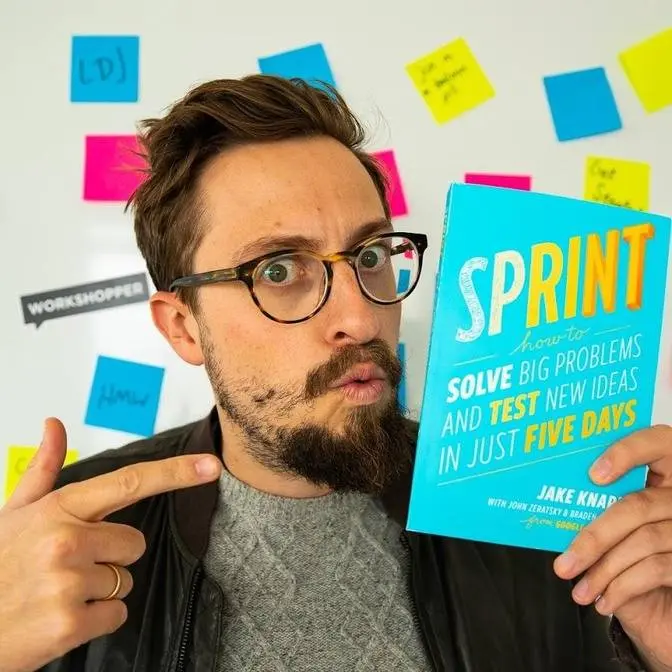
Leadership in 2026 looks very different from the old “command and control” model. In this video, Dee explains why facilitation is the ultimate leadership skill and how modern leadership skills are essentially facilitation skills in disguise.
You’ll learn why great leaders focus less on having all the answers and more on creating the conditions for teams to think, collaborate, and make decisions together — especially in a world shaped by AI, constant change, and growing complexity. The video breaks down how facilitation supports critical leadership skills like problem-solving, alignment, adaptability, emotional intelligence, and psychological safety.
If you’re a leader, manager, or facilitator looking to improve your leadership skills through facilitation training, this video offers a practical and modern perspective on what leadership really means today.
So, you want to upgrade your leadership skills in 2026.
You're not just trying to get the best out of your teams,
but you're trying to get the best out of your team,
working with artificial intelligence hand in hand.
Let's start with a quick gut check.
When you picture a strong leader, what comes to mind?
Probably something like super charismatic,
always decisive, has a big bold vision,
tells people what to do and they just do it.
That's the movie version of a leader.
And it kind of worked in a world that was slower and more predictable.
But in 2026, your team is dealing with constant change,
hybrid work, wildly complex problems,
and now AI tools that can generate 100 options
faster than you can open a slide deck.
So, the leader who tries to be the smartest person in the room
is usually just the one blocking everyone else.
So, in this video, I'll show you what leadership actually is today
and how the 10 most important leadership skills for 2026
are basically facilitation skills in disguise.
So, let's try a better definition of leadership.
Leadership isn't being in charge.
Leadership is creating the conditions for a group of people
to do their best thinking and best work together,
moving in the same direction, especially when things are uncertain.
That is literally what facilitation is.
It's not just about running cute post-it workshops.
Facilitation is the skill set of structuring conversations,
making sure every voice gets heard,
guiding people through tough decisions,
and overall, it's designing the environment for focused, effective teamwork.
So, if leadership is about creating conditions,
then facilitation is how you actually do that.
And all this isn't just my opinion.
McKinsey's recent definition of leadership
is all about aligning people in a collective direction,
enabling them to work together more effectively,
and helping them adjust to changing environments.
All that is basically a textbook description of good facilitation.
Hey, I'm Dee.
I've been facilitating for over 10 years,
and for a lot of those years,
I've also been teaching advanced facilitation skills
to leaders and their teams.
So, let's look at the top 10 leadership skills you need in 2026,
and I'll show you how each one is directly powered by facilitation.
As we go through these, I want you to notice something.
You're going to realize that the leaders that you admire the most
are actually incredible facilitators,
even if they've never used that word.
Essential leadership skill number one.
Number one.
Critical thinking and problem solving.
You can be a great individual problem solver
and still be a terrible leader
because leadership isn't about you solving the problem.
It's about helping the team solve the problem.
Facilitation gives you methods to understand and frame problems,
tools to challenge assumptions,
ways to bring in different perspectives
without derailing the conversation.
And instead of arguing about opinions in a room,
you guide the group through an intentional process
that leads to better thinking and better decisions.
Framing the problem, choosing constraints,
and deciding what good looks like,
that is facilitated human work.
Clearly articulating strategy and vision.
AI can help you draft documents or visualize a strategy deck,
but it can't create real buy-in.
That comes from involving people in shaping the vision
and walking them through why it matters.
So instead of dumping a vague vision onto your team,
you use facilitation to co-create it together and crystallize it
so everyone understands it, not just you.
Facilitation is great at pulling raw ideas out of people's heads,
organizing them into something contextual and meaningful,
and stress testing them with the group.
Then turning all of that into a simple, shareable outcome.
Guiding teams through complexity and uncertainty.
In 2026, there is no clear playbook.
AI is changing workflows,
markets are shifting,
roles are blending together,
and it's all happening at the same time.
A leader who doesn't facilitate thinks like this.
I'll go away, figure it out,
and then come back and tell the team what to do.
A leader who does facilitate thinks more like this.
I'll bring the team together,
structure how we think about it,
and we'll find the best path forward as a team.
Gaining alignment.
While AI can help you model scenarios or surface a lot of information,
it can't get a group to agree on what really matters,
or what to believe,
or what you're willing to commit to.
That's your role as a leader.
And facilitation gives you frameworks
to break big, messy problems down into smaller chunks.
Exercises to explore options without getting lost.
And ways to help people align,
prioritize,
and decide,
even when no one is 100% sure.
Cultivating curiosity and experimentation.
Every company says,
we want innovation!
But then they run meetings that silence people's voices
and suppress creativity.
Facilitation flips that.
You can design sessions intentionally,
where wild ideas can exist before they get judged.
Inspiration and ingenuity can be engineered into the process.
Experiments are prioritized over endless circling debate,
where it's safe to say,
we don't know yet.
Let's try something and see.
You're not just telling people to be curious and experimental
when you use facilitation.
You're structuring the environment
so that curiosity and experimentation are the default.
Adaptability.
Being adaptable as a leader isn't just about
personally being okay with change.
It's about making your team and your processes adaptable.
When you know how to facilitate,
you can do things like
quickly regroup and pivot when plans change.
Run fast prioritization and decision-making sessions.
Bring people along emotionally and practically through the process.
And instead of panicking and throwing more meetings on the calendar,
you can run focused, facilitated sessions
that help everyone reorient and keep moving forward.
Emotional intelligence and empathy.
This one kind of surprised me during my research for this video.
It appeared near the top of almost every list of leadership skills.
People often think that empathy is just about being nice,
but it's really not.
It's the act of understanding and acknowledging
what someone else might be thinking or feeling.
In facilitation and in leadership,
empathy enables you to notice who's quiet and who's dominating.
Sense when energy is changing or dropping.
Pick up on tensions and allow them to be opened up and explored.
Adjust a process to meet the group where they are at the time.
This is emotional intelligence in action.
As more of the hard skills start to get automated,
these human skills become the differentiator.
Genuine communication and deep listening.
Some real talk here.
Many leaders are just waiting for their turn to speak.
Facilitation forces you to actually listen to what other people are saying,
incorporate it into the existing situation,
and then help the group build on each other's ideas.
And because you're guiding the conversation,
you're constantly practicing clear, honest communication.
Vulnerability and authenticity.
This one scares a lot of leaders.
But here's the thing.
When you facilitate, you're automatically saying,
I don't have all the answers.
I'm here to help us find them.
That is vulnerability.
You're admitting that you need the group.
And authenticity shows up when you share genuine uncertainties and risks,
enlist the group to explore and analyze those things,
admit when something's not quite working,
and redesign it together.
In an AI-saturated environment,
where a lot of things in the world feel fake, automated, or overly optimized,
authenticity is genuinely refreshing.
Facilitation makes it normal for the leader to be human.
And that's exactly what people want in 2026.
And finally, skill number 10.
Creating a psychologically safe environment.
You've probably seen the research.
Most notably, Google's 2012 Project Aristotle study
explored the key drivers of effective teamwork.
Teams don't perform well because they're the smartest.
They perform well because people feel safe to speak up,
take risks, and admit mistakes without the fear of judgment.
Facilitation is basically the operating system of psychological safety.
You set clear expectations for the session.
You create rules that protect contributions,
like one person at a time, no killing ideas,
or something as simple as taking anonymous input.
You use structures that ensure everyone gets a voice,
not just the loudest person in the room.
Over time, those facilitated moments change the culture.
People start to think,
okay, it's safe to be honest here.
That's leadership.
And when AI is involved, psychological safety matters even more.
People need to feel safe to say things like,
I don't understand this tool.
Or, this output looks biased.
Or, I'm worried about what this means for my role.
If they can't say those things out loud, you're flying blind as a leader.
Bonus skill, AI literacy for leaders.
Just to be clear, none of this means leaders get to opt out of learning AI.
Quite the opposite.
You don't need to master every tool,
but you do need to understand what's possible,
how these systems shape work, and where their limits are.
The most effective leaders treat AI not as a novelty,
nor as an oracle, but as a thinking partner,
useful for automating the repetitive,
accelerating analysis, and creating space for better judgment.
Adaptability today is knowing how to work with intelligence
you didn't build yourself,
while remaining responsible for how it's used.
Okay, now back to Dee.
So, when we say facilitation is the ultimate leadership skill in 2026,
we're not just trying to hype up workshops.
We're saying that if leadership is about creating the conditions
for great thinking, alignment, and action,
then facilitation is how you do that on purpose, with intention.
In a world where AI is getting better every month,
facilitation is how you make sure the human side of the system
doesn't fall apart.
I love this ending.
If you're watching this and thinking,
okay, I'm a leader, but I'm not a facilitator.
Good news!
Facilitation is a learnable skill.
You don't need to be extroverted.
You don't need to love sticky notes.
You just need two things.
Simple structures for your meetings and workshops,
and the mindset that your job is to enable, not impress.
So, if you want to level up your leadership skills with facilitation,
you can check out the facilitation playlist that's on your screen right now,
or watch a free one-hour training that's in the description below this video.
I hope this video was helpful.
Thanks for watching and see you next time.