
F52 - Non clonazione quantistica e fisici (un po') hippie
7 nov 2023
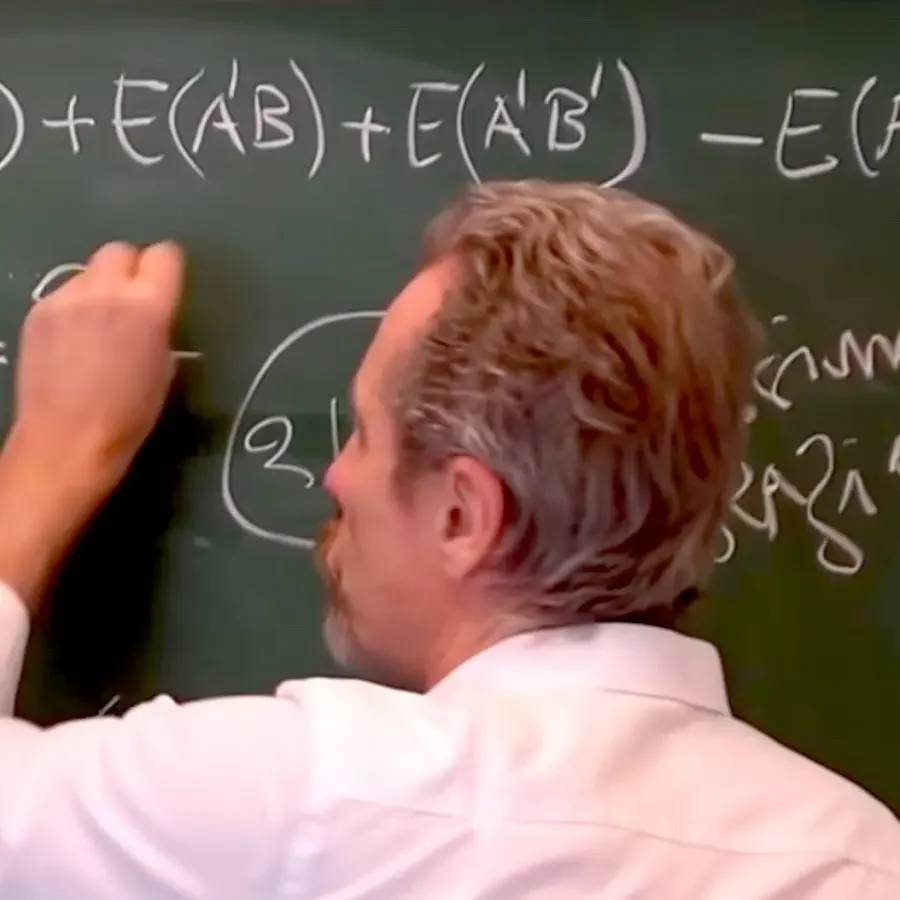
Il celebre teorema di non clonazione quantistica ci dice che una macchina di clonazione in grado di clonare alla perfezione degli stati arbitrari, senza alterare l'originale, non può essere costruita. Vi spiegherò perché e la curiosa origine di questo risultato.
Why can't we clone the state of a system in quantum physics?
Because if we could, it would be possible to communicate instantaneously even at astronomical distances.
It would be like having a kind of magical telepathy.
A kind of telepathy.
It sounds like a hippie idea.
In fact, it is an idea that originated from a group of physicists who were a bit hippie.
If you want, I'll tell you.
Go ahead.
So, you're telling me that a group of hippie physicists
discovered and rediscovered the theorem of non-quantum cloning?
It's not that they discovered it.
They gave a stimulus that allowed them to discover this theorem of non-quantum cloning.
In English it's called the No-Cloning Theorem.
The story is very funny and very interesting to tell.
This group is called the Fundamental Physics Group of Berkeley,
with physics written in a strange way.
It was a group of people who loved to explore consciousness,
even with psychedelic substances.
They were interested in telepathy, in psy phenomena.
They were very open to the possibility that quantum physics
could somehow explain, for example, all these extrasensory perceptions,
things of this kind.
In this group there were characters of remarkable level.
In particular, a certain Frank Herbert,
who I'm going to tell you about now,
because he was at the origin of the theorem in question.
But there were also other physicists of the calibre of Fridtjof Capra,
of John Clauser, who won the Nobel Prize in 2022,
Henry Stapp, another name that comes to mind, etc.
So there was a group of people, a bit strange, a bit hippie in fact,
but who were deeply interested in physics.
There were physicists, theorists of good level, excellent level,
who, however, also explored a bit strange issues.
For example, they were interested in the idea of being able to communicate
in an instant, precisely because they considered the hypothesis of telepathy valid.
But does quantum physics allow to explain an instant communication
between Alice and Bob, for example?
Alice and Bob being two experimenters
who are arbitrarily far apart.
This was the setting, so to speak.
So the story begins in the early 1980s,
because this Frank Herbert wrote an article
and tried to publish this article,
he submitted it to the magazine Foundation of Physics,
and in this article he used the quantum entanglement
through a somewhat particular protocol,
and somehow demonstrated that it was possible to obtain
instant communication, superluminal, much faster than light,
at an arbitrarily high speed.
And you can imagine that those who found this article in their hands
initially said, oh God, what is this thing?
Because in quantum physics it is well known
that information cannot be sent faster than light.
Very good. In fact, this is something that everyone knows,
at least many already know.
For a long time it was known, but not for so long.
There were some works, for example Girardi, Rimini, Weber,
or Eberhard, there were already physicists
who had already written theorems,
formal results,
where it was evidenced that this type of communication
could not take place.
That is, that the entanglement,
which was able to produce instant correlations,
could not be used, these instant correlations,
to communicate instantly.
Because it's a bit like Alice and Bob,
who are these two characters
who act at the same time, or almost at the same time,
on an entangled state,
therefore the state of a system formed by two parts,
one part is Alice's, one part is Bob's,
they operate on these parts,
they observe things,
their results are correlated in a particular way,
the correlations are the result of their observations,
but they can't understand what the other is doing.
So they can't communicate in any way,
because if Alice knew what kind of experiment Bob was doing,
or Bob knew what kind of experiment Alice was doing,
they could use this fact, this knowledge,
to send each other information.
Of course, if I know what a person is doing,
it's a bit like if I see her,
and if I see her, this person, with her actions,
can communicate with me.
Exactly, I can do certain experiments,
each experiment has a meaning, a code,
a letter, a word,
and so on the other hand,
if I know every time what you're doing,
it's as if you're communicating things to me.
Yes.
I agree.
It's a language, and it can transmit any kind of information.
Of course.
But these results were already known,
they had already been published,
a while ago.
So this article was wrong in itself.
So this article couldn't be right,
because it came about ten years after these results,
but, but,
obviously you know that in physics
an article comes to a magazine,
this is given to be reviewed
by peer reviewers.
Yes.
One of these peer reviewers
was Asher Peres,
who is one of the pioneers
of quantum computing,
so even there, a top-notch.
And this scientist
looks at this article
and says,
ok, I know it's wrong,
because he knows about these theorems
that already existed,
about these conditions
that in quantum physics are called
no-signaling,
no-communication conditions.
It was already known that they existed.
Another name is marginal laws,
in a more probabilistic context.
However, it was known
that the structure
of standard formalism
of quantum mechanics
was such that it didn't allow
to extract information from correlations
in order to allow Bob
to communicate with Alice or vice versa.
Ok.
But Asher Peres
looks at Herbert's article
and says, yes, it's wrong,
but he doesn't immediately see
why it's wrong.
So he has that rare intellectual honesty
and that courage to say,
this article is wrong.
I know, it can't be right
because it conflicts with other results.
Yes.
But to understand
how and why it's wrong
will be interesting.
Now I can't tell you
if he's right or wrong.
I don't think so.
But he saw that it couldn't be right
and said, let's publish it anyway.
It must be published
because even if it's wrong,
this article will give rise
to answers and comments
and these comments
will be instructive
because they will tell us
why it's wrong,
which is not so evident.
So it was a very nice move
by another reviewer,
I don't know if it was Ghirardi,
but he certainly gave this input
and then told this story.
And so,
this happens,
that after some answers
these answers contained
the argument
that confused
Nick Herbert's results
was the fact that
there was a theory of impossibility
related to cloning.
Because Herbert had introduced
in his communication protocol
a mechanism
that used
the cloning of states.
I'll briefly explain
what it was.
Explain to me the protocol
that Herbert used
to use entanglement
with cloning to communicate
at a distance.
I won't go into too much detail
or we'll get too confused.
His protocol was this.
He says,
Bob wants to communicate
with Alice.
Bob and Alice share this entanglement state.
His idea is,
Bob makes a measurement,
any measurement on his part
of the system.
The purpose is
that Alice can know
what measurement he made.
Now, the idea is,
Bob makes the measurement before Alice.
A moment before Alice.
They agree.
He always does it a moment before.
Their ROGs are synchronized.
Bob makes his measurement.
At this point, Alice makes hers.
But, before making her measurement,
what does Alice do?
She takes the state of her subsystem,
of her part of the system,
and makes an immense number
of identical copies.
That is, she clones
that state many times.
At this point, she has
this myriad of clones,
of equivalent states,
and on different groups
of these clones,
she does experiments.
She tries to do many experiments.
In reality, what she tries to do
is to find out which experiment
Bob made.
Because there is a single experiment,
which is what Bob did,
which is such that
Alice's results
for that experiment
will all be certain.
That is, if, for example, she measures a spin,
there will be a particular direction
where she will find
all the spins, 100% of the spins,
always up, or always down.
And that can only be
the same direction
that Bob used.
But to be able to get it,
she must have at her disposal
many sets of states
on which to calculate
the experimental probabilities
for a choice of experiment,
of direction, and therefore
she must have the ability
to create these clones.
To create these clones, what does it mean?
It means that she must take
her part of the system,
she must create a clone of it,
but without destroying it.
Not only must she create the clone
without destroying it,
but without knowing what this state is.
So,
Herbert's idea was
it is possible to create
a machine that
creates clones,
and it is a universal machine
because it takes the state, even if I don't know what it is,
it clones it,
and leaves the original intact.
Ok.
Herbert had a mechanism,
in his case, the physical entities were photons,
he used amplification mechanisms
through lasers,
it was about polarization,
I won't go into these details,
but the idea was this.
This allowed, in the end,
to obtain
an instantaneous communication.
So, the objection
that came
with some works,
one by Zurek, another by Eck,
there were two articles
written in the same year of response,
and both contained
this theorem
of non-cloning,
which is really two lines to show,
this theorem. The interesting thing is
that it is easy,
once you have the mathematical-quantum formalism,
it is really
a few steps,
and, among other things, it is surprising
that until those years,
no one had ever derived it, or almost,
now I'll tell you why.
Would it be easy enough
to prove it?
It would be easy enough.
You have enough knowledge of linear algebra,
so you can follow the demonstration.
If you want, we can do it later.
You'll see that in five minutes
the theorem is immediately demonstrated.
Because you immediately arrive
at a contradiction.
Being a no-go theorem,
as they say in English,
an impossibility theorem,
what you want to do is start from a hypothesis,
and the hypothesis is
this universal machine of cloning,
and you immediately arrive at a contradiction.
If it exists, it cannot exist.
So you get the demonstration.
Now, in reality,
let's say,
the hippies of physics,
in a good way, I'm using the word hippie,
because they were people who had a vision,
how to say, holistic,
of reality. They really tried
to find the connections
between the different levels of experience,
both external and internal.
So, let's say,
they were valid people who proved
to be very valid.
With this, let's say,
with this push towards finding certain things,
in any case, they produced
very interesting reactions
from the point of view of physics as such.
In reality, then, we must say one thing,
that the no-cloning theorem
had already been derived
about ten years earlier,
in 1970,
by a certain James Park.
Always on that same magazine,
Foundation of Physics,
where they published the article by Herbert,
there was another article,
ten years earlier,
where this gentleman was interested
in measurement processes
and was trying to understand
how a measurement tool
could completely acquire
the state of the measured system.
So, in a certain sense,
without destroying the measured entity.
So, there were questions
very similar in the field
of, let's say, problems
related to quantum measurement.
So, there was already that result,
it had already been derived by this Park,
but no one had noticed it
in that field.
So, it was rediscovered.
But this, we must say, is something that happens
continuously in physics.
There are always results that are rediscovered.
Or, when they are rediscovered
the importance is not recognized
and only when they are rediscovered
in the right context
it is understood that they were important.
So, this is a bit
the strange story
of the fact that you can't
clone a state
in a way
that you don't know, a priori,
without destroying
the starting state.
This is a theorem.
Among other things,
small parenthesis,
there exists, however,
what we could call
a non-cloning theorem,
which is a bit the opposite,
and it is the observation
that in physics
there are,
we will talk about this another time,
what are called indiscernible entities.
If you take electrons,
when you let these electrons
interact,
they are together,
where there is no possibility
to distinguish them,
because you have not created
an experimental context
created specifically to distinguish them,
but you put them inside a system
and let them interact.
Electrons, photons,
fermions or bosons,
since these entities are indiscernible,
they automatically
enter states of entanglement
called symmetric or antisymmetric,
such that the states
of individual individuals
that are indiscernible
are all the same.
They are no longer described,
now I use a technical word,
they are no longer described
by state vectors,
but by so-called density operators,
but what I mean is that
there is a natural tendency
of identical entities
to self-clone spontaneously,
without a cloning machine,
as soon as you leave them
together in some way.
This is obviously
a completely different context
from the context of the
no-cloning theorem,
which instead has to do
with entities that can be distinguished,
because in order to have an original
and a system that is the receiver
of the original state,
you must necessarily be able
to distinguish these systems.
So you are in a situation
of discernible entities,
this is just to say that
there are mechanisms
in quantum entities
of automatic cloning in some way,
which, however,
in laboratories can be created
conditions where certain systems
are well separated,
and at this point they are indeed discernible.
Well, it seems to me
that it was a nice excursus,
if you want, let's see if in three seconds
we can prove this damn theorem.
Let's go!
So...
So, this demonstration
of the theorem of
non-quantum cloning
is very simple.
Enough for me to understand it.
Certainly,
apart from the details,
you certainly understand the essence.
We have to deal with a composite system
made up of two parts.
One part is the original system
of which you want to clone the state.
That we do not know.
The other part
is the receiver system of the state
on which we want to obtain the copy.
What will become identical.
It will acquire the same state
without destroying the starting state.
Right.
So, basically, what do we have?
Let's assume that the original system
is in a psi state,
described by this strange notation,
think of a vector,
a psi vector,
the state of the original system,
and the other system
is in a phi state.
And this
complex state,
which describes the set
of the original system and the receiver system,
is a so-called
produced state.
Produced because it is written with this strange
product, which now I write it,
but then maybe I do not always write it,
because it is useless.
I can also remove it from the writing
and simply write it
in this way,
without putting the symbol.
There is a product between them,
it is called a tensorial product,
we are not interested in it,
we can just see it.
It is a state where it is clear
in which state the first system is located
and in which state the second system is located.
Yes, a produced state.
The entanglement states
have not been produced,
because it is no longer possible
to correctly determine
the state of the various subsystems.
But this is the beginning.
Now what happens?
Now I use this
cloning machine that makes
this state evolve.
It makes it evolve towards the state I want,
where it must remain the same,
but it must become
equal to it.
So, the evolution operators
in quantum physics are
unitary operators
and are necessarily linear operators.
We will see later
what linear means
in practice, in the demonstration.
So what do I do?
I apply this machinery
that is this unitary operator
of evolution
and applying it to these vectors
I want the result
to be a new
produced state
where the original
always remains
in its psi state.
But
the receiving system
also finds itself
in a psi state.
So this means that
the cloning has taken place.
Now I have two systems
that are exactly in the same state.
Now we have to see
a sort of contradiction.
Ok, I'll leave you some space
and you show me.
Ok, then.
After you know the questions,
I have to start
from a hypothesis
and see that from that hypothesis
I get a sort of contradiction.
Not a sort,
a real contradiction.
So I imagine that the psi state
of the original system
can be written
as a superposition
of two states.
Let's call it
a sigma state
plus a rho state
with a and b
which are coefficients.
Now these coefficients
for hypothesis
I suppose
that they are different from zero.
I want them different from zero.
That is, that this superposition
is a non-trivial superposition.
Now, since
the state of a system
therefore when I do
the scalar product of the vector
with itself must always be equal to 1
because the state vectors
are unitary.
This implies conditions
on a and b.
I want to hypothesize here
that these states, sigma and rho
are states
that are mutually orthogonal.
That is, if I do the scalar product
of this vector with this
I get zero. They are orthogonal vectors.
With this hypothesis
that these two vectors
are orthogonal
that a and b are different from zero
the normalization condition
also imposes me
that a squared
plus b squared
must be equal to 1.
These are the hypotheses.
I wrote the vector in this way.
Now I have to build
a contradiction.
What I can do
is to start from this state
psi phi
and now I replace psi
with this expression
in which I have just written.
So I get
a sigma
plus b rho
multiplied
by phi
and if I distribute
I get
a sigma phi
plus b
rho phi
and so on.
Now what I want to do
is to apply
the operator U
to this state.
If I apply it here
I have to apply it here
and if I apply it here
I have to apply it here too.
Now this U here
is applied to a sum of two vectors
and that's where linearity comes into play.
The fact that
U applied to this sum
is the same as applying
U to each of the terms
of this sum.
So what do I get here?
I get
A
then U applied to
sigma phi
plus b
with U applied to
rho phi.
And since U is an
operator of cloning,
what will it do?
It will get the same result
in this system of receivers.
So I get
by definition of U
A sigma
sigma
plus b rho
rho.
Voila!
I get this result.
Now I also know
that this object here
which I also wrote here
is also equal
to psi psi.
But if I write psi psi
what is this psi psi?
Well, I can use
this expression again
so I get
A sigma plus b rho
multiplied by
A sigma plus b rho.
I distribute and get
A squared
sigma sigma
then I get the term
rho rho
and then I get
the mixed terms
A b sigma
rho
plus b a
rho
sigma.
b a or a b is the same thing
because a and b are not complex numbers
or real, in this case
they are the same.
So I get this expression.
Now, this expression
is the same as this one
so this expression
that I have here
must be the same as this expression
that I have here.
So I can take this expression
minus this one must be zero.
Let's call this
triangle and this square.
I can do
triangle
minus square
must be zero.
But if I do this expression
minus this expression, what do I get?
I get the terms
where I have
sigma sigma, so A squared
minus A
sigma sigma
then I get the terms
b squared minus b
rho rho
and then I get the terms
obviously A b
sigma rho
plus A b
rho sigma.
And all this
must be equal to zero.
Now what can I do?
If, for example, I do
the scalar product of this vector
which must be the null vector
I do the scalar product
with the vector sigma sigma
since
sigma and rho
are mutually orthogonal
when I do the scalar product
with sigma sigma
this term gives zero
and also these terms give zero
because they contain the vectors rho.
So the scalar product
will give zero.
So there is only the scalar product of sigma sigma
with sigma sigma which gives one.
So if I do this scalar product
I get the condition
A squared
minus A
equal to zero.
But I can do the scalar product
of this vector
also with the vector rho rho.
At this point this term gives zero
this gives zero, this gives zero
only this will remain
and I get the second condition
B squared minus B
equal to zero.
Now, however,
these expressions can be
both equal to zero only if
only if what?
Only if A and B
are equal to zero.
Because
among other things
I can have A equal to one
but if I have A equal to one
then this condition here
forces me to have B equal to zero
but I have hypothesized that B is different from zero.
Same thing for B equal to one
does not go well.
So if I do not have A equal to one
B equal to one, etc.
in the end both are easy to convince
that they can only be verified
if either A is equal to one
or A is equal to zero
but both these solutions
contradict my initial hypotheses
and so I have arrived
exactly to the condition
to the contradiction
that I needed.
Voila.
All right?
All right.
It was very easy, I must say.
There was only a little redistributive
and some vectors.
Basically you have to use
the linearity of this U.
This little calculation tells us
that states cannot be cloned
through a universal cloning machine
without destroying or altering
in any way the state
of the original system.
But if you alter the original system a little
and if you give up having
a perfect cloning, etc.
then you can do a lot of things
obviously.
It is a theorem that tells us
about an ideal and universal situation
that is not possible to obtain.
So for telepathy in quantum physics
we still have to wait a few years.
So telepathy in quantum physics
who knows?
Telepathy may not need
quantum physics and quantum physics
may not need telepathy.
Thank you.