
Organic Vine Tea | Guide into Traditional Chinese Medicine
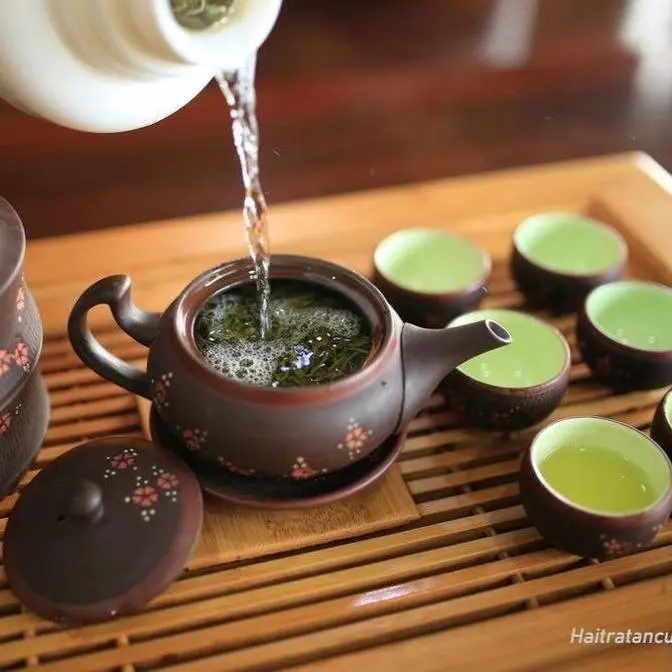
In the ancient orient, many of the ingredients that are used for making medicine come from plants.
After processing, the roots, stems or leaves of various plants can release medicinal properties.
One such plant is Tung Cha, Vine Tea.
Vine Tea, scientific name Ampelopsis Grosidentata,
is a herb that can not just be eaten, but also used as medicine.
Growing in a region near Onshu in Hubei province,
the Lifong Vine Tea has the highest recorded amount of flavon occurring in any vine-type plant in the world,
being 110 times higher in flavon than even the Ginkgo tree.
It contains 17 kinds of amino acids and 14 different trace elements.
Its medicinal worth is extremely high.
According to the ancient medical text, Chinese Materia Medica,
vine tea has a light flavour, is cool in nature,
it can clear away excess heat and toxins from the body,
lower blood pressure and cholesterol, protect the liver, and strengthen tendons and bones.
According to historical records,
during the reign of Emperor Zhu Yuanzhang of the Ming Dynasty over 700 years ago,
an uprising occurred, led by King Tan Hou.
King Tan Hou was leading the soldiers in battle near the Maoyan River,
and struggling when they found a miraculous plant.
This plant, when used externally, relieved swelling and pain,
and when ingested, invigorated the body and spirit,
and was able to detox the body of poison.
They say that it was thanks to this plant,
that King Tan Hou's uprising was able to last for another seven years.
This legendary plant is vine tea.
Vine tea, up until today, was a wild plant that only grew in specific locations with the right conditions.
However, the clever people of the Tujia ethnic minority have managed to domesticate the plant.
Utilising biophysical technology, the vine tea is still grown in a pure natural organic environment,
resulting in vine tea that looks like it is covered in white frost.
Not only does the vine tea grown here have a unique appearance,
it is incredibly rich in selenium,
and the release of this selenium after the tea is brewed is much higher in comparison to other varieties.
I have really enjoyed my experience with vine tea today.
It has its own unique flavour and is equally as pleasurable to drink as other teas,
such as green tea, earl grey, chamomile, peppermint, or whichever is your cup of tea.
However, vine tea is not just a simple beverage.
It has its own unique healing properties and is much tastier than your average cup of medicine.
So, what do you think? Would you like to give it a try?