
The tomb of Emperor Yao was discovered by archaeology in Shandong
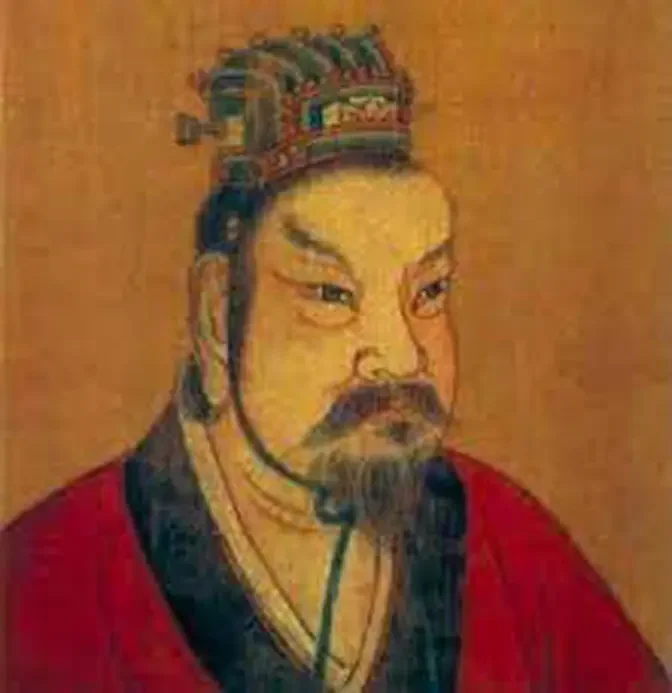
Italian Marco Polo traveled in China for 17 years
During the tour
He met Kublai Khan
Facing this emperor whom he admired so much
After expressing respect
Marco Polo curiously asked Kublai Khan
Are there people who admire you?
Questions about Marco Polo
Kublai Khan replied: The rule of Yao and Shun
Do you know now?
For Kublai Khan
Kings like Yao and Shun are his role models.
Yao Ming Fang Xun
As the great-great-grandson of Emperor Xuanyuan
Should rule the world
Listed as one of the Five Emperors in the Records of the Grand Historian
no doubt
In the legend
The status of the kiln is extremely high
After ten years of efforts by Chinese archaeologists,
The legendary kiln is coming out of the legend
Become a reliable history
The turning point of all this
It's all related to the archway unearthed in 2011
Yaoling Memorial Archway in the winter of 2011
The cold wind in Heze, Shandong is still a bit biting
But Lu Weimin's heart was very passionate
As the director of Juancheng County Cultural Relics Protection Center
A practitioner who loves archaeology
He finally got his muse.
For Lu Weiming
The antiquities buried deep underground are the ultimate art
Each stone carving
Each piece of pottery
Behind it is the weight and charm of history
After hanging up the phone
Lu Weimin was not in a hurry to leave
Instead, I sat in the office chair for a while.
As the archaeologist
Years of experience have taught him
No matter how excited he is
He also needs to regroup.
To lead the team better
Go explore the surprise buried deep underground
Mount Tai collapses in front of you, but you remain calm
The elk rises on the left and its eyes are not in harmony
This is also what history has taught him over the years.
Sit quietly for a while
After Lu Weimin sorted out his thoughts
Take a deep breath
Then he opened the door
Drive to the place told on the phone
Gulin Village is a very ordinary village in Heze
But Lu Weimin knew
starting from today
Old Forest Village
Will become an unavoidable name in the archaeological world
After arriving at Gulin Village
Lu Weimin endured
Excitedly asked colleagues about the situation on the scene
But when the conversation was over
Lu Weimin was extremely excited
His brows furrowed deeply
So do you think something can be discovered?
Looking at the dejected players
Lu Weimin asked solemnly
No one answered
After getting the answer
Lu Weimin said he had worked hard
Let the players take a rest first.
As the responsible person
Lu Weimin knows that it is his responsibility to solve the problem
There have been major archaeological discoveries
However, it is unable to be discovered due to limited conditions.
Such questions are not uncommon in the archaeological community.
The Mausoleum of Qin Shi Huang is also
The final development has not yet been carried out
This common question can relieve many people
But Lu Weimin couldn't accept it.
As an archaeologist
He has obligations and responsibilities
To uncover every truth of history
His love for archaeology does not allow him to pass the door
not to mention
This discovery is related to Emperor Yao.
Bell Arch
This is what Lu Weiming did after receiving the notification from the team members.
The words that kept lingering in his mind
In this winter
Because a local water conservancy survey
His team members accidentally discovered
There is a possibility that a bell-raising memorial archway is buried underground in Gulin Village.
That's Rao, one of the Five Emperors.
He was the first person to initiate the abdication
They are the ancestors of the Chinese people.
Lu Weimin would never allow
Give up easily
A glimmer of hope to uncover the secrets of Emperor Rao
Lu Weimin made up his mind
To excavate the Raoling Archway
But the problem before him is also extremely realistic.
The excavation site is low-lying
Complex geographical conditions
In general
In order to protect the cultural relics of the excavation site as much as possible
The archaeologists
We will explore in a probing way
Divide the archaeological site into multiple identical blocks
Then fix the soil in the ground according to the block range
The most common archaeological method is to
The benefits are obvious
First, we can restore the scene of the original ruins as much as possible.
Second, it can prevent soil collapse
Caused loss of cultural relics
But the carbon square method does not work in this area.
The premise of establishing Carbon Square
The soil is fixed by making supports
But the land structure responsible here
It is difficult to meet such conditions
This is also why
Experienced team members
The reason for all the silence
Lu Weiming naturally knew the difficulty
But he didn't want to give up
After a night of deep thought
With dark circles under the eyes
Lu Weiming ran out of the archaeological camp excitedly
Seeing Lu Weiming running out of the camp
The players who saw it all sighed.
Colleagues for many years
They naturally knew Lu Weimin's love for archaeology.
In their view
Running is just Lu Weimin's way of releasing stress
But what they didn't expect was
Lu Weimin's move was not to relieve pressure
He has already figured out a solution.
Soon after, Lu Weiming returned to the archaeological camp.
With him came a few special guys
Rao Fang Unearthed
When special engineering vehicles
With the arrival of a series of high-tech exploration and excavation machines
The camp members thought for a moment.
They all showed a look of sudden enlightenment
They suddenly realized
Manual cleaning has long been a common method
They accidentally fell into the misunderstanding of thinking
Before, they always thought
How to avoid destroying
When excavating the land structure
Conduct excavations
But I forgot
They could have dug a bigger carbon cube
Since the excavation site itself is in an area prone to collapse
Water Place
Then we can start exploring from the outside.
Encircle the excavation site
Then clean it up little by little
Isolate the excavation site and then proceed with excavation
Although this method is time-consuming and laborious
It is beyond human power.
But it is a special machine that can
A good way to solve a dilemma
Past
Difficulties that plague the excavation of many Sanxingdui and other ruins
There are also many new technologies
New machinery to solve the problem
It's just their self-limiting mistake
I forgot about this for a moment.
After thinking clearly about the joints
The team members all looked up to Lu Weiming
Cast an admiring look
Feel the team members' mood change from low to excited
As the person in charge, Lu Weiming also became happy.
On this
The Yaolin Stone Archway Archaeological Project officially begins
Using machines
After finding out the surrounding situation and the exact location of the ruins
Mining through human-machine integration
Lu Weiming Archaeological Team
Overcame the problem of harsh excavation environment
One by one
The bell-shaped stone archway buried 7.5 meters underground
Discovered
The excavation of the Yaolin stone archway
Lu Weiming was very happy
Facing the camera
He smiled and reported the results of the excavation to the reporter.
A total of 105 cultural relics were unearthed.
The main components and accessories of the archway are not missing.
Under Lu Weiming's introduction
The ancient charm of the bell-ringing stone archway
Gradually emerging in people's minds
The width of the Yaolin Stone Archway is 7.6 meters
Total height 6.5 meters
It is a typical four-pillar three-door stone archway.
Commonly used in ancient tombs and shrines
In the main room of the archway
There are four characters on the plaque: Ancient Forest, Clouds and Moon.
On the side is the inscription "Pulegu Birthday Ceremony in the Fourth Year of Qianlong"
Puzhou Chronicles of the Qing Dynasty
Ancient Forest Cloud Moon Memorial Archway Depicted in Raolin Ancient Map
Exactly the same
There are male and female stone lions carved on the top of the archway's spindle.
Very vivid and expressive
Even the stone lion
The claws are depicted in great detail.
Because all the stones are made of bluestone
So even after many years
There is still not much damage.
The words mentioned about the archway
Lu Weiming explained that Gulin is a place name
The name of the place where the arch is located
Yunyue refers to the kiln
This word
A good place for the emperor to be buried.
then
Lu Weiming explained the origin of the ancient forest to people
The place was named Gulin because of the ancient trees that grew into a forest.
The flower shape of the ancient tree is similar to that of the ear of grain
Hence the name Ancient Tree
Later, due to simplification, the word "gu" was changed to "gu".
Talking about the unearthed Yaoling Memorial Archway
Lu Weiming was still a little excited
The Yaoling Memorial Archway was built in 1739
It's been more than 200 years
Built during the Qing Dynasty
Could it be
Shouldn't the Yaoling Memorial Archway have been formed during Yao's time?
People’s doubts
Lu Weiming smiled and said haha
The stone archway was indeed built in the Qing Dynasty
But this further proves that Yao Ling was here
The Yaoling Memorial Archway was seen in the Qing Dynasty
This actually proves that Yao Ling is here
What is the principle behind this?
A word from Lu Weimin
Makes everyone more confused
In Lu Weimin's subsequent explanation
Everyone finally understood the reason.
It turns out that Yao Lin is so old
Its existence and location have always been controversial in the archaeological community.
But after repeated excavations of ancient ruins
Now Yao Lin is confirmed in Gulin.
The Yaolin Stone Archway from the Qing Dynasty he excavated this time
It was indeed built in the Qing Dynasty.
However, it was proved that until the Qing Dynasty
The emperor also performed Yaolin sacrifices in the ancient forest
From the second year of Jianwu of Emperor Guangwu of the Eastern Han Dynasty
That is, in 26 AD, the ancient mausoleum of Yao was worshipped.
The 31st year of Guangxu in the Qing Dynasty
That is, more than 1,800 years before 1,905 AD
Emperors of all dynasties offered sacrifices to the ancient mausoleum Raoma
Never stopped
The ancient Linyunri memorial archway has a simple and heavy shape
Grand momentum
It is a treasure among ancient archway buildings.
High historical, artistic and scientific research value
He is the important food evidence of Yao's burial in the ancient mausoleum
It is also a study of the history of Yaoling
Provides authentic and reliable food information
I'm glad I discovered him.
Lu Weiming concluded:
Engaged in archaeology for many years
Lu Weiming naturally knew
The difficulty of archaeology does not lie in the process of excavation
It's the process of searching
Countless archaeologists
Because of a few ancient records and folk rumors
Will go to the plateau
Heading to the Desert
Go to remote places such as border areas and uninhabited areas
They wasted their time in countless sparsely populated places
Just to find that possible discovery
To uncover a glimpse of history
Even in the end
Most of them got nothing.
For this excavation
Lu Weiming feels very lucky
He found what he was looking for
Although in later records
People only know that the bell-raising memorial arch was unearthed in ancient Lin
His name won't even be mentioned.
But Lu Weiming was willing to do this
He loves archaeology.
Love is unravelling the hem of history
Love will reveal the true face of history
Rather than other
In Lu Weiming's opinion
He's just a lucky
Just ordinary archaeologists
It was his luck to discover the Yao Ling Memorial Archway
And those who came before him
Then they set out to explore Yao Ling’s predecessors
The real hero
Yaolin Historic Site
Under Lu Weiming's introduction
People only then knew where Yao Lin is now.
How much archaeologists' efforts have been wasted?
There are so many thorns on the road of exploration
Yao Ling's initial archaeological discoveries
In the 1950s
at that moment
No advanced exploration and excavation machinery
All archaeological discoveries
Almost all of them are archaeologists.
Relying on the small brush and spoon in hand
Mined bit by bit
The first encounter between an archaeologist and Yao Ning
It is in that case
In 1958, in the east of Huji Village, Heze
Villagers digging the Limpsa River
Large areas of rammed earth were discovered
This means that there are relics underneath
Although the villagers reported the matter
But due to restrictions
The archaeologists did not excavate it.
In the following decades
Although it has been found in the vicinity
But no formal excavation has been carried out.
Until the 1980s
The archaeological team officially started to study the possible remains of Yao Ling.
Mining was carried out
At that time, local cultural relics workers in Heze
The accumulation of rammed earth was discovered again in the area
It is speculated that there should be ancient relics underneath
However, the exact age, scope and area are uncertain.
To solve these problems
Archaeologists explored and excavated the ruins
This excavation shocked people.
Because the ruins here are a city
The length of the city from north to south is more than 800 meters.
The width from east to west is about 600 meters
The remaining area is about 600,000 square meters
no doubt
The Discovery of an Entire Ancient City
It is an extremely important archaeological discovery.
But unfortunately
Because of various factors
After exploring this part,
It stagnated.
Excavations were not resumed until 2007.
This site
That is Chengyang, the city where Emperor Yao once lived.
The Shui Jing Zhu still records that there is a Yao Mausoleum two miles west of Chengyang City.
Chengyang City
It is an immovable coordinate for finding the Yaoling ruins.
Found Chengyang
This means that Yaoling has been discovered.
In the spring of 2007, at the Heze Institute of History and Archaeology
Under the coordination of Director Pan Jianrong
Heze Cultural Relics Affairs Office
Mudan District Cultural Relics Management Office
Joint team
Preliminary archaeological survey and exploration of Chengyang ruins
After the initial exploration is completed
The following year, the Chengyang City and Yaolin ruins were
Visual work was performed
Through this visual
archeology
The team members explored a more complete Chengyang ancient site
The north and east walls of Chengyang Ancient City are very complete.
Most of the southern wall was also detected
The east wall is 648 meters long
The southern wall is 900 meters long
The north wall is 1,084 meters long
West wall not found
Archaeologists suspect it was destroyed by floods
The detected circumference of the city wall is 2,500 meters
The shallowest part of the wall is only 0.3 meters from the ground surface.
The deepest point is 7 to 8 meters from the surface
Clear soil
The tamping layer is obvious
Such a complete earthen wall
Extremely rare in archaeological history
Although Cheng Yang's location is confirmed
But there is still no definite news about Yao Ling's whereabouts.
Until Lu Weiming discovered the memorial archway
From 1958 to 2007
Then in 2011
Archaeologists explore the rattle
It's been going on
After the road is clear
Archaeologists have not stopped their pace
New archaeological discoveries
The history of rock is gradually being unraveled.
After Lu Weiming discovered the Yaoling Memorial Archway
The Juancheng government attaches great importance to this
The following year
The Yaoling Memorial Archway was excavated for protection.
In 2013, it invested more than 10 million yuan as funding
A landscape avenue leading to Yaoling was built
Infrastructure
Recreate the magnificence of Yaoling
Later in 2015
Archaeologists are exploring again
Under Yao Ling
A 140,000 square meter Longshan cultural site was discovered
So in September of that year
A detailed exploration of the Yaoling underground
In archaeological exploration
In the 140,000 square meters of ruins
Precious soil samples of history
The Longshan culture
Cultural relics from the Zhou, Han, Ming and Qing dynasties
Ancient forest hidden in the kiln
Provides scientific and detailed physical evidence
In the following years
The historical exploration of Yao is becoming more and more detailed
In 2017
The west wall of Chengyang City, which had never been seen before, was also
The wall was found to be 1,475 meters long.
The entire Chengyang was excavated.
Circumference 4,327 meters
Area of 1.36 million square meters
In 2019
Deputy Secretary of Heze Municipal Party Committee
Zhang Lun, secretary of the Juancheng County Party Committee, said
Now under the ancient ruins of Juancheng
Archaeological exploration
A 170,000 square meter Longshan cultural site was discovered
This is so far
The largest Longshan culture site in Heze City
no doubt
The process of kiln survey is arduous and long
But in generations
Archaeologists have come one after another
Yao, the legendary figure
One day it will appear before people's eyes
This process is still going on today
Well, that’s all for this issue.
If you like our show
Welcome to subscribe, like and forward
thanks for your support