
Dog Walking: Why To Start, How Often, And Where #178 #podcast
151 Video Views·Sep 16, 2024
Why is it important to walk your dog daily? Besides the obvious health benefits of exercise, we’re looking at the advantages of daily dog walking that many people don’t realize. Sometimes people can give a list of reasons not to walk their dog, so we’re covering why to start and what defines appropriate exercise for dogs.
If someone had suggested 25 years ago, I was going to do a podcast on why everybody should
be walking their dogs every day, I'd say you're crazy because I might have walked my dogs like
three or four times a week tops. But here I am here to encourage each and every one of you to
make sure your dogs get out and get walked daily. Hi, I'm Susan Garrett. Welcome to Shaped by Dog.
You know, the benefits of getting a dog out and getting them walking are both obvious and some
are very, very hidden. I categorize them into five categories. I mean, the most obvious would
be the health benefits to our dogs, the decrease of behavioral problems, the opportunity to do
some really good training, and of course, the bonding with us. Now I'm going to start this off
by talking about the reasons people give me why they don't need to walk their dogs.
And it starts like my dog doesn't like to walk. And you take a dog like our dog,
Tater Salad, Bulldog Cross, and legitimately in the heat of the summer, he does not want to get
out. He's brachycephalic. It gives him a harder time to breathe, but we can do it in the cooler
times of the day. But there'll be times where it's like pulling teeth to get them to the door.
We will have him go outside. I will take him down, maybe it's a block and a half walk away.
It's all on our property. It's grass. And then I take the leash off and it's his choice.
He always finishes that walk with me. He doesn't ever say, okay, now that I'm here,
yeah, you're right. It's kind of like kids. You know, they're playing on their video games. You
go, Hey, let's go to the beach. No, really. I just want to play my video games. I'm good.
You guys go. No, no, no. You get those kids to the beach. They don't want to go home, right?
So, saying our dog, my dog really doesn't like it. You will find your dog will enjoy it if you
make a regular habit of it. So, dogs don't like it. I do other things that I can meet my dog's
needs. Do you really? Is there a way that you can meet all your dog's needs? And how do you know
you're meeting your dog's needs? Is that just something like, it's a great catch-all phrase
that you say so that you don't have to walk if you really aren't a person who likes to walk.
So, I'm meeting my dog's needs elsewhere. I find it very, very difficult for anybody to meet all
of the needs I'm going to mention in this podcast without getting out there and walking their dog.
It's too hot. It's too cold. Guys, I know there's extremes. Like if you've got a really little dog
and we get, you know, temperatures of minus 40, yeah, maybe that's not an ideal time to be taking
your dog out walking. But that's not going to happen to many people very often. And are there
times of the day when it's too hot that you can go out when it's cooler? I'm in pain myself,
Susan. I just don't like walking. Now that one could be legitimate if you've just like had surgery.
If you're somebody who just, I just don't like walking, get out there and you make a habit of it
and eventually you're going to become a person who misses it when you don't walk.
And those times that you can't, maybe you can get a relative, a neighbor,
you can hire a dog walker because after this podcast, I think you're all going to say,
I've got to find a way to get my dog out and get them walking.
Okay. First, let's talk about the health benefits. Some are obvious, some not so obvious. Did you
know that as of 2022, more than 50% of the population of dogs in North America are obese?
And with obesity comes a drastic increase in the probability of your dog becoming diabetic,
a drastic increase of many, many types of cancer, along with a lot of other problems
that let's not even go into the quality of life. Some of these morbidly obese dogs
are because people love them so much, overfeeding them and really not giving them much exercise.
So, health benefits, there's the obvious physical exercise. It is the stress on the dog's muscles,
tendons, and bones. That stress is what creates health benefits.
My friends, Dr. Karen Becker and Rodney Habib, they wrote this book,
New York Times bestseller book called The Forever Dog. I recommend everybody gets it.
In this book, they talked about the dogs that are the world's longest living dogs.
So, a 31-year-old dog who followed his owner behind a tractor three miles a day from one
end of the farm for the other for more than 20 years. So, people will say,
my dog's too old to walk. How old is your dog? Well, my dog's 12. I don't consider that very
old, but he may be old in your years because of the life that he's led to this point.
So, getting our dogs to use their body. Now, people say, Susan, I do agility. So,
I don't have to, that's all the stress they need on their muscles and their ligaments.
If you use agility to keep your dog fit for agility, I promise you,
there will be an injury along the way. A blown ACL, a blown out shoulder,
something's going to happen if you were relying on a sport to be your dog's physical activity.
So, that's the obvious. The ability to keep the dog's weight down is a massive benefit of this
exercise. Getting the dog out in fresh air, cardiovascular stress, giving that dog the
opportunity to get their heart rate and respiratory up for a sustained period of time, ideally
20 minutes. That's a benefit that they can't receive by giving them a snuffle mat in thinking
you're meeting their needs. Cardiovascular stress is just so important to our dogs.
Getting the dog out in sunshine. The dog benefits just like we do by receiving sunshine and
something that you may not even consider. There's something called earthing or grounding where it's
been proven that the earth is negatively charged and sustained interaction to contact your bare
feet, your dog's paws on dirt, on grass, and some suggest even on concrete actually is discharging
the positively charged free radicals that are circulating your dog's body. So, what you say,
that's what oxidizes the dog's tissues and contributes to that dog's aging.
So, getting your dog in contact 20 minutes a day, sustained contact is going to give you
that added benefit you may not have even known about. Getting your dog out of the house changes
the environment for them. And you could say, Oh, my dog gets exercise. We have a fenced-in backyard.
I'm sorry. That is not exercise. I promise you your dog isn't walking around for 20 minutes
at a minimum at a time every day of his life when he's in the backyard. Unless maybe he's
fence fighting with a neighbor's dog and that goes on for 20 minutes a day, but then that's
creating a lot of behavior problems you just don't want to rely on. So, having a fenced-in backyard
is not a replacement for exercising your dog.
The other part about that fenced-in backyard, it is the same scenery for the dog. There is no,
Oh, this is new. The opportunity to scent the ground, new ground, not just your backyard,
going in new locations. Dogs love to use their nose to scent new smells and to mark
where they've been. Keeping them in the same environment, especially if that environment
is a high-rise apartment, is absolutely contributing to your dog's mental and physical
stress. So, getting that dog outside and ideally changing the path that you walk with that dog
helps to give the dog an outlet for relieving their stress.
So, what happens when we relieve stress? You'll see a decrease in behavioral issues.
Things like nuisance barking or nonstop whining or the obvious destruction of your property,
but behavior issues will decrease if you give that dog an outlet for their stress. Plus,
you are tiring them out a little bit, giving them the opportunity to have a really deep
sleep and sleep contributes to your dog's longevity as well.
The next benefit to getting your dog out, it's another opportunity for you to do some good
dog training in an ever-changing environment. Because you might have a dog who wants to pull
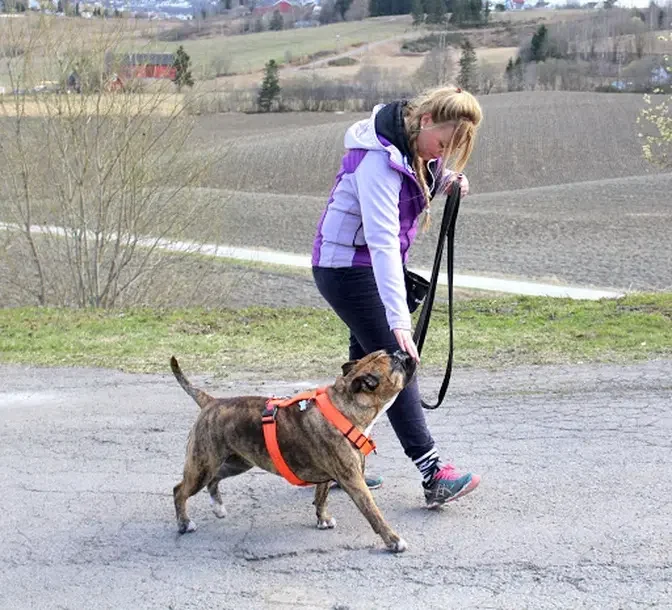
on leash. Well, you can work on loose leash walking and they don't have to be walking
beside you and looking at you, but maybe not just putting any stress on that leash.
So, working on loose leash walking, working on appropriate ways to allow other dogs to walk by
without them being reactive, working on their appropriate ways to let people and children and
all those distractions walk by every single day. Even when the dog gets to be five years old or,
and they've been doing this their whole life, by that point, all these distractions could be
white noise and you could just be working on a new skill. Hey, let's just work on walking
on the right side all day today. So, training, you're out there with
your dog for 20 minutes. Yes, we want the dog to just have the freedom to do what they want to do.
But I'd like to say the first 20% of the walk, you should be doing some amount of training with
the dog and maybe even the last 20%. If you have the opportunity to take that dog off leash and let
them run, well, running gives them even more benefits. I recognize some of you are in a city
and there aren't the same opportunities to do that. Maybe go to Baseball Diamond after hours
where the kids aren't there. That would be a great chance to do it. And on weekends,
make that special trip out of the city, go to a sniff spot, go to a conservation area,
and let that dog get to new environments and stretch your legs in a bigger way.
So, we're going to decrease the dog's behavioral issues at the same time, giving you an opportunity
to work on distractions. Relationship with you. You take your dog out for a walk, especially if
you take your dog out one-on-one, which I like to do with my geriatric dogs when they get older.
You take your dog out, that is a big special adventure time for you and your dog. So,
you're increasing that bonding with your dog. Yeah, I can do that sitting on the couch.
Not the same at all. Calling the dog in, asking them to just turn around in a spot,
and just that interaction. You're giving that dog good old-fashioned dopamine spikes
and creating that feel-good motivation to want to hang out with you, to want to do things with you
because you took the time out of your schedule to do some walking.
Now let's talk about the bonus of walking your dog every single day. All of those benefits I just
mentioned for your dog, guess what? We as humans are reaping those benefits as well. And if you
stay in tune with your body, you will find that you will crave getting out and getting fresh air
and getting sunshine. And for me, I make a habit of gratitude when I'm walking my dogs.
So, it's a trigger that I've paired together. So, as I'm walking, I think, or sometimes I even say
out loud the things that I'm grateful for that day. So, walking for me is more than just a time
to be out with my dogs. It's a time to reflect. And I just think any and all of that contributes
to being a happy and healthy person. So yes, exercise and movement. There's a friend of
mine who's here and she has this expression that is motion is lotion. Meaning when we're in motion,
we're lubricating our joints. So, if we're feeling in pain and we get up moving, you'll find after
a few minutes of motion, I'm not suggesting that all pain is easily solved by moving, but you will
find that aches and pains aren't as achy or painful once you get motion. And once you stay consistent
with the habit of getting out with your dog, then you're going to find a lot of these things are
going to fall into place because walking is such a phenomenal exercise for all of us.
Okay. Who shouldn't walk? I personally don't think really, really young puppies should be walked
because they're going to be rehearsing habits that you really don't want to see repeated. I
think they should be outside. I think they should be out in nature. I think they should be in
fenced-in areas where they have the opportunity to interact with you, maybe doing some recalls,
but work on value for hanging out with you. And then I start walking my puppies,
probably when they're three to four months old, I'll do short little walks with them. Not very
long. Building them up to when they're six months old, that might be more of a couple of loops
around the field twice a day. So, that's, you know, a kilometer or two twice a day for my dogs.
So, young puppies, I encourage you not to get them out walking until you've put in the value for them
not fussing with their collar and leash and to want to hang out with you.
Also, the obvious when the weathers are extreme, there certainly are dogs that probably shouldn't
be walked to keep those dogs at home. And dogs who are super high anxiety until you can work on
counter conditioning that fear to whatever that fear is. If it's heightened when they see kids
or dogs or cars, if those things put them over threshold, then you want to work that as a
distance so that you can do walking on a regular basis. All right. How much should you walk? Well,
as I mentioned in this book, the common denominator, you think like the dogs who
live longest all get fed the same things. They don't. The dogs that live the longest,
the common denominator was they were outside walking a minimum of two hours every day.
Now I get that none of us have that kind of time. So, what is the minimum? Dr. Becker mentions that
the very basic, basic is that you need to get out at least three times a week for 20 minutes
at a time. I encourage you not to take that on board. And here's why. It is so easy for that
three times a week at a minimum to become zero times a week. If you're doing something daily,
it becomes a habit. And when it becomes a habit, it gets done daily, rain or shine.
So, I really encourage you to try and squeak in two walks a day, even if they can only be, you
know, one smaller one and one longer one at night. Make that habit and mark it on your calendar for
at least a couple of times a month to get out of your normal environment, get your dog in a wider
area, a longer walk. You and your dog are going to benefit greatly by it. It's something that
25 years ago, I was not much of a walker today. If I don't get out there, I actually start craving
it. I'll see you next time right here on Shaped by Dog. Tater hit the target. Now it's your turn.
If you're not a subscriber to this page, go ahead and hit the subscribe button now,
and be sure to turn on the notification bell so you won't miss another video. And if you
are already a subscriber, that's for you. Go ahead and get yourself a cookie.