
Why did Zhu Yuanzhang like to kill Guan Yu?|History .
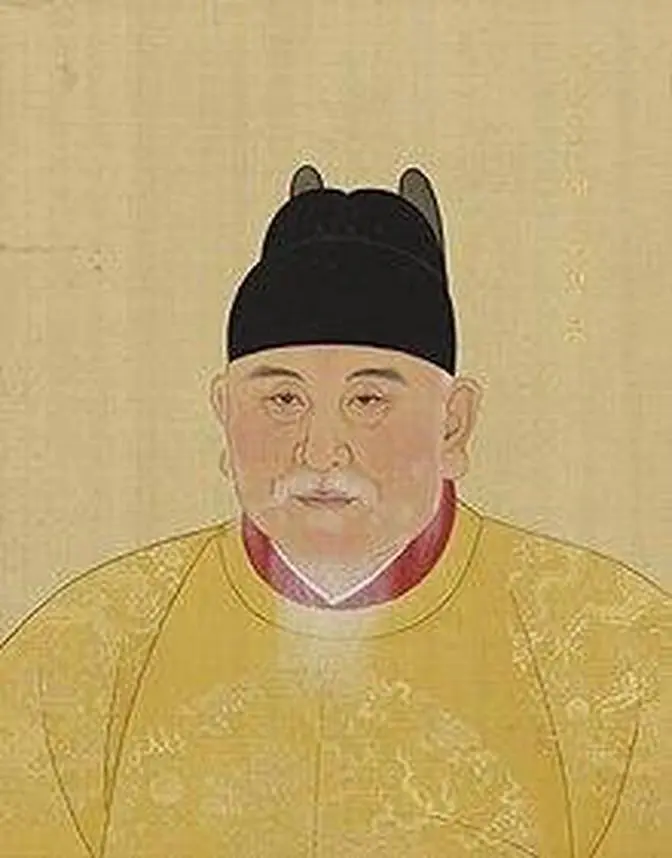
Hey there, my fellow history enthusiasts. It's Kenny again, your friendly neighborhood
YouTube creator, back with another captivating exploration of China's past. If you've been
keeping up with my channel, you'll know that I've been quite enamored with the enigmatic
Ming Dynasty lately. Well, today's video is no exception as we dive deep into the fascinating
and somewhat controversial story of Zhu Yuanzhang and his alleged murder of meritorious officials.
Now, I know what you're thinking, another Ming Dynasty video. Hear me out, though.
This particular event is rife with political intrigue, moral dilemmas, and the age-old
question of whether the ends can ever truly justify the means. Trust me, you won't want
to miss this one. So sit back, grab your favorite snack, and get ready to uncover the truth behind
one of the Ming Emperor's most infamous actions. I promise, you'll come out of this with a whole
new perspective on this captivating era of Chinese history. Zhu Yuanzhang was suspicious and ruthless.
After ascending the throne, he nearly killed all the meritorious officials who had helped him
conquer the world. He killed the meritorious officials, first because some of the officials
were arrogant and lawless, but primarily because he wanted to consolidate the Zhu family's rule and
the emperor's power. Some scholars believe that Zhu Yuanzhang killed the meritorious official
Lan Yu because he feared that Lan would threaten the authority of the next emperor. Lan Yu, who was
a leading figure among the meritorious officials, was charged with the crime of treason and his
entire family was executed. The number of officials and commoners implicated in the Lan Yu case was
innumerable. This case had a far-reaching impact and almost all the meritorious officials of the
early Ming dynasty perished as a result. As for the reasons behind Lan Yu's alleged treason, the
main explanation is that Lan's ambition grew during the period when he had made great military
contributions and he became arrogant and lawless, harboring treacherous intentions. However, some
scholars argue that Lan Yu's death was related to his relationship with the imperial family.
Lan Yu was the brother-in-law of Chang Yechun, a founding official of the Ming dynasty.
Lan's achievements were largely thanks to Chang Yechun's patronage.
Chang Yechun's daughter was the original crown princess, the wife of crown prince Zhu Biao.
When Zhu Biao was alive, Lan Yu was respectfully addressed as
uncle by him due to this political marriage alliance between the imperial family and
meritorious officials. Although Lan Yu had committed many transgressions as his military
achievements accumulated, he still commanded great prestige in the military and played an
indispensable role in Zhu Yuanzhang's efforts to cultivate the crown prince's faction and facilitate
the imperial power transition. Therefore, Zhu Yuanzhang did not intend to move against Lan Yu
despite his arrogance. However, after Zhu Biao's death, Zhu Yunwen became the crown prince.
In Zhu Yuanzhang's eyes, Lan Yu's role had changed, as Zhu Yunwen's mother was not the
crown princess. Although Lan Yu was still nominally a senior-in-law to Zhu Yunwen,
they had no blood relationship. Moreover, besides Zhu Biao's eldest son who had already passed away,
there was another son of Zhu Biao, Zhu Yuntong, who was slightly younger than Zhu Yunwen.
From the perspective of the clan law, Zhu Yuntong was also a legitimate heir of Zhu Biao and was
more closely related to Lan Yu in terms of blood ties. Therefore, Zhu Yuanzhang feared that Lan Yu
might assist Zhu Yuntong in usurping Zhu Yunwen's position. Furthermore, Zhu Yuanzhang was also
concerned that Zhu Yunwen would be unable to control the reckless Lan Yu, which could lead
upheaval in the court. For these reasons, Lan Yu had to die. In addition, some scholars also
believe that the reason Zhu Yuanzhang killed other important military generals and meritorious
officials was because they had kinship relationships with other feudal princes,
and he feared they would rebel together with the princes, threatening the imperial power of the
next emperor. It seems the famous emperor Zhu Yuanzhang had a bit of a trust issue with his
top military commanders. Some scholars believe he bumped off these veteran heroes because they
were related to powerful regional warlords, the princes, who could threaten the central imperial
power. After the Lan Yu case, two of Zhu's most renowned founding generals, Feng Sheng and Fu
Yuda, met untimely ends. Interestingly, later records universally praise these men for their
immense contributions to the establishment of the mighty Ming dynasty. What makes this story
even more juicy is that, just like Lan Yu, both Feng and Fu were part of the imperial family tree.
Feng's son-in-law was Zhu Yuanzhang's own fifth son, the Prince of Zhou. And Fu's daughter had
married the heir of the Prince of Jin, so the two generals were practically in-laws with these
powerful regional lords. In fact, the Prince of Zhou had been caught sneaking off to visit his
father-in-law Feng Sheng while stationed in Hunan. And Fu Yuda had been training troops near the
Prince of Jin's domain right before the fateful purge. You can just imagine Zhu Yuanzhang's
paranoia. With these battle-hardened generals so closely tied to ambitious princelings,
what if they decided to turn against the throne after he was gone? Even if Feng and Fu harbored
no rebellion in their hearts, Zhu saw them as threats to his family's continued grip on power.
So he took them out as a preemptive strike. You see, Zhu Yuanzhang was a bit of a control freak.
He didn't want any of these capable commanders sticking around and potentially threatening the
rule of his less-competent sons and grandsons. So one by one, Zhu had them all executed.
But there was one guy he just couldn't bring himself to kill, his old friend Tang Hor.
Tang Hor and Zhu Yuanzhang went way back. They'd grown up together as poor kids, and Tang had
always been loyal to Zhu. Tang was no slouch either, he had a real knack for military strategy.
When Zhu became emperor, he could have easily made Tang one of his top generals.
Zhu knew Tang was smart enough to figure out what was going on.
As Zhu got older and more paranoid about losing power, he started systematically
eliminating his veteran commanders. But Tang played it cool. He voluntarily gave up his
military command, saying he was getting too old for the job. Meanwhile, Tang made sure to keep
his head down. He refused to get involved in politics or hobnob with the local bigwigs.
He just spent his days in his house and making sure his kids towed the line.
Slowly, Zhu's suspicions started to fade. He just couldn't bring himself to get rid of his old
friend, the guy he'd grown up with. Tang had mastered the art of laying low and reading
the emperor's mind. That's why he was the sole survivor among Zhu's inner circle.
Sometimes the best way to stay alive is to know when to quit while you're ahead.
The historians have spoken, and they've got some juicy gossip to share about the infamous
tale of Zhu Yuanzhang and his supposed murder of the founding general Su De. Turns out, the whole
story might be nothing more than a bunch of tall tales cooked up by some mischievous Ming dynasty
writers. You see, according to the little anecdotes and fiction penned by those old-school literati,
Su De was suffering from a nasty case of carbuncles on his back.
Being the benevolent ruler that he was, Zhu Yuanzhang summoned all the best doctors in the
land to try and cure poor Su De's ailment. And lo and behold, the treatment seemed to work,
Su De was on the mend. But then, the plot thickens. Zhu supposedly sent some palace emissaries to Su
De's place, bearing a special gift of steamed goose. Now, the local legends claim that anyone
with Su De's particular ailment was forbidden from eating goose, lest it trigger a deadly relapse.
Sure enough, Su De broke down in tears as he forced himself to wolf down the forbidden poultry
under the watchful eye of Zhu's men. Shortly after, the poor guy kicked the bucket.
Scandalous, right? Except that prominent Qing dynasty scholar Zhao Yi dismissed this whole
sordid tale as utter nonsense. The truth is, Su De actually passed away in 1385,
long before Zhu Yuanzhang's notorious purges of his founding generals.
At that point, Zhu likely didn't even see his comrades-in-arms as serious threats to his power.
So Su De's demise was probably just a case of natural causes, not an assassination plot.
Alright folks, that's all I've got for you today on the fascinating tale of Zhu Yuanzhang and his
so-called murder of meritorious officials. I hope you found this analysis as intriguing as I did.
Now, I've got to ask, did you enjoy this little history lesson? If so, I'd be forever grateful
if you could take a moment to hit that subscribe button and give this video a good old thumbs up.
That kind of encouragement is what keeps me motivated to keep creating more content about
China's rich history, culture, and artifacts for you all to enjoy. Speaking of which, I'm always
eager to hear what kinds of topics you'd like me to tackle next. Do you have a burning question
about a particular dynasty or historical figure? Or maybe there's a specific artifact or artwork
you'd love for me to dive into? Whatever it is, just drop me a comment below and I'll do
my best to whip up an informative and entertaining video just for you. Thanks a million for tuning in,
History Buffs. I'll catch you in the next one, stay curious.