
Paint like John Singer Sargent in 7 easy steps!
Jun 2, 2025
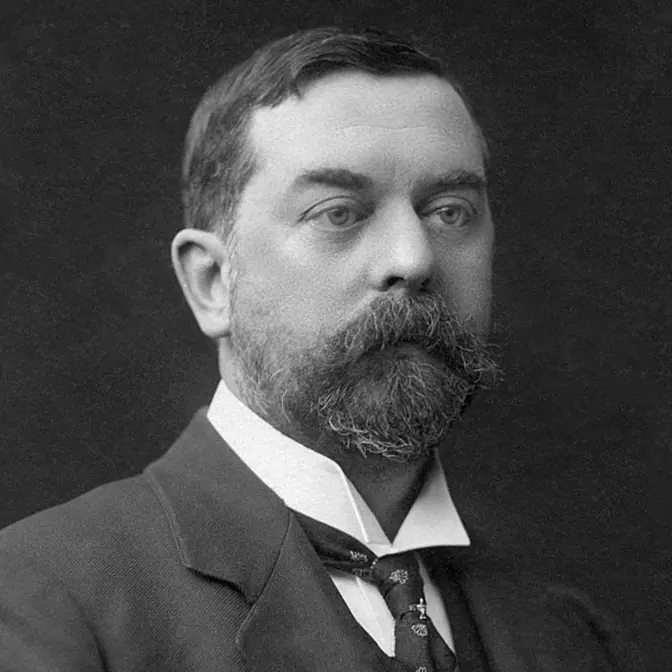
Sargent has been the master of portrait artists for more than a century and all I needed was a bit of inspiration from my ancestor’s portrait to try and emulate his style!
Hi guys! If you don't know, I am quite fond of genealogy and looking for my ancestors
to dress up my family tree as far back in time as I can. And my cousin just sent me a photograph
of our great great grandfather, the grandfather of my grandfather, that must have been taken
around 1900. I guess he was somewhere around my age at the time. The bushy moustache,
the confident gaze, the regal pose, this picture is screaming to be transformed into
a John Singer Sargent portrait. So let's do it!
First of all, thanks a lot for coming back and again to watch my little experimental video.
Like, share, comment with your request and try to do your own mini forgeries and share
them on social media with the hashtag mgfcpaint. Just like Ulrike Select Art who gave us this
colorful Frida Kahlo inspired portrait and Lanny Marie Paint who also followed the Frida Kahlo
episode and posed with a crown of flowers, a cat and a goat. Well, that's exotic.
Continue like this. There are many styles we are trying to explore here so take your brushes and
paint. Now, John Singer Sargent. As maybe one of the most famous portrait artists that ever existed,
it was a bit intimidating to try and copy his techniques and I was waiting for the right model
and, well, my ancestor gave me the inspiration I needed. Born in 1856 in Florence, Italy,
but of American parents, John Singer Sargent studied in Paris where he wanted to establish
himself as a portrait painter. However, this portrait of Madame X proved so scandalous for
the time and borderline erotic that he had to move to London to continue his career.
And he was very prolific. His catalogue raisonné contains no less than 900 oil paintings,
2,000 watercolors and countless drawings and sketches. He became the painter to go
when anybody who was a somebody wanted a portrait. He was even proposed a British knighthood
that he declined to keep his American citizenship. Sargent is best known for his impeccable handling
of the brush, mastering not only brush drawing but also the individual brush strokes that
intricately created each face he was painting. So, trying to imitate Sargent, we will focus
on our brush work. As usual, cover your entire canvas with the color of your choice. I used a
mix of burnt sienna and venetian red. This will allow you to judge your colors better than on a
white background, cover any white spot between your brush strokes and give a tonality to your
whole painting. The sketch should be done in two steps. First, place the general shape of the skull.
Sargent said that once you have the shape of the skull right, you have done most of the work in
terms of likeness. The shoulder and the main attribute, eyes, nose, mouth, ears. Then, come back with a thinner
brush to add the details. Keep a picture of your model in your sight, even if the likeness doesn't
have to be on point yet, but the idea is to know what goes where comparatively to the rest
at the very early stage. So, let's start by covering our face with large strokes that will
start giving our lights and values to the face. The idea is to divide the general shape of the face
into small planes and apply your color in one stroke for each plane. The result will be something
like a blurred photograph and we will add the detail as we go. Use the biggest brush you can
handle for this and keep it loose. Hold your brush by the tip of the handle and never overmix your
paint. A trick I used was to refrain from cleaning my brush between these little facets and add only
a bit of the paint I needed to obtain the color of the next stroke. For example, if I just painted
something orangey and wanted to paint a darker side next, I would simply add a bit of blue to my
brush and bam! Directly mix on the canvas as I was doing the brush strokes. John Mayett, the infamous
but remanded English forger, once said that for Sargent the face is the most important part of a
painting because it is where the attention is attracted and that you could get away with murder
anywhere else on the canvas. So let's cover our background with a mix of black and verde gris.
The suit in complete black. We will add some dark gray later to give a bit of dimension but
nothing more than that. Our focus is on the face. The background, however, can be used to precisely
limit some areas of the face and make them stand out. The back of the neck, the ears, the forehead.
We will come back to this in a while. As we mentioned Sargent was famous for his brush strokes
so let's use brush strokes to add details to our face. With a smaller brush, apply in the same
fashion as during our blocking all the smaller surfaces we see on the face. The eyelid, the folds
around the mouth and chin etc etc. Add color, light and shadows to make a more precise image
just like a sculptor make a face emerge from a block of stone. Don't be shy, be brave but keep it
loose. Work your brush softly, slowly. It is sometimes a mistake to think loose painting must be fast.
Don't fall in the trap and visualize each brush stroke before you commit it to the canvas.
Another very important feature of Sargent was his mastery of his edges. Some are crisps
like we saw you can achieve that by using the background contrast but some are soft
like around the hair for example that almost mixes with the background or the hand that blend with
the jacket. Choose your edges carefully, define some of them sharply and soften some others with
your finger or a soft large brush. And it is now time to tie everything together. Rectify what you
don't like and enhance what you are proud of. Add a tinge of blue color on the eye, a reflection of
the light or even the pocket and kerchief. And we are done! I think this is a nice tribute to my
ancestor and I'm happy I could share it with you. Share your art on social media with the hashtag
ngfcpaint and I'll see you next time. Cheers!