Dive into the enchanting world of Traditional Chinese Festivals in this captivating video! 🌟 Join us as we explore the rich history and vibrant traditions behind major celebrations like Chinese New Year, the Moon Festival, and the Dragon Boat Festival. Discover fascinating stories, delicious foods, and unique customs that have been cherished for centuries. From family reunions to honoring ancestors, these festivals offer a glimpse into the heart of Chinese culture. Perfect for those curious about the beauty of diversity, this guide will leave you inspired! Don't forget to like and share with friends who love cultural exploration!
All of my life I've marveled at the diversity and number of Chinese celebrations and festivals.
Although from a Chinese background I'm embarrassed to say, I still struggle to remember which one is
which. Each tradition has its roots and origin, some dating back all the way to the beginnings
of Chinese civilization. Here are some of the most famous festivals and celebrations of the
Chinese tradition. Chinese New Year is a 15-day celebration that marks the beginning of the lunar
calendar year. As such, this holiday is also called the Lunar New Year, or the Spring Festival.
According to legend, this celebration began over 3,000 years ago during the Shang dynasty,
1600-1046 BCE. Back then, a beast named Nian, neon, or year, was said to come out on Lunar New
Year's Eve to harm people, destroy their property, and generally serve as a major nuisance. Eventually
the people discovered that Nian feared the color red, loud sounds, and fire. This is the reason why
the color red and loud firecrackers are so prevalent during this holiday. Nowadays, with the beast Nian
taken care of, the entire family gathers together for a feast of epic proportions. Festivities
include fireworks, dragon dances, spending quality time with family and friends, feasting on scrumptious
Chinese treats, the giving of red envelopes filled with cash, hongbao, and decorating windows and doors
with red paper-cut couplets. Also on this day, families get together to make and enjoy dumplings.
Most people today associate dumplings with wealth and fortune, since they resemble the shape of
ancient silver and gold ingots. The Moon Festival is the greatest holiday of the Chinese autumnal
season, when the moon is biggest and roundest, and families gather together Thanksgiving style.
Just replace the turkey with some moon cakes, light up some lanterns and fireworks, and enjoy
time with family. Moon watching is a must if the skies are clear. There are several stories
associated with this festival. One is the legend of the Chinese moon goddess Chang'e. To make a long
story short, her husband found some immortality elixir, Chang'e grew impatient and drank the entire
bottle and ended up flying to the moon with only a jade rabbit to keep her company. Another story
claims that the festival was actually inspired by an uprising against the Mongol rulers of the
Yuan dynasty, 1280-1368 CE. During that time group gatherings were banned to prevent potential
uprisings. However, one rebel advisor, Liu Bowen, noticed that Mongols never ate moon cakes. He
devised a plan to get permission to distribute thousands of moon cakes to Chinese residents in
the city on the night of the Moon Festival, ostensibly to celebrate the emperor's longevity.
In reality, each moon cake was embedded with a message that said,
kill the Mongols on the 15th day of the eighth lunar month. Thus, a coordinated attack overthrew
the government that night and established the Ming dynasty, 1368-1644 CE, under rebel leader
Zhu Yuanzhang. Moon cakes attained national snack food status for the festival ever afterwards.
The Lantern Festival marks the end of Chinese New Year celebrations, on the 15th day of the
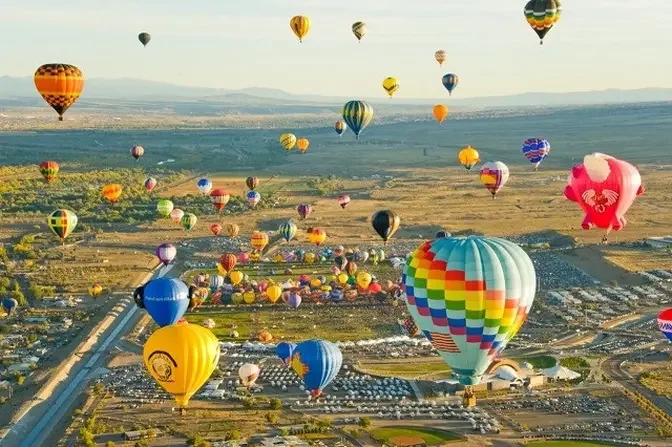
lunar year. On this day, families gather to eat food, decorate lanterns, and then release their
mini hot air balloons into the sky. The origin of this festival dates back to the Han dynasty,
when Buddhist monks would hang lanterns on the 15th day of the lunar year in honor of the Buddha.
This custom was observed by the general population and later spread throughout China and East Asia.
The more recent edition of the sky-floating lanterns is said to have come from the brilliant
tactician Zhuge Liang, who first used one of these floating lights to signal for reinforcements
during a battle when his army was surrounded. Today, however, these lanterns are more of a
symbol of the harmony between our world and the divine as they float ever closer to the heavens.
A special snack to eat during this festival would be the small glutinous rice balls called
tang yuan. Shaped into perfect little spheres of joy and then boiled, these tasty treats are
Dragon Boat Racing, a tradition born from the tragic story of an honorable official.
Occurring on the 5th day of the 5th month of the lunar calendar, the Dragon Boat Festival is one
of the most upbeat and fun festivals in Chinese culture. Its origins, however, come from a story
of tragic heroism. Back during the Warring States period of the Zhou dynasty, an upright official
named Chu Yuan lived in the state of Chu. When the King of Chu made an alliance with the powerful
state of Qin, Chu Yuan was banished and accused of treason because he severely opposed the alliance.
After 28 years, Qin broke the alliance and invaded Chu, prompting Chu Yuan to drown himself
in despair in the Miluo River. The local villagers admired him deeply and raced out in boats to save
him or at least retrieve his body. This is said to be the origin of the Dragon Boat Race. When
the villagers couldn't find his body, they threw balls of sticky rice into the river so the fish
could eat them instead of eating Chu Yuan's body. Today, these delicious balls of sticky rice, known
as zongzi, are an essential part of any dragon boat celebration. The Qingming Festival, also known as
Tomb Sweeping Day in English, is celebrated on the 15th day after the spring equinox, either April 4th
or 5th of a given year. The origin of this festival dates back to China's spring and autumn period,
around 650 BCE. A prince named Wen was exiled in his childhood to avoid religious persecution.
He had a loyal attendant by the name of Jie Zitui, who was always by his side.
Nineteen years later, Prince Wen successfully returned home and succeeded the throne.
He rewarded his many attendants who remained by his side, with one exception, his most loyal
attendant, Jie Zitui. Jie Zitui chose to silently live in a remote mountain and not ask for any
rewards. When Emperor Wen finally felt guilty for his actions, he went to the mountain to find
Jie Zitui. When Jie refused to see him, Emperor Wen set fire to the mountain to coax him into
coming down. Jie, however, still did not come down, and he hugged a willow tree until his death.
Emperor Wen felt so full of regret that he decided in order to commemorate his former loyal attendant,
he would set this day as the Hanxi Festival which is now known today as the Qingming Festival.
On this day, families would get together and pay respects to their ancestors.
People would sweep the tombs, remove any weeds, and lay fresh soil to the graves.
Other activities include offering wine or food, burning incense, and offering or burning joss
paper, also known as spirit money. In modern China, where traditional culture and beliefs
have been eroded by decades of communism, this festival was banned for its promotion of
traditional values. Only in 2008 was the ban lifted, allowing people to once again pay their
respects to the past. Chrysanthemums, thought to have healing properties, are the traditional
flowers of the Double Ninth Festival. This festival has two other names, the Chongyang
Festival and the Senior Citizens Festival. This holiday is a tradition for maintaining good health
and vibrancy, while also taking the time to visit the great outdoors in the crisp fall weather.
Various sources trace this holiday to the story of Huan Jing, a man who believed a pestilence was
coming on the 9th day of the 9th lunar month. The book I Ching considered the number 9 to be
a yang number in the theory of yin and yang, and the 9th day of the 9th lunar month was a
potentially dangerous date because of excess yang energy. To avoid disaster, he told his family
members to climb a hill with zhuyu or dogwood, sprigs and drink chrysanthemum wine. Dogwood,
with its strong fragrance, was said to drive away evil spirits. Chrysanthemum blossoms promoted
longevity. Both plants were said to have cleansing qualities and the ability to cure illnesses.
The family obeyed and did not return to the village until evening, when they found all
their livestock dead. Huan Jing found out from his teacher, a cultivating Taoist, that the animals had
died in place of his family. Following in the footsteps of Huan Jing on this day people drink
chrysanthemum tea and search for the nearest mountain to climb. If there's no mountain nearby,
you can always eat some Chongyang cakes instead, since the Chinese character for cake, gao, is a
homophone for height. In conclusion, Chinese festivals are a vibrant and integral part of the
culture, each with its unique traditions and celebrations. From the joyous celebrations of
the Chinese New Year to the reflective moments of the Qingming Festival, these festivals offer
a glimpse into the soul of Chinese heritage. We hope you enjoyed this journey through the magic
of Chinese festivals. Don't forget to subscribe to our channel for more fascinating insights into
cultures around the world.