
The Photography Mindset Mistake even PROs make
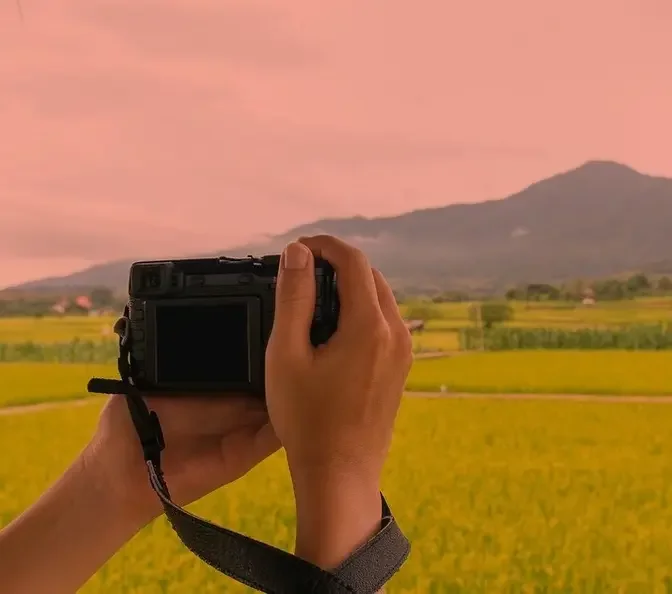
#PhotoCamera, #LandscapePhotography, #PhotographyExpert, #NatureShots, #ScenicViews, #OutdoorPhotography, #CameraGear, #LandscapeExpert, #TravelPhotography, #WideAngleShots, #PhotographySkills, #NaturalBeauty, #CameraTips, #PhotographyMastery, #LandscapeLovers
The majority of what I'm talking about, when I'm talking about photos about things rather
than of things, is curiosity.
Yes, and to me, there is another one that is extremely important.
Maybe even more important than curiosity.
Maybe that curiosity comes from, and this is for me, a principle that has helped really
enjoy the act of creating, of photography, of having fun with your photography and creating
images that not only will feel good to you, but also create some emotional response with
the viewer.
So in this video, I'm going to share with you this principle that hopefully make you
a more fulfilled photographer and help you create photos that you love.
If you're ready, let's get started.
I don't know if you've seen this, but you can basically remove the plate from your camera
and use your strap as a backpack.
Also very, very helpful if you're trying to carry just your water and you don't want to
take your camera or you want to hold it in your hand whenever you go hiking.
This may be your 2025 best tip of the year, honestly, I'm sure.
Let me know in the comments right away.
Good morning, everyone.
Welcome to this episode.
Thank you, James Popsies, for this video about curiosity and one of your biggest tips.
I kind of want to reply to it, add to it, because I think it's a beautiful conversation
to have.
And I just came back from my shoot with that 85mm 1.8 that you may have seen in a separate
video and I was kind of reflecting back on it with some of the photos I took and I realized
there is this principle that is for me a precursor of curiosity.
And I think it will be very well illustrated with this quote from this book called The
Creative Act by Rick Rubin.
If you start from the position that there is no right or wrong, no good or bad, and
creativity is just free play with no rules, it's easier to submerge yourself joyfully
in the process of making things.
To me, this goes back to that principle, which is innocence, going back to the innocence
of being a child, looking at the world with childlike eyes and thus being curious about
everything.
Right.
Let me give you an example.
So on that shoot this morning, I'm here with my 85mm 1.8, I have my GoPro recording.
So I'm like, I want to take good photos.
You know, I have pressure.
I may have to share this.
I may want to do something with the photo.
I don't know, should it be print worthy?
And then I had to step back, recenter, take a breath in, smile, take a breath out and
just look at the space around me and notice the light coming in, hitting the walls, creating
some nice and warm glow, some ambience.
I look at this, I think it's an American cocktail bar or something that's closed down.
It's early morning.
It's a small town in California.
There is no one around.
No one decides to walk, there's just cars passing by.
And then I let my inner child look at the scene, a piano, an old speaker, an old radio
thing with maybe cassettes.
What are cassettes?
You know, 2025, has anyone ever seen cassettes?
And the light just bouncing inwards that almost look fairy-like.
And that's where I started.
And then I got curious and that's where curiosity comes in.
I got curious and I started playing also with the shadows on the wall.
So I really tried to create a scene in my camera that was reflecting that ambience.
And I did it two ways.
One that was obstructing a mirror that you see in the top right corner and one where
I kept that mirror.
And like I said in the video, this mirror could be also helpful if I had a subject walking
or someone or if this was a different shoot, I could actually put that person in the mirror
inside the same frame.
But really, it was about dropping the judgments I had, coming back to that place of innocence.
And we have so, I have so many judgments constantly, you know, it's bombarding me.
This is too blue, this is too green, this is not fast enough, too fast, this takes too
much time, blah, blah, blah.
There's like so many things, or like, I don't like this, I like this.
You know, there's so many things coming all the time.
But if I can come back to my center and my center is just breathing in and out and coming
back to that place where I can observe the mind happen, I'm able to tap back into the
innocence of my inner child.
And my inner child is excited for things.
It's maybe three years old, four years old, two years old, and it's like, wow, light,
you know, light hitting your hand, light hitting your wall.
And everything is kind of magic.
And from that place, and you may think, well, Pierre is like going somewhere really white.
No, it's like observe children and how they interact with the world, you know.
I have a five-year-old, so that teaches me a lot.
And some of her friends grabbed one of those tiny cameras and they were running around
and taking photos of a plant, of a rock, of each other, of random things.
And they were doing it with smile and joy and having fun in the process.
They didn't care to know if the light was good, if the angle was good, if the person
was smiling right, if the flower was properly lit up, if it had rim light, anything.
It didn't matter.
They were just in that moment of creation of innocence and joy.
And Rick Rubin in that book, The Creative Act, has also another quote, which is,
as artists, we seek to restore our childlike perception, a more innocent state of wonder
and appreciation, not tethered to utility or survival.
I'm deeply appreciative of that book.
I recommend it to any friend who has to do with creative space.
It is such a good little reminder.
By the way, if you don't know me, my name is Pierre T. Lambert.
I'm a travel adventure photographer and the creator of the 30 Day Method to Great Photos,
a step-by-step method to retraining your brain to see great photos no matter where you are,
no matter what gear you use, and no matter what your level is.
It's a method that has helped thousands of students around the world.
Check out the link in the description if you want to learn more.
And on this YouTube channel, I'm sharing photography adventures and tips, so make sure you subscribe
to watch the next one.
And thank you also James Popsies for making that video that I'm bouncing back on.
I highly recommend you to watch it after because there's a lot of very interesting details in there.
So if I keep going a little bit on that shoot, I had a few other opportunities to play with
that innocence and come back to it.
So if you remember, if you haven't seen the video, there was this person with two coffees
or one coffee holding them in a corner.
I took some photos, used a little bit of framing.
It was nice. I hid his face because I didn't want his face in the photo.
That wasn't interesting.
I just like the story of the person carrying the coffees around.
And I was excited for him to cross the road and hopefully walk on those arches because
I had been looking for a subject, right, to play with this playground that was present.
And it's almost like going to a playground and there's no kids.
You're like, oh, I'm waiting for someone to come in.
Right. Then I look across and I see this car, this car, vintage car kind of looks cool.
But most importantly, there's like that light bouncing around.
It creates a very warm atmosphere.
There's a it's very bright.
There's a little honeybee on the left.
And I'm like, wait, let's just take a photo without the person in it.
I don't even need it.
Like there's something in my inner childlike experience that's like, oh, this is cool.
And just that little excitement.
Oh, this is cool. Innocence about that photo was enough for me to create that photo,
focusing just on the car.
And then that's it.
And then I took another one with a person walking and I like that photo less.
Honestly, I felt that the previous one was more interesting just focusing on the car
because there's also some mystery.
The car is at a red light.
We can't see the person driving.
So it's an ambience that I appreciate in that photo.
And that is something vulnerable I'm going to share.
I don't want to sometimes I don't want to share those photos, especially on places
where many eyes are going to look at them, because I part of me is a little bit like,
oh, what are people going to think about it?
Not in a bad way, but I'm like I'm trying to keep a certain standard of photos and maybe
I think it's not good enough.
But if we were together, just you and me in the space, I'd be sharing my excitement for
that photo. And that's what I want to cultivate.
It's sharing that excitement for that photo as if we were in that friendship or like real
world interaction.
And that excitement for the photo to me come from that innocence of not wanting it to be
here, not wanting it to be on the wall, not wanting it to be anywhere, but in living in
that little space that was that joy of creation.
I had another scene which the coffee shop, the guy in the coffee shop looking at the
person also outside that was playing with a dog that was sticking out his head from
a car. Well, there's like plenty of opportunities around us to actually practice that
nonjudgmental thinking and through that nonjudgmental thinking, which takes you to that
innocence, right?
You can explore so much.
And I've been shooting a little less those past months.
And I encourage you actually to maybe not necessarily shoot less, but shoot differently
and really tap back into the joy that you had when you first discovered the camera.
Maybe you were five, three, 16.
It doesn't matter. Like that enjoyment of wow, I can take a photo and create something
and it's beautiful or not, but it doesn't matter.
I'm still having fun with it.
So I've been taking my camera on different occasions.
I was in French Polynesia and I decided to go in the water with waves.
And just out of curiosity for what we can create, I went and started creating some photos
under the waves. Okay, I may not, I mean, do nothing with those photos ever, but I'm
sharing them with you right now.
Then there was this little ferry ride with my wife and my daughter.
And I was with my little RX1R2 in order to actually just play with my camera all day
long. So through that lens of, I'm not thinking about doing anything else than just
having the pure idea of creating here and being innocent towards it and being like a
child. I saw that beautiful scene, you know, with this corridor or like staircase going
up. My wife is bending down, my daughter, we can't see their face.
It's actually beautiful. And there's a beautiful contrast between orange, red, the
background. So I created that photo, which was marvelous because I absolutely love that
photo now. It represents a lot for me.
And in the moment, I was just like running around like a like a little puppy, you know,
with my camera. And I think the moment you can tap back into that running around like a
puppy is the most important.
Another example, that tree photo, which by the way, it's not fully centered.
Does that bother you or not?
Have you even noticed it before I said anything?
And then there is the vertical version.
But I was walking with my daughter, nothing.
We were just going around.
I had my camera with me again, and I just wanted to practice a little bit again of having
fun with it and going back to that innocence.
Took that photo, just thought it was beautiful, enjoyed that tree and the light and how it
came. And I showed my daughter.
I'm like, oh, this is incredible.
Like, look at the light that's coming through, etc.
And I've seen it in kids also where there's this innocence of looking dust coming through
a window, hitting the light.
It's almost like little fairies running around.
The stronger we can bring back that sentiment of being a child and exploring the world like
a child, the more fulfilled we will be in our creation, in our life and throughout
everything that we do.
In my opinion, that's just my opinion.
You can let me know what you think.
But really, 2025 for me will be to cultivate that innocence in photography.
Right. And taking my photos just because I think it's fun.
And by the way, through the many students I've had that asked for feedback, it's something
important that I was asked.
Then when they're like, what do you think about the photo?
What can I improve? I'm like, how do you feel about your photo?
Do you love it?
Did you have fun creating it?
If you love it and you had fun creating it, I have nothing to tell you.
You win. You have 100 points like this.
There is no point. There is no rating.
But this is what you want.
Now, if you want to improve certain areas and you want to discuss more, absolutely.
But try to come back to that state of innocence and curiosity like James Popsy was
talking about. Last quote from the creative act that Rick Rubin says, all that matters
that you are making something you love to the best of your ability here and now.
One more important than that.
So now grab your camera and grab the free cheat sheet that's in the description that
will help you dial in the right settings on the field and go shoot.
Or if you really want to stay stuck on YouTube, watch this video to master your camera
before you go shoot or watch this video where we break down three mistakes and how to
fix them in photography.
Now, remember, get out there, go shoot, try something different, try something new.
Have fun. Tap that into that innocence and I will see you in the next one.