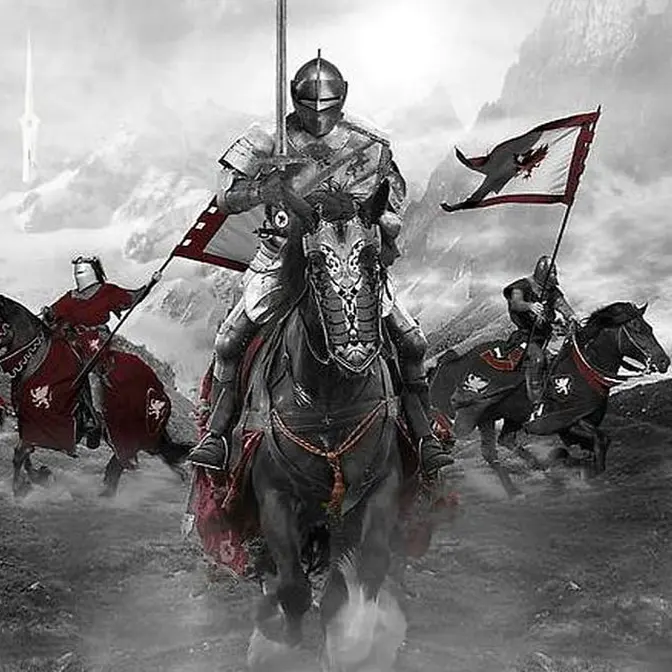
Historical Context: December 218 BC. After crossing the Alps with his army and elephants, Hannibal Barca faced the Roman legions for the first time in a major battle. What happened at the Trebia River would shock the ancient world. The Strategic Masterpiece: Hannibal studied his opponent, Consul Sempronius, understanding his ambition and predictability. Using cavalry as bait, he lured the Roman forces across the freezing river at dawn, when they were unprepared and cold. The Tactical Innovation: While Romans engaged Hannibal's center, 2,000 hidden troops led by Mago emerged from the forests. Combined with elephant charges and cavalry flanking maneuvers, this created a three-sided engagement the Romans couldn't counter. Historical Impact:
First major Carthaginian victory in Italy Demonstrated new tactical innovations Gallic tribes joined Hannibal's cause Changed Roman military doctrine forever
The Battle of Trebia was the first great confrontation that demonstrated to the world
that Hannibal Barca was not simply a desperate adventurer,
but a military genius capable of humiliating the Roman legions on their own territory.
On the frozen banks of a river in northern Italy,
where the alpine wind turned breath to vapor and numbed soldiers' fingers,
a battle was fought that forever changed the Roman perception of their own invincibility.
It was the moment when Hannibal proved he had crossed the Alps not to die gloriously, but to win.
This battle represented much more than a simple military confrontation.
It was the culmination of an oath pronounced beside the deathbed of Hamilcar Barca,
when the nine-year-old boy had promised eternal hatred to Rome.
It was Carthage's revenge for the humiliation of the First Punic War,
the African response to growing Roman power.
It was also the definitive test of whether innovative tactics
could overcome the traditional discipline of the legions.
It had all begun months earlier,
when Hannibal made the most audacious decision in ancient military history,
to lead a complete army from Spain to Italy by crossing the Alps.
It was an enterprise that the Romans considered impossible,
a madness that no sensible general would attempt.
But Hannibal knew that strategic surprise could compensate for numerical inferiority,
that an unexpected blow to the heart of Italy
would be worth more than years of campaigning in distant territory.
The crossing of the Alps had been a nightmare of cold, hunger, and death.
Of the 90,000 men who had departed from Spain,
barely 26,000 reached the plains of the Po.
The elephants, those weapons of terror that had terrorized Mediterranean armies,
had been reduced from 37 to barely 20 half-frozen survivors.
It was a decimated army,
facing the most formidable military power in the known world.
But Hannibal had calculated that quality could overcome quantity.
His survivors were veterans hardened in Spain,
soldiers who had survived not only battles,
but one of the most terrible marches in history.
They had demonstrated superhuman endurance,
unbreakable loyalty to their commander.
They were the iron core around which he could build a new army.
Reinforcements came from unexpected sources.
The Gallic tribes of northern Italy,
tired of Roman domination and thirsting for revenge after decades of oppression,
joined the Carthaginian army en masse.
They brought with them knowledge of the terrain, fresh provisions,
and above all, a fierce hatred toward the legions that had conquered their lands.
Within a few weeks, Hannibal had doubled the size of his army.
Rome responded with the military efficiency that had built its empire.
The consuls Publius Cornelius Scipio and Tiberius Sempronius Longus
quickly mobilized the available legions.
Scipio had been wounded in a previous encounter with Carthaginian cavalry,
which left Sempronius in command of the main operations.
It was a change of leadership that Hannibal knew how to exploit brilliantly.
Sempronius was a competent but predictable commander,
a typical product of the Roman military system that trusted in the superiority of traditional tactics.
He had been elected consul for his personal valor and administrative experience,
not for his tactical genius.
He firmly believed that the Roman legions,
with their superior discipline and advanced equipment,
could defeat any enemy in open-pitched battle.
Hannibal studied his opponent like a hunter studies his prey.
He understood that Sempronius was ambitious,
that he wanted a quick and decisive victory before his consular year ended.
He also knew that the Roman would underestimate an army that had suffered so many losses in the Alps.
It was exactly the type of arrogance that could become a fatal weakness.
The terrain chosen for the trap was perfect for Hannibal's plans.
The Trebia river meandered through a relatively open plain,
bordered by low hills and thick forests.
For a Roman commander accustomed to frontal battles, it seemed ideal.
Sufficient space to deploy the legions in their traditional formation,
without geographical obstacles to complicate maneuvers.
But Hannibal saw the same terrain with completely different eyes.
The forests provided perfect cover for ambushes.
The hills offered observation positions from which to coordinate attacks.
The river itself, though not an insurmountable barrier,
would slow any troop movement and divide enemy forces at the crucial moment.
Preparing the trap required perfect coordination between different types of troops
and a deep understanding of Roman military psychology.
Hannibal carefully selected 2,000 soldiers from his best cavalry and light infantry.
Elite troops commanded by his brother Mago.
These forces hid during the night in the forests near the battlefield,
in positions from which they could attack the Roman legions from the rear.
The most delicate part of the plan involved the Numidian cavalry,
those desert riders whose skill on their mounts had terrorized Carthage's enemies for generations.
Their mission was to deliberately provoke the Romans,
make them cross the frozen river under unfavorable conditions,
and then retreat in a convincing but controlled manner to lure them toward the trap.
The morning of the confrontation dawned frigid,
with a thick fog rising from the waters of the Trebia.
It was the type of weather that numbed fingers and made weapon handling difficult,
that turned every movement into additional effort.
The Roman soldiers, accustomed to the temperate climate of central Mediterranean,
suffered especially under these conditions.
Hannibal had calculated even this detail.
His troops had breakfasted beside warm fires,
had rubbed their bodies with oil to protect against the cold,
had had time to warm their muscles before combat.
The Romans, by contrast, had been abruptly awakened by the Numidian cavalry attack
and had launched into pursuit without adequate preparation.
The bait worked perfectly.
The Numidian riders appeared at dawn like ghosts emerging from the fog,
attacked the Roman advanced posts with showers of javelins,
and then retreated apparently in panic toward the other side of the river.
It was exactly the type of provocation that an aggressive Roman commander could not ignore.
Sempronius bit the hook with the veracity of a hungry predator.
He immediately ordered pursuit, convinced he could crush the enemy cavalry
and then attack the Carthaginian camp before Hannibal could organize an effective defense.
It was a tactical decision that seemed logical,
but played directly into the Carthaginian strategists' hands.
The legions crossed the Trebia in combat formation,
with the icy water reaching up to their chests.
It was a shallow but treacherous river,
with irregular currents and slippery stones that hindered coordinated movement.
The soldiers reached the other shore soaked,
shivering with their shields heavy from water and their muscles numbed by cold.
Hannibal awaited them with his army deployed in the formation he had perfected
during years of campaigning in Spain.
In the center, he placed his Gallic and Hispanic troops,
fierce but less disciplined warriors who would serve to absorb the first impact of the legions.
On the flanks, he positioned his African veterans,
elite soldiers who had survived the Alps and who constituted the iron core of his army.
The elephants formed an intimidating line at the front of each wing.
They were gigantic beasts that had survived the Alpine hell,
animals trained specifically for psychological terror.
Their Indian mahouts knew every command,
every signal that could direct these giants toward enemy lines like living, battering rams.
The Carthaginian cavalry deployed at the extremes of the battlefield,
ready to envelop the legions once they committed to the center infantry.
It was a formation that required perfect coordination between different types of troops,
each with its specific role in the symphony of destruction
that Hannibal had composed.
Combat began with the traditional clash of infantries.
The Roman legions advanced with their characteristic discipline,
a wall of shields and iron that moved forward step by step.
Their javelins flew in dense clouds,
causing numerous casualties in the first Carthaginian ranks.
For a moment, it seemed that Roman tactical superiority would prevail once again.
But Hannibal had planned this phase of the battle with meticulous care.
His center troops yielded ground in a controlled manner,
absorbing Roman pressure without breaking completely.
It was like a spring that compressed but maintained its elasticity,
preparing for the moment when it could release itself with devastating force.
The elephants entered action when the lines became entangled in hand-to-hand combat.
These gigantic beasts charged against the flanks of Roman formations,
sowing panic among soldiers who had never faced animals of such size.
Their trumpeting resounded throughout the battlefield,
a primitive sound that awakened ancestral terrors in human hearts.
Some Romans resisted valiantly,
using their palum as long spears to keep the giants at distance.
But most became demoralized at the sight of tons of flesh and bone charging against them.
Formations disintegrated in panic,
creating gaps that Carthaginian cavalry immediately exploited.
In the nearby forests, Mago waited for the precise moment to launch his ambush.
He could see how the Roman legions committed themselves ever more deeply to frontal combat,
how they lost the cohesion that was their principal strength.
It was the moment his brother had predicted,
the instant when decisive intervention could convert a hard-fought battle into total massacre.
The signal came when Carthaginian cavalry
completed its enveloping movement and attacked the Roman flanks.
Mago launched his 2,000 men against the legion's rear
at the moment when they were completely occupied fighting on other fronts.
It was the hammer blow that definitively broke Roman resistance.
The legionaries found themselves attacked from three sides simultaneously.
Frontal pressure from Carthaginian infantry,
charges of elephants and cavalry on the flanks,
and now a completely unexpected attack from the rear.
It was an impossible tactical situation
that not even the legendary discipline of the legions could overcome.
The Roman defeat became a rout when soldiers realized they were completely surrounded.
Some tried to fight their way toward the river,
others sought refuge in nearby hills,
most simply fled in all directions.
It was the total collapse of an army that had believed in its own invincibility.
Sempronius managed to escape with about 10,000 survivors,
mainly from troops that had not completely crossed the river when the ambush began.
His flight saved his life, but not his reputation.
Rome had suffered one of the most humiliating defeats in its history,
and the responsible party was a young Carthaginian general
who had converted apparent disadvantage into brilliant victory.
Roman casualties were devastating.
Ancient historians speak of more than 20,000 dead,
though these figures are probably exaggerated.
What is clear is that Rome lost two complete legions,
along with their auxiliaries and allies.
It was a hemorrhage of human resources that the Republic could afford,
but which gravely damaged its military prestige.
For Hannibal, Trebia represented the complete validation of his revolutionary strategy.
He had demonstrated that it was possible to defeat the Roman legions
using tactics that exploited their weak points,
their dependence on rigid formation,
their tactical predictability,
their arrogance before apparently inferior enemies.
The victory also consolidated his authority over the Gallic tribes of northern Italy.
These peoples, who had doubted whether to support a decimated Carthaginian army,
now saw in Hannibal the liberator who could definitively expel the hated Romans.
Thousands of Gallic warriors joined his cause,
providing the reinforcements he needed to continue the campaign.
News of Trebia shook Rome to its foundations.
For the first time in generations,
an enemy army had completely defeated the legions on Italian territory.
The Roman Senate, accustomed to receiving reports of victories,
had to face the reality that they were confronting an enemy of completely different caliber.
The Roman response was characteristic of their iron determination.
Instead of seeking peace, they decided to intensify the war effort.
New legions were raised, new commanders were formed,
new tactics were developed specifically designed to counter Carthaginian innovations.
Trebia had not broken Roman will, but had tempered it like iron in fire.
For Hannibal, victory at Trebia was only the first step of a campaign
he planned to carry to the very walls of Rome.
He had demonstrated he could defeat the legions,
but he still had to prove he could maintain an army in enemy territory
long enough to force Rome to negotiate peace.
On the banks of the Trebia,
where the waters continued flowing indifferently over the bones of the fallen,
the first chapter of a war that would define the fate of the Mediterranean,
had been written.
Hannibal had fulfilled his childhood oath in the most spectacular way possible.
But the real challenge was just beginning.
Rome had been wounded, not destroyed,
and its capacity for recovery would be the final test of Carthaginian genius.