
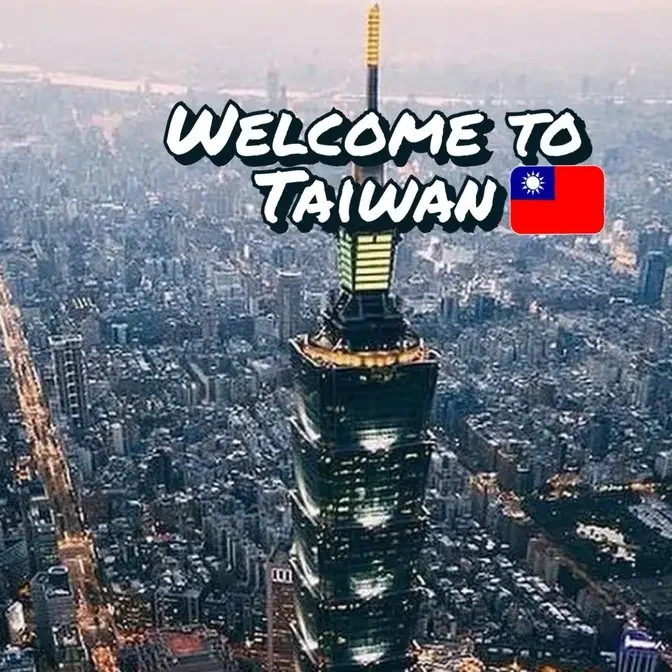
我真的很努力跟朋友解釋,台灣真的有難以言喻的東西(Taiwan really has something indescribable)
196 Video Views·Mar 1, 2026
They forced the president to leave office.
Yeah, it comes to feel like home.
Taiwan people are very engaged with their family.
They're also very, very independent people.
Expect to stay a lot longer than you think you're going to.
The Portuguese, they used to call it Ila Formosa.
You know, they have a beautiful island.
And here we'll treat you with some deference and respect,
even though you might not deserve it.
And I bought a one-way ticket, and I came to Taiwan with about $100.
Although they had all this Western stuff,
they had 5,000 years of culture that they were not going to let go.
And they were 5,000 years of society that they were locked into.
I've come to think of Taiwan as my home.
I go back to Chicago, and the place is dirty, and there's garbage floating everywhere.
People here are really engaged with their democracy.
And the women are beautiful.
What can I tell you?
All right, my name is D.C. Rapier,
and I'm from a little town called Kankakee, Illinois.
It's about 60 miles south of Chicago.
I lived in Chicago for a number of years, and then I came to Taiwan.
It'll be 36 years next month.
Well, I'm retired, but I taught English for about 27 years.
I was house-sitting for a friend of mine in Chicago Heights.
The wife has a doctorate degree in education.
She was asked to come to Taiwan to teach English,
and he missed his family and missed American sports and things like that.
They were supposed to be gone for like a year and a half, and they came back early.
And one day, I was coming down the stairs,
and I heard her on the phone, and she was talking to some friends of hers
trying to get somebody to come and take her place.
So I just asked her.
I said, well, do you think I could do that?
So I made the arrangement, and I agreed to come for 18 months.
And I bought a one-way ticket, and I came to Taiwan with about $100.
That was nearly 36 years ago.
Could you take us through your journey from the first moment you arrived in Taiwan?
So when my friends came here that I replaced,
they were at the very, very tail end of martial law.
But the mindset was still here when I came for the first maybe five years,
for example, to go and dance.
And if you gathered on the street corner, there were more than, I think it was,
there was a law that if more than three people who were not family gathered,
you had to have a special license.
You came here with the intention of one year, eight months?
Yeah, yeah.
Now it's 35 years.
Why did you stay?
I really like the place, for one thing.
I mean, it's a beautiful island.
You know, I mean, the Portuguese, when they used to call it Ila Formosa,
you know, they have beautiful island.
And there's lots of beautiful places to go and hang out and do things.
And the people are really nice and really kind.
And I mean, although I've been here for 35 years or 36 years,
they will still treat you with that deference, you know, of being a guest, being a visitor.
When I came here, I had the idea that I was going to stay for just, you know,
six months or a year and a half or two years or something and go back.
And the longer I was here, I thought, well, what am I going to go back to?
You know, to maybe get a job as an assistant manager at a Kentucky Fried Chicken
or something like that or what?
What, you know?
And the health care system here is great, you know.
I go back to Chicago and the place is dirty and there's garbage floating everywhere.
And, you know, here it's really clean.
There's almost no crime.
There's lots of things here that is a big advantage, you know.
A lot of people, a lot of Taiwanese that I know have moved to either Australia or to Vancouver.
And I can see there's an advantage for them, you know,
to get an extra passport or something like that.
That's, you know, a visa or whatever.
And that's all well and good.
But as I said, I mean, you come to Taiwan and there are people who work in the neighborhoods
making sure that the streets are clean.
And there's a local guanlin runner or something who is in the neighborhood
and make sure that all the lights stay on and make sure that everything is in proper repair, you know.
And I take that kind of as a badge of honor, you know.
I mean, I'll get into a taxi cab and, of course, they'll ask you the questions,
you know, how long have you been here and where are you from?
And I'll tell them.
And they say, wow, oh, you've been here longer.
You're Taiwanese, you know.
I was like, well, thank you.
That's nice.
But my language skills are terrible.
So but I appreciate it.
Thanks.
How is it like living in Taiwan as a foreigner back then compared to now?
Well, when I first got here, there were fewer people who spoke English, for one thing.
And people would stare.
I've tried to explain this to my friends a couple of times where on the appearance,
on the surface, Taiwan looks very, very like it might be a U.S. city or a European city.
You know, there are McDonald's everywhere and 7-Elevens and all those, you know, franchises
like that, you know.
But the heart of the Taiwanese people is very, very different,
very different from the North Americans, right?
I mean, people wear Western clothing and they eat Western food and, you know,
you can find milk and people are making comments about how milk and cheese have made Taiwan
children grow taller and stronger and they're big basketball fans and big baseball fans
and things like that.
And so there's a lot of that stuff that meant that they were more or less Westerners, right?
And that's the dichotomy I had to come to grips with, is that although they had all
this Western stuff, they had 5,000 years of culture that they were not going to let go,
you know, and they were 5,000 years of society that they were locked into.
One thing is that when I started teaching, the parents would come into this classroom
with the parent, with the child, right?
And so the child was very, very well behaved because they had not only a teacher, but they
had their own family behind them, right?
As time went on, then the children seemed to change.
So the parents changed too.
They weren't coming so often to sit in the class and watch the children, but the children
were changing too.
And I heard the same sort of thing from other teachers later on, that what was kind of standard
operating procedure before, you know, telling children to be quiet, sit down and behave
and things like that, you couldn't do anymore.
You know, you could tell them that, but they weren't going to, it just means that they
would act out even more, you know.
That's one change that's happened in the Taiwanese people.
What part of Taiwanese culture do you find hard to adapt to?
I've always been pretty easygoing, so what was more difficult to adapt to was the Chinese
religion.
Because in the West, being raised in what's, I mean, most people are Christian, right?
And many, many denominations, but it's still monotheistic.
There's still one God.
And here, there are many.
In the States, and I think in Europe too, is that if you go into a church, you're very
solemn, you're very quiet, and no one talks during a ceremony, you know.
And here, there's chatter all the time, because the family is more important, you know.
And they handle funerals very, very differently.
In Christian culture, if someone passes away, I mean, you don't see the body, and you don't
take care of the body, and you don't do any of that.
That's all hands off, right?
That's all handled by the morgue in the hospital, or the person who handles the funeral, right?
But here, it's all handled by the family.
And in the same regard, I mean, because I've been in the hospital a couple of times, it's
the family who handles all that stuff.
I mean, the family brings the food, the family washes the sick person, and gives comfort
to, you know.
And I worked in hospitals in the States.
And so, I know that they provide the food, and they bring the food around to people.
And you can still get that in a Taiwan hospital, but it's only if you ask for it.
That sort of business that is in the United States, at least, is handled by the hospital
staff, orderlies, or someone like that.
35 years, what has Taiwan taught you?
People here are really engaged with their democracy.
I mean, we saw, since I've been here, the Xiatai movement, where they forced the president
to leave office.
Although Taiwan people are very engaged with their family, they're also very, very independent
people.
You stand by yourself, but you also rely on your society.
Otherwise, you couldn't stand by yourself at all.
What advice would you give to any foreigner who wishes to come to Taiwan?
Learn Chinese before you come, and expect to stay.
Expect to stay a lot longer than you think you're going to.
There's something about Taiwan, I mean, I found, at least, and a lot of people have
found this, is they come to Taiwan for just a short period of time, and maybe to travel
around Japan, and go to Hong Kong, and Indonesia, and stuff like that.
They'll stay in Taiwan, because it becomes to feel like home, and like I said, the people
are very kind and friendly here, will treat you with some deference and respect, even
though you might not deserve it.
Because you're a guest, and because you're a visitor, then they'll be nice and kind with
you.
So you tend to stay longer, and the women are beautiful, what can I tell you?
And do you have anything else to tell Taiwanese people?
Ni hao.
Well, thank you, I guess.
That's probably the one thing.
Thanks so much for allowing me to live here for so long, and taking care of me, and providing
a society that is really comfortable to stay in, and live in.
I have no plans to move back.
I go back for visits, but coming back to Taiwan is coming home for me.
I've come to think of Taiwan as my home.
So when I do go to Japan, or do go to Korea, or have gone to Korea, I always think of going
back home.
And that's not to Chicago, that's to Taiwan, to Taipei, yeah.
Your likes are very important.
About 80% of the people that watch my videos are not liking the video.
So please, please, please like the video, and thank you for watching.
See you in my next video.