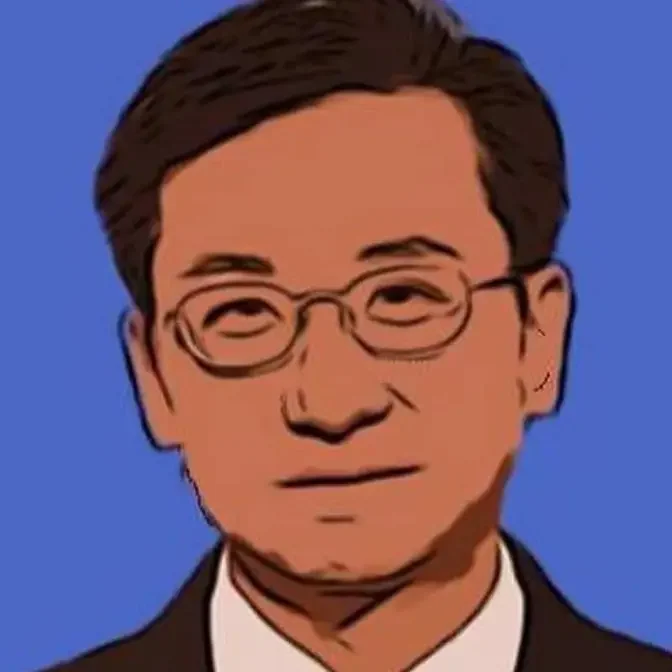
The video explores one of modern China's deepest ironies: many who suffered terribly under the Cultural Revolution—such as **彭佩云** and Xi Jinping—did not reject its logic of high-pressure control, ideological purges, and concentrated personal power. Instead, they became its heirs and enforcers.
**彭佩云**, once denounced and brutalized as a Peking University cadre, later led China's harshest family planning policies. Xi Jinping, sent to the countryside as a teen while his family was shattered, rose to power and revived similar mechanisms of surveillance, censorship, and preemptive control.
The script argues this is no coincidence but a systemic tragedy. Without true reckoning, trauma breeds not reflection or restraint, but a drive to seize the "whip" first—rooted in fear, loyalty demands, and rewards for ruthless execution. The system atomizes society, destroys trust and organization, and turns victims into controllers, perpetuating the cycle.
Even today, with more information, resistance remains fragmented against sophisticated repression. The Cultural Revolution's true legacy endures in the CCP's control logic.
Help me grow the channel by donating any amount through the link below—your support makes a difference! https://paypal.me/DonXiang
Hi, I'm Dong Xiong. Welcome to Digging into China, where we take a deep dive into what's
really happening in China and share some unique insights. One of the most ironic things in modern
Chinese history is this. Many people who were deeply hurt by the cultural revolution did not
end up becoming the ones who ended its logic. Instead, they became its heirs.
Peng Peiyun is one example. Xi Jinping is another. Everyone knows who Xi Jinping is.
But who is Peng Peiyun? She used to be the head of China's Family Planning Commission,
the key person carrying out that ultra-strict population control policy that caused countless
children to die before they were born. Back in the early days of the cultural revolution,
Xi was one of the three people named in that famous big-character poster at Peking University.
She was publicly denounced, overthrown, yet later she entered the family planning system.
As a young person, she was swept up in the cultural revolution. Her father was brought
down. She herself was sent to the countryside. Her family was torn apart. But when she rose to
power later, she helped bring China back onto the same track the cultural revolution was on,
ever-stronger top-down purchase, control, and concentration of personal power.
Xi Jinping and Peng Peiyun, both victims of the cultural revolution and both heirs of it.
There is not a coincidence involving two individuals or two separate fates. It reveals
the most terrifying feature of that system. It doesn't just produce victims, it also produces
heirs. You would think that people who personally lived through that kind of political campaign
would be the most wary of power. They should instinctively hate mass struggle session,
ideological purges, personality cults, and runaway state machinery. But reality turned out
the opposite. Peng Peiyun went on to become a major enforcer in the family planning system.
After Xi Jinping came to power, China in more and more areas started walking back down the road of
high-pressure purges, tight control, and extreme concentration of personal authority.
What does this tell us? It tells us that in a system that never truly settles accounts with
cultural revolution, trauma does not automatically turn into reflection, and being a victim does not
automatically turn into restraint. Very often the victim does not end the logic, he inherits it.
Because for many of them, the deepest psychological impulse is no longer
this must never happen again, it becomes I will never again let myself be the one at the mercy
of others, I must first become the one holding the whip. That is the most brutal essence of the
jungle politics inside the communist system. There is actually a very cruel and very real
psychological mechanism at work here. If a victim never truly reflects and settles accounts,
then once they regain a sense of security and power, they tend not to end the logic of violence
they inherited. In other words, not I was hurt so I will not hurt others, but I was hurt so I can
never again be the one who gets hurt. Therefore, I'd better become the one swinging the whip first.
One deep pattern in the Chinese communist system is that it does not truly heal wounds, does not
truly settle accounts, and does not truly allow people to develop a sense of boundaries around
the power from their victim experience. Far more often, it converts one generation's trauma into
the next generation's impulse to control. The Cultural Revolution did not merely destroy one
generation. Without real reckoning, it encoded that same method of harm into the governance
logic that followed. Let's look first at Peng Peiyun. She was born in 1938. When the Cultural
Revolution broke out, she was 28, right in her prime. On May 25, 1966, she became one of the
three main targets named in the country's very first Marxist-Leninist big-character poster,
Song Shuo, Lu Ping, and Peng Peiyun. At the time, she was deputy secretary of the Peking University
Party Committee and executive vice principal. She was quickly overthrown and went through the
set of Cultural Revolution humiliations and destruction. Struggle sessions, parading in the
streets, confinement in the cowshed, home searches, beatings, isolation, and investigation.
She received classic capitalist road treatment, from mid-level caesura to monster and demon.
Her personal dignity was completely trumped. Both body and spirit were doubly crushed.
Yet after the Cultural Revolution ended, she gradually came back. From 1979, she entered the
national family planning system. From 1988 to 1998, she served as its director, one of the
key figures during the harshest phase of enforcement. So she had once been smashed by
this machine, but later re-entered the same machine and became a key enforcer in other
national high-pressure control policy. Now look at Xi Jinping. Born in 1953,
he was 13 when the Cultural Revolution began and 23 when it ended, moving from boyhood into
young adulthood. His father Xi Zhongxin had already been brought down in 1962 over the Liu
Zhidan novel case. And during the Cultural Revolution, he faced long-term struggle sessions,
imprisonment, and labor camp. Xi Jinping himself, at age 15 in 1969, was sent down to Liangjiahe
village in Yanchuan County, Shanxi Province, to be re-educated among peasants. He stayed there
seven years, lived in a cave, dwelling, carrying manure, going hungry. He also went through struggle
sessions, discrimination, and humiliation. His entire family was deeply wrecked by the Cultural
Revolution. From a red second generation, he quickly fell to the edge as the child of the
Black Five categories. His older sister Xi Chaochao died during the Cultural Revolution,
officially said to be suicide, but widely believed among ordinary people to have been
driven to despair. So on the surface, both of them were undoubtedly direct victims of the Cultural
Revolution. Peng Peiyun was an insider cadre overthrown. Xi Jinping was a high-official child
implicated and sent down. Their middle age for her, their youth for him, both were torn apart
by that movement. The problem lies exactly here. Why did the victims not become people who reflect,
but instead become heirs? Because in an authoritarian system that never truly
reckons with trauma, victim experience does not automatically lead to freedom,
it can lead to new desires for control. At least three mechanisms lie behind this.
First, proving loyalty in order to survive and rise. People who re-emerged after the Cultural
Revolution did not regain position by admitting historical mistakes or openly reflecting on
tyranny. They did it by showing even more extreme loyalty and even tougher enforcement to wash away
their past shadows. Peng Peiyun later pushed the one-vote veto system and high-pressure coercive
measures in family planning. That was a classic way of signaling to the system, I am no longer
the person who was overthrown back then, now I can carry out the party's tasks better than anyone.
After Xi Jinping came to power, he constantly strengthened ideological control,
internet censorship, stability maintenance, and high-pressure personal authority. That too
can be seen as proof on a larger scale. I understand better than my father's generation
how to control the country, how to prevent power from slipping, how to make sure I am never again
the passive one taking the blows. Second, internalized fear and preemptive backlash.
Both Peng Peiyun and Xi Jinping lived through the terror of being at others' mercy. So when they
approached power again, their most instinctive reaction was not to limit power but to prevent
themselves from ever losing control again. The high-pressure enforcement of family planning
that Peng Peiyun took part in was essentially absolute national control over bodies,
families, and reproduction rights. Xi Jinping's emphasis on the party leading everything,
on national security, on ideological struggle, it is also preemptive control at root.
I must crush any sign of losing control before it even appears.
Third, the system rewards the harshest enforcers. The Chinese communist system does not prioritize
people with boundaries, rural awareness, or self-restraint. It more easily promotes those
who can best complete tasks, report upward most faithfully, and maintain stability at any cost.
Peng Peiyun rose from cultural revolution victim all the way to national leadership
because of her iron-fisted enforcement in family planning. Xi Jinping was already known in his
local years for stability, maintenance, control, and efficient execution. After taking power,
he scaled that logic nationwide. This system is not selecting for good people or good officials.
It is selecting for people who best fit it, best defend it, and most willingly use it.
So victims turning into perpetrators is not merely an individual moral issue,
it is more like a systemic tragedy. The cultural revolution destroyed people's dignity and also
destroyed many people's sense of boundaries and courage. Survivors either stayed silent or learned
to climb using the system's language and methods. Thus, the more someone was destroyed, the more
likely they became the firmest controller once they gained power. And this leads to another even
crueler, deeper question. Why do the same Chinese people act extremely submissive when weak,
yet extremely ruthless once they gain the upper hand? There seems to be a contradiction here.
Chinese people went through the great famine and the cultural revolution,
willing to starve or be struggled to death rather than truly rise up and overthrow tyranny.
Yet once someone enters the power system and gains advantage, many become completely different,
even harsher than the old perpetrators. Why? This is not because Chinese people are born with
heavy slavish nature, nor because power inevitably turned Chinese people bad. The real issue is that
a totalitarian system shapes the same group of people in two different ways. In such a system,
the weak are trained into obedient subjects. Once they gain power, they are easily trained
into perpetrators. Because on one hand, the system breaks ordinary people apart, scares them,
beats them until they dare not unite. On the other hand, it screens the ones who can climb
upward into the group most skilled at obedience, struggle, and harming others.
Totalitarian studies repeatedly mention one key word, atomization. Society is shattered,
individuals isolated, horizontal connections between people destroyed. This condition
greatly weakens collective action and makes everyone more dependent on power and more afraid
of losing its protection. So this is not a contradiction in human nature, it is one
continuous process. First step, most people are pressed into not daring to resist.
Through fear, surveillance, informing, collective punishment, and organizational control,
the authoritarian system turns ordinary people into individuals who distrust and can cut off
from each other. In that environment, people's first thought is how to survive, not how to
unite and overthrow it. You may hate, but you cannot find reliable partners. You may be
dissatisfied, but you do not know whether others feel the same. So most people's suffering stays
at the individual level and never grows into political force. Second step, the few who can
climb are screened into people most adapted to the rules. There is a saying, if you want to be a
good official, you cannot reach the top of the Chinese Communist Party. From the system's
screening logic, this is not far off the mark. In a system where loyalty ranks above rules,
struggle above governance, and political security above people's interests, the ones who rise are
usually not those with the strongest boundaries, most respect for rules, or greatest willingness
to restrain power. They are the ones best at showing loyalty, best at execution,
best adapted to struggle logic. People with real bottom lines, who dare speak truth,
who are willing to speak for the people, often get marginalized at the grassroots or mid-levels.
The closer to the core of power, the more you must adapt to the survival rules of the system
itself. Third step, once the oppressed gain power, they do not necessarily oppose the whip,
they want to hold it. Because in this system, many learn from their suffering,
not that power must be limited, but that if I do not hold power, I will be the one butchered.
So security no longer comes from rules, it comes from position. No longer from law,
it comes from choosing the right side. No longer from boundaries, it comes from control.
The most reliable way to protect yourself is not to make the whip disappear, but to make sure the
whip is in your own hand. In other words, the same Chinese people under this system are trained into
two different states. At the bottom, fear, silence, mutual suspicion, mutual harm. At the middle,
obedience, execution, showing loyalty, shifting blame. At the top, struggle, purges, control,
and absolute security. This creates a very cruel fracture in society. Those who have not gained
power dare not rebel. Those who have gained power do not want to stop. Many people do not fail to
hate what they once suffered. They hate it too much and fear falling back into that position
so deeply that in the end, they apply the same logic to others. So these two behaviors are not
two kinds of human nature, they are two survival strategies shaped by the same system. And it is
precisely in this sense that I say the Chinese communist power system essentially guides people
towards the worst side of human nature. It does not train people towards civic awareness,
rural awareness, or boundary awareness. It constantly rewards obedience, struggle,
blame-shifting, and upward displays of loyalty. This screening mechanism naturally pushes people
towards darker, more surveilled, more ruthless directions. The real stable rule in Chinese
officialdom has never been that the kinder rise. It has always been that the more reliable stay.
And in an authoritarian system, reliable very often means better at struggle,
better at suppression, better at cutting ties, better at sacrificing others to prove loyalty.
But this is still not enough. We must ask an even deeper question. Since this system is so cruel,
why after disasters on the scale of the Great Famine and the Cultural Revolution, did Chinese
society still not automatically form the force to overthrow tyranny? This cannot simply be asked as
why don't Chinese people resist, or why does something like the Cultural Revolution come
again? The real question is, why can an authoritarian system suppress a suffering
society into one that is both in pain and unable to unite? Because under those historical conditions,
rising up to overthrow tyranny was not a slogan. It was something almost equal to betting your
whole family's life, with the odds heavily against you. It was not that no one hurt,
no one hated, or no one resisted at all. It was that most people were simultaneously trapped in
fear, hunger, isolation, surveillance, mutual exposure, and organizational collapse.
They simply could not muster effective collective resistance. The most powerful thing about
authoritarian systems is not just they can beat people, it is that they can shatter society so
every individual stands alone with no help. This can be seen from at least six layers.
First, it is not that no one resisted. Resistance acts were quickly scattered, made invisible,
and left no trace. During the Great Leap Forward and Cultural Revolution, there were local escapes,
concealments, slowdowns, grand seizures, clashes, and various forms of passive resistance.
Some places saw grand warehouse attacks, fleeing famine, localized conflicts. In the Cultural
Revolution, there were sporadic confrontations, underground discontent, and later even spontaneous
protests like the April 5th Movement. But these actions were mostly local, survival-oriented,
and scattered. They rarely rose to nationwide political resistance.
The reason is simple. Under household registration, work units, production teams,
street comedians, political censorship, and mass movements layered on top of each other,
ordinary people could not even leave their village freely, let alone move about,
form associations, or spread information. You may hate, but you do not know others elsewhere
hate the same. You may want to resist, but you cannot find reliable partners.
So much resistance was broken before it could even form a political shape.
Second, hunger and fear themselves destroy the capacity to resist. In a famine, a person
first thinks how to survive today, not how to organize tomorrow's revolution. Long-term hunger
narrows attention to the most basic survival issues, rations, whether children or parents
will be taken, whether they will be struggled. The cruelest part of totalitarianism is that it
keeps people in pure survival mode for a long time. In that state, people do not become braver,
they become more short-sighted, more scattered, less able to form high-risk corporations.
In other words, tyranny first knocks out not anger, but organizational ability.
It beats people's political capacity back down to biological instinct.
Third, the system deliberately creates mutual distrust so people cannot band together.
Why would Chinese people rather starve or be struggled to death than rise up? Because
rising up requires mutual trust first. But the cultural revolution and the chain of political
movements before it systematically destroyed that trust. Spying, exposing, showing loyalty,
identifying class status, choosing sides. Teachers distrust students. Students distrust parents.
Colleagues distrust colleagues. Neighbors distrust neighbors. Once a society is shattered to this
degree, what people lose first is not affection, it is the ability to unite. Authoritarianism
stays stable not just because it has guns, but because it destroys horizontal connections in
Fourth, many people knew the system had problems, but felt that if they resisted,
their family would die first. Authoritarianism does not punish only you, it punishes your family,
children, parents, spouse, even your distant relatives. You may want to risk your life,
but would you dare let your child carry the label of counter-revolutionary family member?
Would you dare let your parents be collectively punished? So for many ordinary people,
resistance was not individual heroism, it was the risk of the whole family being buried with you.
Fifth, long-term propaganda makes some people explain disasters as their own
lack of loyalty rather than the system's fault. This sounds absurd, but in highly ideological
societies it is very common. Long-term propaganda does not only makes people believe in the leader,
more importantly, it takes away other ways to explain reality. You are hungry, not because
the system is wrong, but because of natural disaster, local cadres, class enemies, or your
own impure thinking. You are struggled, not because law collapsed, but because revolution requires it,
the situation demands it. First, make sure you pass the test. The deepest rule of authoritarianism
is not just a police rule, it is rule over interpretation. It pre-defines how you should
understand your own suffering. So a problem that should lead to resistance is digested
into self-blame, endurance, and continued obedience. Sixth, overthrowing tyranny requires
not just anger, but organization, information, context, and alternative plans. Real large-scale
resistance does not rely only on everyone being miserable. It needs horizontal context,
reliable network, information channels, organizational cores, shared goals, workable
strategies, and even belief that things will be better afterward. What authoritarianism destroys
first is exactly these things, independent organizations, free media, open discussion,
autonomous space. In other words, people having pain does not automatically mean people have
revolutionary capacity. But coming to today, people will then ask, since modern China is
no longer completely trapped in an information blackout like the cultural revolution era,
since today there is the internet, ways to circumvent wars, books, overseas information,
video materials, different angles of historical research, and far richer material conditions
than before, will it be easier for Chinese people now if cultural revolution-style,
high-pressure politics keeps escalating to unite and ultimately overthrow Xi Jinping's tyranny?
There is that possibility, but it cannot simply be answered yes or no. A more realistic conclusion
is this. Modern Chinese people have far better information conditions than in the cultural
revolution era. They have more ability to speak out in scattered ways and easier short-term
cross-regional emotional resonance. At the same time, however, the regime's surveillance,
censorship, data tracking, opinion manipulation, and targeted crackdown capabilities are far more
precise than in the cultural revolution era. So what is more likely to appear today is not
necessarily a sustained nationwide overthrow movement. More likely are localized outbursts,
scattered protests, short-term resonance, but very hard to naturally grow into stable nationwide
opposition. Moreover, this question needs to be split in two. One half, modern Chinese people
indeed have many conditions that did not exist back then, no longer completely in the blackout.
They also know the outside world does not have only one system. In the cultural revolution era,
many people did not even have alternative language to explain reality. Today, at least,
more and more people have alternative narratives and points of reference. Even more important,
recent years in China have proven that decentralized leaderless protests are not
impossible. The 2022 white paper movement is a classic example. No single leader, yet it spread
across cities in a short time, showing that even in high-pressure environments, rapid emotional
and expressive resonance can still happen. But the other half, the regime, is also far better at
preventing such things than before. Today's China is no longer mainly relying on big-character
protests, loudspeakers, mass movements, and human wave struggle like the cultural revolution era.
It is a high-density control system combining digital surveillance, platform censorship,
content alteration, social media account deletion, data tracking, and offline stability maintenance.
People have more chances to know the truth, but the regime has faster ability to discover you,
identify you, scatter you, and cut your connections to others. This determines a key reality.
If something like cultural revolution-style high-pressure escalation really happens in China
today, what appears first is not likely a sudden nationwide overthrow of tyranny. So if you ask
whether modern Chinese people will ultimately overthrow tyranny is many hope. My judgment is,
there is a greater possibility of knowing, greater possibility of short-term occurrence,
greater possibility of localized protest and emotional resonance. But whether it naturally
develops into a real force that changes the system will not happen automatically just because
there is internet, books, and information. What truly decides the outcome is not only whether
people have pain or have truth, it is three other mechanisms that are more necessary.
First, whether horizontal connections built on mutual trust can form. Many know the truth,
but that does not mean many trust each other. Totalitarianism remains best at shattering
society and isolating people from one another. Second, whether sustained organization can form.
A burst of anger is easy. Long-term organization is hardest. Without organization,
protests often remain at the emotional level, and emotion does not automatically become power.
Third, whether cracks appear inside the system. Large-scale political change has never been only
about whether the people are angry enough. It also depends on whether the upper levels
lose control, whether localities and the center split, whether the execution chain begins to
hesitate. Many authoritarian systems truly falter not only because the bottom erupts,
but because the top loses. It takes inside and outside working together to possibly topple a
regime. But on the other hand, we cannot be so pessimistic as to think everything is useless.
Because the internet, books, and different sources of information have already changed
one very important thing. More and more people no longer can only use the official language
to understand their own suffering. In the cultural revolution era, many people could
hardly even say out loud that the problem lies in the system. Today, at least more and more people
begin to realize that the problem is not just some bad cages or some out-of-control campaign.
It is clearly a problem in China's power structure. This does not automatically equal overthrow,
but it is the prerequisite for any real change. The most terrifying thing about the cultural
revolution is not just that it destroyed one generation. It is that it reshaped victims
into heirs, produced both obedient subjects and perpetrators at the same time, and passed this
logic down generation after generation. Peng Peiyun and Xi Jinping are just two
highly representative samples of this cycle. That is why we must keep looking back at the
cultural revolution again and again. Because if you seriously look at it once,
you will understand how the communist party has shaped modern Chinese people.
If a nation cannot learn from victim experience to limit power, but always converts victim
experience into new desires for control. If a society cannot truly settle its trauma,
but only keeps encoding that trauma into governance logic. If after one generation
is destroyed, what the next generation learns is not freedom, but more sophisticated control,
then it will never escape the totalitarian cycle. Thank you so much for watching. If you find this
helpful, please like it, drop a comment below, and hit the subscribe button right here. It really
helps YouTube suggest my video to others. I'll be back with more content soon. Until then, be well.