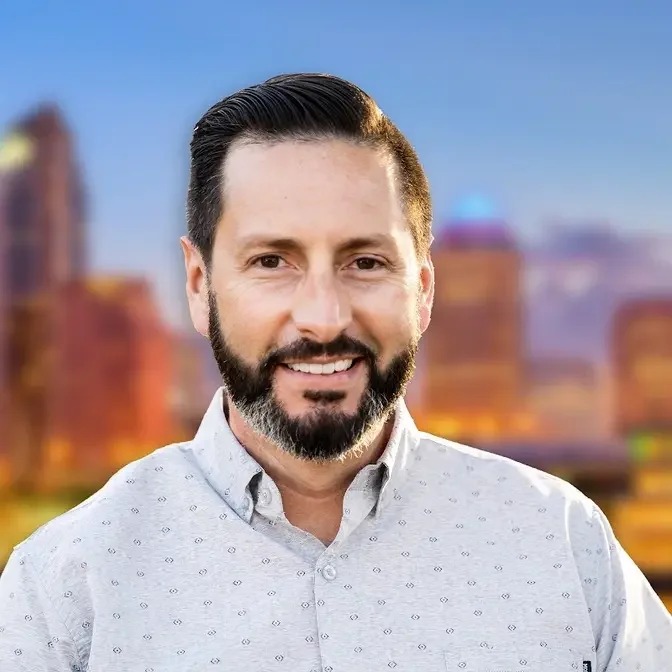
Thinking about the Tampa market in 2026? Contact Juan Alcala and the Tru Living Group at Real Broker, LLC for a data-driven look at your specific move.
If you’ve been watching the headlines lately, you’ve probably seen the "Crash" warnings: “Tampa leads the nation in foreclosures” or “Florida real estate is cooling.” Between the doom-scrollers and the agents pretending it’s still 2021, it is almost impossible to know what to believe.
In this video, Juan Alcala breaks down the Honest Truth about the 2026 Tampa Bay market. We are looking at the data that the headlines miss and why this market is fundamentally different from both the 2008 collapse and the 2021 "Golden Era."
Thinking of moving to Tampa? LET’S TALK!
If you're considering buying, selling, or investing in the Tampa Bay area, we'd love to be your real estate team of choice!
Juan Alcalá | Tampa Bay REALTOR® | Tru Living Group at Real Broker, LLC 283 families served • $129M sold • 108 five-star reviews on Google, Zillow & realtor.com.
00:00 Tampa Bay Real Estate in 2026: Why It's Not 2008 (and Not 2021 Either) 01:58 The Headline Trap 04:18 The 2021 Anchor 07:05 The Perception Gap 10:08 Tampa Bay In 2026 Is Not 2008. 11:39 Reach Out To Us
So I want to talk to the person who's been doing their homework.
You've watched the videos, you've seen the headlines, Tampa leads the nation
in foreclosures, the Florida housing market is cooling,
is this 2008 all over again? And somewhere between the crash callers and
the agents telling you it's still a good time to buy,
you're sitting there thinking, I genuinely don't even know who to
believe. If that's you, then you're exactly who
this video is for. And if you're a homeowner here in Tampa thinking about
selling and you're quietly wondering why your neighbor's house has been sitting on
the market for 90 days, this video is for you too. Because
here's what I keep seeing. Buyers who are frozen because they think
the market is about to fall off a cliff. And sellers who are pricing their home
like it's 2021 and wondering why no one is coming to
their open houses and not writing offers. And both groups
are probably going to end up worse off because of it.
Because here's what's actually happening. And if we've never met before, my name
is Juan Alcala. My wife Kate and I moved our family of five from Michigan to
Tampa Bay, packed up and sold almost everything we
owned, moved 1,200 miles south here. So I'm not just someone who sells houses
here. I made the same decision you're thinking about making.
And over the last five years, I've helped over 200 families make the exact same
move. And what that really means is I've had
a front row seat to every version of this Tampa Bay market. The frenzy of
2021, the rate shock of 2022 and 2023,
and what we're navigating right now in 2026. And I've watched the home buyers
sit on the sideline waiting for the crash that never came.
While the window they were waiting for quietly opened up and now looks like
it's starting to close again. And I've watched sellers price their homes at
what they wish the market still was and end up netting less at the end of
the day because of price reduction and months of carrying costs
than if they just priced it right on day one. And the reality is both of those
outcomes are avoidable, but only if you understand what the market is actually
doing, not what the headlines are saying it's
doing. So today my goal is to help arm you with the right information so you
can make a qualified decision that is best for you and your family.
Now let's start with the headline that's scaring most people right now.
Tampa leads the entire country in foreclosure activities.
Florida is the number one foreclosure state in the nation right now.
Both those headlines are real and I'm not going to pretend like they aren't.
But here's what the headline doesn't tell you and this is the part that
actually matters. There's a metric in the business they
call serious delinquency. That's a mortgage where the homeowner is
more than 90 days late. It's an early warning signal for
foreclosure problems. In 2008 at the peak of the crisis,
serious delinquencies hit around nine percent of all mortgages.
And that's roughly one in eleven homeowners underwater and falling
behind. Right now serious delinquencies are
sitting at about one percent. That's one in one hundred. So yes
foreclosures are actually up, but they're up from the base that was
artificially suppressed during the pandemic.
Moratoriums, forbearance programs, all of it held the numbers down.
So what we're seeing now isn't the beginning of a collapse. It's the return
of something closer to normal. In 2008 the problem wasn't just people
couldn't pay their mortgages. It's that their homes were worth less
than they owed. These homes had a lot of negative equity.
You couldn't sell your way out of it because there wasn't any equity in the
home to sell. And that's not what we have today.
Homeowners who are struggling in 2026, and yes some are genuinely struggling,
mostly because of insurance costs and property taxes have gone up
significantly, but most of them still have real equity in their homes.
They can sell. They can walk away with money in their pocket.
That's a fundamentally different scenario than a homeowner who owes
$400,000 on a home that is worth $280,000
with a mortgage rate that just tripled because they took an adjustable rate
mortgage. And those crash caller videos are
pulling on a real thread. The foreclosure numbers are real. The
stress is real, but the structural conditions that turned 2008 into a
systematic collapse, the exotic loan products, the negative
equity spiral, the financial system built on top of
all of it, those don't exist in the same way today.
What 2026 is really showing is a stress signal.
What 2008 had was a time bomb. And we have to be real with ourselves. Those are
not the same thing. Now if you're a buyer, that probably
gives you some relief. But before you go too far the other direction, I need to
tell you something about the other half of our market.
Because there is a group of people making a different kind of mistake, and
it's costing them real money. And here's what I mean. In 2021, if
you listed a house in Tampa Bay, you put the sign in the yard,
you sat back, and within a week you had multiple offers. Most of them
well above asking price, several of them waiving inspections
entirely. It was genuinely wild. I was there. We sold a lot of houses. We wrote a
lot of offers for clients. And as most people already know, that
market is over. But there's a significant portion of
sellers, and I'm going to say this with all due respect because it's a
completely human reaction. They are still trying to price their
homes as if it was 2021 or 2022 during the peak of the pandemic.
But here's what the numbers actually say right now. The sale to list
price ratio in Tampa. That's the ratio where the home actually sells
versus what they listed the home for. It's sitting at about 95.5%
at the time of this recording. Meaning on average, sellers are getting about
4.5% less than they asked for. And in 2021,
that number was above 100%. We hit almost 102% at one point.
And sellers were getting way more than they were asking. But right now,
two-thirds of the homes for sale in Tampa, that's 67%,
have had a price reduction. Remember, that's two out of every three homes
on the market right now have taken a price cut. And homes are sitting.
Average days on the market is approaching around 70 days in the city
of Tampa. Now compare that to 2021 when homes were
going pending in days and even sometimes hours. And here's why
this matters for homeowners who are trying to sell specifically.
There's something I call the stigma clock. Every day, a listing sits
on the market without an offer. Buyers start asking the same question.
What's wrong with this home? And even if nothing is wrong with it,
even if it's a great house in a great neighborhood, the longer it sits,
the more leverage the eventual buyer has. And let's be real,
the lower that final price is going to fall. And the sellers who are doing
it well right now, those are the ones who price based upon
today's comparable home sales. Not what Sally down the street
sold her home for in 2021 or 2022, because the ones who are struggling
are the ones who are anchored to what their neighbor got three years ago.
And I know because I sit in living rooms with Tampa Bay homeowners
having pricing conversations. And I look around my neighborhood,
the homes that sit, they're the ones that are asking the same thing
that people were trying to get back in 21, 22. And I get it.
If you bought a home, made improvements, watched the value run up
and now you're pricing it, it's genuinely painful to look at where
homes are selling today versus where they were. And that's real.
But here's the hard thing that homeowners will have to come to terms with.
The market doesn't negotiate with your emotional attachment to a previous peak.
It only negotiates with where it actually sits right now.
So if it's not 2008 and it's not 2001, what is it?
Because I think that this is the most interesting part.
And it's the part that almost no one is talking about clearly.
And here's what I think is happening.
And I'm sharing my professional perspective and my personal perspective
based upon the information that I consume.
I do have a window to the insights of the marketplace because I am in the market.
We help homebuyers and sellers all the time.
I'm reading this data. I'm a nerd about real estate. I get it.
And there's a gap right now between what people perceive the Tampa Bay market to be
either crashing or still overheated and what it actually is.
And that gap, depending on which side of the transaction you're on,
either is your biggest risk or your biggest opportunity.
So let me show you both sides.
For buyers, here's what the data says.
Inventory is up about 18% compared to this time last year.
Sellers are conceding things they haven't conceded in years.
Rate buydowns, meaning that they're helping you buy down your mortgage rate,
which has real effect to that monthly payment.
Closing cost assistance.
Repair credits.
Homes in Riverview, Brandon, Valrico, Wesley Chapel.
You can negotiate.
This wasn't even a realistic option 18 months ago.
And the fundamentals to our market, meaning the foundation, the health of it, aren't soft.
Tampa added over 14,000 jobs last year.
Total employment is about 1.58 million.
It's the highest it's ever been.
The Tampa Bay Economic Development Council,
that's the council that is tasked with bringing in new business,
they closed 29 new development projects in their last fiscal year,
adding 2,200 jobs and about $273 million in capital investment to the Tampa Bay area.
These are operational commitments, companies assigning leases, relocating employees,
building facilities, and hiring people.
Tampa's hotel revenue hit over $1.2 billion last year,
the third straight year of above billion dollars.
And that's not a city that's falling apart.
And all of that screams this is not a city that's hollowing out or in trouble.
And the buyers who move right now, who do the work, price correctly,
negotiate hard, get inspection credits, and rate buy downs,
are the ones who five years from now are going to look back at this window as the moment they got in.
And the buyers who are waiting for a crash, they are making a bet that all of those investments
in that economic foundation is going to collapse.
And I'm not here to say it's impossible because no one could ever tell you that.
All I'm saying is if you do a little bit of research,
it's a different bet than people think they're making
when they click on the crash caller video at 11 p.m.
And for sellers, that perception gap, if you will, it really goes to the other direction.
The opportunity isn't pricing high and hoping a home buyer doesn't notice.
The opportunity is pricing correctly from day one.
In a market where well-priced homes in West Chase, South Tampa,
Wesley Chapel, and Lakewood Ranch are still moving,
sometimes even with multiple offers within the first week.
And that gap is really between the sellers who understand what the market rewards
and the ones who don't.
And right now, the ones who understand it are quietly closing.
The ones who don't are watching that stigma clock tick away.
So let me bring this full circle to where we started.
You've been watching the crash caller content.
You've seen the headlines about foreclosures.
And maybe you've even seen the real estate agents who are trying to hype up a market
that no longer needs to be hyped.
And I just want to share with you my honest perspective.
First of all, Tampa Bay in 2026 is not 2008.
The structural differences, the foundation,
there is no systematic collapse on the horizon outside of a global event,
which no one has control of.
The exotic loans, the negative equity spiral,
the financial system built on top of bad paper,
those really don't exist in today's market.
It is a much more difficult process to get a loan
if you've ever tried that in the last five years.
And serious delinquencies are 1%, not 9%.
We have homeowners here with tons of equity, up to 60% in most cases.
We've got jobs here.
The migration is still here.
And the economic investments are still blowing.
But don't forget, it's also not 2021.
The bidding war market, the waived inspections,
the every house gets five offers environment, that is gone.
And sellers who are anchored to it are losing money slowly.
So I know what you're thinking, what is the market want?
Well, it's a market that rewards people who see it clearly.
Buyers who do the work, sellers who price correctly,
and people who make decisions based upon what the data actually says,
instead of what the loudest voice on their YouTube home screen is telling them.
And let's be real, that's good stewardship of a really big decision.
And it's the only approach I know how to take.
So if you're someone who's trying to figure out
what this market means for your situation,
whether to buy now, wait, or list your home,
that's exactly the kind of conversation we have with our clients.
There's no pressure.
If you look down below, you'll see a link to my calendar.
It'll take you to our website,
ask you just a couple questions about what you're trying to accomplish.
And behind that will actually give you access to my personal calendar.
We can jump on Zoom, talk about what you're trying to accomplish,
and help you build a real plan for a real future.
And if you found this video useful, feel free to subscribe,
hit that like button because we put videos out like this every single week.
As a matter of fact, I'm going to put two more videos up here.
They're going to help with these decisions as well.
And as always, until next time, go out and live that Tampa life.