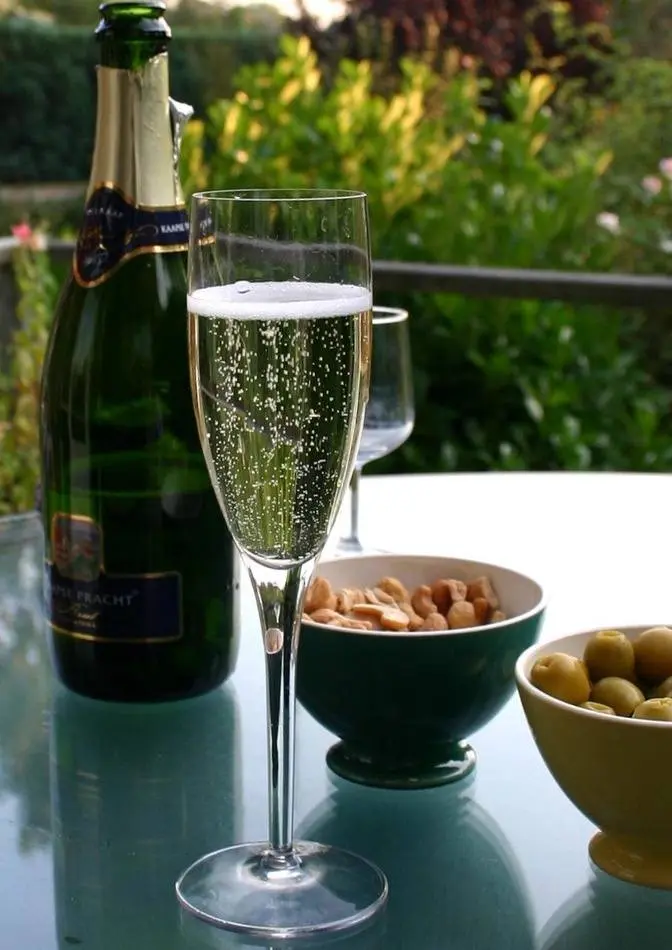
Everybody thinks they know Champagne. You pop it at weddings. New Year’s. Celebrations. But collecting Champagne? That’s a completely different game.
In Bordeaux, you learn estates. In Burgundy, you learn vineyards plus producers. In Champagne? You need to understand time. The same house, same grapes, same vineyard — but the vintage, the disgorgement date, and how long it sat on lees can make the difference between a $50 bottle and a $5,000 bottle.
This video breaks down everything a new collector needs to know about Champagne — the houses, the grower revolution, the vintages, and how to start putting real bottles away.
Topics covered: • Why Champagne is different from Bordeaux and Burgundy • Méthode champenoise — how the bubbles get there • Non-vintage vs. vintage vs. prestige cuvées • The Grandes Marques: Krug, Dom Pérignon, Cristal, Salon, Bollinger, Pol Roger, Taittinger • The grower revolution: Jacques Selosse, Egly-Ouriet, Cédric Bouchard, Pierre Péters, Ulysse Collin • Disgorgement dates — the hidden variable that changes everything • Dosage levels and what they mean • Great vintages: 1996, 2002, 2008, 2012, 2013 • Price tiers: from $75 entry collectibles to $1,000+ trophy bottles • The 2008 vintage — a case study in buying smart • Why magnums age better • How to buy and store Champagne properly • Red flags to avoid
Welcome, welcome. I'm John, and I'm coming to you from old London at Podshop Studios,
where I'm lucky enough to be shooting this in the morning, which is a perfect time for champagne.
Everybody thinks they know everything about it. You pop it at weddings. You got it on New Year's.
You drink it in the morning. You drink it at night. But today, I'm just talking about collecting
champagne, which is a completely different game. Most people, even serious wine collectors,
don't really even understand this. Bordeaux, we talked about estates. In Burgundy, we learned
about the vineyards plus the producers. In Champagne, we're just going to learn about time.
Same house, same grapes, same vineyard, but the vintage, the disgorgement date,
and how long it sat on lease sometimes makes all the difference between $50 and $5,000.
This video is not about the best champagne. It's not about my favorite champagnes. This is just for
the new collector who needs the basics of collecting champagne, learn a little bit about
the region, and learn what separates collectible champagnes from everything else. You have the
houses. You have the grower movement. You have the vintages. Today, we're going to learn about
putting some of the good stuff away. Let's get into it. The very first thing that you need to
understand is the method that makes this particular style of wine. Champagne is made using the
Champagnois method. I'm not going to go through the entirety of how champagne is made, but here's
the basics. You make a still wine, you add your yeast and sugar to the bottle, and then a second
fermentation gets triggered. It happens inside the bottle, and that's why there's bubbles inside it.
After that second fermentation, the dead yeast cells, they're called lees, they sit in the bottle
for months, sometimes for years, sometimes for a decade or more. That's what gives champagne
what we think of as its complexity. It's like brioche, it's bread, it's toast, it's creamy.
Then you riddle the bottles. Riddling is just turning them slightly, slightly with the neck
down until that sediment collects. Then you freeze the neck, you pop the cap, the pressure
shoots out of the plug, and that is called the disgorgement or the degorgement. Now, I'm not
going to go deep in the science, but this is what you need to understand. How long that champagne
sits on lees and when it's disgorged, those are hidden variables that separate a good bottle from
a great one from the same year. Now, let's talk about non-vintage because that is the backbone.
Most champagne is NV, non-vintage. It's a blend of different years,
and it's designed for consistency. This is like a signature for that particular house.
It's their calling card. Now, NV is not lesser. It's just different by intent,
and it's just not really what we're celebrating or talking about in a collector's video.
Vintage champagne that is from a specific year, that's the collector's game. These are only
declared in exceptional years. The house saying this year is special enough to merit a stand of
its own, and that's where the collectability is going to start. You have prestige cuvées,
which are the top of the pyramid. Here are a few of the names, and I bet you know a lot of them.
Dom Perignon, Cristal, Cru Grand Cuvée, Comte de Champagne, La Grande Dame de Vauclico,
Sir Winston Churchill. These are kind of like the first growths of champagne. These are the
flagship bottlings from the very top houses, and this is where the real money and then that aging
potential really lives. But here's where it starts getting interesting for collectors,
because this champagne world has definitely split into two camps. The Grand Marquis is
kind of the establishment brands, and these are really, really famous names. So we have
Moet & Chandon, Vauclico, Krug, Bollinger, Louis Roderer, Paul Roger, Tate & Jay, Rounard,
Dom Perignon. These are things that you know of, and you probably actually pronounce them in
English. These houses are buying grapes from all across the region, and they have hundreds of
local farmers that are growing the grapes for their brand. They have just massive reserves,
and they have a ton of blending experience, and they have global distribution. For collectors,
the Prestige Cuvées are just proven. They age beautifully, they have secondary market liquidity,
and they're well documented. But let me kind of do some character sketches in the same way I did
this for the first growths so that you can understand what you're looking for. So Krug
is just an obsessive perfectionist. Their Grand Cuvée is technically envy, but it ages like a
vintage wine. The real collector bottles are Clos de Menil and Clos d'Abonné, and these are just
single vineyard like holy grails. Dom Perignon is the icon. They only do vintage, so they never
make a non-vintage. And then the collector play from their line is the P2 and P3, which are
extended aging releases. So P2 is 16 years on Lise, and P3 is over 25 years. So these are like
just totally different classes of wines. Louis Roederer Cristal, which was originally made for
the Tsar of Russia. Now Cristal is like the celebrity champagne, but it is legitimately
a world-class champagne. Roederer is just a very forward-thinking house too. It's totally
biodynamic. Salon is the ultimate scarcity play. There's one wine, and there's only one grape. It
is just Chardonnay. Remember, champagne could have up to three grapes. Beignet, Pinot Noir,
and Chardonnay. This only has Chardonnay. Salon is only from La Menil. It's only made in great years,
and there's only been 37 vintages since 1905. Think about that. There's only been 37 good
enough years for them to make it in more than 100 years. Bollinger is like the James Bond
champagne. The Villevignet Francais is from ungrafted pre-phylloxera vines, and it's just
one of the rarest wines in the world, period. Horoger was Churchill champagne. Their Sir
Winston Churchill cuvee is the tribute to him. It's a serious wine. This is a serious collector
wine. Atatenger has its Combes de Champagne. Their Blanc de Blanc is a prestige cuvee,
and it's the collector benchmark. It is 100% Chardonnay. It's elegant, and it ages beautifully.
These are the established names. Let's go on to the revolution. These are the grower
champagnes. Starting in the late 1990s, the early 2000s, small farmers who'd been selling
their grapes to the big houses decided to start making their very own wine. What you want to look
for is the letters RM, Rectolent Manipulant, and it means the grower grew it and made it.
So this is the champagne equivalent of what happened in Burgundy. It's very terroir-focused,
single vineyard, very small production. The collector's names in grower champagne.
We start with Jacques Solos. This is the godfather. This turned grower champagne into a
cult category. They have a Solera-based method. It's very oxidative. It's super polarizing to
actually taste. And by the way, it's like super impossible to find. These prices have more than
doubled. Iglais Oureret is Power and Precision from Abonnet. It's got extended lease aging.
These are serious collector bottles. Cedre Bouchard. They're Roses Saint-Jean. It's a
single vintage. It's a single varietal. It's kind of like a radical minimalism.
Pierre Peters. Le Menil. The Blanc des Blancs. So this is sharing the same village as Salon,
but it's actually way cheaper than Salon, but really a spectacular champagne.
Jackson. It's known for its number of cuvées, the 700 series. But every single bottle is a
statement about that particular vintage. Oulay Cologne is a tiny production. It's got a huge
reputation. It's extra brute, low dosage. It's really a crisp, non-sweet, terroir-driven
champagne. Collector question. Grand Marquis prestige cuvées are safe. They have a proven
track record, and there's always a secondary market demand. Now, grower champagnes are more
of a discovery play. So it's harder to find. There's less liquidity, but this cult following
is growing very fast. Disgorgement dates do matter. So this is the single biggest thing
that separates collector knowledge from kind of casual knowledge. Two bottles of the same
Dom Perignon vintage are disgorged years apart, and they are going to taste completely different.
So the late disgorgement, the Dom P2, the P3, the Bollinger RD. This is the Ressement
des Gorgées. This is Krug's older releases. Those are going to all be a separate category
entirely. You're going to look for the disgorgement date on the back label, or there's going to be a
code, and then you're going to have to go online and look up the code. But this super matters.
There's a hidden variable in here called dosage. That's the amount of sugar that's added after
disgorgement. I want to explain the scale just so you as a collector understand it. It becomes
really important also when serving. So you have Brut Nature. It's zero dosage,
so they don't add any sugar. So it's very, very tart. You have extra Brut, which is very low.
Brut, the standard. Extra Dai, which is actually sweeter. And then Dry, which is sweeter still.
And then Demisec, which is like a dessert champagne. And this trend, by the way,
has moved to lower dosage, and collectors drive that. But you have to know what you prefer,
or your guests prefer, if you're serving it. But actually, the dosage helps longevity
just a little bit. So it's something to consider. And the aging potential is really, really real.
Great vintage champagne can age like 20, 30, 40 years, but it changes a lot. The fresh fruit
turns to brioche, to honey, nuts, mushroom. And not everyone loves aged champagne, and that's fine.
As a collector, you should drink one young, sell her the rest, and then you'll start to
understand the trajectory, and kind of the velocity of bubbles, and things like that,
that are going to change. The storage becomes even more critical than still wine. Champagne
is more fragile. It's super sensitive to light, especially like clear bottles like Cristal.
They have cellophane for a reason. Temperature fluctuation is an enemy. Vibration is an enemy.
Remember, this is carbonated wine. If you're cellaring the series champagne,
professional storage is not like an option. Vintage question. Not every year is declared.
Each house does their own independently. So a Dom Perignon might exist, but no Salon.
They're different houses, and they have different standards. But here's some great
recent vintages, just to keep in mind. 2002, 2004, 8, 12, 13, 15. 2008 in particular has
become kind of legendary. Many houses made like super wines that year. And then there's some
older ones, 96, 90, 88, 85, and they have serious pricing at auction. A little quick
explainer on the styles. You have Blanc de Blanc. This is all Chardonnay. For collectors,
this tends to age the longest. So Salon, Comtes de Champagne, Clou de Meunier. Blanc de Noir.
Now this is actually all Pinot Noir, or it could also have Meunier. So it's a richer,
more full-bodied. It's my personal preference. A Rosé, which is blended with a still red wine,
or has just a little bit of skin contact. These Rosé prestige cuvées are like becoming more and
more collectible. So let's talk about Champagne as investment versus Bordeaux and Burgundy.
Now Champagne has historically been the third pillar of wine investment. It hasn't seen these
explosive returns of top Burgundy. But it's more accessible and more liquid than called Burgundy.
The Livex Champagne 50 Index tracks that market. It's been a steady performer. It's not been a
rocket shipped. It's not been like Burgundy, but it's been consistent. And so what drives
the Champagne value on the secondary market? First of all is the house reputation and prestige
cuvée status. Vintage quality and their declaration rarity. So the fact that Salon has only declared
in 37 and 120 years, when they do declare, the market pays more attention. Condition and
provenance, especially storage. Champagne is super fragile. It's just more fragile than Burgundy and
a lot more fragile than Bordeaux. Late disgorgement releases like P2, RD, and similar, they command
premiums. Grower Champagne is appreciating. The liquidity is super thin. It's harder to resell
a bottle that nobody's heard of it. Price tiers for collectors getting started. Here's the entry
level. $75 to $150. Like a Bollinger Grand Annet, a Paul Roger Vintage, a Tatinger Vintage. To your
mid-range. This is going to be like $150, $350. These are prestige cuvées from Dom Perignon,
Cristal, Comtes de Champagne. These are top grower bottlings too. Then you get into the serious range.
So $350, $1,000 even. Krug, Dom P2. Salon is definitely expensive. Bollinger, Vervinier,
Francais. And then you get into the trophy ones. These are the $1,000 plus ones. Krug,
Clos de Mesnil. Krug, Clos de Ambonnet. And some of the salon back vintages. And then Dom,
their P3. So let's talk about 2008 in particular because it's kind of a case study. The 2008's
have just become a darling in the champagne market. And many houses released these late.
So the 2008's usually started getting released about 2018 or 19. And they were exceptional.
But the prices have climbed steadily ever since. This is actually a good example when buying on
release would have been smart. You would have been on the ground floor and then the market would
have done the rest. But buyer beware because you just don't know. Do you need prestige champagne
to be a collector? So the honest answer is no. But understand it actually makes you a little bit
better than everybody else, right? The practical entry points are to start with vintage champagnes
from houses you enjoy. Let's just say you like Veuve Clicquot. You might have seen in my house
that I have a number of their bottles. Well, try the Grand Dame. You like Paul Roger. Go ahead,
try the Sir Winston Churchill. Just start with the ones that you know. And then try one grower
champagne to see if you like it. You know, a Pierre Peter or a Jackson. You just don't have
to go and buy a Solos, for example. If you're going to seller, buy in cases or buy the half
dozen. You want to track it as it evolves. It's kind of the fun of it. And then just don't overlook
Blanc de Blanc for ancient potential. All Chardonnay champagne just tends to have the longest
runway. You can also have the drink one, seller one rule. Buy six bottles of a great vintage,
drink one now, then open one every three years. And then you learn a lot about champagne from just
this exercise. And you're going to learn a lot more from this video or any book or any class that
you can make. And by the way, this is true of almost any type of collecting. It's just about
reps and tasting and experience to know what you're buying and whether it's worth cracking
open during the next special occasion when you have guests over. Or whether you even want to
buy it at all. Where do collectors buy champagne? Allocations from top retailers for Salon and
Cru-Clo and grower champagnes sell out. So you're just going to have to be on the list.
And you're going to have to communicate with your retail partner, whether that's a local wine shop
or a large national chain, how you want it. Now, auction houses also have back vintages. So
Sotheby's and Christie's and Acker and Zaki's. This is where you're going to find the 96 Dom
or the 88 Salon. You can also buy from growers if you visit the region. Some don't export and
that's part of the hunt. So you're going to oftentimes have to find a local champagne
exporter who will get it to the United States for you if you're in the U.S. or across Europe if
you're there. And then there's others. There's the wine merchants that I've mentioned before,
K&L. There is Berry Brothers and Rudd, which opened up in the United States. Storage is
super important. Consistent temperatures, 50 to 55 degrees Fahrenheit, no swings, no light,
especially for those clear bottles, the Cristal. The light degrades champagne more than anything.
And then vibration is super important because champagne has bubbles in it. And that humidity
is the same. And it's really important that you have provenance and that you keep all that
paperwork if you're going to professionally store it. Also consider magnums. If you're
selling champagne long-term, magnums are actually the right move. Magnum is 1.5 liters. It's basically
two standard bottles in one bottle. But here's why they age better. The ratio of wine to oxygen
is actually more favorable. The cork is the exact same size and there is that same amount of air
exchange, but twice the volume of wine. So it just means slower aging generally, less oxidation.
But the result of that is pretty cool in champagne. A 20-year-old magnum of Dom will be
fresher and more vibrant than that same 20-year-old standard bottle from the same vintage. And it's
not very subtle. You can really taste the difference mostly from the carbonation,
but also from the development. Here's the practical side. Magnums are much easier to
find from the big houses. Dom Perignon, Cristal, Krug, and Bollinger. They produce magnums of their
prestige cuvee. Grower champagnes, most don't make them at all and it's just because their
production is so small. Especially in champagne, magnums rightfully command a premium at resale.
Pretty much all collectors, auction buyers know that they age better and so you pay more up front,
but you're getting a better bottle and a better resale value later. And it's one of the few cases
in wine where the more expensive format is actually a smarter buy for the collector.
What to look for. You're going to look for OWCs, the original wooden cases. Sometimes it'll say OGP,
original gift packaging for resale. You're going to check those disgorgement dates when buying the
older bottles. You're going to avoid bottles that have been stored upright for a longer term. The
cork's going to dry out and then the pressure will start to escape. Provenance matters so much,
it's even more so than any still wine. Red flags, super important. If the price is just
significantly below market, something's wrong. If there's unknown storage history,
if you don't know where it's been, just walk away. Cloudy, flat looking champagne is a storage
failure usually. And anyone with just a huge quantity of rare bottles. So Salon, for example,
makes a tiny amount. If somebody has a whole case of that just sitting around, just ask some
questions. So let's talk about Champagne's place in a balanced collection. Bordeaux is your
foundation, Burgundy is your depth. Champagne is like range, it's just something you could
open on any occasion. And at the collector levels, it rewards patience and knowledge
just as much as the others, but the unique advantage? Unlike Bordeaux and Burgundy,
Grey Champagne doesn't require decades of aging to enjoy. You can enjoy the prestige
cuvées young and love them. They hold them into release until they are ready to drink.
You can age them, discover something different. It's just great because the flexibility is a
total gift for collectors and you will always have almost everybody ready to knock down the
door and drink your Champagne. Champagne does come down to a couple things for a collector.
You gotta know the differences between the house and the growers. You gotta understand the vintage
and the disgorgement. You have to store it properly, but you just don't need to start with
Salon or Krug, Clos de Misenil. You start with a great vintage from a house you like, put a few
bottles away, open one now, the next one in three years, and you learn. If any of this is helpful
to you, subscribe and drop a comment below. What's your favorite Champagne and what is it that you
are celebrating right now? Cheers.