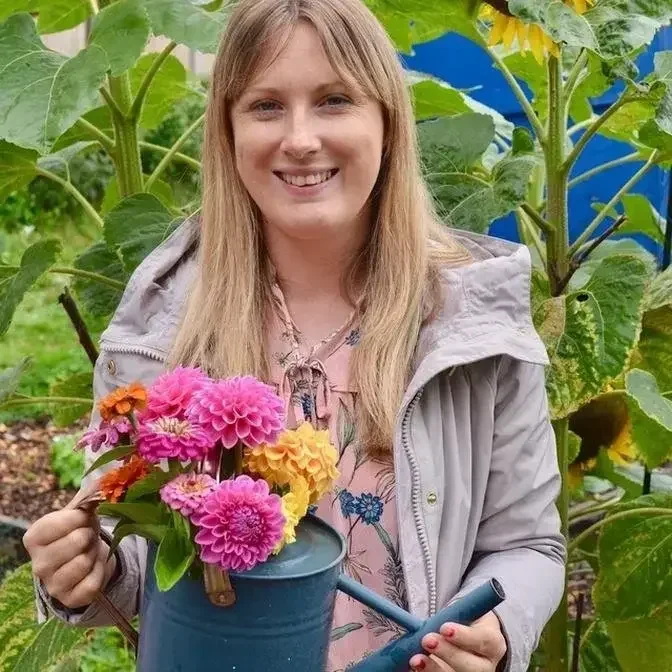
Look at those!
Oh, look who's turned up.
Look, look, look, look.
My watering can.
Look at this.
When I'll be coming home
Then I'll be at your door
When I'll be coming home
I plan to let you know
Good morning, everyone.
I know, I know, I'm still turning up in a coat.
It's because there's kind of showers on and off
and first thing in the morning
it's quite chilly.
It's actually been quite a chilly few days, actually.
I think we're starting to see the temperatures rise again.
But this happens pretty much every year
at the beginning of June.
I always get really surprised
when the weather kind of clouds over again,
goes a bit colder, and I have to put my coat back on.
I'm always like, what's going on?
It's June.
But this happens pretty much every year.
If I look back at my videos,
I'm usually in a coat at the beginning of June
and then the coat comes off again by the end.
So, okay, I have a few jobs to do today.
The first job that I'm doing is in the greenhouse.
This greenhouse does get
very overgrown
and I noticed this the last time I was here.
This is going to make you laugh.
I've obviously been working.
I mean, if you follow this channel, you'll know.
I've worked really hard at keeping the back as clear as I can.
Well, look what's happened over here.
It's like the Triffids.
Is that what it's called? The Triffids?
Oh my goodness me.
Look at the state of it.
It's literally covered one half of my greenhouse
which is not letting any light in.
And then up here, it's starting to go up
onto the top of the greenhouse.
So I think the first job is going to be
to clear the side of my greenhouse.
Honestly, I don't think it's enough
to massively impact any of my crops in here.
Everything's doing really well.
Last year, it was all overgrown at the back as well
and it grew fine.
I think the glass roof helps a lot
and the sun moves and stuff
and I think it gets enough light.
But obviously, it's not ideal
for your greenhouse to be covered
in foliage.
So, let's see if I've got any nice thick
corduroy gloves. Yes, I have.
Don't forget to use my discount code
if you want one of these, by the way.
It's Emma Glove and it'll give you 20% off.
There's a link below.
Also, I completely forgot to tell you
if you like my wellies.
I get so many questions about my wellies.
They're muck boots.
Muck boot wellies.
I've also got the new Rainscape
muck boots as well which are really great
and they're black so I can kind of wear them
as a boot out and about when it's raining
and go shopping and then go to the park in them.
If you want these,
they've very kindly given me a discount
code of 20% off and the discount
code is... I will link it below
because she sent it quite late to me last night
because I was just like, oh, everybody always
likes my wellies and asks where they're from
and I always tell them muck boots and she said,
oh, here, have a discount code.
It is
Emma20
and it will give you 20% off all full
priced items.
Emma20. I will link that
below as well. If you do like the wellies
that I wear, they are muck boot.
They've got loads of colours.
I can't show you anymore. They've got loads of colours,
loads of different styles and you can get 20% off.
Emma20. Right.
Let's go sort out the foliage. What's that?
What's happening?
It's bin day.
Oh dear, look at this.
An array of different things,
different plants that have just grown up over it.
Right, I can see some bindweed, some brambles,
some of those big purple flower
weed things. Right.
I hope the bees don't hate me too much for this.
It has to be done.
Oh yes.
That's better, isn't it?
Look at that. Look at the difference.
It's not on the roof anymore.
We've got a lot more light coming in now.
We've sort of kept it at bay.
I think the fox lives in there.
So I don't want to remove all of his den.
I just want to keep his den at bay a little bit
because I can't have it going over my greenhouse.
Okay, so that's the good job done.
The next job I want to do
is feed these tomatoes.
Like I said, I'm going to feed them once a week
and this is the day I'm choosing to feed them.
So I've got my tomato feed.
I'm going to go fill up my watering can
and give them a feed and then
I'm going to see if they need any work.
So like I said before, with feeding
if you just choose one day of the week
where you're going to feed your crops
and do it consistently on that day
you can't really go wrong.
And you just start feeding as soon as you start to see
flowers or significant growth
when they get going basically
then you can just start helping them out a little bit
giving them a feed.
Shall we mix that again?
I think we probably need to.
The wicked witch of the allotment is back.
Do we have to do that every time?
I don't know.
Probably not.
So again, just watering right at the base
not over the top of the plant
just all around the roots.
Tomatoes are one of those plants that are
at risk of blight.
Blight is a horrible fungal
or bacteria, I always forget.
But it's basically, I think it's brought down
in the rain.
It's in the soil
and the rain comes down and it splashes
onto the soil and then it gets
onto the plant. I think that's what happens.
And that's why you have to water
around the roots of your plant, not over the top.
Because if you water over the top
you're splashing all the soil
and you're getting the soil onto the plants.
Also, another way of avoiding it
is by mulching around your plants.
So you can see here that I've got some straw
all around the bottom, just hiding the soil
because I think the spores
of blight are in the soil
and so by mulching over with some straw
or something, you're stopping the soil
from being able to reach the plants.
Does that make any sense?
I think I'm sort of explaining that quite badly
but basically, blight is something
you don't want. You normally get it on tomatoes
and potato plants.
You know you've got it because you get these kind of
black spores, like these black marks
all over your plant.
Not just on the leaves, on the stems
and eventually on the fruit
and that's how you know it's blight
because I think it starts on the stem
and then it moves to the leaves
and you'll just get these sort of black patches
and once you've got blight, it's very difficult to get rid of.
I think at this time of year
if you get blight, and I might be wrong
again, this could be absolute rubbish
but I think early blight is something
you can sometimes get rid of.
So if you saw very early signs of blight
on a plant at this time of year
you could snip it where the blight
is sort of starting
and you can reduce all the leaves
mulch over it, give it a feed and hope for the best
and sometimes they can kind of
overcome it. But late blight
late blight
which happens later on in the year
that is absolutely catastrophic
for a plant. Once you get late blight
you have to pull all of them up
you can't compost, you have to just
burn all of your crops or just
dispose of it somewhere else
because it is a disease and it will spread.
I think there's conflicting advice now
that actually you can compost blight
some people say you can, some people say
you can't. I prefer not to.
Anything that's diseased or looks unwell
I probably wouldn't put in my compost heap
just out of precaution.
But yeah, two different types of blight. Early blight
late blight. Late blight is the killer.
Early blight sometimes you can
sort it out, most of the time it's gone.
But the best way
of dealing with blight is prevention.
Prevent it from happening.
Can't always do that
but there are things you can do to help.
I am starting to get teeny tiny
little tomatoes on my plants
that's an excellent sign. That means the plant
is actually doing what it's supposed to do
which is always a good sign.
Right, I think I'm going to take out
some of the
middle stems and I'm also going to tie them
in. So, because
tomato plants want to take over the world
and take over your entire greenhouse or garden
we have to keep them at bay.
You see this stem
here in the middle. It's going out at a 45 degree
angle. So you've got your main stem
the right angle stem and then this one
at 45 degree. That's the one
we're going to take out.
We're going to take it out because it's not
putting all the energy into the plant.
It's trying to expand its life and get
bigger and bigger and bigger.
We want it to give us lots of tomatoes.
You can keep a couple in and I will
keep a couple in. This one can come out as well.
I can't get it out. There it is.
Right, we got it out. That's what she said.
Some of them I'm going to leave in.
This one here has got quite big so I'm going
to leave this one in but I will prevent
him from creating any more
because you're not allowed to get any bigger than that mate.
So you can leave a couple of them in.
You don't have to take all of them out but
most of them I will now take out.
What's so funny is that garden advice is
always changing so when I'm doing this
there will be people in the comments saying you don't have
to do that anymore. It's a myth
or like you don't have to do it now.
It's always always changing.
I think ultimately
people tend to grow
how they've grown for years and years
so whenever I've spoken to anyone on my
allotment plot, the advice
they give me is always advice of
what they've done for years and years
or what their granddads did or what their grandma
did or generations
before them have done and that's
one of the beauties of gardening
is that we kind of pass down this generational
knowledge but of course
science is changing all the
time and people are experimenting
on things and
challenging these methods so
quite often I'll say something and then
you might see a load of comments of people saying
oh no you don't have to do it like that anymore.
Actually you can
do it like it still but it's probably
just some new research that's come out
suggesting that maybe it doesn't matter
as much as we thought. Anyway
ultimately you have to do what you
want to do. They're your plants.
So I will continue
to take out these middle stems
because that is
what I've been taught, that's the way I've been taught, that's
how everyone's told me to do it and it works for me.
I'm also
going to start taking off some of the leaves that
are touching the soil or are bending down
and again this is
like a blight thing
because if your leaves are bending down touching
the soil they're going to
pick up disease and stuff
and I don't want them to do that so any of these
lower stems I'm actually going to just
start taking off so that the
plant essentially starts higher up
all the leaves start higher up
all these lower down ones
I'm just going to pull them off. Notice
how I'm, oh you know what look that's rooted
oh these are my tomato seedlings
that I'd left
in the, oh my gosh they're
starting to grow I can't believe it.
Do you remember ages ago
all over the winter I had all
these little baby tomato seedlings growing
and I was like I don't know what's
going to happen to them, I don't know if they're going to grow
they've all started to grow into
tomato plants, this one is
particularly doing really well, look at this one
I think that's two there but they're doing
really well so they have actually
survived the winter in my greenhouse
so I have had tomatoes growing all over the winter
look at this
this is because basically I harvested
my tomatoes but I dropped a load of them
into the ground and
the tomatoes that I dropped
the seeds started to grow, that's why they're kind of
in clumps like this
and they've continued to grow, I actually can't believe it
I can't believe they've survived, look I didn't need to buy
any tomato plants or sow any seeds
they're all just growing
we'll just wait and see what happens to them
I think
look how quickly the weather has changed, actually I can
feel rain, it was really sunny
a second ago and quite warm
and now it's like this
right these are my early and second early
potatoes, I think these are
early potatoes
and these ones are my second early potatoes
and I think they need a little bit of tidying up
because they're getting quite weedy
so I think we're going to start with that
oh look
they're starting to get flowers
so one of the ways you can tell if your early potatoes
are ready to pick is when they get all their flowers
a lot of people say
it's when they die back but actually you can start
harvesting them when they start getting
their flowers because they will be kind of
ready to pick but if you want the ultimate
kind of harvest
as good as it can be it's when
all the plants die back and all the foliage
dies back but with
early potatoes they don't tend to
store very well so it's best to pick
and use them as you need them
so flowers is a very good indicator
that there are some potatoes
under the ground that you can use
and then it's best just to pick the ones that you need
to use, take them home and use them
because they don't store brilliantly
and that's just the best way to
use them I've found
I used to pick all of them, take them all home
and then within a week they were kind of
rotting so best to pick as you go
this is another one of our mates just chilling
these are all around my allotment now
I hope they're doing something useful
I hope they're like a useful moth or something
because I've got so many of them around now
right these beds are now looking a bit better don't you think
just a little bit neater
so you can actually see the potatoes in there
I think I need to sort my strimmer out and charge my battery
and then I can strim all around the bed here
because we are getting quite a lot of slugs and snails
hiding
oh look who's turned up
look look look
I've got my watering can
oh my goodness it's Einstein
I haven't seen him in so long
I think he's looking for me
do you know what I don't think he's going to come for his food
with all of this sort of overgrown
because I think they like to be able to fly away
and see their predators and stuff
so I am actually going to cut this back a bit
then we'll feed him
do you know what that high pitched sound is
is that my spaceship
has my spaceship finally arrived
oh no have I got to go home
not yet surely I'm not ready
anyway look I've um
oh my goodness it is here
it's here
I've cut all this down so let's feed him
and see if he comes I think he probably won't
now that he saw me hacking that with some shears
he's probably terrified of me
but you know what we'll feed him
right I think I'm going to go around
and do a little bit of harvesting
we're going to harvest as much as we can
I think a lot of things are ready to be picked
and I've just not been picking them
and then I did want to plant peas up
but I think I'm going to do that next time
none of my pea seeds have germinated
I'm going to start sowing peas directly
what happened to my voice then
I'm going to start sowing peas
so I'm going to make the structure
and then plant peas out
but that will be in the next vlog
it's just starting to rain so we've got to get a move on
we've got to get a wiggle on
I think we're going to start with the peas
yeah to talk with the peas
to talk with the peas
it's time to pick the peas
I think they might have gone ever so slightly over
but I think when they're cooked they'll be ok
I'm not sure if I'll be able to eat them sort of raw
oh my gosh that was a pea
I thought bird had just landed on my arm
that was a pea
yeah I think when they go over
I think maybe I'll be able to cook them
I might have to investigate one of these
because they've gone a little bit rough and wrinkly
on the outside
so I feel like they're just sort of going over
which means that when you eat the pea
it becomes a bit gritty
but the other ones, some of them are ok
I'm not very good at getting to my crops on time
I always either get there too early
and then I go oh I'll wait a little bit
and then I wait too long
and they go over
so it's a very fine line between being ready
and going over
it's a really good harvest though
peas they do give you a lot
so I really do want to grow some more
some of this broccoli might be salvageable
I know a lot of it has flowered
but some of it hasn't
what's that, is that bird?
I think the birds can sense it's about to pour
so they're all kind of like hurrying
into little spaces they can hide
this one here
that looks harvestable
which is really good news
and I think there's another one just over there
so let me just grab my shears and we'll just cut those off
broccoli really is one of those crops
that when it goes over it just goes so fast
and then it's just gone
and you can't use it anymore
so I'm just going to cut it there
I think that's just about
savable
oh my gosh Einstein
did you just land on my back
oh my gosh
what's up with the birds
it's a shame I didn't get this a little bit earlier
because you know what
I absolutely love broccoli
and I eat it all the time at home
pretty much with every meal
so this is such a great crop for me to be growing
and I never harvest it on time
I'm so terrible at it
what is that all about
and we're fast running out of time
because it really is starting to rain
but I did just want to check on my carrots
and just see where we are with them
because they've been growing for quite a long time
they're looking really healthy
the other ones that I planted in here
that I sowed from seed haven't germinated
which is a shame
but I want to see how far off we are from proper carrots
I have to say
it's shaping out to be quite a good year for carrots
because they're growing quite well here
but they're also growing really well
in my home garden, I've got them in a raised bed
so if you watch my Sunday diaries
you'll know that they're doing quite well at home as well
shall I have a little bit of a dig?
right, I see a carrot
so we're going to pull this one up
oh wow
ok, we're getting carrots guys
that is so exciting
is that not so exciting
oh my goodness me
you know what, I'm going to take a couple more
and then me and Pippin can eat them
Pippin is my house rabbit
and he loves carrots
that's a tiny one
let's see if we can get another
good sized carrot
for Pippin
and then we'll leave the rest after I pull this one up
because I think they need more time
oh yeah
yeah
that's a pretty good little carrot
my house rabbit will be very happy with that
ok good, so you are growing carrots
well done, please keep growing
I'm sorry I've removed a couple of your mates
but you know what, they're going to a better place
come on, keep growing
look at those
they're fantastic
aren't they so fantastic
god
right let's get in the greenhouse
I'm utterly thrilled with those
I'm so blown away, I love growing things like carrots
the thing is about carrots
and also like potatoes and parsnips
it's like the mystery of them
because they're kind of under the ground
you get an indication of what they're doing
by what's happening on the top
so you see their foliage
and you're like, oh yeah
they're looking good, they're looking healthy
but you never really know what they're doing
under the ground
so it is a little bit of a mystery
and I just love it, I find that so exciting
also, and I say this every year
I say this every year, but I will say it every year
they are the most
carrot-y smelling carrots
I have ever smelt
buy carrots from the shop
even a farm shop
because they've been lying there for so long
they don't have that really
intense carrot-y smell
when you pull it fresh from the ground
and you've got all the earth on it still
and you give it a sniff
it's the most carrot-smelling carrot I've ever smelt
and that's the only way I can describe
pulling carrots and eating
fresh carrots that you've grown
it's just the most carrot-y carrot
so, not a bad harvest
I did want to pick some sweet peas
I might go and do that, but I won't be able to show you
because it is raining
but we've got some broccoli
we've got some carrots
we've got some peas
it is really raining now
so I'm going to have to end the vlog there
I hope you've enjoyed it today
I hope it's been informative and interesting
YouTube keeps telling me that you guys like it
when I tell you facts about the garden
and I talk a little bit more
so I'm sort of trying to do that in these vlogs
I'm sure you've noticed
I'm trying to spout more of my knowledge onto you
so I hope you're finding it helpful and interesting
I will be back on Sunday with a home vlog
or Monday on my lotment plot
hopefully with some nicer weather
at last
see you next time, thanks for watching
bye!