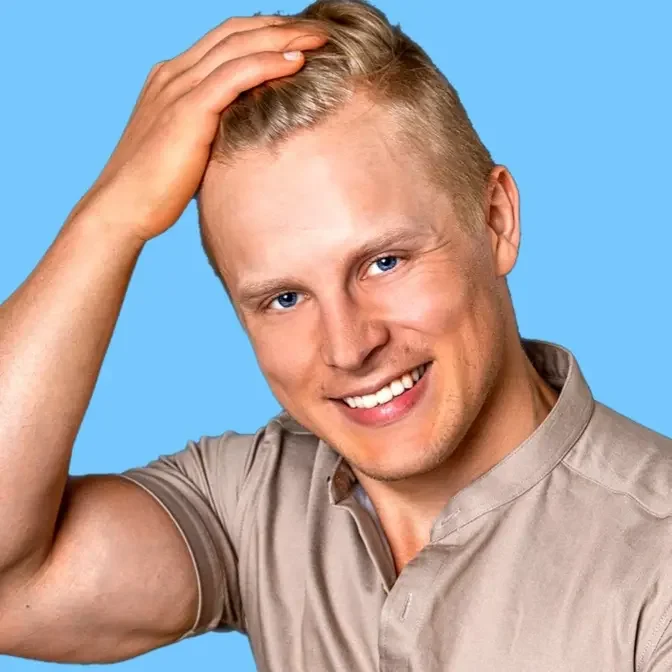
Charles Duhigg is a Pulitzer Prize-winning journalist and bestselling author best known for The Power of Habit, which explores the science of how habits are formed and changed. His work combines psychology, neuroscience, and real-world case studies to help people build better habits, improve productivity, and create lasting behavior change.
Timestamps: 00:00 Intro 00:43 How GLP1s change habit formation 03:21 How GLP1s reduce food noise 05:18 The 3 components of every habit 08:41 Willpower versus biological mechanisms in weight loss 11:46 Bon Charge sponsorship 12:36 How eating less and being leaner makes me want to eat less food 15:26 Revealed preferences vs stated preferences 18:51 Window of self-awareness for changing habits 19:21 How to start changing habits 25:26 Building the mindfulness muscle through neuroplasticity 28:46 Role of dopamine in habits 30:56 How GLP1s influence addictions and addictive behavior 32:56 Are people who need to use GLP1s just lazy 36:31 How understanding the habit window can help you change habits 39:01 Workout plan for creating habit windows 40:41 Feeling less enjoyment after starting to use GLP1s 45:21 Future areas of research in GLP1s and habit formation 49:26 Understanding the power you have over your own life
P.S. This is not professional medical advice and should not be taken as such. The creator of this video is not held accountable for your health. Consult your doctor first.
AI Generated·May contain errors
Video Summary
AI Generated
This discussion examines the synergy between GLP-1 medications and the psychology of habit formation. It explains how these drugs silence \"food noise,\" creating a biological \"habit window\" that allows individuals to replace impulsive, unhealthy routines with sustainable behaviors by disrupting the traditional cue-routine-reward loop and leveraging neuroplasticity for long-term health.
If I eat snacks today, I'm reinforcing this habit loop associated with snacks in my head,
and it's going to be so much easier to eat snacks the next time.
And I don't want to eat snacks.
Something important happens.
It opens up this window, a habit window, where your habits become more malleable.
They can change more easily.
If you take advantage of that window, and that window eventually closes, right?
It's not open forever.
Then you still keep the weight off.
You still keep the healthy habits that you developed.
Charles, welcome to the show.
Thanks for having me on.
Yeah, I'm excited to have you on the podcast because I read your book, which is, I think,
one of the most known habit books about like 10 years ago.
So yeah, I'm excited and honored to have you on my podcast now.
So you also actually reached out about a very interesting new kind of area of research,
which is GLP-1s and habit formation.
So you described this idea of how GLP-1s not only affect weight loss,
but they also have quite interesting effects on the brain chemistry and habit formation.
So yeah, I'm excited to delve into this topic.
So yeah, maybe we can start off with what are some of the interesting things
that you've researched about this?
Sure.
So I started using a GLP-1 about two years ago, and I thought it was great.
I really enjoyed being on it.
I started losing some weight.
I thought that was really, really helpful.
And then I started noticing that the habits in my life were changing because I was using the GLP-1.
Eating habits, yes, but also like exercise became easier.
I stopped drinking alcohol.
I just had no taste for it anymore.
And so I became really interested in trying to understand what's going on here.
Why is this GLP-1 having such a big impact on my life?
And we know that it's not just me, right?
There's people who are suffering from alcoholism or gambling addiction,
and they find that when they start on the GLP-1, all of a sudden those cravings diminish.
And so I started looking around for people who are doing research,
and I found this company, Noom, that I'm now working with.
Noom, for anyone who's not aware, is this app that you can download on your phone.
More importantly, the app is this thing that's designed to help you
recognize and change your habits, particularly habits around food consumption.
And what their research suggested is that when you start using a GLP-1,
something important happens that we can go into the details of.
But what it does is it opens up this window, a habit window,
where your habits become more malleable.
They can change more easily.
And if you take advantage of that window, and that window eventually closes, right?
It's not open forever.
But if you take advantage of that window and you change your basic consumption habits,
then when you discontinue the medication, you still keep the weight off.
You still keep the healthy habits that you developed.
And I thought that was really, really fascinating.
So I told Noom, I wanted to work with them to understand more about this
and help their research.
And it's been a great relationship.
And we've learned a lot about how habits function within our brains
by using GLP-1 as a variable that changes things.
Yeah, I mean, people know that GLP-1s are very effective at weight loss.
And I guess the basic understanding of how it works is that it suppresses appetite.
It's like a diabetes medication, historically.
But yeah, it reduces your appetite.
But what people say, what you also alluded to,
is that it just reduces this food noise,
or you're just less interested in different kinds of activities.
And it's important to note, it's not that it necessarily represses your appetite.
That actually ends up happening because your stomach shrinks.
And so as a result, you're just less hungry.
But what it actually does is it quiets what you mentioned,
that food noise in people's heads.
It seems to somehow moderate or remove the cravings
that all of us feel throughout the day on a lot of various things.
And sometimes, like for me example,
I did not even understand that this food noise was inside my head
until I started the GLP-1.
I wasn't aware of the food noise.
I would just sit down at dinner, and there'd be a restaurant,
a basket of fries on the table.
And I wouldn't be hungry, and I didn't want any fries,
but I would just reach over and start eating them without even thinking about it.
And that's the food noise.
The food noise is this thing that's creating this slight craving
anytime you see food that you know is tasty, that you want to eat it.
And what's interesting is that by quieting that food noise,
oftentimes we don't understand that the food noise is even there until it goes quiet.
And then suddenly, in my case, I'm like,
oh my gosh, this is such a change.
I didn't understand that this is what was happening before.
But when you quiet the food noise, you quiet the cravings,
that actually changes a lot of mental habits around food and other behaviors.
Yeah.
I think that it actually very well also describes what you wrote in your book,
The Power of Habit,
about that it's not necessarily the fries or whatever else that people crave.
It's something else.
And the GFP-1s almost help you to detach from that signal or cue.
Yeah, exactly.
So let's talk about exactly what's happening.
So The Power of Habit, the goal of it is to explain really the habit loop,
which is that every habit has three components.
There's a cue, which is like a trigger for an automatic behavior to start.
And then a routine, which is the behavior itself, what we think of as the habit.
And then finally, there's a reward.
Every habit in your life delivers a reward to you.
And about 40 to 45% of what people do every day is a habit.
It's not a choice.
It's a habit.
So these habits are all around us all the time.
And so their cue, routine, reward, that's the habit loop.
So let's talk about what GLP-1s do.
One of the things that they do is that by diminishing the food noise in your head,
they're disrupting the cues that normally exist, right?
So suddenly, these cues and these rewards are suddenly getting shaken up a little bit
because it used to be that the food noise was a cue for me to reach over and eat a French fry,
or perhaps I started imagining the reward of it.
I started imagining the crunchiness and the salt of it.
And that's what drives me to pick up the fry.
All of a sudden, that food noise is quieted.
And so as a result, the cue has been disrupted, which is how we change habits.
Then the second thing that happens is that oftentimes,
and this is what you had alluded to before, the reward also changes.
Because one of the things about rewards is that rewards are more rewarding
when we recognize them as rewards, right?
The reason you love to eat a bowl of ice cream is A, it tastes good.
That's a reward in and of itself.
But B, your brain anticipates how it's going to taste.
It starts expecting that taste.
It creates that sense of craving.
One of the things that GLP-1s do is that they suddenly make food seem less pressing.
It's just easier to ignore things.
And so as a result, you stop anticipating the reward from that French fry.
And because you're not anticipating the reward,
because your brain has essentially said,
I could eat it, I could not, whatever.
It doesn't really get me that excited anymore.
Now suddenly the reward is diminished as well.
So we're in this situation where your cues have been disrupted.
The rewards associated with eating French fries have been diminished.
Now we can go in and we can start changing the routine, the behavior, right?
We can sort of say like, you know, I guess when I think about it,
the thing I like about the fries is the crunchiness.
So I'm just going to put a bowl of carrots here and I'm going to eat carrots instead.
And I do that once, twice, three times.
Suddenly I have this new habit loop inside my head
that the old cue that I sit down at the dinner table is now linked to a new routine.
I eat carrots instead of French fries.
And the reward is I get that same crunchiness, which, you know, is pretty good.
That's how GLP-1s help create this habit window
where our behaviors become more malleable.
Yeah, that's super interesting.
One kind of interesting thought I had is,
or a question that, you know, people who are leaner,
you would presume that they are a little bit better at this, you know, control of,
or they might get less, first of all, they might get less food noise for various reasons,
or they're just much better at controlling it.
With the GLP-1s, is it that the idea of just detaching yourself
from the habit or the cue of unhealthy or junk food eating
versus is it that people who are leaner are just experiencing this
similar kind of mechanisms just by default or because they're leaner
or they're already managed to distance themselves from that habit loop?
So we don't totally know the answer to that,
but it is important to make this distinction.
When people are leaner or less lean, it is not because of a willpower problem, right?
So it's not about whether they can control it or they choose to control it.
That's not why people gain weight or lose weight.
In fact, we know there's lots of people who have very, very strong willpower
and have struggled with their weight.
And it's not just a matter of them just, you know, taking on more discipline.
Rather, what often seems to happen is that some people,
for genetic reasons, do experience less food noise naturally.
And some people, they're able to achieve satiations,
that satiety, much faster with less food.
And so as a result, the urge to eat is diminished.
You know, that's genetics.
But the truth of the matter is that all of us can achieve that
through changing our biology and changing our habits.
What those people are doing, it's not that they have more willpower.
It's not that they have more discipline.
It's that they have a little bit of an advantage,
but we can replicate and mimic that advantage.
Because the truth of the matter is,
there's lots of people who don't feel food noise,
who are skinny when they're kids,
and then they grow up and suddenly they become overweight, right?
It's not that the dye is cast in your head when you're born.
Rather, what we know is that environment matters much,
much more than genetic predisposition.
And in particular, forming new habits through choice
has much, much more to do with your weight than genetics.
And so as a result, what we see is that when people are in that situation
where they do want to lose weight, they struggle with their weight,
that we can change the biology through the GLP-1.
And that doesn't necessarily mean that it's a permanent change, right?
During that habit window that opens up when you're on a GLP-1,
you can build new habits.
So it's about biology plus psychology.
GLP-1 takes care of the biology.
We can take care of the psychology by understanding how habits work
and by creating new deliberate habits that are healthier
and then relying on those.
Even once the medication discontinues,
those habits remain and it's the psychology that wins out.
I want to take a quick break to let you know
about my favorite wellness devices,
which are the Bond Charge red light therapy devices.
You've probably seen many of your favorite longevity influencers
using these red light therapy devices.
But do they actually work?
Yes, they do.
Red light therapy has been shown to have many benefits on skin anti-aging,
hormone optimization, pain management, and even exercise performance.
I use my device every day for 15 minutes,
especially during the winter months when there's not much sunlight.
It increases my energy in the morning and makes my skin glow.
Just check out the testimonials on the Bond Charge website
for the before and after pictures of other people.
Most red light therapy devices don't have the right wavelengths of light,
which might mean you're not getting the claimed benefits.
Bond Charge uses the exact wavelengths of light used in research,
and they also have near-infrared light that's beneficial to the joints.
Head over to bondcharge.com and use the code SEEM,
S-I-I-M, for a 15% discount.
Yeah, I was just sharing my own experience a little bit that
when I'm a little bit more strict with my diet,
or I, you know, let's say I'm already kind of lower body fat,
I eat a bit less food,
then also the desire to eat more food usually produces a little bit
compared to if, you know, I might have a little bit of more snacks
or like a little bit more junk food,
and it kind of feeds into this loop
that you keep wanting it more and more and more,
whereas if I'm much stricter,
then the desire to eat the junk food is also much lower.
It's kind of like when people say that, you know,
I can't eat one donut, I'm going to eat the entire box.
It's kind of like this on a microphone.
No, and I think what's probably happening there is that,
and this isn't to say that discipline isn't important at all.
Obviously, I mean, one of the things that we know
from the National Weight Loss Registry,
which is the largest database of people who have lost,
I think you have to have lost 30 pounds to be on it
and have kept it off for two years,
and many people lost way more than 30 pounds,
is that the most influential habit is food journaling, right?
If I write down what I'm eating at each meal,
I tend to eat less.
So what's going on there?
Like, or when it comes to you,
what's actually happening when you consciously decide to eat less
or to eat healthier, to not have snacks?
Well, part of it might be your biology, right?
It might be easier or harder for you to make that decision,
but a much more important part of it,
and frankly, a larger impact,
is that you're either reinforcing
or diminishing certain habit loops within your brain.
So when I'm food journaling,
and I get in the habit of writing down everything I'm eating,
one of the things it does is it forces me
to pay attention to what I'm eating, right?
I can't just reach over and grab a couple of french fries
because I haven't written it down.
And if I write it down, I'm going to feel like an idiot.
Like, I have to admit to myself that I broke my diet.
So I'm creating a psychological tool
to help me pay closer attention to what I'm consuming
and pay closer attention to what my stated preferences are.
My stated preferences are that I'm only going to eat healthy.
I'm reminding myself of that stated preference.
Similarly with you, when you decide to eat fewer snacks,
there's probably part of you that recognizes,
if I eat snacks today, I'm reinforcing this habit loop
associated with snacks in my head.
And it's going to be so much easier
to eat snacks the next time.
And I don't want to eat snacks, right?
My stated preference is that I want to avoid snacks.
So you probably have some system in place to help remind you.
And it might just be completely mental.
And like, you might not even be aware of it.
But there is some system in place that's reminding you
of what your larger goals are.
And as a result, it's helping you make the right decision
to influence the habit loops.
It's reinforcing the habit around healthy eating
and deprioritizing the habit around eating snacks.
Hmm. Yeah, that's quite interesting.
And yeah, the way you frame it can be quite powerful
that if you think you're going to overindulge,
then you're probably going to be more likely to do it.
Yeah. And this actually gets to something
that's kind of interesting in psychology,
which is there's this tension inside everyone's head
between what are known as revealed preferences
and stated preferences.
So stated preferences are, I want to lose 20 pounds.
But the revealed preference is that even though I say that,
I have ice cream after every meal, right?
And there's a tension between what I say I want
and what my behavior suggests I want.
And the reason why this is important is
because there's kind of two brains in our head, right?
There's the prefrontal cortex,
the thinking part of our brain,
the conscious thought part of our brain.
And that part of our brain,
it pays a lot of attention to your stated preferences.
When you say, I want to lose 20 pounds,
the prefrontal cortex says,
okay, there's the stated preference.
We're going to make this happen.
This is real.
This is true.
Like we love this idea.
But then there's the deeper interior structures of our brain,
which frankly are much, much more of our brain, right?
It's like 80% of our brain is the deeper interior structures.
And they are incredibly powerful at influencing habits
in part because the place where habits live
inside our head is in the basal ganglia,
which is that sort of at the center of people's skull.
And it's one of the oldest structures inside the brain.
The basal ganglia,
it does not care what your stated preference is.
Like it doesn't even listen to your stated preferences.
Rather what it does is it observes how you behave,
your revealed preferences.
And from those revealed preferences,
it develops a self-identity.
So you say, I want to lose 20 pounds,
but the basal ganglia is like, yeah, you say that.
But then you have ice cream after every dinner.
So like, I don't actually think you want to lose 20 pounds
because the revealed preferences
that you prefer ice cream to losing weight.
So I'm going to create a self-identity
that makes it easier for you to eat ice cream.
It's going to make eating ice cream into a habit
because the basal ganglia and the rest of the brain,
it doesn't, except for the prefrontal cortex,
it doesn't say like these are good habits
or these are bad habits.
It just says, these are habits, right?
If you're behaving in a way that suggests
you want that reward,
I'm going to make it easier and easier and easier
for you to get that reward.
So the reason why this is important
is because when we start to change our behavior,
when I sit down at the table
and I don't eat from the bowl of French fries,
perhaps because I'm on a GLP-1,
the interior structures of my brain,
my basal ganglia says,
oh, you know what?
Charles just revealed to me
he's the kind of guy who can ignore French fries.
And if he's the kind of guy
who can ignore French fries,
then first of all,
I'm not going to make eating French fries easier
because he clearly doesn't want it.
But second of all,
the kind of guy who doesn't eat French fries,
he's the kind of guy
who can go for a run in the morning.
He's the kind of guy who can eat a salad at lunch.
So my self-identity is going to update
to the identity that makes it easier
for me to make healthy choices
and for those habits to be prioritized.
Right.
But yeah, the key is having this gap
or like this window, right?
To become this self-aware in that moment
to make those kind of narrative choices.
Yes, that's exactly right.
That's exactly right.
The key is to take advantage of the habit window,
right, that can be long in duration,
but also to take advantage,
to apply that habit window to these smaller habits.
So you have a system in place
that's causing you to,
you see the French fries,
that's causing you to say like,
I don't want any French fries.
Yeah, gotcha.
So where can people then start?
So let's say whether they do it with the GLP or not.
Let's say, how do people start
with trying to change their habits,
like let's say in the context of dieting
and the weight loss?
So this is why I started working with Noom
is I thought they did such a good job
of making this starting and tracking easier.
So there's a couple of things
that are important to have in place
if you want to create behavior change.
The first is that you need to have a system
for being able to analyze the cues
and the rewards that are driving your behavior, right?
And we can talk a little bit
about how we build that system.
Secondly, we need a system of monitoring.
The thing about a habit is that
when we're in the grip of a habit,
our brain actually stops thinking.
Like that's kind of why habits are so useful
is you don't have to really pay attention
when you're doing them.
Otherwise, we'd never have been able to evolve.
All mammals, I should mention, have a basal ganglia.
And the reason why it's so critical
is because if you can't form habits,
you can't evolve because every time you walk down a path,
you have to decide whether to eat the apple
or eat the rock, right?
It's just mentally exhausting.
You don't have any time for anything else.
And so when you're in the grip of a habit,
your brain basically kind of turns off.
So it's very, very easy to not notice habits.
And so you need a system that forces you
to notice them and to track them.
And then you need a system
to figure out where they fail, right?
So there's three systems there.
So let's talk about the first one,
identifying the cues and the rewards.
There's a method for doing this, which is,
let's say, I kind of, I had this cookie habit
that I used every afternoon.
I used to go get a cookie from the cafeteria
and I didn't want to do it.
I was gaining a little bit of weight,
but I did it every day
because I would just have this craving
and almost automatically I'd stand up
and go get a cookie.
And so I needed to figure out what the cue was.
Now we know that all cues fall into one of five categories.
It's usually a time of day, a particular place,
the presence of certain people,
specific emotion,
or a preceding behavior that's become ritualized.
And so what I did is literally,
like I had a piece of paper
and every day when I felt the cookie urge,
I would write down those five things.
Like, what time is it?
It's 3.15.
Where am I?
I'm at my desk.
Who's standing around me?
Jim and Bill are standing around me.
And after about two or three days,
it was pretty easy for me to identify the cue
for this cookie habit.
It was the time of day, right?
That's the only thing that remained constant day after day
was it was usually that the cookie urge
would hit between like 3.15 and 3.45.
Okay, so I know the cue.
Now I have to figure out what the reward is.
And at first I thought that the reward was cookies, right?
Cookies taste delicious.
But when I talked to researchers,
they said, no, no, no, you don't understand.
Like a cookie is a bundle of like 20 different rewards.
Like, is it the carbohydrates?
Is it the sugar?
Is it the taste sensation?
Is it something that's going on around you
that standing up from the desk is actually like the reward
because you get to take a break.
And so what I started doing
was I started doing experiments.
The next time I had a cookie urge,
I'd go up to the cafeteria.
And instead of eating a cookie,
I would take some Splenda and spread it on my tongue,
which is actually a really good way
to satisfy a craving for sweets.
It doesn't taste great, but it works pretty well.
Then the next day, and then I would ask myself,
do I still have the cookie urge?
Then the next day I would go up and I'd eat an apple.
Maybe it was just that I'm hungry
and an apple is as satisfying as a cookie
and I would pay attention.
Does that work?
The next day I would conduct a third experiment.
Instead of going up to the cafeteria,
I would walk around the block
because maybe the reward that I'm seeking,
maybe it's that I just need like a break from work.
Like I need to stretch my legs.
So I would do that for about four or five days.
And pretty quickly it became clear to me,
it was not the cookie that was the reward for this.
The thing that I was craving was talking to other people.
Because when I would go up and get the cookie,
I would oftentimes as I'm eating it,
walk to the cafeteria and I'd see someone I knew
and I would sit down and I would chat with them
for 10 or 15 minutes.
And we gossip about everyone else in the office.
And so it turns out that when I would stand up
and instead of going up to the cafeteria,
I just find someone else in my newsroom.
I was working at the New York Times at that point.
I'd find someone else in my newsroom to go talk to
that the cookie craving would be completely gone
when I went back to my desk.
So now I knew the cue.
The cue is a time of day between 315 and 345.
The reward is basically socializing with other people.
Once I know that, now I can reprogram the habit, right?
Now I can create a brand new behavior, a new routine.
So what I started doing is I started setting my alarm
for 3.30 and when the alarm went off,
I would stand up and I'd look around
and I would see someone who's a friend of mine
and I'd walk over and I'd talk to them
for 10 or 15 minutes.
And then I'd go back to my desk and continue working
without having eaten anything.
And the cookie urge would not be there anymore.
And after about a week of that,
I didn't really even crave the cookie anymore.
Like I didn't think about the cookie.
So that's how we need a structured system
to help us identify our cues and our rewards.
That's the first step for figuring out
how to change a habit.
And as I mentioned, one of the things I like
about the Noom app is it helps you identify
those cues and rewards.
It helps you do those experiments to figure out
what is driving a habitual behavior.
Yeah, it's also like a muscle,
the mindfulness muscle or just becoming aware of it
that when you do it once, it becomes easier to do it again.
And neuroplasticity works through that way
that over time it becomes easier.
So one like very powerful idea
that I've utilized in the past has been,
yeah, there's just the idea that,
okay, whatever you're doing,
it's reinforcing that new habit again.
So yeah, especially in the moments of the awareness.
If you know that you're in a habit window,
you know that you're at a crossroad,
are you going to eat the cookie or not?
Then that's especially powerful
because you're mindfully or you're enforcing
those neural pathways while being aware.
Whereas in most cases, people do it automatically.
It's still reinforcing that same pattern,
but at least you're not being that aware in that moment.
But if you are aware and you still do the bad habit,
then you're especially kind of worsening that pathway.
But yeah, if you're also doing the right thing
in that habit window,
then you're able to change it
and steer it to another direction.
That's right.
And there's a mechanical explanation
for what's happening here,
which is the way that our brain works
is neural pathways get either thicker or thinner.
And as they get thicker,
it's easier for electrical pulses
to travel down them, right?
Basically the electricity kind of powers our brain
and as well as neurotransmitters
like serotonin and dopamine,
which influence the gating functions
for neurons in this electrical impulse.
So when you build a habit loop,
what's happening is that your brain
is creating a neural pathway
that connects the cue, the routine, and the reward.
But there's two ways you can influence that.
First of all, as you mentioned,
when we do a habit deliberately,
what we're doing is we're actually strengthening
or thickening the neural pathway
associated with a cue, routine, or reward
that we want to encourage.
So every time you eat a cookie habitually,
then that neural pathway gets a little bit thickened
and it's a little bit easier
for electrical impulses to move down it.
And that's why it feels like the habit
gets stronger and stronger and stronger.
But you can disrupt that,
you can take advantage of that
by, as you mentioned,
basically deliberately creating
a new habit for yourself.
So when you create a new habit
and you're saying,
okay, I'm gonna put my running shoes next to my bed
so I see them when I wake up in the morning,
that's gonna be the cue.
I'm gonna go for a run, that's the routine.
I'm gonna let myself have a really good smoothie
when I come home, that's the reward.
When you do that and create a habit deliberately
and then you do it,
it will get easier each day.
And the reason it gets easier each day
is because you're thickening the pathways
associated with that cue, routine, and reward.
So it's not so much that I can just decide
to reprogram the habits in my head,
that's not how neuroplasticity works.
The way that neuroplasticity works
is my ability to influence
which neurons are connected to each other
through choices
and the thickness of those connections.
And when I deliberately say every morning,
I'm going to see that cue of the shoes next to the bed,
I'm gonna go out and have a run,
I'm gonna have a smoothie afterwards,
what I'm doing is I'm teaching
the interior parts of my brain,
okay, make this habit thicker and thicker and thicker
and easier and easier and easier to do.
What's the role of a dopamine in this?
So that's the neurotransmitter
associated with addictions and rewards,
but how does it work here?
I mean, so the answer is that
we don't really know a lot about dopamine.
Like dopamine, serotonin,
there's a bunch of neurotransmitters
that we can identify
and we do have some sense of how they function,
but we don't completely understand them.
So actually serotonin is a better example than dopamine.
Dopamine seems to be associated with a pleasure response
and that's why people associate it with addiction,
but probably even more influential is serotonin, right?
So when people are suffering from depression,
they'll use an SSRI,
which is a selective serotonin reuptake inhibitor
to basically create higher levels of serotonin
inside your brain.
And one of the things that it does is,
when I talk about that electoral impulse,
it's not really an electoral impulse
and it's not just an electoral impulse.
Like electricity is part of it,
but the neurotransmitters are part of what makes,
are part of what powers that neural connection.
And so the more serotonin you have until a certain level,
the more that you're able to change your behavior.
There's a gating,
we can get into the details of this,
but like, so experiments that have been done with MDMA,
for instance,
they show that they increase the serotonin levels
in people's heads.
They also slightly change the gating function
so that serotonin gets released differently.
And that also has the capacity
to thicken certain neural pathways
and to create sensations of pleasure.
So the answer is serotonin and dopamine
and other neurotransmitters,
they're really, really important.
But they're also very complicated.
There's a lot that we don't know about them.
And ultimately it's less helpful
to know about the neurotransmitters
than to know about the techniques we can use
to influence them.
People also report that some of the addictions
tend to be easier to manage,
like alcohol or some other addictions.
Yeah, and we don't know exactly why.
You mean on a GLP-1,
the GLP-1s help with addictions.
Yeah, we don't exactly know why.
The prevailing theory right now
is that it has something to do with that craving,
interrupting the craving loop.
That people become addicted to,
for instance, alcohol,
not necessarily because of the influence
that alcohol has on them,
but because they cultivate a craving for alcohol.
And that craving is very hard to ignore.
And the same way that GLP-1s quiet food noise,
there's a lot of evidence
that they might be quieting other kinds of cravings
or other kinds of noise in our head as well.
And that if we can just disrupt that craving
just a little bit,
then the cue that used to prompt people to drink
suddenly either isn't there
or it's much quieter.
And as a result,
it allows them to make the choice
that they want to make,
which is to avoid drinking.
So you're exactly right.
GLP-1s appear to influence all kinds of things.
And this gets to what we don't know about the human body.
We know a good deal about the human body,
but there's a lot that we still don't know.
So a GLP-1 is a glucagon-like peptide.
And for a long time,
we sort of thought glucagon was just this thing
that had to do with digestion and feelings of fullness,
but it's becoming clear that glucagon plays
a much bigger role in our bodies and our brains
than we previously realized
because influencing glucagon seems to cut down
on other kinds of addictions.
And so that's really exciting
because it means that there's new things for us to learn
and hopefully use those learnings
to help people live better lives.
Yeah, absolutely.
In a lot of ways,
there's like the two kinds of people always
that people shouldn't use medications,
that they should just be very disciplined
and just put in the work
and stop eating the junk food.
But on the other hand,
there's just people who are stuck in their habit loops
for various reasons,
for environmental reasons,
genetic reasons,
or just being lazy
and stuck in this kind of a bad habit loop.
People put a moral argument over it.
And the science is really clear
on which of those arguments is right.
There is no moral component to this stuff.
If somebody had cancer
and we said,
oh, you shouldn't do chemotherapy,
you should just be more disciplined
and you'll beat your cancer.
Everyone would be like,
you're an idiot.
That's not how cancer works.
That's not how biology works.
If somebody had poor eyesight
and they were like,
no, no, no, I don't want to wear glasses
that cure my eyesight problems.
I just want to use more discipline
to be able to see everything I want to see.
We would say,
you're a moron.
Discipline is not going to give you
your eyesight back.
Just use the tool in front of you.
The exact same thing is true of weight loss
and of using medications.
This is not about discipline.
People who are overweight,
it is usually not
because of a discipline problem.
Many of them have very strong discipline
in other parts of their life.
Similarly, there's people who suffer
from gambling addictions or alcoholism.
It's not that they're undisciplined.
Oftentimes they're incredibly disciplined.
It's because there's something in their biology
that's conspiring against them.
The same way that someone with poor eyesight
has something in their biology
or someone who has cancer
has something in their biology.
So to say you shouldn't use a medication
is not only is it counterproductive,
it's frankly idiotic.
What you should do
is you should acknowledge
that there are some things
that I have control over.
There are other things
that for a variety of reasons,
it's harder for me to control.
And so I should use the tools available to me
to try and control them.
But there's this demonization
of using GLP-1s
as if they're in a lower moral category
than using glasses or chemotherapy.
It's just total BS.
Yeah, I agree.
First of all,
it's just going to be better for the society
if there's less people who are obese
and metabolically sick
because you'll spend less on healthcare
as a society
and you'll save a lot of money.
So, yeah, I mean,
everyone's going to win
at that argument already.
Yeah, no, absolutely.
Yeah, and a lot of addictions
also require a lot of discipline.
So they have the discipline
of getting out of their own way
to fulfill their addiction,
whatever that...
Oh, absolutely.
Anyone who has met someone
who's addicted to opiates
knows they're some of the most
disciplined individuals on earth.
And again, it's because of that craving, right?
When they have the craving for the opioid,
when they start to go through
sort of peri-withdrawal syndromes
and the craving is really strong,
they're oftentimes
like getting themselves
to walk miles and miles
or getting themselves
to do really boring tasks.
Or if they're hiding that addiction,
they have to be incredibly disciplined at work.
Addicts have a lot of discipline.
The problem there is not the discipline.
The problem is the biology.
Yeah, yeah.
And I mean, even then,
this is just how GLP-1s
have unraveled this area of research
about the habit window
and how even people
who aren't using GLP-1s,
they can use the same ideas
to help with their own habits
or just because everyone
doesn't need to go on a GLP-1.
And you can use these same ideas
of the habit window
for quitting some other smaller kind of ices
or other things that you want to change.
Absolutely.
And I will say,
the thing about GLP-1s
is you can only get them
in the U.S. by prescription.
And I believe other places as well.
And it is really important
to work with a medical provider
in figuring out dosage
and figuring out how it's working.
That's the other reason
I like working with Noom
is that they can actually
prescribe GLP-1s,
either microdose or macrodose.
And in addition,
they have medical providers
that you can talk to, right?
Because that's an important part of this
all of this stuff is pretty complicated.
So if somebody's like,
oh, I'm an alcoholic,
I'm going to start taking a GLP-1
just to see what happens.
That's probably going to be
much less effective.
It's going to be much less effective
because first of all,
you're not talking to a medical provider
who can help you figure out dosing,
who can observe the responses
that you're feeling and having.
Second is that
if you just start taking a GLP-1,
maybe you will stop drinking
during that time
you're taking the GLP-1.
Maybe the alcohol noise
in your head quiets enough
that you can make different choices.
But you're in that habit window.
If you don't change
your fundamental habits,
if you don't develop
new, better habits
to deal with things like stress
or cravings,
then once you discontinue the medication,
the drinking is going to come right back.
Just like when people
who are taking GLP-1s for food reasons
stop the medication,
oftentimes they start regaining
the weight immediately.
But if you build new habits
in that window,
one of the things that Newm has found
is that 80% of people
who have built new habits
in the habit window
can maintain their weight loss
for up to two years.
It's probably longer than two years.
It's just what they studied.
Because the habits take over,
the new habits take hold,
take root,
and then you can discontinue
the medication
and still continue to live
those healthy habits.
Is there any,
I guess,
like a workout plan
for creating this
or helping to use
this habit window?
So if you train your muscles,
they get stronger,
so is there something you can do
for your habits similarly?
Yeah, yeah.
I mean, that's exactly
what the Newm app does, right?
Is that it gives you
a day-by-day plan
to strengthen those healthy habits.
I mean, it's not as easy
with weights,
and even it's not
that easy with weights,
but if you want physical strength,
we say, well,
you should go lift weights.
That's not actually true, right?
Like the reason people
work with trainers
is because just lifting a weight
doesn't actually do the trick.
I need to lift certain weights
for certain muscles
in certain ways.
I also need to increase my protein.
I need to allow myself
for rest and recovery.
So strengthening your muscles
is actually
a little bit complicated, right?
Particularly if you want
to get real strength,
you need advice,
whether that advice
is from a trainer
or from the internet.
Similarly,
when it comes to changing habits,
particularly if they are
habits around food,
it really helps to have someone
you can turn to for advice.
That doesn't mean
it has to be Newm
or it has to be an app, right?
There's lots of resources online
to help you educate yourself,
but it is important
to have sources of advice
that tell you
what to do
to make this habit stronger
and that habit stronger
and then this bad habit weaker.
And having a system,
particularly in my opinion,
having an app to help you
is really helpful
just because
the app can be personalized to you.
What do you think of this phenomenon
that people report
feeling more numb
or less,
enjoy things less
when they started the GLP-1s?
What's the like
the brain chemistry there?
So you're referring
to the anhedonic response
some people report on GLP-1s.
And it's important to note
it does not seem widespread
and it does not seem pervasive.
So oftentimes what people say
when they're on a GLP-1,
and I think this is true,
I've experienced this myself,
is you tend to enjoy food
just a little bit less.
I used to really look forward
to dinner, right?
I would kind of be like,
oh my God,
this is going to be delicious.
Now that I'm on GLP-1,
I'm like, oh, dinner.
That's great.
Yeah, I want to eat dinner.
But it's not that I don't enjoy it.
It's that I think I enjoy it
like just a little bit less.
And that probably has to do
with my anticipation being muted.
Because when I anticipate a reward,
that reward becomes more satisfying.
So when it comes to food,
there probably is some anhedonic response.
It's not universal.
It's not 100%.
It's like very small percent.
But it exists.
When it comes to enjoying,
feeling pleasure from other behaviors,
there doesn't seem to be a lot of evidence
that this happens on a widespread basis, right?
Or that it even happens at all.
What might be happening is that,
let's take sex, right?
So I don't think there's a lot of records
of people saying they enjoy sex less on a GLP-1.
But let's imagine that they do,
and it's probably out there.
It could have something to do with
as you're losing weight
and as your body is changing,
the serotonin levels in your head are also changing.
We know that taking an SSRI
oftentimes diminishes libido.
It doesn't make sex less pleasurable.
It makes the desire for sex less strong.
And my guess is that something similar
is happening here.
That as your body
and your brain chemistry are changing,
that you're experiencing more serotonin
or you're experiencing something similar
to more serotonin
that makes the craving for sex feel less urgent.
And so you'll enjoy having sex just as much,
but because you're craving it less,
your subjective evaluation
is that there's less pleasure
associated with the behavior.
Does that make sense?
Yeah, yeah.
So in a lot of cases of,
let's say someone,
even like they're used to drinking alcohol,
they stop drinking alcohol.
Some people have said that
they just feel a lower kind of dopamine
or less kind of this vigor
or something else like that
after quitting some sort of,
you know, it can be alcohol,
it can be some other type of things,
junk food or something like that.
So it's more like the thing
that they were using before
has kind of elevated their dopamine
and now they're at their true baseline.
So it feels lower,
but that's what the actual true baseline is.
So if they remove this kind of artificial,
you know, kind of stimulus
that has raised their dopamine,
now they're just normal.
So they think that it's lower than they're used to.
I think what's probably happening,
and again,
we don't really know very much about this.
Like we're kind of guessing at the edges
and I'm not an expert on this,
but I think what's actually happening is
it's not that drinking the alcohol
is producing less dopamine,
it's that the craving for the alcohol,
when that craving is satisfied,
it creates its own dopamine.
And so as a result,
because the craving has been removed,
there's less total dopamine.
And I'm using dopamine here to stand in
for a bunch of neurotransmitters
because it's not just dopamine.
But there's less total dopamine in your system,
not because the alcohol,
the impact of alcohol and dopamine has changed
because you can't really change that, right?
If you eat 1,000 calories,
you've eaten 1,000 calories,
whether you enjoyed it or not,
there's just a biological impact
of eating 1,000 calories.
If I really anticipate eating 1,000 calories,
if I'm really craving it,
then when I satisfy that craving,
there's an additional dopaminic
or neurotransmitter response associated with that.
And now that's been removed from the equation
because the craving has been diminished.
You've mentioned several times
that there's limitations in this area of research still.
What do you expect that we discover
in the next few years
about not only the habit formation,
but yeah, the GOP ones as well in that context?
I mean, I think the big question is,
we need to understand more about this food noise, right?
Or the alcohol noise or whatever.
We need to understand more about cravings.
We had a model of cravings,
which is that your body began
to anticipate a reward sensation,
and it started anticipating the pleasure of that reward
even before the reward was delivered.
This is a research by a guy named Wolfgang Scholz
for the most part
that did these experiments with monkeys and juice.
And so the idea was that
because my brain would start anticipating the reward,
it would start experiencing the reward
before the reward even came.
If the reward failed to show up,
I would have a neurochemical response
that looks very similar to depression.
Depression, in many cases,
is actually when your expectations fail to be actualized,
that you have sort of a backlash in your pleasure response.
That was a pretty good model,
and that seemed to work pretty well.
It seemed to explain a lot of things.
Not everything, but a lot of things.
But now we're thinking that
actually that model might be incomplete.
If I can change the food noise,
if I can change the craving inside my head,
and we don't even really know
what craving means in this capacity.
Am I craving the reward?
Am I craving the quieting of something in my head?
Am I craving simply meeting expectations?
We're learning that that's much more complicated,
and GLP-1s will give us a window
into experimenting with that.
Can we identify a certain type of addiction?
Can we use a GLP-1 to reduce that addiction?
Can we figure out what specifically
the GLP-1 is doing inside our brains,
what glucagon is doing inside our brains
to affect that addiction?
Then we're learning a lot
about how habitual behaviors emerge,
and that's really, really valuable.
So that's what I think is going to happen
in the next couple of years,
probably the next five to 10 years,
is that we're going to gain
a much, much better understanding
of the mechanics of habit formation,
the mechanics of craving,
the mechanics of anticipation,
and how to influence those in a way,
and the mechanics of reward sensations,
and learn how to influence those
in a way that gives us more power over ourselves.
Yeah, so yeah, you can kind of...
Because the addictions usually aren't your true self
in a sense that you're being hijacked
by your own neurochemistry.
Yeah, no, absolutely, absolutely.
And again, much like I can get hijacked
by bad eyesight, and so I use a tool,
glasses, to overcome it,
you can get hijacked by the biology of addiction.
And so using a tool to,
whether in some cases it's like methadone
for opiate addiction,
or using a GLP-1 to quiet the craving,
that tool allows me to be the person I want to be.
Yeah, that's super interesting.
Before I ask my last question,
where can people learn more about you and your work?
Yeah, absolutely, absolutely.
So you can buy The Power of Habit
anywhere you read books.
My website is charlesduhigg.com,
and that's just C-H-A-R-L-S-D-U-H-I-G-G.
I also have a newsletter that comes out
that sort of uses science to explain
how to become better versions of ourselves.
It's called The Science of Better,
and you can sign up at my newsletter,
you can find it on Substack.
And then if people want to learn more about Noom,
if you literally just type N-O-O-M
into your search bar,
you'll find the website.
The website tells you exactly how to download the app
and what the app does and how to use it.
It also tells you how you can order GLP-1s through Noom.
All right, we'll put the link in the show notes.
And my last question is,
what's this one piece of advice or habit
that you wish you had opted sooner?
Oh, that's a good question.
I mean, I think the biggest thing
is just to realize how much power and control
you have over your own life, right?
I think particularly when you're younger,
it's very easy to feel like
there's a lot of path dependency.
Well, I went to a mid-tier college,
so I'm never going to get the big fancy job,
or I'm someone who struggles with my weight,
and I've struggled with it for 18 years or 25 years.
And so it seems unlikely
that I'm going to be able to change that.
But what we've learned is that,
again, to that neuroplasticity you mentioned,
any habit can be changed, any habit.
There is someone in this world
who will drink their last drink today
and will never have another drink.
There's someone who will give up cigarettes today,
and they will never smoke another cigarette.
And they might've been people
who drank or smoked for 40 years.
They might've been alcoholics.
They might've been addicted to nicotine.
But there are people every day
who change those habits
that seem so difficult to change.
And so that's the thing I would say,
is that any habit is within your reach
if you have a system,
if you have an understanding
of how that habit works,
and if you have a system to change that habit.
And then for some of them,
if you take advantage of the tools
that are available to you
to make that change easier.
Yeah.
Yeah, that's a very good thing to finish on,
that, yeah, you're more powerful than you think.
You might just need help.
All right.
Well, it was great to talk with you.
And thanks for coming.
You as well.
Thanks for having me on.
All right.
Thanks for watching.
If you want to discover your health percentage
and get your roadmap to top 1% of health,
then join the community
using the link in the description.
I'll see you there.