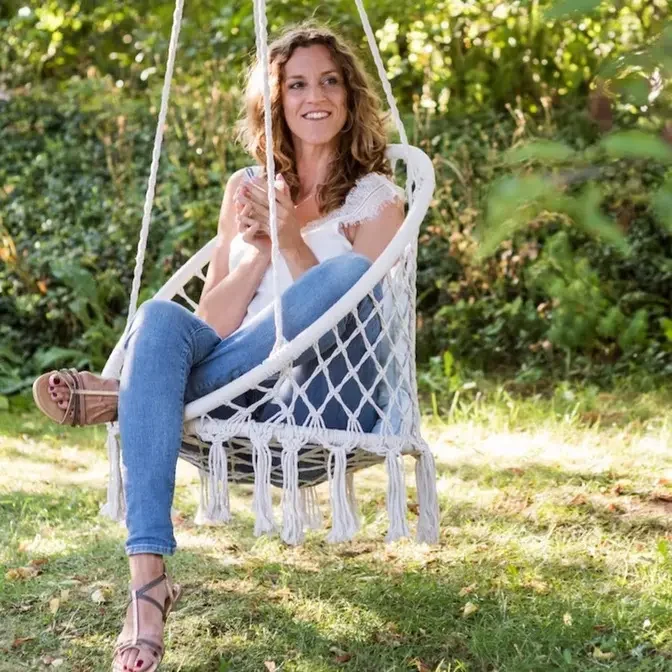
I'm taking you with me and Olav on a trip to Corsica, the isle of beauty in the Mediterranean Sea. We went to film a home tour and decided to stay a few more days to explore the island. We fully enjoyed our Corsica adventure, even if the weather didn't quite cooperate and made filming challenging. There were unexpected twists, memorable moments, a few challenges, but most of all plenty of adventures and beauty along the way! I hope you enjoy this one!
A travelogue exploring Corsica, the \"Isle of Beauty,\" detailing a journey through its diverse landscapes, prehistoric sites, and complex history. Despite facing extreme weather and wildfires, the narrator visits key locations from Ajaccio to Cap Corse, highlighting the island's natural beauty and its strong sense of independent identity.
Let me take you to Corsica,
the fourth largest island in the Mediterranean Sea, at the south
of France and the west of Italy.
With its incredible nature and beautiful beaches,
Corsica is also called l'île de beauté,
the isle of beauty.
It's a popular tourist destination for the French
and many northern Europeans,
but I feel it is less known by non-Europeans,
and yet there is so much beauty to behold and
discover here. Two-thirds of this island are made up
by an impressive granite mountain range,
stretching from the north to the south.
An untouched nature called the Maquis,
the dense and fragrant Mediterranean shrubland
that covers a vast portion of Corsica
from the mountains down to the coast.
Corsica has been on my list of places
to visit for as long as I can remember.
So when I got a chance to film a home here,
we got in our car, we took a ferry in Toulon
in southern France to arrive in the southwest of Corsica in Ajaccio,
where Napoleon Bonaparte
was born.
But he is not very loved by many Corsicans.
He became the ruler of France and that,
to a Corsican, makes him way too French.
You have to learn about Corsica's history to understand
why most Corsicans see another man as their true hero.
And I will share more about that later.
We arrived in Ajaccio and had about a two and a half hour drive
to the home where we were going to film.
And so we randomly picked three places to visit on our way there.
First stop, Filitosa, a megalithic archaeological site
that allows us to discover the roots of Corsica
in the footsteps of the first Corsicans,
and it's considered by scientists as one of the most
mysterious cultural sites of the Mediterranean.
as well as one of the most beautiful
prehistoric art collections in Europe.
Filitosa features Menhir statues, circular monuments known as Tore,
and evidence of human settlement starting here 8,000 years ago.
There is a huge olive tree on site that is said to be between 1250
and 2000 years old,
and the on-site museum allows you to explore all
the archaeological finds and prehistoric
art that have been discovered here since
the site was accidentally discovered in 1946.
We continue our journey on small winding roads to Sartène,
on top of a granite hill dominating
the valley, between the mountains and the sea.
Sartène is said to be the most Corsican of all
Corsican towns. Sartène was built to endure.
In 1551, the town was fortified against barbarian
raids so that all the inhabitants
of the surrounding hamlets could find refuge there.
Although its first appearance
is a little less welcoming and a little dark,
we loved the lovely vibe of its town square,
known as Place de la Libération, where we had our lunch.
A classic Corsican
dish, sauté de veau
aux olives, a stew
of veal, olives and wine.
If you're a food lover like me,
you will love Corsica's Italian and French inspired cuisine.
Corsica is also known for its sheep's cheese
and the Corsican charcuterie,
which we got to taste during our trip.
We continue our drive and we pass the Lion de Roccapina,
a breathtaking viewpoint.
We see it from the road here where we could stop,
and it allows us to admire the huge pink
granite rock which was eroded by water and wind,
and which looks like a sculpture of a lion.
It is said that the lion has been watching over
the marina here since the dawn of time,
and you can see a close-up of it here,
an image I pulled from a website,
because we didn't get to get this close.
After this, we continued to Vista Corsica,
the B&B where we'll be filming in the coming days,
and we were warmly welcomed
by Sylvain and Eric.
Although the weather on Corsica is beautiful year-round,
Our trip turned out to be pretty eventful
because of extreme weather conditions.
We were supposed to film the next day
but the weather was stormy and dark,
and so we decided to explore Bonifacio,
a medieval town with its historic citadel
located on top of white cliffs.
We were hoping to be able
to walk along the coastal path
We planned to explore the narrow streets of the citadelle before
the predicted heavy rains and storms would arrive.
We had surprisingly nice weather in the morning,
and the coastal walk was beautiful.
I can only imagine how much more beautiful it must
be when the sun is out.
We wandered the small streets of the Citadelle
and headed back down to the marina, where
we sat in a cafe for a coffee,
and when we saw impressive dark clouds rolling from over
the sea, we quickly headed back to our car
and drove back to Vista Corsica in the heaviest
rains that we've ever seen, and we're Dutch,
so we're kind of used to getting some rain.
Later news reports shared that part of North East Corsica were flooded
and back at Vista Corsica we went for a cozy night,
had a lovely dinner in an incredible restaurant just
a short drive from the B&B and enjoyed a good night's sleep,
hoping we could start filming the home tour the next day.
We
enjoyed
a
lovely
last
breakfast
at
Vista
Corsica
and
said
goodbye
to Eric
and
Sylvain.
Before heading north we made a stop at the Santa Julia beach
which is known to be one of the most
beautiful beaches of Corsica.
There were heavy winds this day but the beach is very secluded
and it was such a tranquil little spot where I would have loved
to linger and take a swim.
But we wanted to head north
because we didn't know what we would find after the heavy rainfall.
And so we followed the east coast
and we actually saw some of the remains
of the flooding of the previous day.
We stopped for a simple lunch on the beach
and then arrived
north in the town
of Oleta.
Oleta is known as
the pearl of Nebbio.
Nebbio is a region that has always been prosperous and fertile.
And the village really was very beautiful with lots
of beautiful old buildings, churches and a convent.
And we decided to finish this day to take
the little hike straight from our holiday apartment
to this
convent.
The next
day we took
a short
drive to
Saint-Florent,
a coastal
town.
Where we walked the Littoral, the hiking trail following the coast.
I didn't really film anything here, but the hike was really beautiful.
Although the sun didn't really want to come out.
I really felt that I wanted to explore more of the raw
and untouched inland nature of Corsica.
And so the next day we drove to the Scala di Santa Regina,
an eroded granite corridor of the Golo River,
the main river of Corsica.
Scala means ladder or stairs in Italian and Corsican,
referring to the natural stair-like
switchbacks and dry stone paths carved into the rock.
We would have loved to hike a small part
of the ancient mule track, the Sentier de la
Transhumance, a hiking trail that leads past waterfalls,
gorges and mountain villages,
but it's highly recommended to avoid after rainfall.
For thousands of years, the Sentier de la Transhumance
was the exact path that shepherds used to
move their sheep and goats away from the scorching coastal heat up
into the cooler summer mountain
pastures. Instead, we admire the impressive mountain range
and canyon while driving on the D-84.
From here it was only a short drive to Corte,
which was the capital of the short-lived Corsican
Republic, declared an independent state in 1755 by Pasquale Paoli,
who sought to liberate
Corsica from its ruler at the time, the Republic of Genoa.
Here we found a very authentic vibe.
We passed a statue of Jean-Pierre Gaffory,
a hero of Paoli's revolutionary movement,
who was assassinated in 1750.
His former home, which you see behind him,
is still showing the bullet holes.
Besides his battle for Corsican independence, Paoli
also founded the university here in Corte,
which still is the only university on the island.
The Corsican Republic fell
when the island was taken over by France in 1769.
This is actually the year that Napoleon was born here on Corsica,
who later became a very famous but French ruler.
Today Corsica is officially part of France,
but it still is a delicate thing to say.
Corsica has a long history of fighting for its independence
while dealing with repeated
attacks and colonization from the Romans,
Greeks, Italians and France, because yes,
most Corsicans experience the French as colonizers.
To this day, it's Paoli, far more than Napoleon,
who is Corsica's national hero.
We find his statue on the town square with an image of the flag.
A moor's head, a legacy of Corsica's time
as a territory of Spanish kings.
On pre-revolutionary flags, the moor was blindfolded.
Legend has it that Paoli ordered
the bandana to be lifted onto the forehead
so to symbolize the awakening of the Corsican people.
We really liked the vibe of Corte.
It is really a student city and it brings just a lovely energetic
vibe to the city and also it brings nice places like
this small bookshop slash coffee place that
was recently opened by a young woman and so we went in to get a coffee,
carrot cake and a cookie
and also to get inspired to find a couple of books.
That I can add to my list of books I'd like to read this winter.
In a previous video, I mentioned that I'm going to keep a book journal.
I still intend to share more about it in an upcoming video.
But this was just the perfect place to be inspired.
And I actually took home a couple of really nice books.
And also these really beautiful little postcards.
And it turned out the artist was a Dutch person.
I love these for their douceur, so the softness,
the gentle vibe that they have. It's, I think,
a little bit of softness
and gentleness that we can all use right now in our lives. So
I was happy to find
so many nice little things in this wonderful shop here in Corté.
On our last day, we wanted to explore Cap Corse.
This is the most northern part of the island,
nicknamed the Finger of Corsica,
and it's the most untouched wild nature part of the island.
We wanted to take this scenic drive starting on the west coast,
passing the highly recommended villages Nonza, Centuri,
and then continuing to the north
and then taking the coast down on the east side to Bastia.
It was very stormy but we were enjoying the beauty and the views,
while keeping an eye
on the time as our ferry was leaving back
to the French mainland from Bastia that evening.
While we were driving,
the road was suddenly blocked in the village of Pino.
It turned out that there was a car rally,
which there are many of in Corsica, this time it was
the Ronde de la Giraglia,
and it was taking place that day so we stopped to enjoy it.
We decided we wouldn't have enough time
to continue the full drive around the gap,
so we decided to cut straight through the road
and untouched inland nature.
The
drive
was
breathtaking.
As we were nearly at the other end,
driving from the west coast to the east coast, a car
coming from the opposite direction stopped us
and said there was a huge wildfire and
the road was entirely blocked.
So we had to turn around
and drive all the way back south following the coastline to
take another one of the only two roads actually
that you can take on the Cap Corse going from
west to east or from east to west.
As we approached the east coast we saw the smoke
and it became clear to us that the fire was pretty
serious and we realized that we would never have
been able to get to Bastia if we had continued our
drive around the cap. 30 hectares of shrubland were burnt that day
and it just made us feel like
the week had been pretty eventful.
So we arrived in Bastia
and took some time to explore the city
and the Old Harbor.
It also turned out that many of the rally cars
and their drivers were taking our ferry,
so we were able to admire some of the cars.
You have to make your phone a little bit closer.
I don't know if you can hear me.
No, no contact.
Thank you.
This short week in Corsica was centered around filming the home tour
and although the weather
conditions made it pretty challenging,
we were not able to fly the drone for most parts for example,
and we really had to work around what
the weather was allowing us to do, we did see
enough of Corsica to know that the island holds
so many incredible treasures, stories and beauty.
And we definitely need to come back to explore
and see it in its traditional
sunny and picture-perfect weather conditions.
Now I'd like to know, did you ever visit Corsica?
Did you even know that this beautiful island,
Île de Beauté, existed? And what
has sparked your interest during our visit?
I would love to hear from you.
I will be editing the home tour video this winter,
so it should be up in the coming months.
Meanwhile, I'll thank you so much for watching
and I hope to be back with a new video very soon.