ere does whiskey get its flavor? The barrel can bring vanilla, caramel, and toasted oak, but the grain, yeast, and choices made at the still all help shape what ends up in your glass.
Rick from the Hobby Distillers Association follows whiskey from grain to glass. You’ll see why two whiskeys made with similar grain recipes can taste so different, what distillers mean by heads, hearts, and tails, and how oak and time shape the finished spirit. Then we’ll go back to the glass for a simple way to pick out what you notice on the nose, on the sip, and on the finish.
What’s a whiskey you love, and what specific flavor keeps you coming back to it? Tell us in the comments.
0:00 What actually makes a good whiskey? 1:11 The mash bill and what each grain brings 1:43 How yeast shapes flavor 2:20 Distillation, heads, hearts, and tails 4:03 Barrel aging and the influence of oak 4:56 Back to the glass — nose, sip, and finish
AI Generated·May contain errors
Video Summary
AI Generated
This video explores the complex journey of whiskey from grain to glass, explaining how specific decisions during production shape the final flavor profile. It details how the combination of ingredients, fermentation, distillation techniques, and barrel aging creates the unique tastes and aromas associated with different whiskeys.
Think about a whiskey you really like.
Maybe it has a little rye spice, or maybe it tastes like
vanilla and toasted oak, or maybe there's a fruit note
that you just can't quite put your finger on.
Where do those flavors come from?
It's easy to point to the barrel, but imagine taking
two whiskeys made from the exact same grain recipe
and aging them in similar barrels.
Change the fermentation, where the distiller makes the cuts,
or even where the spirit was aged.
And those two whiskeys can taste surprisingly different.
Today, we're going to follow whiskey from the grain to the glass
and look at the decisions that actually change what you taste.
Hello everyone, I'm Rick with the Hobby Distillers Association.
Hold on to that flavor that you just pictured,
because over the next few minutes,
we're going to trace it back to the decisions
that put it into the bottle.
Let's start with the mash bill,
which is just a fancy way of saying the grain recipe.
A corn-heavy whiskey can have a round, sweet impression.
Rye can bring peppery,
herbal notes. Wheat often gives a softer impression, and malted barley
can bring flavors that remind you of cereal, toast, or nuts.
I say can, because if you've ever tasted two whiskies
with similar mash bills, you
know the grain recipe only gets you so far.
This is where yeast comes in.
While it's turning sugar into alcohol,
it's also making flavor compounds.
Some of those can smell like apple, pear, or banana.
If you've ever smelled a beer that reminded you of bananas,
you've already experienced
How much character yeast can bring to a drink.
Now, the yeast that you choose
and the conditions it ferments under can change how much of that
fruit character that you will get.
So even before the still is ever heated,
there's a lot going on that can shape the finished
whiskey.
Here's where it gets interesting.
These jars can all come from the same run.
They can look identical and the aromas can be completely different.
As the run progresses,
the mix of compounds coming off of the still changes.
And the way the still is designed
and run affects how much of that character carries
through.
A tall reflux column strips things back for a lighter,
cleaner spirit, while a simpler
pot still lets more of that grain and yeast character ride along.
Both can make a whiskey that you'd want another glass
of, just very different from
each other.
Then come the cuts.
You'll hear the terms heads, hearts, and tails.
Those describe parts of the run
and transitions between them are gradual.
The distiller needs to decide where the whiskey that they want starts
and where it ends.
An earlier jar might bring a fruit note
that works beautifully in the blend.
A little farther in that direction
and you might get a sharp solvent-like smell that takes over.
Now, go the other way and a little later jar might add weight
and an earthy note, but
keep going and you may get something
that reminds you of damp cardboard.
That's a decision about the whole blend.
A jar that seems a little too assertive
on its own may add exactly what the whiskey needs
in a small proportion.
And once you've made those decisions,
that's the spirit that you're asking the barrel to
work with.
Now if you enjoy learning how spirits are made
and want to support our work to legalize home
hobby distilling, consider joining the Hobby Distillers Association.
We have a free membership
level and there's a link in the description below.
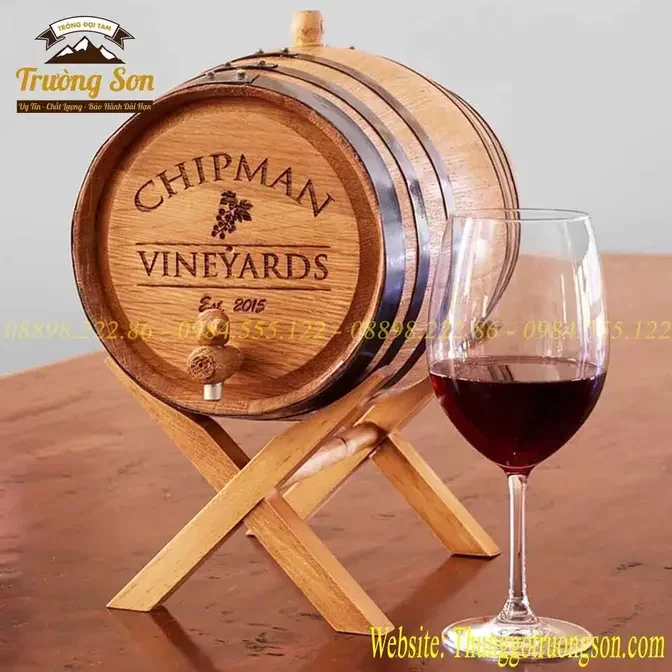
Now we get to the barrel. Oak can bring flavors
that we associate with whiskey like vanilla,
caramel, baking spice, and toasted wood,
and over time the spirit itself changes in the barrel.
How the oak was toasted or charred matters.
Whether the barrel is new or has held whiskey
or another drink previously matters.
Even where the barrel sits to age can influence
how the whiskey develops.
That's why I wouldn't pick a whiskey on age alone.
So think about an oak character that you enjoy.
A little toasted oak alongside the fruit and grain can be wonderful.
If the wood dries out your mouth and it's all you can taste,
you might like that whiskey
a little better earlier in its life.
Or maybe you're like me and you're the person
who loves that big oak flavor and that's exactly
the bottle that you're reaching for.
Now back to the glass.
The next time that you pour a whiskey try this.
Let it sit for a few minutes to open up and then
smell it and see what jumps out.
Then take a sip and pay attention to what's still there after you
swallow. You might get fruit on the nose,
grain and spice on the sip, and oak on the finish. Ask
yourself which part makes you want to come back for another sip.
That's what I look for in a good
Good whiskey. If I'm enjoying the rye spice,
I want to taste what the oak does alongside it.
If I like fruit on the nose,
I want to see where it goes once I take a sip.
It's how those flavors work together that makes me remember the bottle.
One that I truly enjoy has a distinct butterscotch note on the nose,
but on the finish you taste what I would best describe as cherry pie.
It's very complex and it's very delicious.
So drop a comment below and tell me about a bottle that you love
and the specific flavor in it that keeps you coming back.
And if you enjoyed this video,
please give it a thumbs up, subscribe to the channel,
and hit that bell icon so that you don't miss the next one.
I'm Rick with the Hobby Distillers Association.
Thank you for watching, and I'll see you next time.