It's time to head back down to the lower 48 for the rest of the year! On our way up to Alaska we drove the Alaska Highway through British Columbia, but for the way down we took a different route, the Stewart-Cassiar Highway. During our 4 days driving down the Cassiar Highway, plus part of the Yellowhead Highway, we saw stunning bright blue lakes and tons of mountains, learned about jade, camped by a lake, enjoyed some smaller towns, saw BEARS, and slept overlooking an insane glacier. It was one of the most memorable experiences of our summer!
⌚Timestamps 00:00 Introduction 00:19 About the Stewart-Cassiar Highway 01:29 Kayaking and camping at Boya Lake 03:50 Back on the road (EPIC views)! 04:57 Visiting Jade City 06:40 Continuing south! 08:06 Camping at Kinaskan Lake Provincial Park 10:28 We’re heading back to…ALASKA! 11:05 Quick fuel update! 11:29 Turnoff for Stewart + Hyder 11:43 BEAR SIGHTING! 12:40 Bear Glacier 13:35 We’re back in Alaska! 15:03 The world’s BEST fudge! 16:28 Fish Creek Wildlife Observation Site (Round 1) 18:38 Camping at the EPIC Salmon Glacier 22:39 Fish Creek Wildlife Observation Site (Round 2) 27:53 Heading back into Canada 29:30 We saw another BEAR! 30:43 Cassiar vs. Alaska Highway 31:26 Gitwangak Battle Hill National Historic Site 32:38 Highway of Tears 33:18 Witset Canyon 34:01 Hiking the Crater Lake Trail near Smithers 35:45 Bugwood Coffee in Smithers 37:28 Fraser Lake 38:03 We made it to Prince George
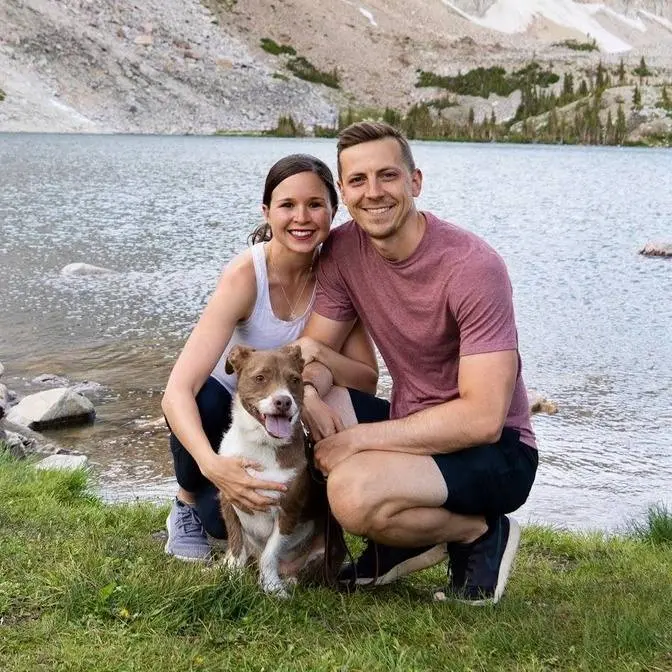
👋🏼 About us Hi y’all! We’re Adam, Kathryn, and Kona, an adventurous married couple (+ pup!) living on the road in our self-converted sprinter van! You can often find us driving all around the US and Canada, scoping out the best coffee shops, eating tacos and ice cream (we're a 5+ taco and 2+ scoop household), and enjoying nature.
We help travelers spend less time (and stress!) planning their trip and more time enjoying it! Our detailed travel guides, YouTube videos, and travel resources share the must-visit local eats, popular and off the beaten path sights, and tons of tips to make planning your next adventure a whole lot easier.
Note: We’ve linked a handful of items so you can see exactly which products we take with us. Full disclosure--if you click on these links and make a purchase, we get a small commission at no extra cost to you. We will only ever recommend products we truly love, actually use during our adventures, and think you can benefit from too!
I don't know how we're going to top this summer.
This is just unreal.
There are two ways to go to and from Alaska through British Columbia, the Alaska Highway
and the Stewart-Cassier Highway.
On our way to Alaska, we took the Alaska Highway, which was incredible, but for our way back
to the lower 48, we're going to take the Stewart-Cassier Highway.
The Cassier Highway is a 724-kilometer drive along Highway 37 and is said by many to be
even more remote and even more beautiful than the Alaska Highway, and we thought the Alaska
Highway was stunning, so we cannot wait to see what the Cassier has in store.
We're currently on the Alaska Highway, about to turn onto the Cassier Highway, and over
the next four days, we're going to be driving the Cassier Highway and part of the Yellowhead
Highway to Prince George, British Columbia, making as many stops as we can along the way.
And today, we have about an hour drive to T'Chilla Provincial Park, which is home to
Foya Lake, to camp for the night.
Bye, you guys.
We're back in British Columbia for the first time in three months.
I'm a little confused because it feels like we made a wrong turn.
It feels like we are at the Caribbean.
This water is so blue and so clear.
We read that many people compared this water to the waters in the Caribbean, and they were
not lying.
It is stunning, and it is screaming to be kayaked.
This lake is so insane.
It is definitely the clearest lake that we have ever paddled on, and it gets its color
from the light reflecting off of the marl at the bottom of the lake, which is a mixture
of silt and shell fragments.
And we wish that we could show y'all what the lake looks like from above, because that's
when the colors really pop.
But unfortunately, this is a provincial park, and drones are illegal.
So here's what it looks like from Google Earth instead.
Don't mind me, just deflating my kayak.
Foya Lake has 44 campsites, which cost $20 per night.
Some of them can be reserved in advance, and we booked site number 34 beforehand so that
we didn't have to worry about trying to get a first-come, first-served one.
Some of the sites are located right on the water, but unfortunately, they were all booked
up.
But we do still kind of have a lake view behind us.
It is so hard to leave this lake, but lucky for us, there are more lakes along this next
stretch of the drive.
And our goal today is to drive about three and a half hours to another lake to camp tonight.
About five minutes down the road from Foya Lake is Good Hope Lake and a bunch of other
lakes that kind of combine together.
And wow, they are probably just as beautiful as Foya Lake.
They have that super clear water, and we actually were able to fly the drone here legally,
so we got to fulfill all of our Foya Lake drone dreams, and just seeing all the islands
in the water, and just the mix of clear water, striking light blue, and then dark blue.
It is just insane out here.
Then we have mountains all around, and this stretch of the drive is just gorgeous, and
we're trying to soak it up as much as we can because after this drive, we don't have much
more scenery like this for the foreseeable future, which makes us very sad.
But we're just going to try to enjoy it while it lasts.
We're making a quick stop at Jade City, which isn't actually a city, it's a business that
mines jade, which is a term that applies to two completely different rocks, nephrite and
jadeite.
And it turns out 90% of the jade in the world comes from the Cassier Mountains here in British
Columbia.
And fun fact, the family that runs this mine is the star of the Discovery Channel show
Jade Fever.
They have a shop and some jade outdoors that you can check out, and they supposedly have
some free coffee, so we're going to try to grab a cup and wander around.
So we walked up, and there's all this jade on this table, and it doesn't look very green,
but they said it turns green when it's either wet or polished.
So grab that water hose.
Let's get it wet!
Yeah, that's definitely more green.
Cool!
It is so smooth, and this apparently isn't even polished.
You just can't stop touching it.
Free coffee has been acquired, and that was a much cooler stop than we thought it would
be.
We really did not know much about jade before coming here, but it was really neat to see
it in all of its different forms, from raw to super, super polished, and we hear that
in the summertime you can actually watch them carve jade, which would be awesome to see.
We still have about three hours of driving left today, and as we mentioned, this road's
pretty remote, so there aren't a ton of stops to make, but the scenery should be incredible.
It already is incredible, and we hear that the Cassier Highway is better than the Alaska
Highway for seeing wildlife, so we're really hoping to see some wildlife.
So far, all we've seen are some squirrels, and no hatin' on the squirrels.
We do love squirrels.
They're very cute, but we want to see a bear.
Bear!
Leany wildlife out here.
That's a joke that Adam does all the time.
We'll be camping somewhere, and he'll come back in, and he'll be like, there's a bear!
Leany bears out here!
But yeah, no wildlife.
We've seen a mouse, and some birds.
Tonight we're camping at Kanaskan Lake Provincial Park, which is $20 per night, and it's all
first-come, first-served, with many sites on the water.
We got here at 3pm on a Saturday in September, and there were tons of sites available, and
I think we snagged a really good one.
Tonight for dinner, we're having chicken thighs, as well as foil-wrapped potatoes and asparagus
all over the campfire.
We're topping off the chicken with some Cheeky Nando's.
This dinner is delicious.
The chicken is so good.
It's a little spicy, and the potatoes are slightly underdone, but it's still really
good.
And we have the best sunset happening right now.
The sky is so pink.
The lake is right there.
This is the best.
This is awesome.
Kona?
Look at this.
Kona!
Kona just stole our firewood.
Get back here.
That's not yours.
No, that's not yours.
We didn't know when we booked a site here that there would be thieves here.
Stop.
Today is a very exciting day because...
We're going back to Alaska!
We're going to be taking a detour off the Cassier Highway to Highway 37A to check out
an area right on the U.S. and Canada border, including the very small town of Hyder, Alaska.
But first, we have about a two and a half hour drive until the turnoff.
So far, there's been plenty of gas stations to stop at.
The tank's maybe only gotten down to maybe three quarters of a tank at its lowest.
These have proven to be a waste of money.
We just made it to the turnoff to Hyder, and it's only about an hour from here, so it's
a pretty easy side trip.
We left Alaska about two weeks ago, and we've been missing it, so we couldn't pass up a
chance to go back.
Oh my gosh.
The score of the year.
Oh my gosh!
We survived!
We just had the score of the year.
It was like a grizzly with two guinea bears.
And it was the best situation ever because they were crossing the road, so we had to
stop and we had time to film them and got to watch them.
That was awesome.
That was amazing!
One of the things I've missed the most about Alaska is seeing glaciers everywhere, and
lucky for us, this detour has a couple glaciers that we'll get to see.
First up, we're at Bear Glacier, which is just on the side of the road.
It's crazy how the second we got on this part of the road, the scenery just instantly
looked more like Alaska.
The mountains look more like Alaska.
All the glaciers, it's just making me so happy.
One thing that's unique about crossing into Alaska here is that there's no customs, at
least on the U.S. side, so you just drive on in, so we're back in Alaska.
It feels good to be back.
I've missed you!
Welcome to Hyder, the friendliest ghost town in Alaska.
Although this super tiny town is located in Alaska, it is completely isolated from the
rest of the state and is dependent on its Canadian neighbor across the border, Stewart.
They use Pacific time instead of Alaskan time, use Stewart's area code, do their grocery
shopping in Stewart, and send their kids to school in Stewart.
There are just a handful of buildings in town, including the Glacier Inn, which is known
for having at least $20,000 worth of $1 bills on the walls, and a tradition called getting
Hyderized, which is when you take a shot of 150 proof Everclear.
Most things seem to be closed today, but we did see a sign for a gift shop that has fudge,
so why the fudge would we not go there?
We're about to walk to go get this fudge, and I just saw a bear walking across the road.
A huge black bear, really close to the fudge shop.
Oh fudge!
We got the goods.
Man, that shop was pretty awesome.
The owner was hilarious, and we got three different kinds of fudge, and she let us try
a sample of some of her fudge, and it is some of the creamiest fudge I've ever had
in my entire life.
It was so good.
Look at this.
Oh my gosh!
It's so creamy!
It melts in your mouth, oh my, mmm.
Not a fudge connoisseur, but I have to say, this is probably, this is the best fudge I've
ever had in my entire life.
It's so good.
She says she makes flavors of stuff that she really likes, and one that caught my eye was
the orange creamsicle, a little tangy zest of the orange, creamy of the creamsicle part.
Mmm, that is awesome.
Who knew we'd find the best fudge in Hyder, Alaska?
World famous, she says.
People come from miles and miles, she says.
Something super high on our Alaska bucket list is Katmai National Park, which is home
to Brooks Falls, which is that iconic spot where you can see bears grabbing salmon over
a waterfall.
Unfortunately, it's $1,000 per person for a day trip because you have to fly there,
so we skipped it this past trip and we're saving it for a future trip when we visit
the harder to reach Alaska National Parks.
But here in Hyder, they have a Katmai-esque experience at the Fish Creek Wildlife Observation
Site.
This is the only bear viewing platform in all of Alaska that you can drive to, and from
mid-July to early September, you have a chance of seeing bears eating salmon, and the best
part is, unlike Katmai, it's only $5 per person per day.
We hear it's way less predictable than Katmai.
Some people come out here and spend hours and don't see any bears, but we're gonna give
it a shot and see if we have any luck.
So they have this boardwalk here, and you have to stay on the boardwalk for the safety
of you and the bears.
We don't see any bears right now, but I do see some big, plump salmon down there, ready
to be devoured.
We've been here for about an hour and no luck yet, but we've been chatting with the park
ranger, and he's been telling us so much information about all the bears that hang
around here, and it's just so relaxing to be here.
It's so quiet, that's why I'm whispering, you're supposed to be quiet so you don't scare
the bears away.
It's just really quiet, you just hear nature, all the fish just kind of flopping around
in the water.
I could spend all day here.
Well we hung out for about three hours, didn't have any luck on seeing any bears, but we're
gonna come back in the morning, and I think we'll have a better shot then, but for the
rest of the day, we're gonna continue up this road, which will actually take us back
across the border into Canada to the Salmon Glacier, and we just ran into some friends
that we met on the Dempster Highway, and they said that this unpaved gravel road is a lot
worse than the Dempster, tons of big potholes, so we're gonna be taking it slow, but it should
be worth it.
We just crossed into Canada, and what's super weird is that there is obviously, we're on
this like really back country dirt road, there's no border crossing here, so we just drove
on into Canada without telling anyone.
This feels naughty.
Definitely worse than Dempster, big old potholes.
We just got our first glimpse of the toe of the glacier, which is insane, but it's not
even as insane as the part of the glacier that we are going to, and I knew I missed
glaciers and Alaska and this type of scenery, but I didn't realize how much I missed it
until we came out here today.
I just feel like I've been transported back to the last two and a half months that we
had in Alaska.
I can't fully articulate all the feelings I have right now.
I'm so happy to see this again, because we kind of thought our time in Alaska was over,
but I'm also so sad, because I know we have to leave the scenery again, but it's just,
what a summer.
I don't know how we're gonna top this summer.
This is just unreal.
This is wild.
Wow, this is basically like the Harding Icefield Trail, but we're driving it.
Exactly.
This is cool.
This is the Salmon Glacier, the fifth largest glacier in Canada, and it is sick.
This is quite possibly the most stunning, mind-blowing glacier we have ever seen.
Oh my gosh.
I cannot believe this is real.
Not only can you drive up here and check out the glacier, but you can also boondock out
here, so this is our backyard for the night.
This hands down takes the cake for the best campsite we've ever had in our van.
That's gonna be out of our back windows as we go to sleep.
Let's go see some bears.
So according to the log of all the bear activity, every morning for the last few mornings a
bear has been here around 7.30 or 7.45 a.m., so we're hoping that streak continues.
We've been here well over an hour, and we just spotted a bear.
Yes!
This is the coolest.
I'm freaking out.
I'm shaking.
This is the coolest thing I've ever experienced.
He's running in the water.
So the bear that we've been seeing is named Runner because he runs all around, and he's
about four years old, and he's a grizzly bear, brown bear.
Oh my gosh.
This is just so wild.
Might be the highlight of the year.
My whole year.
My life.
Highlight of my life.
They're all standing on right underneath us.
We ended up watching the bear for well over an hour, and there are truly no words to describe
just what an incredible experience that was.
Like ultimate Alaska bucket list achieved.
We've seen several bears now, and you know, it's always in that situation where we're
driving by and we're like frantically, oh my god, oh my god, there's a bear.
Get the camera.
Get the phone.
Da da da.
But this one, he was just there.
He strolled up, ran a little bit because his name was Runner, but we were just chasing
him around the boardwalk, but he would like grab fish and just, you know, munch on it,
and you know, we just had plenty of time to be able to just get plenty of footage and
then just enjoy it.
It was excellent.
There was a solid 30 minutes that we just put the cameras away and just watched him.
It was just so interesting to watch him and just kind of see how his brain was working
and why he would munch on some fish and then kind of put them to the side, but then start
chewing on some other fish.
And then he might come back for that one.
It was just so beautiful to watch a wild bear just in its habitat, not just speeding by
it on a road.
It was just, I don't know.
It's truly one of the most memorable experiences of my entire life.
I will never forget today.
I started to lose hope that we were even going to see a bear because we had been here for
a while, and then Adam all of a sudden spotted it.
He was the first one to see it.
I was keeping the faith, and I just saw it over somebody's shoulder, and I was like,
whoa.
It's right there in the middle of the water through this like tiny window of, you know,
leaves hanging out over.
I could see it like perfectly.
I was like, oh, there's a bear.
And we just got so lucky the entire time that he was in like prime positions because there's
spots he could go around here that we wouldn't be able to see him.
You could hear him and everything, but he was just always right there, right in the
open.
We got at some points like probably like 10 feet within.
Really close.
He made, him and I made direct eye contact with each other, which was kind of scary,
but it was just, it was just insane.
We could go on and on.
I just, it's been a dream of mine to see a bear just eating salmon and catching salmon,
and I cannot ask for a better way to kind of just end our time here in Alaska for real
this time.
Like it's just, oh, it was so amazing.
It was so awesome.
But unfortunately, we are now leaving Haider, which means we are leaving Alaska, which means
we're leaving the United States and crossing back into Canada.
And even though there's no customs when crossing into Alaska and the U.S. at this border, you
do have to go through customs to cross back into Canada.
So we have our passports.
We filled out the Arrive Can app, and it should be a pretty easy border crossing.
Bye, Alaska, for real this time.
Hi, how are you?
Just some fudge.
Okay.
We'll be back in, we'll be in Washington on this Thursday the 15th.
Okay.
Awesome.
Thank you so much.
Thank you.
You too.
And just like that, we're back in Canada.
But before we head back to the main part of the Cassier Highway, we're going to wander
around Stewart a little bit.
Stewart is super cute, and we wish we could stay and hang out for a bit longer, but unfortunately,
we still have quite a bit of driving to do today.
But we could not recommend this detour anymore.
The last 24 hours have been some of our favorite memories of the entire summer.
We got a bear.
Woo!
As if today couldn't get any better, we saw the telltale sign of Roadside Wildlife.
We saw a bunch of people on the side of the road taking pictures and stuff, so we decided
to stop.
And we saw a grizzly bear.
It's just like a cherry on top to the day.
It's awesome.
We're getting closer to the end of the Stewart-Cassier Highway.
And now that we've driven both the Alaska Highway and the Cassier Highway, we can honestly
say that they are both incredible drives.
They both have beautiful mountains and beautiful lakes.
But the Alaska Highway has a hot spring and cinnamon buns, and the Cassier Highway has
glaciers and fudge, so they do offer a slightly different experience.
And if you're driving to and from Alaska, we highly recommend driving the Alaska Highway
up to Alaska, especially if it's your first time going to Alaska, just because it feels
more iconic to be driving the Alaska Highway.
And then we suggest taking the Cassier Highway down.
But we honestly cannot pick a favorite between the two.
I'd say we love them both equally, but differently, and you just have to do them both.
The Cassier Highway ends near Kitwango, where it then connects with the Yellowhead Highway.
And to stretch our legs a bit before driving a bit further, today we came to the Gitwinga
Battle Hill National Historic Site.
This was the site of a fierce First Nation battle two centuries ago.
The battle resulted in the destruction of the Gitwinga Fort and Cedar Dwellings that
once stood to protect the Gitsan people, their fishing sites, and the active trade routes
in the region.
There are a lot of First Nations in this area, and this is a super quick and easy way to
learn a little bit about their history.
Plus, the views are not too bad either.
We have officially finished the Cassier Highway, and we're now on the Yellowhead Highway,
which has some really sad history.
This stretch from Prince George to Prince Rupert is nicknamed the Highway of Tears because
of the many missing and murdered Indigenous women, as well as some non-Indigenous women
along the highway.
From what we read, due to the remoteness of the area and lack of public transportation,
many women would hitchhike to get around, and unfortunately many have gone missing or
been murdered, with the cases being unsolved.
We try to keep our videos upbeat, but we think it's important to know this history as you're
driving along the stretch of the highway, and even though we're no longer on the Cassier
Highway, you do have to take the Yellowhead Highway to get to the Cassier Highway, so
we're going to continue to share a few more spots as we make our way east to Prince George.
We made a quick stop at Whitsett Canyon, which is on the land of the Wet'suwet'en First Nation.
This is a very important spot for them to fish for salmon, and we hear it's pretty entertaining
to watch.
No one's fishing today, but it is still worth the stop because it is gorgeous and is a hidden
gem just right off the Yellowhead Highway.
Tonight we're staying in Smithers, which is an outdoorsy town in the Bulkley Valley with
mountains, rivers, and lakes nearby, which we're going to explore a tiny bit tomorrow.
There are a ton of hikes to do in the Smithers area, and we wish we could do them all, but
we still have a bit of driving ahead of us today, so we decided on a hike called Crater
Lake that's about 3.6 miles with about 1,000 feet of elevation gain.
While our goal for the summer was to spend as much time in Alaska as possible, one of
the biggest highlights was just getting to experience so much of Canada.
We drove up all of British Columbia, and we got to explore a lot of the Yukon and Northwest
Territories and see places that we honestly had never heard of and maybe would have never
visited, like here.
We had not heard much about this area at all.
And look how gorgeous it is!
Well, that was a nice and quick hike, and one awesome perk about it is that it's only
about a 30-minute drive from Smithers, so we're going to head down and check it out.
We came to Bugwood Coffee, which is a super cool outdoor coffee shop, and breaking news!
It is fall, y'all, and we got our first pumpkin spice latte of the season.
Mmm!
Ooh, baby.
That is so good.
Just screams fall.
Mmm.
I better go back to the van, put my flannels on, get my jeans on, put my, my boots, my,
uh...
What is happening?
My shin-high boots, my vest, because it is fall.
It is officially fall.
Every sip is more like fall.
Get the potpourri out, the Halloween candy.
I can smell the turkey roasting.
You can't stop.
It's just, it's fall.
It's official.
Fall is in him now.
But in all seriousness, this is the best pumpkin spice latte I have ever had.
One thing you'll notice here in Smithers is that it has an alpine theme.
This theme was decided in the 70s, and buildings were given alpine-style rooflines, and there's
a wood sculpture called Alpine Owl, who plays the alphorn, and has become the mascot of
the town.
The town is super charming, and we wish we could stay longer, but we've still got over
four hours of driving left today, so we gotta hit the road.
There's our lake!
We couldn't drive by Fraser Lake, which is named after us, and not stop at it.
Just kidding, it's not named after us, and it's not even the same spelling, but we had
to stop and check it out, and after taking just one look at it, we approve.
It is worthy of the name.
Over 1,300 kilometers later, we have about made it to Prince George, which is going to
mark the end of our Canadian adventures, on camera at least.
We still have about 900 kilometers until we cross the border back into the United States,
and we had hoped to explore more of Canada on the way down, like the Canadian Rockies,
but due to some family stuff that I need to fly to in Chicago, plus just having a really
tight timeline to get back down to the lower 48, we're gonna have to just book it the rest
of the way back.
But we did film the whole drive up Canada on our way to Alaska, so make sure to check
that out to see more British Columbia.
So this officially marks the end of our journey to, in, and from Alaska, which makes us sad
because it has been the best adventure we have ever been on, but this last stretch of
the journey has been quite the epic grand finale.
Our adventures for the year aren't quite over yet, though.
We still have a bunch of fun stops we plan to make on our way back to Texas, most of
which are brand new to us, and the next time you see us, we'll be in Washington, exploring
a part of the state we have yet to share.
Boy, oh boy, this lake is hard to leave.
Get down, get down, the chopper!