01:00 - Shaming Patients into Surgery 03:00 - Ordering unnecessary Blood work 04:07 - Patients don't know their health 05:00 - Life is at risk 06:02 - Social Workers do A LOT 07:06 - No Lunch Breaks 08:12 - Working w/ HIV pts 09:22 - Use the Call Bell 10:06 - You are NOT the only Patient 11:20 - Working at the VA 12:44 - Hospitals AREN'T Clean 13:40 - Don't be Rude 14:20 - Treat people right
*None of this is meant to be construed as investment advice, it's for entertainment purposes only. Links above include affiliate commission or referrals. I'm part of an affiliate network and I receive compensation from partnering websites. The video is accurate as of the posting date but may not be accurate in the future.
People in the medical field are sharing secrets about their job. Welcome back to the channel
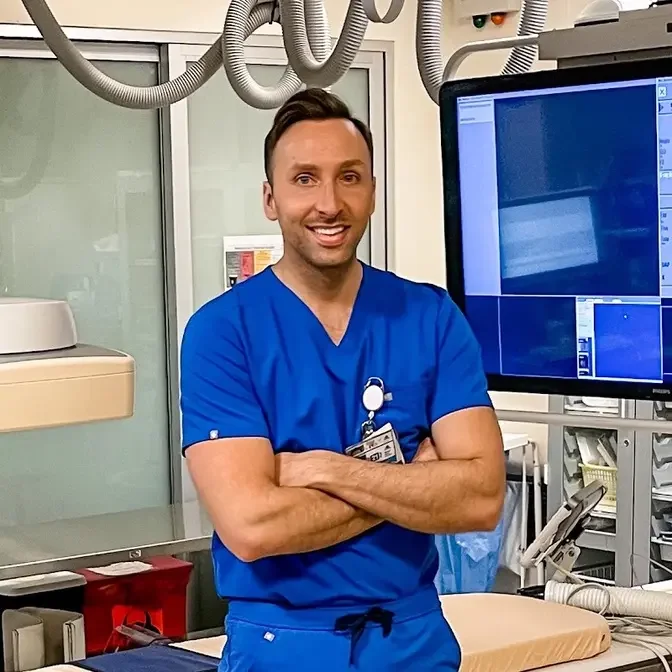
everybody. For those of you who are new around here my name is Michael aka Dr. Cellini and I'm
a board-certified diagnostic and interventional radiologist. On today's video we are going to be
going over a recent BuzzFeed article in which people who worked in the medical field started
sharing secrets about their field that you wouldn't know unless they told you. I happened
to come across this article while reading the morning news as I often do. This popped up and
I started reading it but then I decided to stop after the very first one because I wanted to save
it for this video. So let's go ahead and get right into it. Alright so this is a BuzzFeed article
that I will link in the description below. So basically the author who is Audrey Ingvalsson
she asked medical professionals if there was a relatively unknown part of their job that they
wanted the general public to know and according to her they didn't disappoint. So let's start
off with the first one. I'm just going to read some of these to you and we'll talk about them a
little bit and we'll pick our favorite ones. Number one. I used to work at a private practice plastic
surgery center and the things I saw were repulsive. Interesting. The doctors would shame some of the
patients into scheduling surgeries with him. The first question he would ask you in your
pre-operative appointment was what you did for work and would provide a quote based on that. Now
I actually someone told me this recently that they were wearing like a nice watch or a nice bag
somewhere and they felt like they got a bad deal on whatever they were purchasing because they had
a nice watch or a nice bag with them or whatever. I think this does happen but it definitely should
not happen and a lot of people don't know that people in surgery fields aka surgeons I don't
know why I said that they can charge people whatever rate they want. The insurance company
may not cover that specific rate because they may deem a certain surgery worth a certain value on it
and they will only pay you the difference so you have to cover the extra. Now say for instance an
appendectomy costs I don't know $10,000 and your insurance thinks yeah it's maybe worth like a $10,000
case so we provide $10,000 reimbursement. A doctor who maybe is very skilled and maybe is a cash only
physician or surgeon may charge you $20,000 for that appendectomy. Your insurance may only cover
$10,000 and then you would be responsible for paying them the other $10,000. So this definitely
holds true. There are a lot of private doctors who charge whatever they want and maybe this
plastic surgeon is no different. I'm not saying I agree with it I'm just saying it exists. He also
made us reuse surgical supplies that weren't meant to be reused to cut costs. He was so mean to his
staff and wouldn't overwork us to the point where exhaustion with no breaks during surgical days.
Okay so I understand the overwork part because in medicine people just overwork each other for some
reason I have no idea. It's deeply ingrained in our whole system but the problem I have with this
whole thing here is reusing surgical supplies that weren't meant to be reused. That my friends
is a problem and I hope this doctor was reported for this. Now I don't know what kind of things
were reused but if something was meant for a certain procedure or surgery it should be thrown
away or cleaned into autoclave with their reusable instruments. You should never reuse anything that
was used in another procedure period. Number two. I worked in an outpatient laboratory and a patient
does have the right to decline tests that they feel unnecessary or too expensive. There are
several providers in our clinic who insist we all do labs and a patient's chart even if the patient
doesn't want all the blood work ordered. So again exploiting the system to get their labs so they
can bill for them and some of these labs can be very expensive by the way. So one provider once
told me not to listen to the patient but always do all blood work she orders. Patients should be
proactive, question the need for tests and have the right to decline if they choose. I totally
agree with this because a lot of times certain physicians, NPs, PAs etc will just knee-jerk order
a whole bunch of different tests and not really know what's included with them. So a patient may
actually not need all of the labs that they're ordering but they just kind of knee-jerk them
because they come in a package deal. And for instance a CBC with differential you may not need
but sometimes the doctor will just order that because I don't know why. It sounds better. So I
totally agree. The problem with the statement is it's very difficult for a patient to know what
labs they actually need versus what they don't need. It's very challenging. Clearly a lot of
physicians can't figure it out so I don't know how a patient would. Number three. Nurse for over 30
years patients have no idea why are they having a procedure and therefore what the results mean.
For example a colonoscopy is performed to look for and remove colon polyps which can over time
grow into cancerous tumors. It's scary how many people don't know why are they required to have
this done after turning 45. This holds true so much because in my field all I do is procedures
and I cannot tell you how many times people just come down and they're like whatever you say doc
they have no idea what they're having done. I explain it to them obviously. They consent for
the procedure and say they understand but they also don't care or don't even care to ask questions
about the procedure. They're just like yeah whatever sounds good. Sometimes it shocks me but
it happens so frequently now that people don't know what they're even coming down to me for that
you know it's not even surprising anymore. And again like I always say patients need to have
some sort of ownership on their own care and if you don't know ask questions. Number four. I've
been a nurse for 20 years and every day a nurse punches in they put their life at risk. There's a
risk of exposure. I've been exposed to TB multiple times meningitis and hepatitis B and there's a
risk for violence. I was assaulted when working in an ICU from a confused patient. I mean I don't
know if this is necessarily a secret because when you sign up for working in the hospital or any
medical field especially if you're drawing blood getting labs being really close to patients there
is always a risk for a transmissible disease period. In my line of work you have to be very
careful. Treat every needle with respect. Make sure you know where every needle is so you don't
have any accidental needle sticks because you could be exposed to some of these things they
mentioned. The violence part that's what a lot of people don't understand and this happens all the
time. This happened to one of the PAs I worked with recently. They were just assaulted as a patient
passed them in the hallway. They weren't even a part of that patient's care. It just happens and
I don't think it's right but I don't know what we would even do to avoid it per se. It's kind of a
just a known risk of being in the hospital. All right number five. Medical social worker here. We
often don't get a lot of credit for the things that we do but we are really important part of
the interdisciplinary team and actually do a lot. They do do a lot. We are usually thought of as
people who call child or protective services for adults which we are but that is such a small part
of our job. A lot of times we are the ones writing letters to insurance companies to get medications
approved when they are initially denied. We also provide a lot of education to patients and families
after they receive a new diagnosis and it all seems overwhelming and confusing. Yes I totally
agree. I think people kind of don't give social workers enough credit. They actually do a ton and
they are responsible for getting patients out of the hospital and into places where they can be
cared for. It's not easy to say but a person who just had a big operation who maybe like 80 years
old has no family. It's not very easy to find them a home and have care for them when they leave. So
they set up all these homes that they can go in or transitional homes to get them back to their
home. It's a lot of work on the back end that people don't realize and the social workers do
all of this. They actually wear a lot of hats so shout out to the social workers out there. My
sister and I are fourth generation nurses. I have been working in health care for 43 years. We've
always been short-staffed. We never have gotten 15-minute breaks and rarely did 30-minute lunch
breaks where we are not still doing work related activities like charting, answering the phone,
etc. Our work is emotionally, physically, and psychologically demanding or exhausting. We
suffer from chronic insomnia and rarely take a good care of ourselves as we do for our patients.
Yeah, I totally agree with this. This is a little thing I like to call burnout and we talked about
it a lot on this channel and I was actually just thinking about this today is I don't think I've
had a lunch break since I worked in real estate back in like 2008. That's the last time I remember
a lunch break. My lunch today was thankfully a sandwich that my wife made me. Shout out Andriana
for making me a sandwich today and most days she packs my lunch. I have the best wife ever but I
literally was between studies and between procedures. I grabbed the sandwich and I have my sandwich in
one hand. I'm reading studies, putting the sandwich down, dictating with my mouth full, putting the
sandwich, eating it, repeat, repeat until it's done. Like that's my lunch. I'm just working like
crazy through my lunch break. I should just say through lunch because I've never had a lunch break.
That's neither here nor there. So I agree with this person. Number seven. I worked in HIV testing
education. I test hundreds of people every month. Sometimes the people who will be positive are
obvious from the moment they step in the testing room. Most of the time they're people who test
every few months and just have that one risky encounter. Either way telling someone that they're
now living with HIV is devastating. Yes it is. I try so hard to keep my emotions neutral and stay
upbeat as I walk them through their next steps but honestly I cry with them most of the time.
It's the stigma surrounding the diagnosis that people fear the most. The virus itself is easily
controlled with medication but the judgment of others and the lack of basic HIV education in
this country makes a lot of people afraid for their safety and privacy when having to disclose
their status. I totally agree with this. Coming from prior hospitals in my training where we had
a lot of HIV positive patients, the education just isn't there. We've made so many advances on HIV
treatment in the last decade that honestly the whole virus can be controlled with pills that
you take regularly. That's a crazy advancement in this field and a previously deadly virus that we
had no idea how to cure. But a lot of people don't know that and there still is that stigma around
HIV. Obviously because it's a transmissible disease and I don't think that'll ever go away
but what really needs to happen is people get more educated on the topic. Alright number eight. I work
in health care and when we tell you to use the call bell when you need something it's not a
suggestion. We really mean for you to use it and not harass the secretary by walking to the front
desk. It's not going to get you help any faster. The message has been relayed and your family member
is not the only one that needs care so be patient especially to the staff that actually showed up to
their job. Yeah I totally agree with that. I mean you see patients wandering around the nursing
station a lot when they need help and some people are more needy than others as we know but use the
call bell. The nurses, the staff, whoever's taking care of the patients on the floor is most of the
time busy or dealing with something else so be patient. I'm skipping some of like the dry ones.
I can't put everyone in here because there's like 18 or something so if you want to read them all
link in the description below. Number 10. I'm a medical assistant in a medical office. Many
patients don't realize or care that they are one of thousands of patients. This is very true and
people forget this a ton. No we do not know you by only your first name when you call nor do we
always know your phone number if you don't leave it. Also state your reason for calling. Don't just
say you need to call back if you're asking for a refill or when your next appointment is. Those
calls can be handled quickly by non-clinical staff rather than tying up the nursing staff.
This is a weird thing with health care in the U.S. because we pay to get health care in the
U.S. so you expect with that payment that you would be given like exceptional care like you'd
be in a restaurant somewhere. You're a paying customer so you feel like you should be treated
as such but that's not the case in medicine in the U.S. I'm not saying that's a good thing but
I'm saying it's just different. So a lot of these health care systems and doctor's offices are short
staffed. There may be one person who's in charge of answering the phone calls so make their life
easier and you making their life easier will help your life and everything will just be easier from
there. So I totally agree with this. I imagine how frustrating I can imagine how frustrating that
would be to get a bajillion calls every day and people will be like hey this is Michael call me
back. Like we don't we don't know who you are. It's probably like 100 Michaels. Number 11. Oh
this is a good one and oh so true. I've just read the first line and I know I already know where
this is going. Physician at the VA here I love our patient population and taking care of such
deserving population. I actually love working in the VA by the way. Something that most people don't
know is there is a hard salary cap for federal employees including physicians. This means once
you reach the cap you no longer receive pay that is due to you like performance bonuses or even
yearly cost of living adjustments. This creates a disincentivized environment that ultimately
affects our patients care. This is very true. So you have physicians and an entire staff that are
working as federal employees that you pay by the government. They have a salary cap so once they
reach that cap there's really no incentive to see more patients do more procedures or anything of
that nature. So what this does is it creates an environment where people just only want to do the
bare minimum and I've seen this time and time again and I feel like the reason this happens is because
there is no incentive. A lot of people like to work with incentives in mind. It keeps them motivated.
We don't have an incentive. What's the motivation to work harder? I'm not talking about just in
healthcare. I'm talking about in general. Now obviously in healthcare we're motivated by helping people but it's
still hard to keep taking care of patients, not getting paid for it, not getting a bonus, not being
incentivized to take care of more patients and bring down more work for yourself. I mean
disincentivizing the environment is the best way I can put this. They hit the nail on the head with
this one. If you worked at a VA comment below and let me know what you think about that. All right
number 12. Many of you think hospitals are clean aren't they? This is far from the truth in the
room that the room is hardly wiped down and sanitized. Most likely they are throwing a new
sheet on the stretcher and done. The rest of the room is not clean. The ice machines of the hospital
just don't. This I totally agree with. I would not get ice from any ice machine especially in the ER
setting. Who knows when the last time that ice filter has been changed. Like the water tubing
that connects the tubing, the line, the water that goes to the ice machine. I don't think that's ever
been changed. I've never seen anybody change those things. They've probably been there for decades.
Just mold growing in them. Would never drink water or ice out of any of that stuff. As far as
the sanitation goes, yeah I could see this happening. People are in a rush. The emergency department's
completely jam-packed. Patient leaves, you rip the linens off, wipe down the stretcher, throw a new
linen on. I can totally see that. I'm not saying it's right but let's just say I'm not surprised.
Number 13. When people call to complain that doctors haven't called them back or answered
them, some of them are very very rude. The people who send messages have no control over when the
and when you're rude to them, you probably will wait longer as you have no right doing that to
the messenger. Have some patience. Patience. This is like the whole gate agents that work for
airlines. Say if your flight is canceled and you need to get on another flight, there's no reason
to yell at the gate agent. It's not like they're the ones that cancel the flight. They have nothing
to do with it. They're just the ones representing the company and just taking the brunt of all of
it. The old adage, don't shoot the messenger, holds true here. All right we'll go ahead and fast
forward to the last one here because this is going to be like a 30 minute video if I keep
going. So number 16. Finally I've worked in almost every facet of health care. How you treat people
is very important. There is a common theme here that I'm seeing. You'll get everything from shorter
wait times to lower prices to choice appointments if you are nice. Again, this is just the way it
works. If you're nice, nice things happen to you. The minute you start being rude, it goes on your
file and we will tell the pharmacist slash doctor. You can and will be expelled from the clinic for
bad behavior. If your behavior is bad, I've had many doctors that I know of have had to fire
patients, fire patients, and tell them that they can't see them in their clinic anymore because
maybe they're too abrasive, maybe they're too aggressive, and no one has time for that or
needs that in their life. Health care is already tough to work in and to be yelled at while at work
is not something anybody wants. So I totally agree with this. Being nice goes very very far. Not just
in health care but all of life for that matter. So on that note, hopefully you all enjoyed this.
If you have any other secrets you want to tell me, leave them in the comments below. I'll talk
about them and maybe I'll mention them on an upcoming episode. Make sure you smash the like,
subscribe button, follow me on Instagram, and TikTok if you don't already. And as always,
I'll see you all on the next video. Bye!