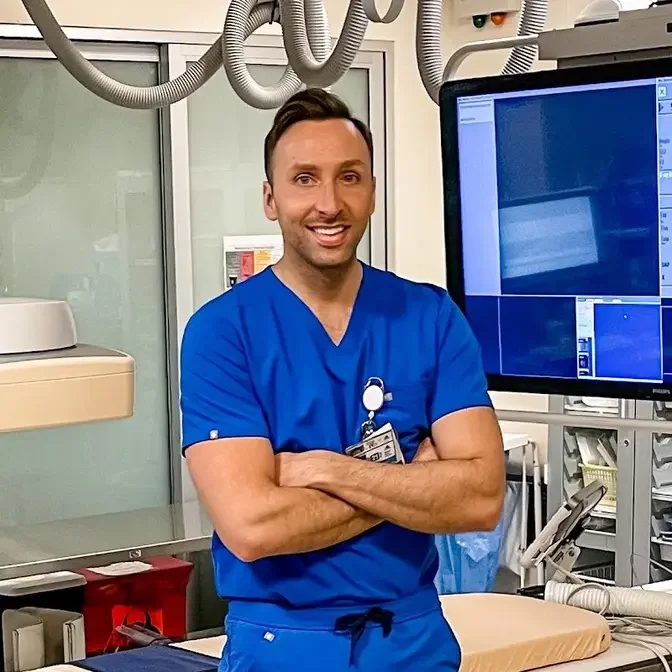
The USMLE Step 1 exam is going from a scored exam to pass/fail. In this video, I break down the USMLE Step 1 exam and give my thoughts. I also discuss what I think about the change to pass/fail and how it will affect medical school/medical students.
1:20 - What is the USMLE? 3:18 - What is the point of the USMLE Step 1? 5:38 - Picmonic Ad 7:00 - Why They changed Exam to Pass/Fail 10:49 - My Thoughts on Pass/Fail Change
*None of this is meant to be construed as investment advice, it's for entertainment purposes only. Links above include affiliate commission or referrals. I'm part of an affiliate network and I receive compensation from partnering websites. The video is accurate as of the posting date but may not be accurate in the future.
The emphasis has essentially just switched from step one to step two.
So we're still kind of in the exact same boat, just not step one anymore.
Step two is the beta exam. Welcome back to the channel, everybody.
For those of you who are new around here, my name is Michael,
AKA Dr. Cellini and I'm a board certified diagnostic and interventional
radiologist in New Jersey. Okay.
So a lot of people have been asking me over the past year or so to speak out on
the USMLE step one exam going from the most stressful
performance-based test ever to now just pass fail.
I actually forgot about this and put it off for a while,
even though I planned on making a video on it.
But I recently noticed about a month or so ago on January 26th,
they administered the first USMLE that is now pass fail.
So I think it's finally time to talk about my thoughts on the USMLE step one
exam going to pass fail. Let's go. Of course,
Androna is doing a thing right now.
Now I know it's not really like me to do this kind of video anymore since I've
kind of changed up the content on this channel. However,
I've gotten so many questions and requests about this topic.
So you've left me no choice and a partner with my good friends over at Pygmonic
to make this video, but more on that later. So in this video,
we were going to be talking about what the USMLE actually is,
why they are changing it to pass fail,
how has it affected the medical school experience and what are my thoughts on
this change? So let's get into topic number one. What is the USMLE?
If those of you who already know everything about the USMLE skip to the next
timestamp, but if you don't know anything, or even if you know a little bit,
stick around, I'll tell you everything you need to know.
So the USMLE stands for United States Medical Licensing Examination and it's
broken down into three separate exams. Step one, step two, and you guessed it,
step three.
The goal of this exam is to test one's medical knowledge and how they apply that
medical knowledge in real world scenarios.
You usually take your first step exam at the end of your MS2 or second year of
med school. And this exam is very medical science heavy.
It consists of embryology, histology, anatomy, physiology,
biochemistry, and all of that stuff. And like any standardized test,
there's always that little sprinkle of useless data that you have to memorize
that has no clinical application or any bearing on your life.
The second board exam during your medical training is the step two CK or
clinical knowledge exam.
You usually take this exam at the end of your third or fourth year of medical
school and it's more clinically based.
And instead of testing you on useless medical science nuance,
it basically tests you on your application of medical knowledge.
Because after all you are in your clinical years when you take this examination.
So now it's time to see how you apply that real world medical knowledge to real
world patients, or in this case questions.
You also get tested on topics such as medical information, patient interaction,
indifferential diagnoses, et cetera. And as if two exams weren't enough,
there's always a step three exam,
which you usually take during your first year of residency or your internship.
This exam is kind of like step two, but it's pretty easy at this point.
So you don't really study for that much and you pretty much can pass without
really putting too much effort in. And just to be complete,
there's also a step two clinical exam or basically another board exam where you
see live patients and take notes, histories, come up with differentials, et cetera.
You may have seen stuff on social media where they like practice on patients that
are actors and actresses. And this is that,
this is the clinical exam portion of that board exam.
And I still have no idea why we do that.
So what's the whole point of all of these medical board exams or the US MLEs?
Well,
the original point was to have basically a standard test in order to obtain a
medical license,
which every medical student slash doctor would have to take before they
graduated. And guess what? It's always been a pass fail exam,
even when I took it,
but it's evolved over time into something completely different.
At some point along the way,
these step one stores became the most important thing on your application,
period.
The reason there was so much emphasis on the scores is because it was
essentially a quick and dirty way of comparing multiple students for getting
into residency.
You could see which ones were the smartest or the best applicants by just looking
at their step one score, which is ridiculous.
There was even so much emphasis on these stores that if you didn't score high
enough, you would not be able to match into your specialty of choice.
For example,
say you wanted to match into dermatology or interventional radiology or plastic
surgery, but didn't get a good enough board exam score.
Well, guess what? You weren't matching it.
If you didn't score well on the step one exam,
you would have to look into other specialties that you didn't want to go into,
which isn't really fun or fair.
So basically what it came down to was it doesn't matter how good of a doctor you
are or how good of a medical student you are.
It just comes down to how good of a test taker you are.
And if you're a good test taker, you match into competitive specialties.
It's that easy. And to top it all off,
a lot of residency program directors also liked having med students with higher
scores because it was like bragging rights to them.
Everyone wanted to have a residency program full of high scoring individuals
because it made them elite and they were considered the best.
So I hope I'm doing a good job of explaining just how stressful this exam was
and still is to some degree. Imagine your whole life.
You want it to be a dermatologist and you worked your butt off in undergrad and
then finally in med school,
but you just had one little issue that you didn't score well on your USMLE step
one exam. Well, unfortunately all your dreams are crushed. I mean,
that's a little extreme, but it's kind of true.
And if you didn't do so hot on step one,
you had one other option and that was to do well on step two.
And if you still didn't do well on step two,
because say you're not a good test taker,
well you're not going to be a dermatologist.
So after years and years of unneeded stress on these poor med students,
they finally made a change and changed the USMLE back to pass fail,
even though it's been pass fail all along.
But this time it's different because they won't be handing out an actual score,
just pass or fail.
So why did they ultimately decide to change the USMLE step one exam to pass
fail? I'll tell you,
but first I want to give a big thanks to the sponsor of today's video,
PicMonic. Now, you know,
I love PicMonic and you've probably seen me work with them many different times
on many different videos. And there's a reason for that.
And if you don't know what PicMonic is,
it's an online learning platform that uses picture mnemonics and stories,
which helps you remember large quantities of information quite easily.
To give you an example of what they offer and how they can help you with your
studies. Here's the homepage that you can browse any topic you're studying.
They have all the page numbers listed here.
So you can actually follow along with the exact page numbers of your first aid
book, which makes this so easy.
I love PicMonic because they can offer quick and effective two minute videos
that can help you connect difficult to remember facts with unforgettable
characters like Ataxia,
which you see here can be seen in Ataxia Telangietasia. I mean,
how can you forget this character?
PicMonic does an amazing job with tying together facts with ridiculously
memorable stories.
You can also reinforce what you learn and track your progress with thousands of
built-in rapid review, multiple choice quizzes,
intelligent space repetition algorithms automatically adjust to your learning
needs.
So you'll be reminded to review the right information at the right time,
increasing long-term retention.
And since we're talking about step one in this video,
I wanted to show you a little bit about the step one question banks. As always,
you can use my code,
Dr. Cellini D R C E L L I N I to get $25 off your true
learn USMLE smart bank.
All you gotta do is click the link in my description.
Now let's get back to the video.
So the ultimate reason they decided to change this exam to pass fail was to try
to remove some of the stress or all of the insane amount of stress that was
placed on med students while studying for this exam because of how important it
was.
And the ultimate goal of all this was to reduce its importance for residency
applications. And as we all know,
burnout is a huge component of medical education and the healthcare system.
So the goal here is to try to help with that.
Or maybe it's because the test takers finally realized that medicine is a team
sport. Going further on that topic and speaking from experience,
the USMLE really singled out each person and promoted competition amongst their
peers. While studying for the USMLE people would not share their notes or discuss
study plans with each other because anyone you were talking to or giving an
advantage to is competition to you.
So why would you want them to succeed over you?
And that's especially true when you're trying to match into the same specialty.
Why would I give my friend over here an advantage to matching into radiology
when I also want to match into radiology?
So basically it was this huge kind of competitive environment.
It wasn't very collaborative.
It wasn't very team sport-esque and it wasn't medicine. At that time,
everyone was your enemy.
And I think the test makers or the NBME finally realized that.
So how has this ultimately affected the medical experience by changing the exam
from scored to pass fail? Well,
I think it has most likely reduced the stress surrounding this exam,
which ultimately allows med students to chill out a little bit and not get so
worked up on one single exam.
They could actually work together to pass the exam versus competing with each
other to try to beat one another. You see,
it likely has reduced the stress for taking the step one exam. However,
remember when I mentioned that old exam,
step two that you take during your third or fourth year of med school? Well,
the emphasis has essentially just switched from step one to step two.
So we're still kind of in the exact same boat, just not step one anymore.
Step two is the big exam. Furthermore,
the step two exam used to be the safety exam.
And what I mean by that is it was a backup just in case you did terribly on step
one,
you could always redeem yourself by doing really well on step two and say you
did poorly on step one, but then did really well on step two.
The door to becoming a dermatologist was not completely shut.
So what's the big deal about shifting the weight from step one to step two?
Well, there are a few things. For one,
you take your step two exam during your third or fourth year of medical school,
which is during your clinical rotations.
And what happens if you are on OBGYN or surgery rotations back to back where
you're going in at 5am and leaving at midnight every day,
you won't really have too much time to study.
And I guarantee you won't want to study. All you'll want to do is sleep.
The reason I bring this up is because now that more emphasis is being placed on
step two exam,
it's going to be harder to study for because you're at a different point in your
medical career or your medical education.
The other part of this is that the goal of changing the exam to pass fail was to
help people get into competitive residencies and not put so much emphasis on
the step one exam.
But that's not really going to change much because the stress to match into
these specialties is still there.
And the reason being is just as simple as supply and demand.
There are too many applicants for too few positions.
So the competitiveness is still there regardless of step one.
The other part of this is that there will likely be more emphasis placed on
things like letters of recommendation or your clinical grades,
which can be a good thing,
but it still puts a lot of stress on you because oftentimes those are very
subjective and out of your control. Speaking from experience,
a lot of my clerkship grades were very subjective.
Some physicians that filled out my clerkship forms have never filled one out
before. And we're like, do I just give you an honors pass? And I was like, sure.
If you thought I was honors pass worthy. And that's how it is at a lot of places.
Same goes the other way though.
Some physicians don't know or maybe have too crazy of expectations for someone
getting high honors or whatever the heck it's called anymore.
And they may just give them like a pass,
which may be detrimental to their application.
So now that we discussed all of that, what are my thoughts on this change? Well,
I think it has pluses and minuses. And I bet you thought I was going to say that.
On one hand, it does take the burden off of step one, but on the other hand,
it just shifts that burden over to step two.
But I don't think that's necessarily a bad thing.
Step one is riddled with nuanced medical information that really isn't pertinent
to the daily life of a physician. While step two is a more clinically focused exam.
There are real life question stems and patient management questions,
which is more pertinent to what you will see as a physician.
I also think that with the extra time students will have in their first and
second year of medical school,
when they're not spending all that time studying for step one,
they'll spend that time in other avenues such as research or volunteer work or
other clinical work and also their medical education. I do, however,
think this change negatively impacts DOs and IMGs or international medical
graduates. Even in 2022,
a lot of program directors are still unsure of how to rank DOs or IMGs
because they're not really familiar with their curriculum.
And the easiest way to compare them to their MD counterparts is to just directly
compare the step one exam. And now we don't have that. However,
given how much emphasis will likely be placed on step two instead of step one,
I don't think this will negatively affect them too much. So to sum it all up,
I think it was a good idea,
switching the USMLE step one exam to pass fail from a scored exam.
Although I don't think the intended benefits will be felt from this.
All they're doing is shifting the stress of getting into residency from one
place to another without getting rid of the stress altogether.
So that officially concludes this video.
Let me know in the comments below what you thought about this and what you think
about changing the USMLE step one to pass fail. As always,
please subscribe to my channel. Follow me on TikTok and Instagram.
If you don't already, and I'll see you all on the next video. Bye.